



Pull to refresh
Logo
Bluetooth SIG adopts High Data Throughput, raising LE speeds to 7.5 Mbps

Bluetooth SIG adopts High Data Throughput, raising LE speeds to 7.5 Mbps

New Capabilities

The optional Core 7.0 feature nearly quadruples Bluetooth Low Energy's top rate and sets up standardized lossless audio

Overview

Updated 5 hours ago

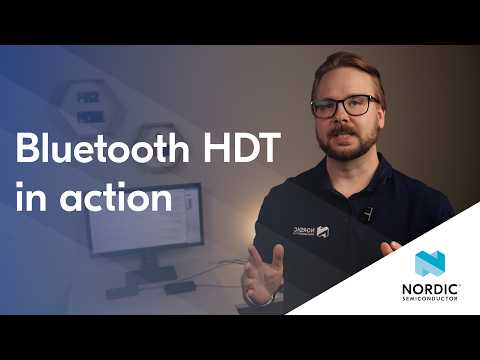
On November 4, the Bluetooth Special Interest Group adopted High Data Throughput, a new radio layer that lifts Bluetooth Low Energy's top speed from 2 megabits per second to 7.5. The feature is optional and ships inside the newly adopted Core 7.0 specification.

The practical target is audio. At 7.5 Mbps, a Bluetooth link can carry lossless and high-resolution streams that today's 2 Mbps ceiling cannot, without leaning on proprietary codecs. The first devices are expected in early 2027.

Why it matters

Faster Bluetooth LE could make lossless wireless headphones a standard feature rather than a proprietary, premium one.

Questions about this story

Free account needed to ask — your question is kept and asked for you right after sign-up. Answers are public.

No questions yet — be the first to ask.

Key Indicators

7.5 Mbps
Maximum HDT bit rate
Top rate of the new physical layer, up from 2 Mbps on the LE 2M PHY.
3.75×
Speed increase over LE 2M
The SIG describes the gain as nearly fourfold.
5
HDT rate modes
Rates of 2, 3, 4, 6 and 7.5 Mbps; the top two are optional.
2 Msym/s
Symbol rate
Same signaling rate as the existing 2M PHY; speed comes from more bits per symbol.

Voices

Curated perspectives — historical figures and your fellow readers.

Sign up to generate historical perspectives on this story.

People Involved

Organizations Involved

Timeline

2010 November 2026

5 events Latest: Yesterday
Tap a bar to jump to that date
  1. SIG adopts High Data Throughput

    Latest Standard

    Core 7.0 adds an optional PHY reaching 7.5 Mbps using QPSK, 8PSK and 16QAM.

  2. Bluetooth 6.0 adds channel sounding

    Standard

    The release adds distance measurement, another feature awaiting silicon.

  3. Bluetooth 5.2 introduces LE Audio

    Standard

    A new audio architecture with the LC3 codec promises lower power and better quality.

  4. Bluetooth 5.0 doubles LE speed to 2 Mbps

    Standard

    The LE 2M PHY raises throughput and becomes the ceiling for the next decade.

  5. Bluetooth 4.0 introduces Low Energy

    Standard

    The first LE physical layer runs at 1 Mbps and targets coin-cell devices.

Scenarios

1

Flagship phones ship HDT lossless audio in 2027

Likely Resolves by End of 2027

Discussed by: Bluetooth SIG and early coverage from The Verge and Engadget

The SIG names premium wireless audio as HDT's first flagship use case and expects devices in early 2027. If a major phone maker pairs the 7.5 Mbps mode with a lossless codec, the feature moves from spec sheet to store shelf.

2

HDT follows LE Audio's slow path to market

Possible Resolves by Q2 2028

Discussed by: Audio industry coverage in Android Authority and StereoNET

LE Audio was announced in 2020 but took years to reach mainstream devices. HDT could repeat that pattern: chip vendors announce silicon, while handset makers wait for cost reductions and codec support.

3

HDT finds its market in data, not audio

Possible Resolves by End of 2028

Discussed by: Bluetooth SIG feature documentation and trade coverage

The spec also speeds file transfers, firmware updates and sensor data. If audio adoption lags, HDT could still ship in wearables, medical devices and industrial sensors where throughput matters more than codec politics.

Historical Context

3 moments from history that rhyme with this story — and how they unfolded.

December 2016

Bluetooth 5.0 and the 2M PHY (2016)

Bluetooth 5.0 doubled Low Energy's top rate from 1 to 2 Mbps and extended range. The specification was adopted in December 2016, but phones and headphones needed new radios to use it.

Then

Support arrived gradually, with flagship phones first and cheaper devices later.

Now

2 Mbps became common by the early 2020s, but audio quality stayed limited by codecs rather than radio speed.

Why this matters now

HDT repeats the pattern: a faster radio arrives years before the products that use it well.

January 2020

LE Audio announcement (2020)

Bluetooth 5.2 introduced LE Audio and the LC3 codec, promising lower power consumption and better sound than classic Bluetooth audio.

Then

The first LE Audio products reached shelves in 2022 and 2023, well after the specification.

Now

Adoption stayed gradual, and classic Bluetooth audio remains common in many devices.

Why this matters now

It shows the gap between a SIG adoption and shipping hardware, a gap HDT also faces.

2015

Sony LDAC and proprietary high-resolution audio (2015)

Sony launched LDAC, a licensed codec that streams high-resolution audio over Bluetooth at up to 990 kilobits per second. Android added support in 2017, and Qualcomm's aptX HD followed.

Then

High-resolution wireless audio split across competing licensed codecs.

Now

The market stayed fragmented, with quality depending on which brand's codec both ends supported.

Why this matters now

HDT's promise is to replace that patchwork with a standard radio layer, if device makers adopt it.

Sources

(8)