Pull to refresh
Logo
Daily Brief
Following
Why Ranks Sign Up
Boeing's 737 MAX production rebuild

Boeing's 737 MAX production rebuild

Built World

The slow climb back from the Alaska Airlines door-plug blowout

May 27th, 2026: FAA approves the ramp to 47 jets a month

Overview

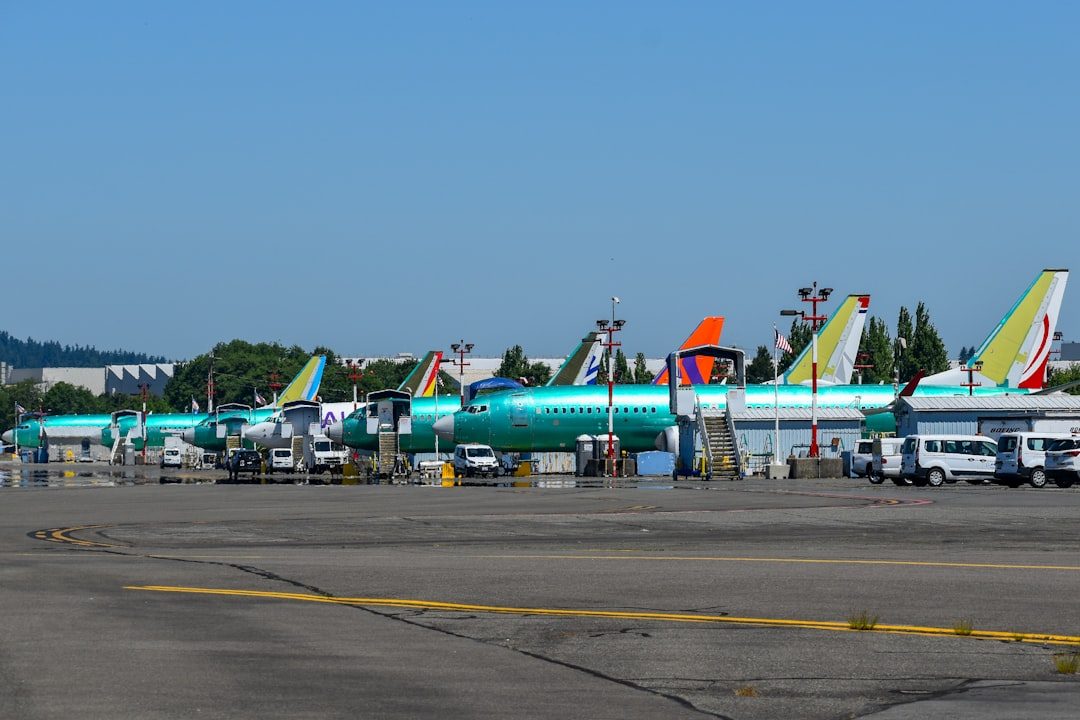
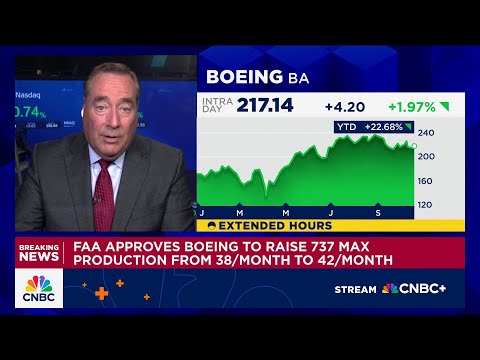
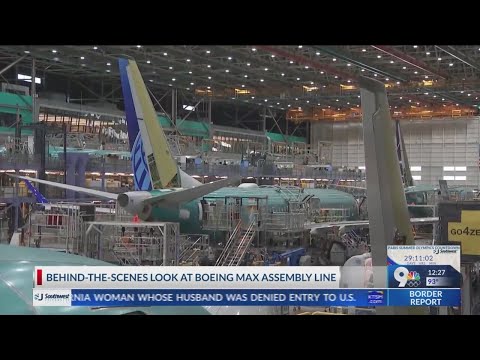
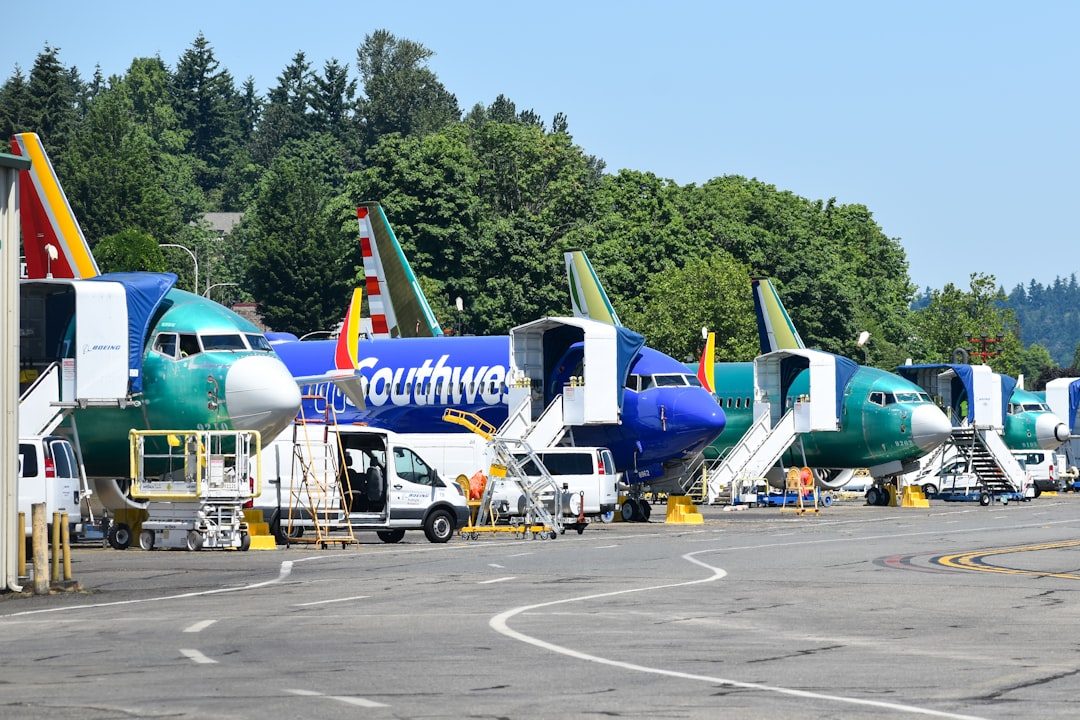
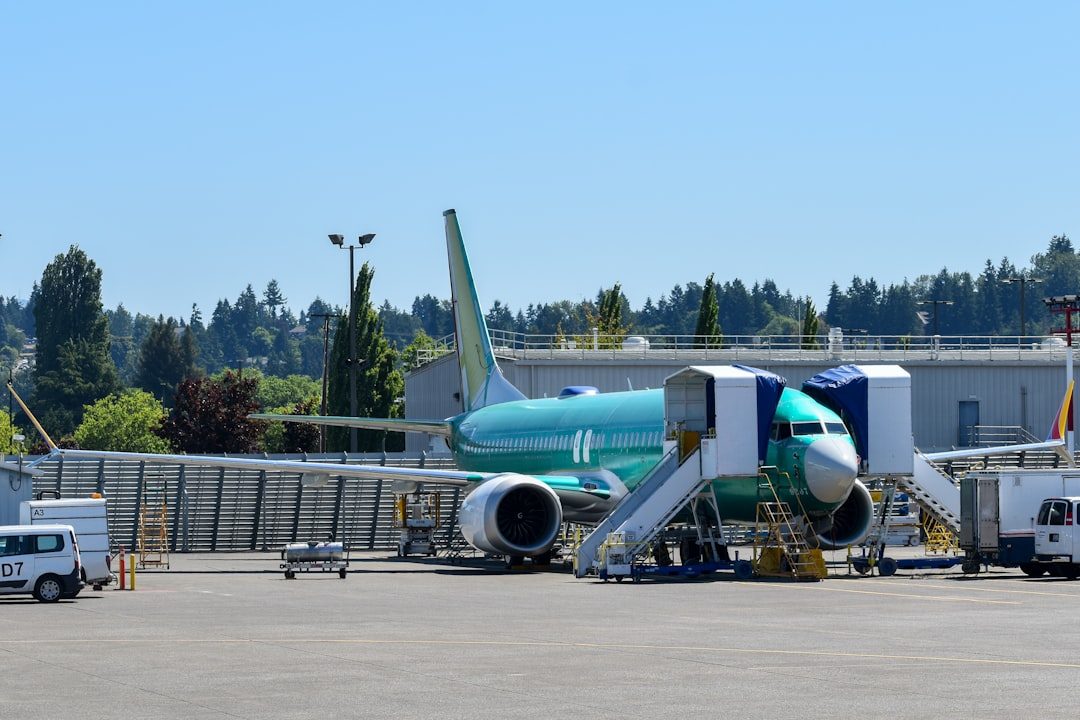
Boeing's 737 factory in Renton, Washington has spent 28 months under a federal speed limit. On Wednesday, the Federal Aviation Administration (FAA) said it could go a little faster — from 42 jets a month to 47.

That five-jet bump is the second time the cap has lifted since the agency froze Boeing's output at 38 in January 2024, after a door plug tore off an Alaska Airlines flight at 16,000 feet. Boeing wants to reach 63 a month by 2028. The FAA, and the airlines waiting on roughly 4,000 backlogged jets, will decide how fast that happens.

Why it matters

Airlines have been waiting years for 737 MAXes they already paid for; every monthly rate increase shortens the queue and signals the FAA trusts Boeing's factory again.

Questions about this story

0

What was the cause of the door plug issue? How could it happen? Are different parts of the plane tested or reviewed differently?

Four bolts that hold the door plug in place were removed for a rivet repair at Boeing's Renton factory in September 2023 and never put back — a paperwork-free process with no record of who did the work and no check to catch the omission.

Why it matters: The NTSB's June 2025 final report found this wasn't a lone worker's mistake but a systemic breakdown in Boeing's manufacturing process, with FAA oversight too distant to catch it before the plug departed the plane at 16,000 feet.

  • On September 18, 2023, Boeing workers opened the door plug at the Renton plant to fix rivets on the adjacent fuselage — no documentation was required for that work, so there's no record of who removed the four retaining bolts or who was supposed to replace them.
  • Without the bolts, the plug was held only by friction and shifted incrementally upward with each pressurization cycle over roughly 145 flights before it blew out on January 5, 2024.
  • The NTSB found Boeing's Renton workforce had lost much of its experienced labor during COVID, leaving undertrained workers on tasks with no formal written guidance — nobody flagged that the bolts were missing at any point from removal to final delivery.
  • On the testing question: yes, aircraft components carry different levels of federal scrutiny. Primary flight controls go through direct FAA certification, but Boeing's production floor operated under an Organizational Designation Authorization (ODA) — Boeing employees signing off on Boeing's own work. The door plug repair fell through that gap entirely. Post-blowout, the FAA scrapped the audit-only model and placed inspectors directly on the production line.
Room for disagreement
  • Boeing and the NTSB both agree the bolts were missing, but responsibility is genuinely contested: because no work order was ever created for opening the plug, there is no paper trail pointing to a specific person or team — Boeing says it cannot determine who did the work, while critics argue that ambiguity is itself the failure, not an excuse for it.
  • Some aviation safety experts argue the ODA delegation system — letting Boeing certify its own production — is the deeper structural problem and that any fix short of mandatory independent inspections on the factory floor will be insufficient; the FAA's post-blowout response (on-site inspectors, production cap) is seen by others as sufficient reform without dismantling the delegation model entirely.
AI-generated with web search — may be wrong. Check the linked sources.
Key Indicators

47
New monthly production cap
Up from 42, after the FAA's capstone review.
63
Long-term rate Boeing wants
Targeted for 2028, pending more FAA approvals.
28 months
Time under the FAA cap
Imposed January 2024 after the Alaska Airlines blowout.
~4,000
737 MAX backlog
Roughly two-thirds of Boeing's 6,200-jet order book.
~500
2026 delivery target
Boeing's full-year goal for 737 MAX handovers.
$4.7B
Spirit AeroSystems deal
Boeing reabsorbed its fuselage supplier in December 2025.

Voices

Curated perspectives — historical figures and your fellow readers.

Ever wondered what historical figures would say about today's headlines?

Sign up to generate historical perspectives on this story.

Play

Exploring all sides of a story is often best achieved with Play.

Log in to play. Track your picks, climb the leaderboards. Log in Sign Up
Predict 3 ways this could play out. Contrarian picks score more — points lock when the scenario resolves. Log in to play
Higher or Lower Two numbers from this story. Guess which is bigger. 5 rounds to set a streak. Log in to play
Timeline Five events from this story — drag them oldest to newest. Log in to play
Connections Sixteen names from the news. Find the four hidden groups of four. Log in to play

People Involved

Organizations Involved

Timeline

January 2024 May 2026

9 events Latest: May 27th, 2026 · 1 month ago
Tap a bar to jump to that date
  1. FAA approves the ramp to 47 jets a month

    Latest Regulatory

    Ortberg tells investors Boeing has passed the capstone review for rate 47 and will stabilize over the next few months, with 52 and 63 still to come.

  2. Boeing out-delivers Airbus in Q1 for the first time since 2019

    Milestone

    Stronger 737 MAX output narrows the gap with Airbus and validates the post-blowout recovery plan.

  3. Boeing closes the Spirit AeroSystems acquisition

    Corporate

    Boeing reabsorbs its 737 fuselage maker after 20 years, betting vertical integration will fix quality.

  4. FAA raises the production cap to 42

    Regulatory

    First cap increase in 21 months. The FAA says Boeing has stabilized factory processes enough for a modest step up.

  5. Kelly Ortberg becomes Boeing CEO

    Leadership

    Aerospace veteran takes over with the line stuck at 38 a month and a backlog stretching past the decade.

  6. Dave Calhoun announces he will step down as CEO

    Leadership

    Part of a board shake-up that also removed the chairman and the head of commercial airplanes.

  7. FAA caps 737 MAX production at 38 jets a month

    Regulatory

    The agency freezes output until Boeing proves it can fix factory quality. Boeing's target had been roughly 57 a month.

  8. Alaska Airlines Flight 1282 door plug blows out

    Incident

    A door plug separates from a nearly new Boeing 737 MAX 9 at 16,000 feet over Portland. No deaths, but a hole in the fuselage and the start of a federal crisis.

Historical Context

3 moments from history that rhyme with this story — and how they unfolded.

March 2019 - November 2020

Boeing 737 MAX grounding (2019-2020)

After two crashes killed 346 people — Lion Air 610 in October 2018 and Ethiopian 302 in March 2019 — the FAA grounded the entire 737 MAX fleet for 20 months. The cause was MCAS, a software system that pushed the nose down based on a single faulty sensor. Boeing rewrote the software, retrained pilots, and submitted to a re-certification process that reshaped the FAA's relationship with the company.

Then

The MAX returned to service in November 2020 after software fixes and new pilot training requirements. Boeing took an estimated $20 billion hit.

Now

Congress passed the Aircraft Certification, Safety, and Accountability Act, ending Boeing's ability to self-certify safety-critical systems. The reform set the precedent for the FAA's more aggressive 2024 cap.

Why this matters now

The MAX grounding established that the FAA would intervene at the program level when Boeing's safety case failed. The 2024 production cap is the same playbook applied to the factory floor instead of the airframe.

August 2009 - February 2010

Toyota unintended acceleration recall (2009-2010)

After a California crash killed four people and a Lexus floor mat was implicated, Toyota recalled more than 9 million vehicles for unintended acceleration. The National Highway Traffic Safety Administration fined Toyota $48.8 million and forced changes to its quality processes. Akio Toyoda apologized to Congress.

Then

Toyota halted production at U.S. plants for a week and lost roughly $2 billion in sales.

Now

Toyota restructured quality control under direct executive oversight and recovered its sales lead by 2012. The episode is now a business-school case in how a manufacturer reabsorbs control after losing it to suppliers and decentralized teams.

Why this matters now

Toyota's path — federal pressure, executive reset, vertical reintegration of quality, multi-year recovery — is the closest commercial analogue to what Boeing is trying under Ortberg, including the Spirit reacquisition.

June 1972 - June 1979

McDonnell Douglas DC-10 cargo door crisis (1972-1979)

A cargo door blew off an American Airlines DC-10 over Windsor, Ontario in 1972; passengers survived only because the captain landed the crippled jet. The same defect downed Turkish Airlines Flight 981 outside Paris in 1974, killing 346 people. The FAA had let McDonnell Douglas handle the fix through a gentlemen's agreement rather than an airworthiness directive.

Then

McDonnell Douglas redesigned the cargo door and the FAA grounded the DC-10 fleet briefly in 1979 after a separate engine-pylon failure killed 273 in Chicago.

Now

The DC-10 never recovered its commercial reputation. McDonnell Douglas's commercial division declined through the 1980s and was absorbed by Boeing in 1997.

Why this matters now

The DC-10 saga is the cautionary tale Boeing's recovery is racing against: a manufacturer that lost passenger trust, never regained the airline order book, and eventually disappeared. The current ramp is partly about proving that outcome is not Boeing's future.

Sources

(9)