

Pull to refresh
Logo
Fenway developers slash affordable units in revised Park Drive plan

Fenway developers slash affordable units in revised Park Drive plan

Built World Boston, MA local

Income-restricted units drop to the city minimum as the project shrinks from two towers to one

Today: Developers file revised plans cutting affordable units

Overview

Updated 44 minutes ago

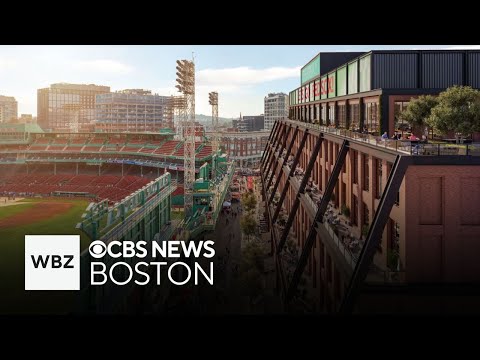
Developers who won approval for 117 apartments in Boston's Fenway neighborhood in 2023 now want to build 112 instead. Income-restricted units would drop from 48 to about 22, the city's legal minimum.

The developers say the original $70 million plan depended on state grants that never materialized. Without them, a two-tower project with 41% affordable units didn't stand up financially. They're asking the city to approve a single six-story building with the minimum required subsidized units.

Why it matters

Every income-restricted unit cut from private Boston developments shifts more of the city's affordable housing burden to its own budget.

Questions about this story

Free account needed to ask — your question is kept and asked for you right after sign-up. Answers are public.

No questions yet — be the first to ask.

Key Indicators

48 to 22
Income-restricted units
Down from 48 in the 2023 approval to about 22 in the revised plan.
41% to 20%
Affordable share of total units
Fall from 41% to about 20% of the project.
117 to 112
Total apartments
Drop from 117 in the approved plan to 112 in the revision.

Voices

Curated perspectives — historical figures and your fellow readers.

Ever wondered what historical figures would say about today's headlines?

Sign up to generate historical perspectives on this story.

People Involved

Organizations Involved

Timeline

2023 September 2026

2 events Latest: Today
  1. Developers file revised plans cutting affordable units

    Today Filing

    Notice of project change reduces project to one six-story building, 112 units, 22 income-restricted.

  2. Original Park Drive plan approved

    Approval

    Boston Planning Department approves two seven-story buildings with 117 units, 48 income-restricted.

Scenarios

1

Boston approves Park Drive revision, project moves forward

Likely Resolves by Q1 2027

Discussed by: Universal Hub and Boston housing supply advocates

The Boston Planning Department accepts the notice of project change. Construction proceeds with 112 units, including 22 income-restricted apartments. This is the most likely outcome given the developers' documented financial constraints and the city's housing supply needs.

2

City negotiates higher affordable count in Park Drive project

Possible Resolves by Q2 2027

Discussed by: Housing advocates and Fenway neighborhood groups

Concerned about the 54% cut in affordable units, the city presses for a middle ground. Negotiations yield a plan with 30 to 35 income-restricted units, possibly with density bonuses or other incentives to make the math work.

3

Park Drive project stalls as city and developers remain at odds

Unlikely Resolves by Q3 2027

Discussed by: Boston real estate analysts

The city delays or rejects the revision and the developers walk away. The site remains undeveloped, and 112 units leave the housing pipeline. This outcome would underline the tension between affordability mandates and project feasibility.

Historical Context

3 moments from history that rhyme with this story — and how they unfolded.

December 2018

Minneapolis ends single-family zoning and parking minimums (2018)

Minneapolis became the first major U.S. city to eliminate single-family-only zoning, allowing duplexes and triplexes everywhere, while also removing mandatory parking minimums. The reforms aimed to combat high costs, underproduction, and segregation.

Then

Unlocked new housing types in formerly restricted neighborhoods.

Now

The reforms became a model for cities nationwide seeking to boost housing supply.

Why this matters now

Shows the alternative approach: removing development requirements entirely rather than negotiating their reduction project by project.

2021

Boston drops parking minimums for affordable projects (2021)

The city voted to eliminate parking space requirements for residential developments where at least 60% of units are income-restricted. Structured parking costs $50,000 to $250,000 per space, a cost passed on to rents.

Then

Cut construction costs for affordable housing projects in Boston.

Now

Set a precedent for relaxing zoning requirements to make housing more financially feasible.

Why this matters now

The city acknowledged that building requirements affect project feasibility, the same argument Park Drive developers make about affordable unit counts.

December 2024

Cambridge inclusionary housing lawsuit (2024)

A developer planning to replace 20 rental apartments with condominiums in Cambridge, Massachusetts, sued the city over its requirement that 20% of new for-sale units be affordable. The developer argued the mandate was an unconstitutional property taking because the project would reduce, not worsen, the housing shortage.

Then

The case is pending in Massachusetts Land Court, one of several similar challenges nationwide.

Now

If courts side with developers, inclusionary housing mandates could lose constitutional grounding.

Why this matters now

Shows developers increasingly challenging the same affordability mandates the Park Drive team is trying to reduce through negotiation.

Sources

(2)