





Pull to refresh
Logo
Brogidirsen shows 5-year motor function stability in Duchenne muscular dystrophy trial

Brogidirsen shows 5-year motor function stability in Duchenne muscular dystrophy trial

New Capabilities

Six patients on weekly dosing maintained function with no serious adverse events over five years

Today: 5-year data presented

Overview

Updated 1 hour ago

Six boys with Duchenne muscular dystrophy have taken weekly doses of brogidirsen for five years. New data presented at the World Muscle Society congress in Hiroshima shows their motor function held steady and no serious side effects appeared.

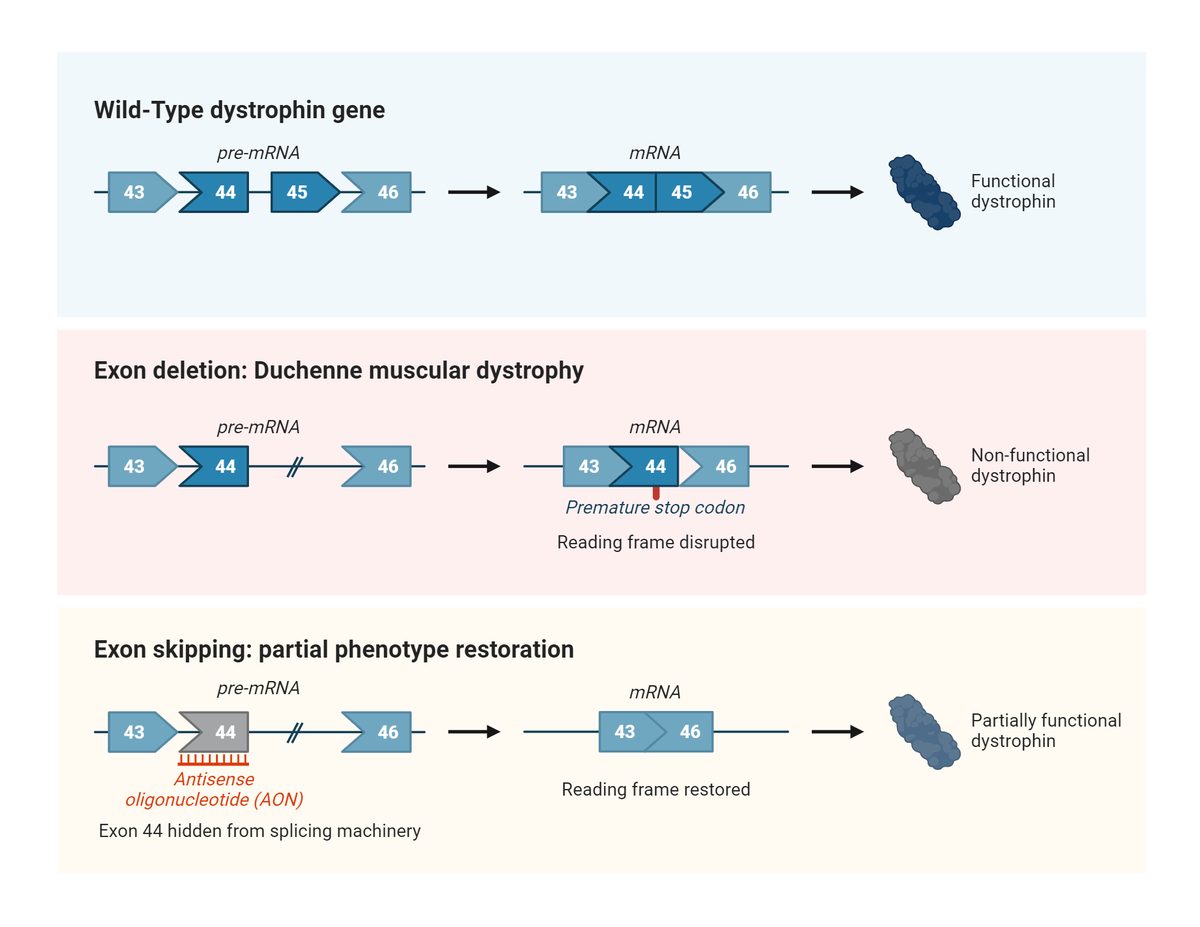
Duchenne is a fatal muscle-wasting disease that typically robs boys of the ability to walk by their early teens. Brogidirsen works by skipping exon 44 of the dystrophin gene, restoring a shortened but functional protein. The results suggest the drug may slow disease progression for patients whose mutations are amenable to exon 44 skipping.

Why it matters

Duchenne is fatal and progressive; if five years of stability holds, brogidirsen could become a treatment option for patients with exon 44 mutations.

Questions about this story

Free account needed to ask — your question is kept and asked for you right after sign-up. Answers are public.

No questions yet — be the first to ask.

Key Indicators

5 years
Weekly dosing duration
Six participants received brogidirsen weekly for five years with no serious adverse events.
6
Trial participants
All six participants in the open-label extension study remained on treatment.
24.47%
Dystrophin restoration at 80 mg/kg
Dose-dependent dystrophin increase measured in the Phase 1/2 trial after 24 weeks.
0
Serious adverse events
No serious or severe adverse events, anaphylaxis, or discontinuations over five years.

Voices

Curated perspectives — historical figures and your fellow readers.

Ever wondered what historical figures would say about today's headlines?

Sign up to generate historical perspectives on this story.

People Involved

Organizations Involved

Timeline

June 2021 October 2026

4 events Latest: Today
Tap a bar to jump to that date
  1. 5-year data presented

    Today Data Release

    NS Pharma presents 5-year data at the World Muscle Society Congress in Hiroshima, showing maintained motor function and no serious adverse events.

  2. 4.5-year data presented

    Data Release

    NS Pharma presents 4.5-year data at the MDA Clinical & Scientific Conference showing maintained motor function.

  3. 3.5-year data presented

    Data Release

    Nippon Shinyaku presents 3.5-year efficacy and safety data at the World Muscle Society 2025 Congress.

  4. Phase 2 extension study registered

    Clinical Trial

    Nippon Shinyaku registers the open-label extension study (NCT05135663) for brogidirsen in DMD patients.

Scenarios

1

Brogidirsen wins regulatory approval for exon 44 DMD

Possible Resolves by Q2 2029

Discussed by: NS Pharma and Nippon Shinyaku have signaled intent to pursue approval; the eteplirsen and casimersen precedents show the FDA path.

The global Phase 2 DISCOVER study completes and supports a regulatory submission. Based on dystrophin restoration and functional stability, the FDA or Japan's PMDA grants approval for DMD patients with exon 44 mutations.

2

DISCOVER Phase 2 study reports topline results

Likely Resolves by End of 2027

Discussed by: Clinical trial registries and NS Pharma announcements

The ongoing global Phase 2 study (NCT05996003), enrolling up to 20 boys ages 4 to 14, completes and reports topline safety and efficacy data. Positive results would strengthen the case for regulatory submission.

3

Safety signal or efficacy failure derails brogidirsen

Unlikely Resolves by End of 2027

Discussed by: The small trial size (6 participants) leaves room for unexpected safety findings in larger studies

A serious adverse event emerges in the extension study, or the DISCOVER study fails to show dystrophin restoration or functional benefit, halting development.

Historical Context

2 moments from history that rhyme with this story — and how they unfolded.

September 2016

Eteplirsen (Exondys 51) approval (2016)

Sarepta's eteplirsen became the first exon-skipping therapy for Duchenne muscular dystrophy, approved by the FDA under accelerated approval based on dystrophin production as a surrogate endpoint. The decision came despite objections from FDA staff who questioned evidence from a 12-patient trial.

Then

The approval opened the door for a wave of exon-skipping therapies targeting other exons.

Now

It established dystrophin restoration as an acceptable surrogate endpoint, but also set a precedent for controversy over accelerated approvals in rare disease.

Why this matters now

Brogidirsen follows the same regulatory path: small trials and dystrophin restoration as the endpoint. The eteplirsen precedent shows both the route to approval and the scrutiny that comes with it.

February 2021

Casimersen (Amondys 45) approval (2021)

Sarepta's casimersen, which skips exon 45, was approved by the FDA for DMD patients with amenable mutations. Like eteplirsen, it was approved under accelerated approval based on dystrophin production.

Then

It expanded the exon-skipping approach to a different patient subgroup.

Now

It reinforced the regulatory framework for mutation-specific exon-skipping therapies.

Why this matters now

Casimersen shows the precedent for approving exon-skipping therapies for specific mutation subgroups, the same model brogidirsen would follow for exon 44.

Sources

(7)