

Pull to refresh
Logo
California approves $8.4 billion bond for immunology research

California approves $8.4 billion bond for immunology research

Money Moves

Voters back the largest science funding package ever approved by a US public vote, with about half reserved for a single UCLA-affiliated institute.

Overview

Updated 1 hour ago

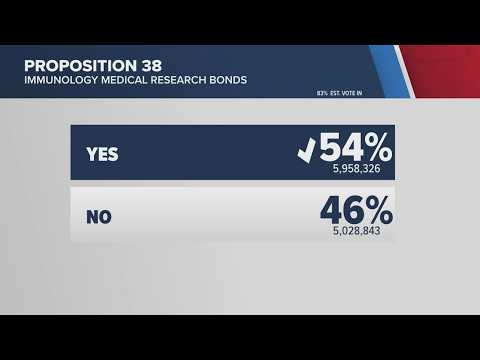
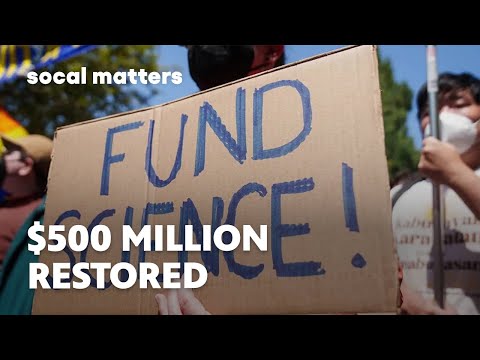
California voters approved $8.4 billion in state bonds for immunology research, the largest sum ever authorized for science by a US public vote. About half of the money is reserved for a single research institute, and only one four-year-old center at UCLA appears to qualify.

The bond arrives as the Trump administration cuts federal science funding, giving California researchers a state-funded backstop. It also concentrates billions in an institute co-founded by the billionaire who wrote the measure and spent about $45 million to pass it.

Why it matters

California is borrowing $8.4 billion for immunology research, testing whether state money can replace federal science cuts.

Questions about this story

Free account needed to ask — your question is kept and asked for you right after sign-up. Answers are public.

No questions yet — be the first to ask.

Key Indicators

$8.4B
Total bond authorized
General obligation bond for immunology and immunotherapy research.
$4.2B
Minimum for immunology research
At least half must target cancer, heart disease and Alzheimer's disease.
$500M–$600M
Annual bond repayment
State General Fund cost for about 20 years, roughly 0.25% of the budget.
20%
Patient discount
Funded treatments sold in California must generally be offered at this discount.
10%
Revenue returned to state
Share of research revenue that first repays the bond, then funds more research.
546,000
Signatures to qualify
Voter signatures collected to place Proposition 38 on the ballot.

Voices

Curated perspectives — historical figures and your fellow readers.

Sign up to generate historical perspectives on this story.

People Involved

Organizations Involved

Timeline

2025 November 2026

5 events Latest: Today
Tap a bar to jump to that date
  1. Approval confirmed as record sum

    Today Result

    The $8.4 billion is confirmed as the largest science funding ever approved by a US public vote.

  2. AP calls the race

    Result

    The Associated Press declares Proposition 38 passed after a week of ballot counting.

  3. Voters cast ballots

    Election

    Californians vote on Proposition 38 in the midterm elections; the race is too close to call.

  4. Measure qualifies for the ballot

    Campaign

    Organizers backed by Gary Michelson gather 546,000 signatures to place Proposition 38 before voters.

  5. UCLA clears the institute threshold

    Milestone

    UCLA's health system passes 3.5 million annual outpatient visits, the measure's eligibility bar.

Scenarios

1

California picks UCLA's immunology institute for the $4.2 billion share

Likely Resolves by End of 2027

Discussed by: The San Francisco Standard and the state Legislative Analyst's Office, analyzing the measure's eligibility criteria

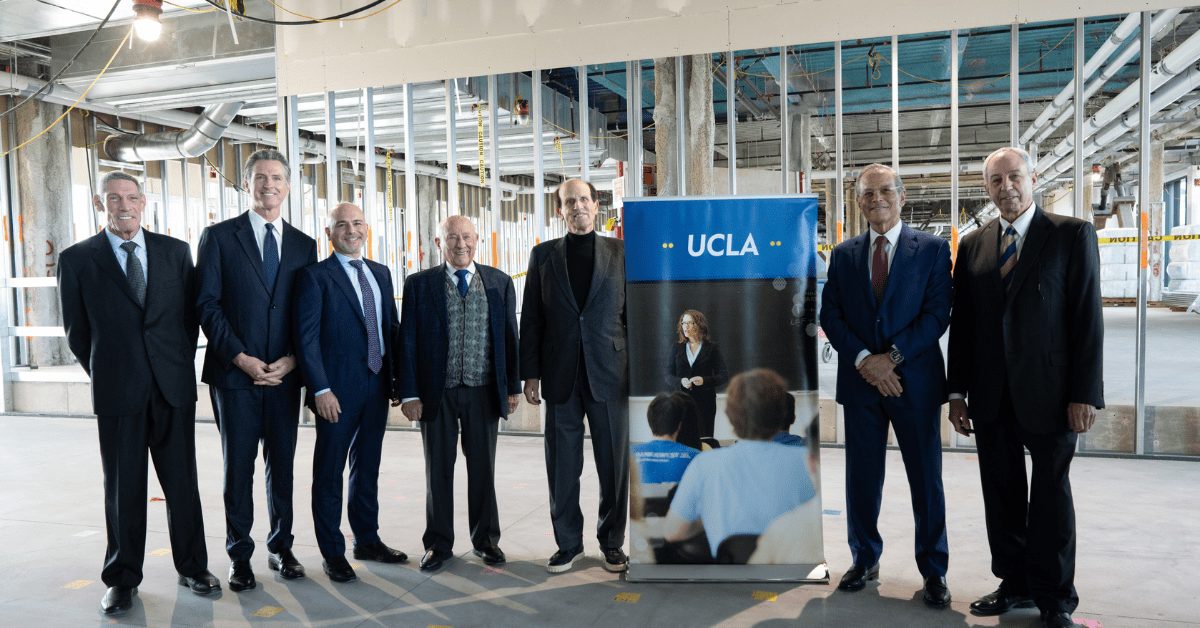
The measure requires the California Department of Public Health to select an institute affiliated with a UC campus whose health system logs more than 3.5 million outpatient visits a year. UCLA passed that mark in 2025; UC San Francisco fell short. The California Institute for Immunology and Immunotherapy, co-founded by measure author Gary Michelson, is the only center that appears to fit.

2

Court challenge blocks or overturns Proposition 38

Unlikely Resolves by End of 2027

Discussed by: Opponents including political scientist Sarah Hill and the Hoover Institution, who criticized the measure's design

Critics argue the eligibility rules were written to benefit a predetermined recipient and that the institute is exempt from public records laws. A lawsuit could seek to halt bond sales or invalidate the measure. No suit had been reported as of the coverage.

3

State sells the first Proposition 38 bonds

Likely Resolves by Q2 2027

Discussed by: The Legislative Analyst's Office, which projects $500 million to $600 million in annual repayment

The measure authorizes general obligation bonds, which the state sells to investors and repays from the General Fund over about 20 years. The first sale would turn the authorization into cash for research.

4

First research grants awarded

Likely Resolves by End of 2028

Discussed by: Supporters including UCLA's Antoni Ribas, who say the grant council will fund competitive research

Half the bond funds go to a council of UC campuses and other California universities and nonprofits, which sets priorities and awards competitive grants. The first awards would show the money reaching working researchers.

Historical Context

2 moments from history that rhyme with this story — and how they unfolded.

November 2004

California Proposition 71 (2004)

After President George W. Bush restricted federal funding for human embryonic stem-cell research, California voters approved a $3 billion bond to create the California Institute for Regenerative Medicine. It was the first large state bet on science funded by borrowing.

Then

The institute began awarding stem-cell research grants across California.

Now

It established the bond-financed state science agency as a model, and voters replenished it in 2020.

Why this matters now

Proposition 38 copies the structure: a voter-approved bond that pays for research the federal government is not funding.

November 2020

California Proposition 14 (2020)

Voters approved $5.5 billion to replenish the California Institute for Regenerative Medicine after its original $3 billion ran low. The measure extended the state's commitment to bond-funded research.

Then

The institute continued funding grants for several more years.

Now

It showed that bond-funded science agencies return to voters for more money, and that repayment becomes a long-term budget line.

Why this matters now

Proposition 38's backers may eventually need a similar replenishment, and its critics point to the same long-term cost structure.

Sources

(7)