

Pull to refresh
Logo
Canada's Supreme Court upholds Quebec's religious symbols ban

Canada's Supreme Court upholds Quebec's religious symbols ban

Rule Changes

Bill 21 survives almost intact, and the notwithstanding clause comes out with fewer limits than before

Overview

Updated 51 minutes ago

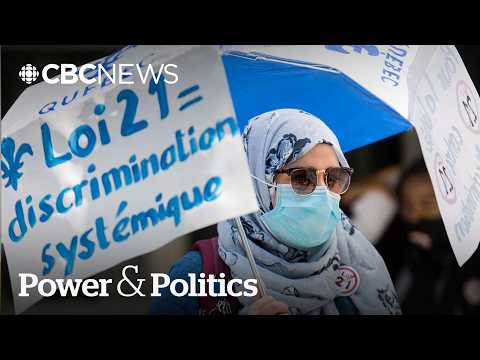
Since 2019, Quebec has barred teachers, police officers and other public employees from wearing hijabs, turbans and kippahs at work. On Nov. 27, the Supreme Court of Canada upheld that ban almost in full. The one exception: the law cannot stop elected members of the provincial legislature from taking their seats.

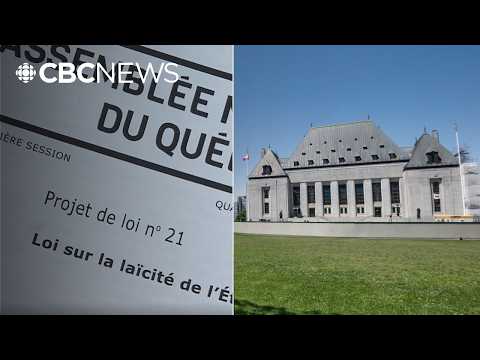
The ruling settled a larger question than Quebec's law. It defined how far any Canadian government can go in using the notwithstanding clause, the Charter provision that keeps a law running even when it violates rights such as freedom of religion. The court said a province can invoke the clause before any judge has ruled, and that courts may still formally declare a law inconsistent with the Charter while it stays in force.

Why it matters

Any Canadian legislature can now shield a law from Charter challenge before a judge rules, and Quebec says it will widen its ban.

Questions about this story

Free account needed to ask — your question is kept and asked for you right after sign-up. Answers are public.

No questions yet — be the first to ask.

Key Indicators

7
Justices who heard the appeal
Seven of the court's nine justices sat on the case, argued over four days in March 2026.
1
Provisions the ban cannot apply to
Section 8 of Bill 21 cannot be applied to members of the National Assembly of Quebec.
4
Justices backing judicial declarations
Four of seven agreed courts may declare a law inconsistent with the Charter even when it stays in effect.
5 years
Maximum life of an override
A notwithstanding clause invocation lasts up to five years and can be renewed; Quebec renewed in 2024.

Voices

Curated perspectives — historical figures and your fellow readers.

Sign up to generate historical perspectives on this story.

People Involved

Organizations Involved

Timeline

June 2019 November 2026

9 events Latest: Today
Tap a bar to jump to that date
  1. New Quebec government elected

    Politics

    The incoming government says it intends to strengthen the law further.

  2. Bill 9 extends the ban further

    Legislation

    Daycare staff are covered, face coverings are barred at public colleges and universities, and prayer locations are restricted.

  3. Bill 94 widens the restrictions

    Legislation

    The province extends the ban toward prayer on school premises.

  4. Quebec renews the override

    Legislation

    The province extends its notwithstanding clause invocation for another five-year term.

  5. Quebec passes Bill 21

    Legislation

    The province bars religious symbols in defined public jobs and invokes the override before any court rules.

Scenarios

1

Quebec extends the religious symbols ban to primary school pupils

Likely Resolves by End of 2027

Discussed by: The Quebec government elected in October 2026, which has said it will strengthen the law

The incoming provincial government campaigned on going further than Bill 21, including a ban on conspicuous religious symbols worn by children in primary school. The Supreme Court's ruling clears the constitutional path: a province can invoke the override preemptively and need not wait for a judge. The question is political, not legal. Any such bill would face the same objections the court's dissent raised about unequal effects on Muslim women and girls.

2

A court formally declares Bill 21 inconsistent with the Charter

Possible Resolves by Q2 2028

Discussed by: Four of the seven justices, who agreed courts hold that power even where the override applies

The court confirmed that judges may issue a declaration of inconsistency while the override keeps the law in force. It made no such declaration itself. A future challenge, or a renewed one, could ask a lower court to put that power to use. The declaration would not change the law's effect. It would put a judicial finding on the record that the law violates Charter rights, which the override cannot erase.

3

Another province passes its own secularism-style public dress ban

Unlikely Resolves by End of 2028

Discussed by: Legal commentators noting the ruling gives legislatures few limits on preemptive override use

The ruling lowers the practical cost of copying Bill 21. A province can now write a dress or symbol restriction, attach an override, and defend it without waiting for a court to find a rights violation first. Alberta has already used the clause in several laws, including one restricting transgender youth. A province outside Quebec adopting a religious symbols ban for public employees would test whether the model travels.

Historical Context

2 moments from history that rhyme with this story — and how they unfolded.

1988

Ford v. Quebec (1988)

The Supreme Court struck down Quebec's ban on English commercial signs, holding that it violated freedom of expression under the newly entrenched Charter. Quebec responded with Bill 178, which kept French-only outdoor signage by invoking the notwithstanding clause.

Then

The signage rules survived court scrutiny by moving behind the override rather than changing to comply.

Now

Ford set how section 33 is read, and the Supreme Court's Bill 21 decision confirms that reading: the override's only limits are the ones written into its text.

Why this matters now

The Bill 21 ruling explicitly relies on Ford, which is why Quebec could keep a law a judge had found incompatible with the Charter.

November 1981 - April 1982

The Charter accord and section 33 (1981-1982)

Provincial premiers made an override of charter rights the price of agreeing to an entrenched bill of rights. The clause was written into the November 1981 accord and took effect when the Charter did, on April 17, 1982. Quebec never signed the agreement.

Then

Canadian governments got a legal tool to keep laws running despite court findings that they violate rights.

Now

For four decades the clause was rarely used. Quebec's 2019 invocation, and Alberta's recent use in several laws, ended that restraint.

Why this matters now

It explains how a law can be found to violate freedom of religion and still operate: the override was designed for exactly that.

Sources

(9)