Pull to refresh
Logo
Daily Brief
Following
Why Ranks Sign Up
Canadian wildfire smoke blankets the United States

Canadian wildfire smoke blankets the United States

Built World

Smoke from more than 800 fires burning across Canada pushes hazardous air into 19 states and over 120 million people

Yesterday: Smoke blankets the United States

Overview

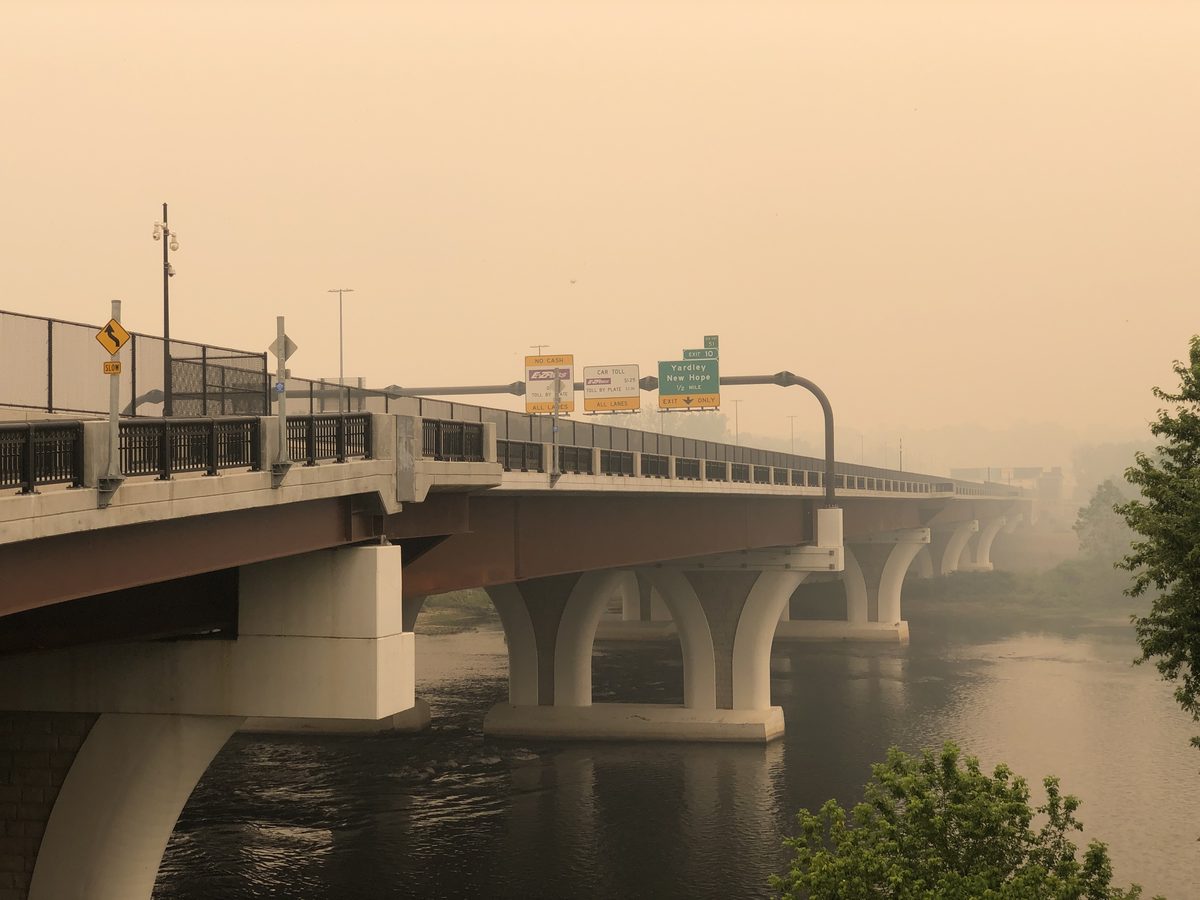
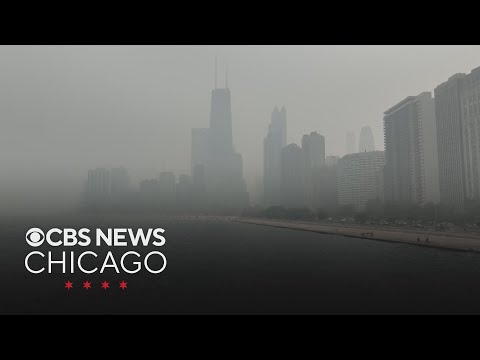
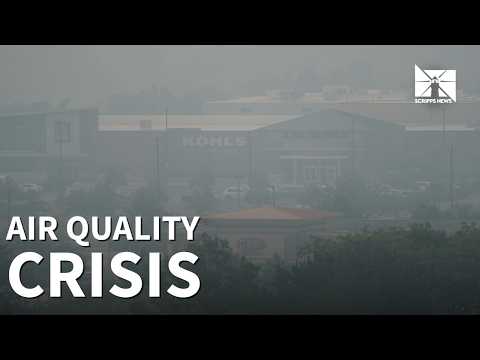
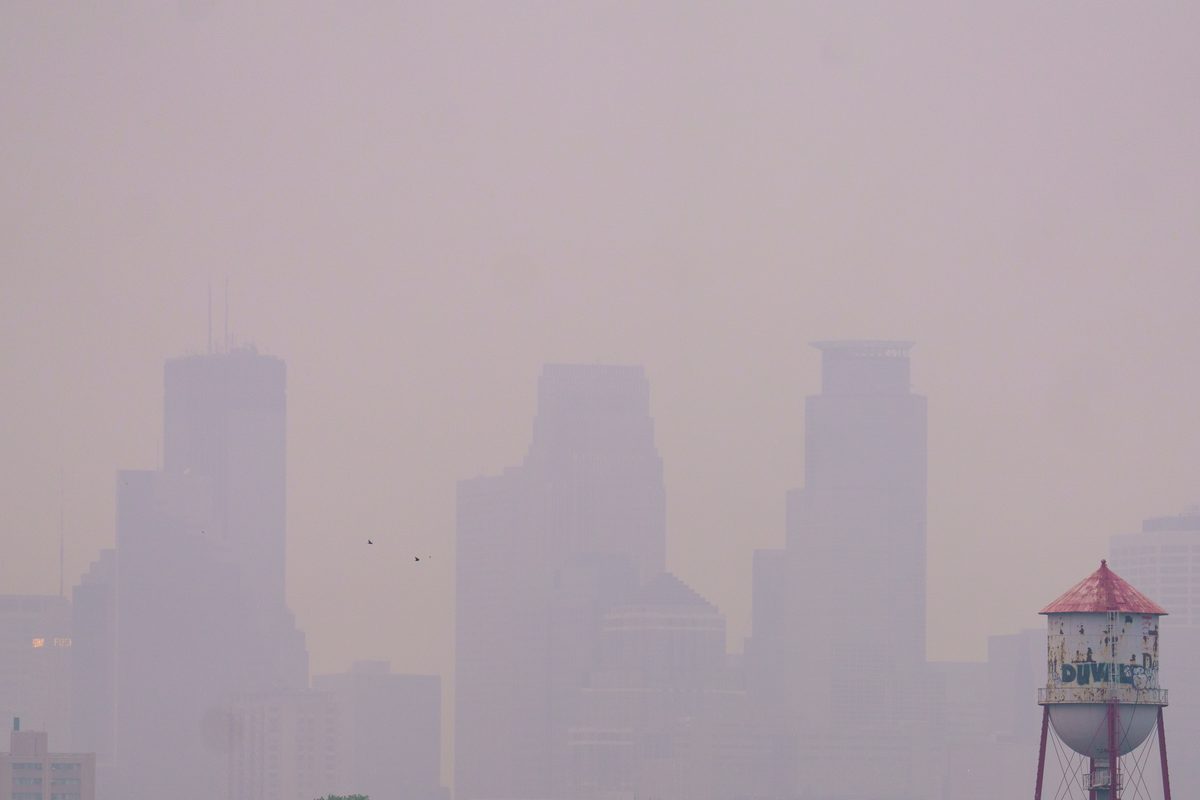
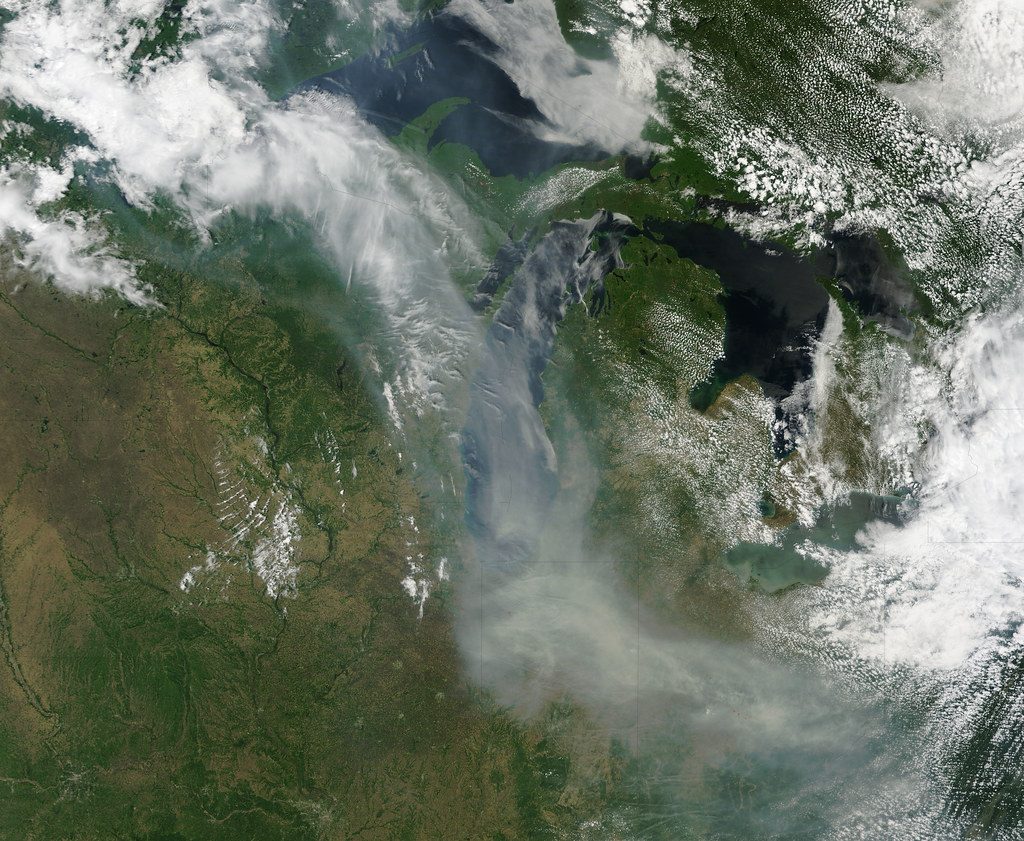
On July 16, smoke from hundreds of Canadian wildfires spread across the northern United States. Air quality alerts covered 19 states and more than 120 million people. Parts of Michigan hit the "hazardous" rating, the worst category the U.S. index has.

The smoke is a wall of fine particles called PM2.5, small enough to reach deep into the lungs and pass into the blood. More than 800 fires are burning in Canada, over 700 of them out of control. Wind decides who breathes it, and this week the wind is pointed south.

Why it matters

Fine-particle smoke raises the risk of asthma attacks, heart problems, and hospital visits for children, older adults, and anyone with lung or heart disease.

Questions about this story

0

how long will it last in Michigan?

The smoke is expected to clear Michigan by Saturday, July 18, when a warm front from the south pushes it north — a roughly 3-day event from Wednesday through Friday.

Why it matters: Michigan hit 'hazardous' — the worst AQI category — meaning even brief outdoor exposure carries real health risk until conditions improve.

  • Upper Peninsula hit AQI Maroon (Hazardous); Lower Peninsula reached AQI Purple (Very Unhealthy) through Thursday and Friday
  • Smoke lifts from mid-Michigan late Friday, then Metro Detroit clears Saturday morning
  • A secondary wave of lighter smoke may drift back Saturday night, but forecasters say it won't match this week's peak intensity
Room for disagreement
  • Forecasters differ on Saturday night: some models show a brief smoke return after the initial clearing, while others keep it clean through the weekend — the outcome depends on how quickly the front stalls.
AI-generated with web search — may be wrong. Check the linked sources.
Key Indicators

800+
Active fires in Canada
More than 700 were rated out of control on July 16.
120M+
People under air quality alerts
Across the Midwest, Great Lakes, and Northeast.
19
States with alerts
From North Dakota to the Carolinas and up to New England.
2.8M hectares
Area burned in Canada so far
About 6.9 million acres across at least eight provinces and two territories.
1,615
Peak air quality index in Minnesota
The U.S. scale tops out at 500; readings above that mean off-the-chart pollution.

Voices

Curated perspectives — historical figures and your fellow readers.

Ever wondered what historical figures would say about today's headlines?

Sign up to generate historical perspectives on this story.

Play

Exploring all sides of a story is often best achieved with Play.

Log in to play. Track your picks, climb the leaderboards. Log in Sign Up
Predict 4 ways this could play out. Contrarian picks score more — points lock when the scenario resolves. Log in to play
Higher or Lower Two numbers from this story. Guess which is bigger. 5 rounds to set a streak. Log in to play
Connections Sixteen names from the news. Find the four hidden groups of four. Log in to play

Organizations Involved

Timeline

May 2026 July 2026

5 events Latest: Yesterday
Tap a bar to jump to that date
  1. Smoke blankets the United States

    Latest Air Quality

    Alerts cover 19 states and more than 120 million people. Parts of Michigan reach the 'hazardous' rating.

  2. Toronto has worst air on Earth

    Air Quality

    Smoke from northwestern Ontario gives Toronto the worst air quality of any major city, prompting an orange alert.

  3. New plumes push south into the U.S.

    Weather

    Fresh smoke drifts into the Midwest and Northeast, worsening air quality into the weekend.

  4. Plane crash kills three crew

    Incident

    Three firefighting crew members die in a plane crash near Fort Simpson, Northwest Territories.

  5. First firefighting death of the season

    Incident

    A 40-year-old firefighter dies battling fires in Nova Scotia as the season opens.

Historical Context

3 moments from history that rhyme with this story — and how they unfolded.

June 2023

Canadian wildfire smoke turns New York orange (2023)

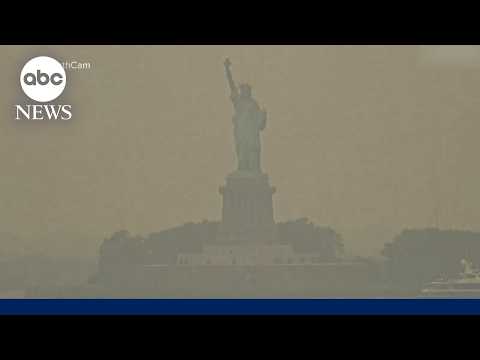
Smoke from Quebec fires blanketed the U.S. Northeast. New York City's sky turned orange, and its air quality was the worst since the 1960s. It briefly ranked as the most polluted major city on Earth.

Then

Schools closed, flights were grounded, and officials told millions to stay indoors.

Now

Three New York City studies found asthma-related emergency visits rose 44% to 82% at the peak. The event became the benchmark U.S. cities now compare new smoke against.

Why this matters now

The 2026 smoke revives the 2023 memory, though forecasters say New York's air this time is not as severe as the orange-sky days.

2025

Canada's record 2025 fire season

Fires again burned across the western and central provinces, forcing large evacuations and sending smoke into the U.S. for weeks. It ranked among Canada's worst seasons for area burned.

Then

Tens of thousands were evacuated, many of them from First Nations communities in remote northern forests.

Now

Repeated heavy seasons pushed Canada to expand Indigenous-led fire response and lean harder on international crews.

Why this matters now

2025 set the bar 2026 is now measured against, and shows how a single bad season can strain firefighting capacity nationwide.

September 1950

The Chinchaga Fire and the 'Great Smoke Pall' (1950)

A fire in British Columbia and Alberta burned across roughly 1.4 million hectares. Its smoke rose high into the atmosphere and drifted over eastern North America and Europe. People saw blue suns and blue moons.

Then

Skies darkened at midday across parts of the U.S. Northeast, and some feared an eclipse or worse.

Now

It remains one of the largest single recorded fires in North America and an early example of smoke traveling thousands of miles.

Why this matters now

It shows this is not new: a distant northern fire can change the sky far away. What has changed is that we now measure the particles and warn people.

Sources

(7)