



Pull to refresh
Logo
CAR-T therapy helps stiff person syndrome patients walk and return to work

CAR-T therapy helps stiff person syndrome patients walk and return to work

New Capabilities

A single infusion of Kyverna's miv-cel produced week-16 walking gains and let all 26 treated patients stop immunotherapy in a phase 2 trial.

Overview

Updated 36 minutes ago

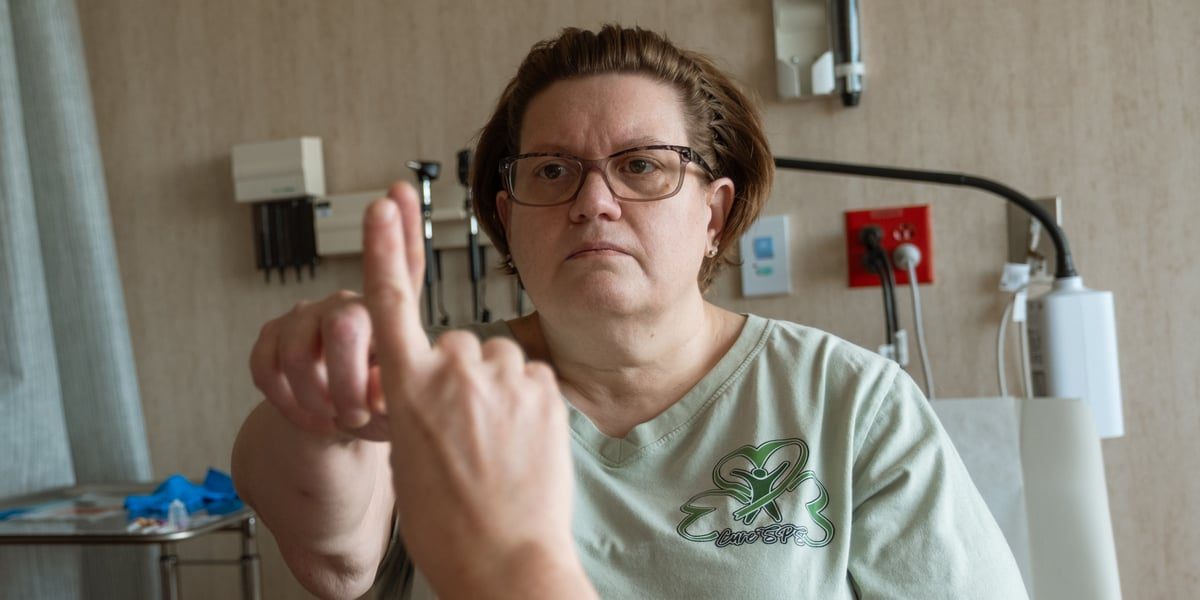
For Lynn Montgomery-Haga, a 25-foot walk once meant reaching for hallway walls. In a phase 2 trial, one infusion of engineered immune cells helped her and other stiff person syndrome patients walk faster, and all 26 treated patients stopped immunotherapy.

The therapy, mivocabtagene autoleucel (miv-cel), targets CD19, a protein on B cells that make antibodies. Depleting those cells appears to reset the immune system. At week 16, the median 25-foot walk time fell by 4.8 seconds, a 45.6% improvement, and researchers are still tracking how long the benefit lasts.

Why it matters

If approved, a one-time cell therapy could replace chronic immunotherapy for a disease that can lock muscles and end careers.

Questions about this story

Free account needed to ask — your question is kept and asked for you right after sign-up. Answers are public.

No questions yet — be the first to ask.

Key Indicators

26
Patients treated in KYSA-8
One enrolled participant was not treated.
45.6%
Median improvement in 25-foot walk at week 16
Median walk time fell from baseline by 4.8 seconds.
8 of 12
Patients who dropped walking aids
Two-thirds of patients who used a cane or walker at baseline no longer needed one at week 16.
92.3%
Low-grade cytokine release syndrome
All cytokine release syndrome cases were grade 1 or 2 and resolved.
Q4 2026
Kyverna's planned FDA submission
The company intends to complete a rolling Biologics License Application in late 2026.

Voices

Curated perspectives — historical figures and your fellow readers.

Sign up to generate historical perspectives on this story.

People Involved

Organizations Involved

Timeline

September 2024 November 2026

5 events Latest: 3 days ago
Tap a bar to jump to that date
  1. Optimist Daily reports return-to-work outcomes

    Latest Media

    The article highlights patients who resumed jobs, hunting and fishing after treatment.

  2. JAMA Neurology publishes week-16 results

    Research

    Walking speed improves by a median 4.8 seconds, and all treated patients stop immunotherapy.

  3. Kyverna targets FDA submission

    Regulatory

    The company plans to complete a rolling Biologics License Application in the fourth quarter of 2026.

  4. Enrollment closes with 27 patients

    Clinical trial

    Twenty-six of the 27 enrolled participants receive the single miv-cel infusion.

  5. KYSA-8 trial begins enrolling

    Clinical trial

    The phase 2 study opens at three U.S. sites for antibody-positive stiff person syndrome.

Scenarios

1

FDA approves miv-cel for stiff person syndrome

Possible Resolves by End of 2027

Discussed by: Kyverna Therapeutics and University of Colorado Anschutz investigators

Kyverna has said it will complete a rolling FDA marketing application in late 2026. A positive review would give patients a one-time option instead of chronic immunotherapy.

2

FDA asks for more data before approval

Possible Resolves by End of 2027

Discussed by: Rambam Health Care Campus neurologist Professor Shelly

The pivotal study was single-arm, open-label and enrolled 26 treated patients. Regulators could require longer follow-up or a randomized trial before clearing the therapy.

3

Longer follow-up shows remissions hold at 12 months

Possible Resolves by Q2 2028

Discussed by: Kyverna Therapeutics and JAMA Neurology investigators

Week-24 data from 16 patients showed walking gains held. The open question is whether the immune reset lasts beyond a year or patients need retreatment.

Historical Context

2 moments from history that rhyme with this story — and how they unfolded.

August 2017

First CAR-T approval (2017)

The FDA approved tisagenlecleucel, a CD19-directed CAR-T therapy, for children and young adults with B-cell acute lymphoblastic leukemia. It was the first gene therapy cleared in the United States.

Then

The treatment produced high remission rates in patients with limited options.

Now

The approval opened the way for CD19 CAR-T in lymphoma and, later, autoimmune disease.

Why this matters now

Miv-cel uses the same CD19 target, but its goal is to wipe out antibody-making B cells rather than cancer cells.

2006

Rituximab for rheumatoid arthritis (2006)

The FDA approved rituximab, a CD20-directed antibody that depletes B cells, for rheumatoid arthritis.

Then

It gave patients another option when standard drugs did not control their disease.

Now

B-cell depletion became a standard strategy in some autoimmune diseases, though responses vary.

Why this matters now

Miv-cel pushes B-cell depletion further, using engineered T cells to seek a deeper, temporary immune reset.

Sources

(9)