
Pull to refresh
Logo
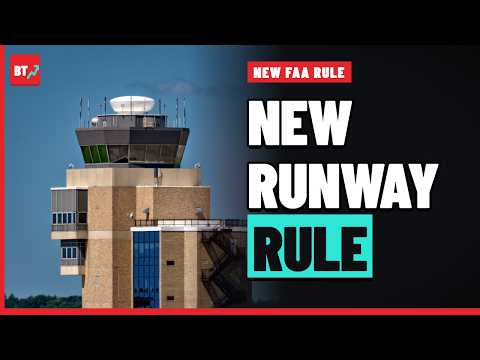
FAA requires dedicated supervisors for 'line up and wait' as Thanksgiving travel peaks

FAA requires dedicated supervisors for 'line up and wait' as Thanksgiving travel peaks

Rule Changes Chicago, IL local

The nationwide directive lands 11 days after a telecom failure halted U.S. flights, and days after staffing and radar outages stopped arrivals at O'Hare.

Overview

Updated 1 hour ago

Starting Tuesday, a controller can clear a departing plane to enter a runway and wait there for takeoff only if a supervisor is on duty and not working another position. The controller handling arrivals and departures cannot simultaneously run a second station.

The Federal Aviation Administration says the rule is about supervision and will not affect airport operations. Controllers warned pilots to expect delays anyway, and the change lands at the start of what the FAA projects as the busiest Thanksgiving travel week in 16 years.

Why it matters

Stricter runway rules could mean longer holiday waits, and the staffing gap behind them is the same one that caused recent ground stops.

Last Monday's email for Chicago, IL

Sent Nov 23. It carried:

Get next Monday's: one short email a week. Free. Unsubscribe in one click.

Questions about this story

Free account needed to ask — your question is kept and asked for you right after sign-up. Answers are public.

No questions yet — be the first to ask.

Key Indicators

1.67M
Passengers expected at O'Hare
Projected for Nov 24-30, a 7.2% increase and a Thanksgiving-week record for the airport.
417,000
Flights forecast over nine days
The FAA's 2026 holiday forecast, with more than 52,000 flights expected on the Tuesday alone.
12,000
Cancellations after Nov 13 ground stop
The nationwide halt after a telecom failure was the longest since September 11, 2001.
47 min
Average delay after Tuesday's O'Hare ground stop
An O'Hare radar equipment failure halted inbound flights for part of the afternoon.
860,000
Annual takeoffs and landings at O'Hare
Airports Council International ranked O'Hare first globally for aircraft movements.

Voices

Curated perspectives — historical figures and your fellow readers.

Sign up to generate historical perspectives on this story.

People Involved

Organizations Involved

Timeline

5 events Latest: Yesterday
Tap a bar to jump to that date
  1. FAA requires a dedicated supervisor for 'line up and wait'

    Latest Rule Change

    The directive bars controllers from clearing a plane onto a runway to wait for takeoff while working a second position, and requires a supervisor with no other duties to oversee the procedure.

  2. Radar equipment outage triggers another O'Hare ground stop

    Disruption

    An equipment failure linked to an O'Hare ground radar halted inbound flights for part of the afternoon; delays averaged 47 minutes once the stop lifted.

  3. Staffing shortage grounds flights bound for O'Hare

    Disruption

    The FAA held flights at their departure airports for about 90 minutes because of a controller staffing issue at Chicago's air traffic facilities.

  4. Delta automation failure delays 1,600 flights

    Disruption

    A Delta Air Lines system failure triggered a ground stop for flights bound for Atlanta and delayed more than 1,600 flights nationwide.

  5. Telecom failure halts U.S. flights for more than four hours

    Disruption

    A telecommunications failure cut radar and aircraft communications, forcing a nationwide ground stop that led to roughly 12,000 cancellations.

Scenarios

1

Departure queues grow through the holiday, but the directive holds

Likely Resolves by Dec 1, 2026

Discussed by: Air traffic controllers heard on recorded frequencies and aviation analysts quoted in local coverage

Controllers at busy towers lose a tool they use to sequence departures quickly. Planes wait longer on taxiways instead of on the runway, and O'Hare and Midway absorb the change with longer departure queues rather than mass cancellations. The FAA keeps the directive in place through the travel period.

2

FAA relaxes the supervisor requirement once holiday traffic clears

Possible Resolves by Q1 2027

Discussed by: Aviation analysts who note the agency gave no specific incident as the trigger for the change

The directive was issued without the FAA identifying a safety event that prompted it. If delays at major hubs draw airline and political pressure, the agency could narrow its scope or allow controllers to use the procedure without a standalone supervisor during off-peak periods.

3

The supervisor rule becomes permanent, folded into an air traffic staffing standard

Possible Resolves by End of 2027

Discussed by: Transportation officials who have framed the week around modernizing the air traffic system

Rather than treat the directive as a holiday measure, the FAA writes it into standing procedure, tying runway-queueing authority to documented supervision levels. That would make staffing the binding constraint on departure capacity at the busiest towers.

Historical Context

3 moments from history that rhyme with this story — and how they unfolded.

February 1991

USAir Flight 1493 and SkyWest Flight 5569 collide at LAX (1991)

At Los Angeles International Airport, a tower controller working both the local and ground control positions cleared a SkyWest commuter turboprop onto runway 24L to wait. She then cleared a landing USAir 737 for the same runway. The 737 struck the commuter plane on the runway; 34 people died.

Then

The National Transportation Safety Board attributed the collision to the controller's workload and the loss of runway separation, and the accident became a standard case study in why one person should not work two positions during runway operations.

Now

Runway incursion prevention became a standing FAA priority, and the accident is still taught in controller training as the cost of combined positions.

Why this matters now

The new directive targets exactly the condition that preceded the LAX collision: a single controller managing a runway occupied by a waiting aircraft while also handling something else.

August 2006

Comair Flight 5191 crashes after wrong-runway takeoff (2006)

A Comair regional jet departed from the wrong runway at Blue Grass Airport in Lexington, Kentucky, using a short general-aviation strip instead of the main runway. It crashed shortly after liftoff; 49 of the 50 people aboard died.

Then

Investigators found the tower was staffed by a single controller working both ground and local control, with limited rest before the shift. Pilot error was the probable cause; controller fatigue was cited as a contributing factor.

Now

The crash intensified scrutiny of single-controller tower shifts and led to changes in runway-crossing clearances at airports nationwide.

Why this matters now

It is the clearest recent example of what combined controller positions can cost, and it is the staffing practice the FAA's new supervision requirement is meant to constrain.

August 1981

Reagan fires striking air traffic controllers (1981)

More than 11,000 controllers represented by the Professional Air Traffic Controllers Organization walked off the job in an illegal strike over pay and working conditions. President Ronald Reagan gave them 48 hours to return, then dismissed those who did not and decertified the union.

Then

The FAA rebuilt its controller workforce with replacements and supervisors pulled onto position, and flight schedules were cut for months.

Now

The dismissals shaped hiring and staffing for decades, and the resulting experience gap is routinely cited in discussions of controller shortages and mandatory overtime.

Why this matters now

It explains why the FAA has long combined controller responsibilities to cover gaps, the practice the new directive restricts during runway queueing.

Sources

(4)