


Pull to refresh
Logo
Three Tibetan-run schools close in Golog as China tightens language rules

Three Tibetan-run schools close in Golog as China tightens language rules

Rule Changes

Two-month closure wave follows new language and ethnic unity laws restricting minority-language instruction

Yesterday: Radio Free Asia publishes consolidated report on closures

Overview

Updated 1 hour ago

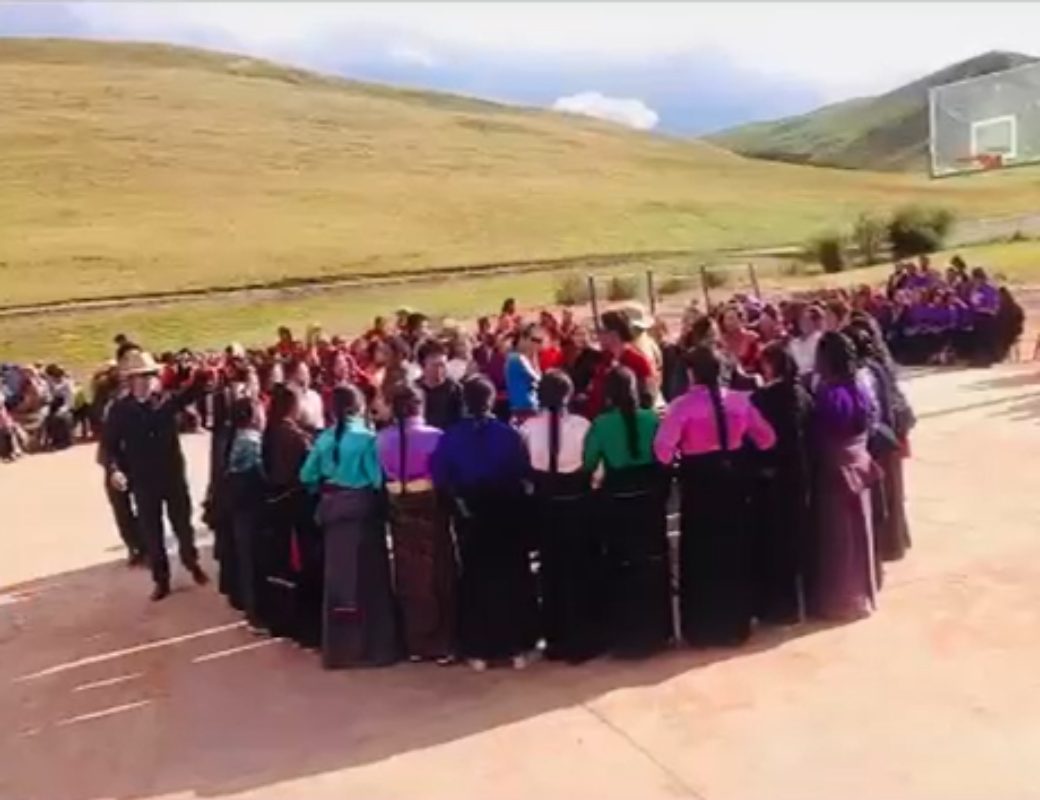
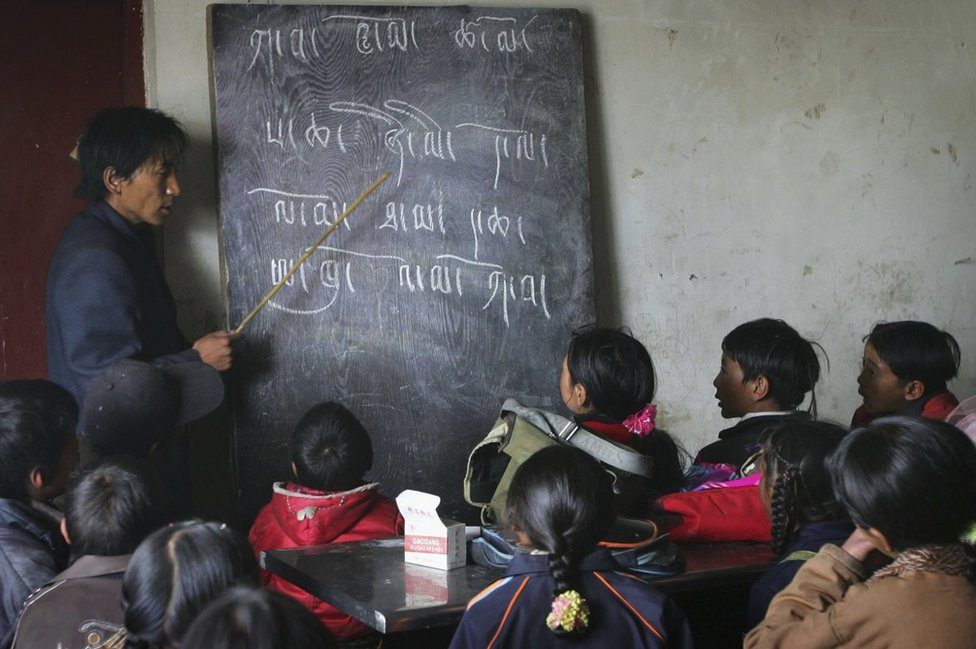
Chinese authorities have closed three Tibetan-run schools in Golog prefecture, Qinghai province, in recent months. The shutdowns removed the main local venues where children learned Tibetan language and culture.

The closures follow two national laws — a revised standard-language law and the Ethnic Unity and Progress Law — that took effect in 2026 and restrict minority-language instruction. Tibetan sources say students are being moved into Mandarin-medium state boarding schools, a policy they fear will weaken Tibetan cultural transmission.

Why it matters

Tibetan children in Golog are losing community schools that taught in their mother tongue, with state boarding schools offering Mandarin-only instruction as the alternative.

Questions about this story

Free account needed to ask — your question is kept and asked for you right after sign-up. Answers are public.

No questions yet — be the first to ask.

Key Indicators

3
Tibetan schools closed since late August 2026
Gangjong Girls' School, Jasag Village Primary School, and Golog Tadra Orphan School all closed within about a month.
450
Students at Gangjong Girls' School at closure
The school had roughly 450 students and 60 teachers when it closed August 28, 2026.
300+
Children served by Tadra Orphan School since 2005
The school housed and educated orphans and children from broken families for two decades.
1,090
Tibetan students at new Golog Tsoshar Middle School
The school opened September 1, 2026 east of the prefecture with 1,200 students enrolled.
1,000,000
Tibetan children in boarding schools per 2023 UN estimate
UN human rights experts described the boarding-school system as involving forced assimilation.

Voices

Curated perspectives — historical figures and your fellow readers.

Ever wondered what historical figures would say about today's headlines?

Sign up to generate historical perspectives on this story.

People Involved

Organizations Involved

Timeline

2005 October 2026

14 events Latest: Yesterday Showing 8 of 14
Tap a bar to jump to that date
  1. Radio Free Asia publishes consolidated report on closures

    Latest Reporting

    English report links closures to education policy and the Ethnic Unity and Progress Law.

  2. Golog Tadra Orphan School forcibly closed

    Closure

    School serving 300+ orphans and disadvantaged children ordered shut in Tabo Village.

  3. Golog Tsoshar Middle School opens in eastern Qinghai

    Policy

    New school enrolls 1,200 students including 1,090 Tibetans from farming and nomadic families.

  4. Jasag Village Primary School shut down

    Closure

    School founded by nomadic families in 1995 closed after being told to teach in standard Chinese.

  5. Golog launches language promotion week

    Policy

    Prefecture government encourages students to learn standard Chinese and emphasizes national unity.

  6. Gangjong Grassland Girls' School closed

    Closure

    School with 450 students and 60 teachers shut down after 21 years. Student fate unclear.

  7. Hungkar Dorje Vocational High School forced to close

    Closure

    School that taught Tibetan language and culture since 2008 shut down permanently.

  8. Sengdruk Taktse School closed in Golog

    Closure

    Authorities shut the school, beginning a wave of private school closures in the prefecture.

  9. State-run Golog Ziling Middle School opens in Xining

    Policy

    Boarding school in Qinghai's capital enrolls Golog students; fosters shared Chinese national identity as stated goal.

  10. Gangjong Grassland Girls' School founded

    Founding

    Ra-Gya Jigme Gyaltsen establishes the girls' school in Ragya Township, Machen County.

  11. Tadra Orphan School opens in Tabo Village

    Founding

    Dr. Tawu Lobsang Palden and his wife fund the school from Germany to serve orphans.

Scenarios

1

Fourth Golog community school closes as language enforcement continues

Likely Resolves by Q1 2027

Discussed by: TCHRD, Central Tibetan Administration, Tibetan sources cited by Radio Free Asia

With the revised language law and Ethnic Unity law in force, authorities continue consolidating education into Mandarin-medium boarding schools. The pattern of closures since 2021 — Sengdruk Taktse, seven more private schools, Hungkar Dorje, then the three in 2026 — points to further shutdowns of community-run schools in Golog and neighboring Tibetan prefectures.

2

UN body issues formal finding on Golog school closures

Possible Resolves by End of 2027

Discussed by: UN human rights experts, TCHRD

UN experts warned in 2023 that roughly one million Tibetan children were in boarding schools they described as forced assimilation. The Golog closures could prompt a treaty body or special procedure to issue a formal statement or report naming the schools, echoing the 2023 warning.

3

Tibetan community education reorganizes informally after closures

Uncertain Resolves by Q2 2027

Discussed by: Tibetan community sources cited by Radio Free Asia

Some community education may continue outside formal school structures. Teachers, families, or monasteries could organize Tibetan-language instruction in smaller, informal settings that fall outside the registration and enforcement system, as has happened in other restricted contexts. Verification would require documented reporting of such arrangements.

Historical Context

2 moments from history that rhyme with this story — and how they unfolded.

1879–1978

US Indian Boarding School Era (1879–1978)

The US government operated hundreds of boarding schools that removed Native American children from their families and communities. Carlisle Indian Industrial School, founded in 1879 by Richard Henry Pratt, popularized the motto 'Kill the Indian, save the man.' Children were forbidden to speak their native languages.

Then

Generations of children lost fluency in their mother tongues and connection to their families.

Now

The 1978 Indian Child Welfare Act ended the removals; a 2022 Interior Department report documented widespread abuse and hundreds of deaths.

Why this matters now

Shows how removing children from their language communities, rather than supporting bilingual education in place, drives the decline of minority languages across generations.

1930s–1950s

Soviet Russification of Minority Education (1930s–1950s)

The Soviet Union made Russian compulsory in schools and allowed or encouraged minority-language schools to switch to Russian-medium instruction. In 1938, Russian became a required subject in all non-Russian schools; the 1958–59 education reform let parents choose Russian-only schooling for their children.

Then

Many minority-language schools closed or converted, and Russian became the dominant language of education and public life.

Now

Several minority languages lost institutional support and declined sharply in use among younger generations; some became endangered.

Why this matters now

Illustrates that shifting instruction to a dominant language through centralized policy, rather than localized shortage, is the mechanism minority communities fear in Golog today.

Sources

(10)