
Pull to refresh
Logo
Italy bans face veils in schools and caps non-Italian students per class

Italy bans face veils in schools and caps non-Italian students per class

Rule Changes

Decree-law caps non-Italian students per class, fines face-veil wear; ratification due in 60 days

Yesterday: Cabinet adopts school decree-law

Overview

Updated 2 hours ago

Italy's cabinet approved a decree-law on Sept. 24 that bans the burqa and niqab in schools and caps at 30% the share of first-year students with weak Italian in any one class. The rules take effect immediately, but parliament must ratify them within 60 days or they lapse.

The cap binds by citizenship and school history rather than language tests alone. Primary-school first years are counted when students lack Italian citizenship, were born abroad, or missed at least two years of nursery school; secondary first years apply a three-year Italian schooling test. The Education Ministry says the aim is to avoid "ghetto classes," and since foreign students are about 11.6% of enrollment nationwide, the limit bites mainly in immigrant-dense neighborhoods.

Meloni framed the package as integration policy, but the timing tracks pressure from her right. National Future, a party founded in February by former army general Roberto Vannacci, polls near 8%, ahead of elections due next year. Opposition parties call the decree an election move aimed at Meloni's right flank.

Why it matters

The decree sets a first-time legal ceiling on immigrant students per Italian classroom and fines families for face veils — parliament has 60 days to ratify.

Questions about this story

Free account needed to ask — your question is kept and asked for you right after sign-up. Answers are public.

No questions yet — be the first to ask.

Key Indicators

30%
Cap on non-Italian students per first-year class
Applies to first-year primary, middle and high school classes from the 2027/28 school year.
€200 – €1,000
Fine range for face coverings at school
Fine applied to the parent when the student is a minor; the veil ban is in force immediately.
11.6%
Foreign students share of Italian enrollment
Aggregate national share, well under the 30% cap — the limit mostly binds concentrated classes.
60
Days parliament has to ratify the decree
A decree-law lapses if not converted into law within 60 days of approval.
8%
National Future party polling share
The rival party pressing Meloni's coalition from the right, per Reuters.

Voices

Curated perspectives — historical figures and your fellow readers.

Ever wondered what historical figures would say about today's headlines?

Sign up to generate historical perspectives on this story.

People Involved

Organizations Involved

Timeline

2010 September 2026

4 events Latest: Yesterday
Tap a bar to jump to that date
  1. Cabinet adopts school decree-law

    Latest Regulation

    Council of Ministers bans burqa and niqab in schools and caps non-Italian students at 30% per first-year class.

  2. Meloni announces school measures

    Statement

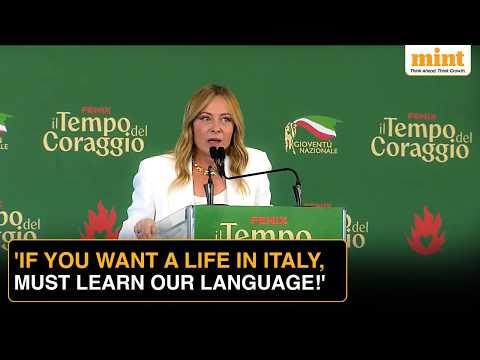
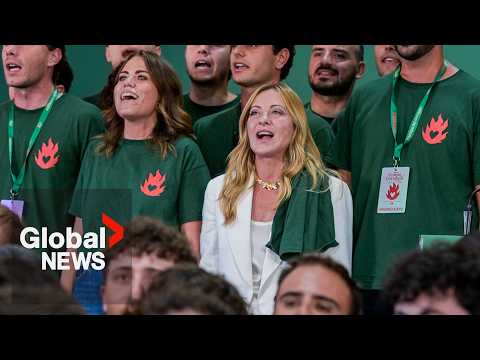
    At her party's youth gathering, Meloni pledges a student cap, Italian lessons for parents and a school veil ban.

  3. Vannacci founds National Future

    Political

    Former army general Roberto Vannacci launches National Future, a party drawing right-wing votes.

  4. Gelmini notice sets 30% guideline

    Regulation

    A ministerial notice fixed a 30% limit on non-Italian pupils as a rule, without force of law.

Scenarios

1

Italian parliament ratifies school decree by November

Likely Resolves by Nov 23, 2026

Discussed by: Reuters, Ansa, BBC News

Meloni's coalition holds a parliamentary majority, and the draft already dropped the most contested reported provision — removing children from families over language barriers. Ratification without major changes is the baseline expectation; the main open question is timing within the 60-day window and any floor amendments from coalition partners.

2

Parliament waters down veil fines or student cap

Possible Resolves by Nov 23, 2026

Discussed by: Il Foglio, opposition parties

The decree's most contested pieces — the up-to-1,000-euro fine on families and the duty to report parents to social services over language barriers — could be revised during ratification. Educators have also criticized the citizenship-based triggers in the cap, which count foreign-born students with strong Italian against the limit.

3

Decree lapses or is struck down in court

Unlikely Resolves by Nov 23, 2026

Discussed by: Italian education unions, administrative courts

If parliament misses the 60-day deadline or courts strike down parts of the decree, the measures lapse. Neither is expected: the 2010 Gelmini notice already set the same 30% as guidance, so the policy architecture exists, and the government has the votes. Administrative fines have historically been the most vulnerable to court review.

Historical Context

3 moments from history that rhyme with this story — and how they unfolded.

March 2004

France bans religious symbols in schools (2004)

President Jacques Chirac pushed a law banning conspicuous religious signs — headscarves, crosses, yarmulkes — from public schools. Muslim girls who refused to remove headscarves were expelled.

Then

The law removed religious dress from French classrooms and was upheld by European courts.

Now

It set the template across Europe for restricting religious dress in state education on secularism grounds.

Why this matters now

Italy's veil ban is the latest in that European line of school-dress rules, though Italy's measure ties the ban to integration policy, not just secularism.

October 2010

France bans the burqa and niqab in public (2010)

France banned face-covering veils in all public spaces, with fines for offenders. The law passed with broad political support and survived an European Court of Human Rights challenge in 2014.

Then

Established that states may restrict full-face veils; several European countries followed.

Now

The French precedent has made full-face veil bans largely durable in law across Europe.

Why this matters now

Italy's ban targets the same garments but only in schools — a narrower scope reflecting schools' role as state-run integration spaces.

2018

Denmark's ghetto package (2018)

Denmark's government imposed mandatory daycare for children in designated neighborhoods, heavier penalties for crime, and other measures meant to break up what it called parallel societies.

Then

The package passed and redefined Danish integration policy, drawing criticism from rights groups.

Now

Other European governments adopted variations on numerical limits and conditionality for immigrant-heavy communities.

Why this matters now

Denmark's package is the closest European precedent for Italy's classroom cap — explicit numerical limits on immigrant concentration as integration policy.

Sources

(10)