

Pull to refresh
Logo
Cleveland starts licensing short-term rentals and capping them per block

Cleveland starts licensing short-term rentals and capping them per block

Rule Changes

Chapter 686B took effect November 28, 2026, with a 10% block limit that council members are already trying to replace

Overview

Updated 50 minutes ago

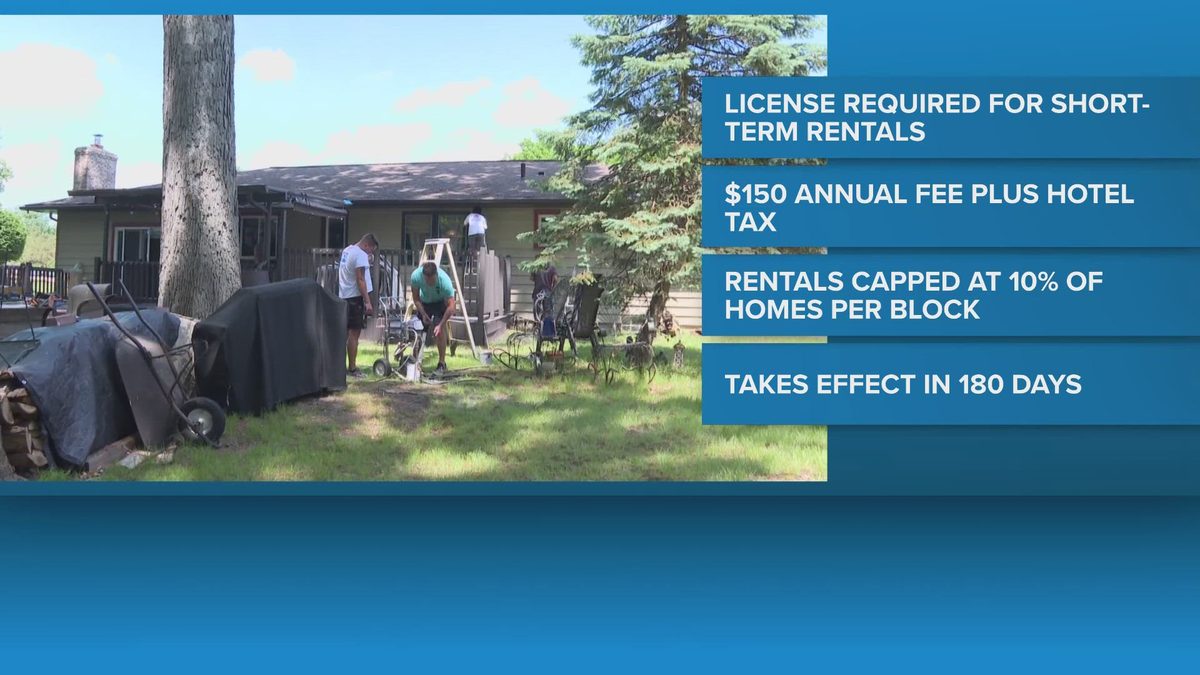
Until this year, Cleveland's only rule for a short-term rental was a stay limit: no more than 90 nights a year, no guest longer than 30 days, under a provision called limited lodging. On November 28, 2026, Chapter 686B took effect. Every short-term rental in the city now needs an annual license, and in residential districts no more than 10% of the units on a block may be short-term rentals.

The license requirement is in force now. City officials say formal enforcement, backed by a vendor tracking about 1,100 listings across five platforms, starts January 4, 2027. Before then, council members are trying to rewrite the density rule itself: a committee advanced an amendment on November 10 that would replace the 10% block cap with a 75-foot buffer between rentals.

Why it matters

About 1,100 Cleveland listings need a $150 license and risk a $5,000 fine; a 10% block cap decides which can operate.

Questions about this story

Free account needed to ask — your question is kept and asked for you right after sign-up. Answers are public.

No questions yet — be the first to ask.

Key Indicators

$150
Annual license fee
Yearly short-term rental license required under Chapter 686B.
10%
Block density cap
Share of units on a block, or in a multi-unit building, that may be short-term rentals in residential districts.
75 ft
Proposed buffer between rentals
Distance between rentals that Ordinance 1282-2026 would substitute for the block cap.
$5,000
Penalty for operating unlicensed
Civil fine under Section 686B.991 for renting without a valid license.
1,100
Listings a city vendor will monitor
Approximate number of listings across five booking platforms that enforcement will track.
180 days
Passage to effective date
Gap between the June 1, 2026 passage of Ordinance 561-2026 and the November 28 start of licensing.

Voices

Curated perspectives — historical figures and your fellow readers.

Sign up to generate historical perspectives on this story.

People Involved

Organizations Involved

Timeline

April 2026 November 2026

6 events Latest: Yesterday
Tap a bar to jump to that date
  1. Amendment on the council agenda

    Legislation

    The emergency ordinance to amend Sections 1 and 5 of Ordinance 561-2026 is listed for the council's evening meeting.

  2. Committee advances the fix-up amendment

    Legislation

    Ordinance 1282-2026 would align licensing with the rental registry, ticket violations at $1,000 a day, and swap the 10% block cap for a 75-foot buffer.

  3. Tax and platform duties start first

    Tax

    Booking agent obligations under Chapter 193 take effect five months before licensing, including quarterly transaction reports for agents that do not collect the tax.

  4. Council passes Ordinance 561-2026

    Legislation

    The ordinance creates Chapter 686B and repeals limited lodging under Section 337.251, with an effective date 180 days out.

  5. Short-term rental ordinance introduced

    Legislation

    The council file for Ordinance 561-2026 is created, launching a rewrite of how Cleveland regulates rentals.

Scenarios

1

Council replaces the 10% block cap with a 75-foot buffer

Likely Resolves by Jan 4, 2027

Discussed by: Building and Housing officials at the November 10, 2026 committee hearing; the Development, Planning and Sustainability Committee approved the change without objection.

Officials argued the percentage cap allowed rentals to bunch on one stretch of a block while a distance requirement spreads them out and is easier to measure. If the emergency ordinance passes, the density limit hosts read about in the ordinance text never operates as written, and zoning enforcement shifts from counting units to measuring lot lines.

2

City issues its first fine against an unlicensed Cleveland host

Possible Resolves by Q2 2027

Discussed by: Department of Building and Housing officials, who said enforcement begins January 4, 2027 with a vendor tracking about 1,100 listings.

A $5,000 civil penalty for renting without a license gives the city a blunt tool. The test is whether the department uses it on a live listing, or whether licenses quietly accumulate while unregistered hosts stay on the platforms.

3

The Board of Zoning Appeals becomes the route around the density limit

Uncertain Resolves by Q2 2027

Discussed by: The variance process written into Section 686B.07(b), which lists nine factors the board may weigh, including parking, prior complaints and tenant support.

Every host who wants more rentals on a block than the limit allows has to argue their case to the Board of Zoning Appeals. A run of granted variances would soften the cap in practice; a run of denials would make the cap bite.

Historical Context

2 moments from history that rhyme with this story — and how they unfolded.

Before November 2026

Limited lodging under Section 337.251 (through 2026)

Cleveland let residents rent part of a home for no more than 30 consecutive days and no more than 90 nights a calendar year, provided the property had working smoke and carbon monoxide detectors. There was no block-level limit on how many such rentals could sit near each other.

Then

Ordinance 561-2026 repealed the section and replaced it with Chapter 686B, which adds licensing, density limits and neighbor notice.

Now

Operators who ran compliant limited lodging for at least a year before the change, with no recorded complaints, are exempt from the new density limit without needing a variance.

Why this matters now

It explains who is grandfathered out of the block cap and why council described the old rules as too thin to manage rentals at scale.

Before 2026

Cleveland's rental registry (before 2026)

The city already required rental properties to register with the Department of Building and Housing, and already required lead-safe certification for many of them. Short-term rentals sat outside that system.

Then

The November 2026 amendment would align short-term rental licensing with the registry, drop a duplicate lead-safe requirement, and limit certificate-of-occupancy rules to commercial conversions.

Now

Licensing becomes part of an existing inspection and registration pipeline rather than a separate office.

Why this matters now

It is the machinery the new license plugs into, and the reason city officials say the buffer rule is easier to enforce than a percentage cap.

Sources

(6)