Anchor

Chest X-ray AI that drafts radiology reports wins FDA breakthrough designation
New CapabilitiesCognita CXR is the first generative model in radiology to get the status; Aidoc's rival tool followed in June
Yesterday: Breakthrough designation confirmed as first for generative radiology AINew here? Follow stories to track developments over time. Create a free account to get updates when stories you care about change.
Overview
Updated YesterdayThe Food and Drug Administration granted breakthrough-device status to Cognita CXR, a generative AI model that reads chest X-rays and drafts the preliminary report a radiologist then reviews. It's the first generative model in radiology to receive the designation. In June, the agency gave the same status to Aidoc's rival tool, First Read.
Traditional imaging AI flags individual findings on a scan. Cognita processes the entire image and writes up comprehensive results, closer to what a human radiologist does. The designation puts it on an accelerated path to market as hospitals face a widening radiologist shortage.
Why it matters
If generative AI that drafts full radiology reports clears FDA review, it could reshape how hospitals handle a growing imaging backlog and radiologist shortage.
Questions about this story
Free account needed to ask — your question is kept and asked for you right after sign-up. Answers are public.
No questions yet — be the first to ask.
Key Indicators
18%
Radiologist efficiency boost
Average interpretation efficiency gain cited in Mosaic's internal clinical validation.
16–65%
Detection improvement range
Improved detection of certain significant chest X-ray findings when radiologists used Cognita CXR.
2
Generative radiology AI devices with breakthrough status
Cognita CXR (March) and Aidoc First Read (June) both received the designation in 2026.
$80M
Cognita acquisition price
Radiology Partners paid $80 million for the Stanford-founded startup in November 2025.
4,000+
Radiologists in Radiology Partners network
Largest radiology practice in the U.S. and the parent of Cognita's maker, Mosaic Clinical Technologies.
Related Media
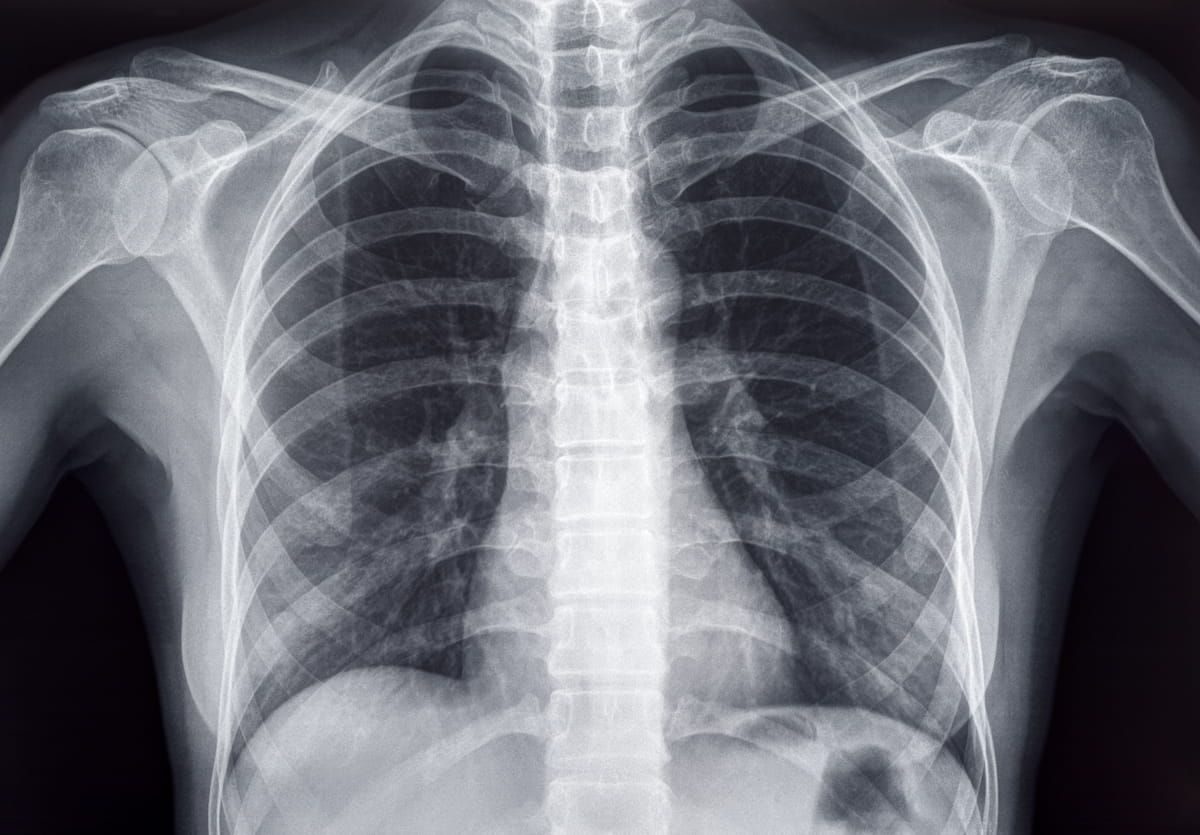
Generative Vision Language Model for Chest X-Ray Gets FDA’s Breakthrough Device Designation

Cognita CXR AI secures U.S. FDA breakthrough device designation | AuntMinnie
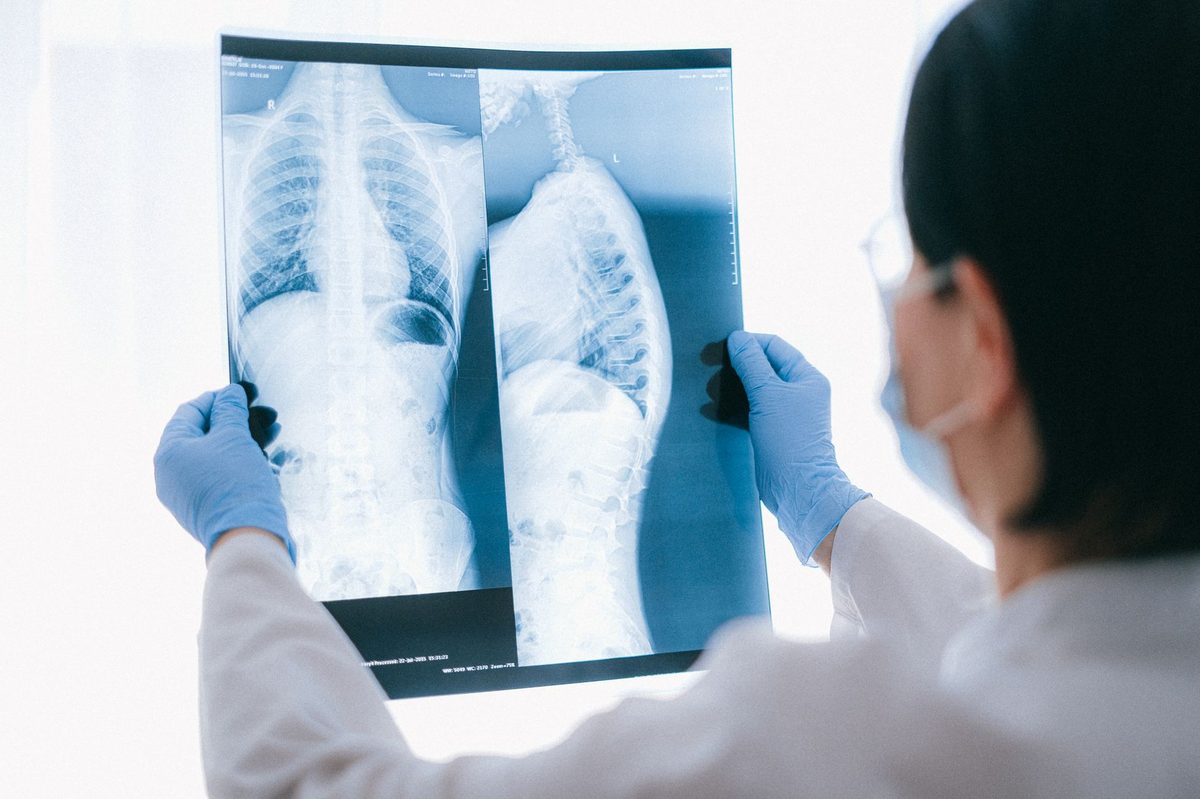
Medical professional analyzing chest x-ray images in a clinical setting for diagnostic purposes.

226 views
1:53
Aidoc Receives FDA Breakthrough Device Designation for AI ...
Aidoc

88 views
1:16
FDA-approved AI tools expanding across oncology and imaging
VJOncology
156 views
48:44
AI Innovations That Reduce Radiology Cognitive Burden
RapidAI
Images from Openverse under Creative Commons licenses. Videos from YouTube.
Voices
Curated perspectives — historical figures and your fellow readers.
Play
Exploring all sides of a story is often best achieved with Play.
Most of these play right now — no account needed. Sign up to save scores, keep a streak, and unlock Debate and Predict.
Log in
Sign Up
Higher or Lower
A number from this story, against one from elsewhere in the news — guess which is bigger, then keep the chain going. 5 rounds, 3 strikes; a miss costs a strike and resets your streak.
Example
Anchor
EU tariff revenue
$52B
Big for this kind of number
Mystery
Pentagon AI contract
?
Round 1
Streak: 0
Mystery
?
Keyboard: ↓/L lower · ↑/H higher
0 pts
Best streak: 0 · Rounds: 0
0 points — sign up to put that on the leaderboard.
Now try on this story
Connections
Sixteen names from the news. Find the four hidden groups of four. Four mistakes max.
Loading today's puzzle…
0/4 groups
Mistakes
Sign up to keep a daily streak — a new puzzle lands every day.
Now try on this story
Exit debate?
Your progress in this debate will be lost.
How it works
- 1 Two AI personas square off on this story.
- 2 You predict who'll win each round — correct picks earn XP.
- 3 One crossfire question is yours to fire. Pick it carefully.
Couldn't generate a topic
Select Your Champions
Choose one persona for each side of the debate
DEBATE TOPIC
Choose personas with different perspectives for a more dynamic debate.
SIDE A (PRO)
Select debater for this side:
No debate personas available right now.
SIDE B (CON)
Select debater for this side:
No debate personas available right now.
VS
Get ready to make your prediction...
Round of
Claim
Evidence
Stakes
Crossfire Answer
Closing Statement
Claim
Evidence
Stakes
Crossfire Answer
Closing Statement
Your Crossfire Question
Generating arguments...
Who's Got This Round?
Make your prediction before the referee scores
The referee scores both sides on
Correct predictions earn +20 XP
· Press 1 or 2 to pick
Evidence
40%
Logic
30%
Detail
20%
Style
10%
Round Results
Your Pick
Not this time
(%)
Overall Score
/10
Your Pick
Not this time
(%)
Overall Score
/10
Set the Crossfire
Pick the question both personas must answer in the final round
Crafting crossfire questions...
Choosing a question earns +10 XP crossfire bonus
🏆
Total XP Earned
Cred Change
Predictions
Debate Oracle! You called every round!
Sharp Instincts! You know your debaters!
The Coin Flip Strategist! Perfectly balanced!
The Contrarian! Bold predictions!
Inverse Genius! Try betting the opposite next time!
XP Breakdown
Base completion
+20 XP
Rounds played ( rounds x 5 XP)
+ XP
Correct predictions ( correct x 20 XP)
+ XP
Crossfire bonus
+10 XP
Accuracy
%
Prediction History
Round
You picked:
✓
✗
Now try on this story
Keep debating to level up your credibility and unlock achievements
People Involved
Organizations Involved
Mosaic Clinical Technologies
Healthcare technology subsidiary
Parent of the Cognita AI division; owns the Mosaic OS platform
Radiology Partners' technology subsidiary that builds AI models plus the workflow infrastructure radiologists use them in.
Cognita
AI research and development unit
AI business unit of Mosaic, developing vision-language models for radiology
Developer of Cognita CXR, a generative vision-language model that interprets chest X-rays and drafts preliminary findings.
Radiology Partners
Radiology practice
Largest U.S. radiology practice; parent of Mosaic and Cognita
National radiology practice with more than 4,000 radiologists in its network.
U.S. Food and Drug Administration
Federal regulatory agency
Granted breakthrough designations to Cognita CXR and Aidoc First Read
The agency's Breakthrough Device Program accelerates development and review of technologies that may improve care for serious conditions.
Aidoc
Radiology AI company
Received breakthrough designation for First Read in June 2026
Developer of First Read, a generative AI tool for chest X-rays that also received FDA breakthrough designation.
Timeline
July 2025 September 2026
5 events
Latest: Yesterday
Tap a bar to jump to that date
-
Breakthrough designation confirmed as first for generative radiology AI
Latest NewsReporting reaffirms Cognita CXR's status as the first generative model in radiology to win the designation.
-
FDA grants breakthrough designation to Aidoc's First Read
RegulatoryA second generative AI chest X-ray tool receives the same status, confirming the category shift.
-
FDA grants breakthrough designation to Cognita CXR
RegulatoryThe first generative AI model in radiology receives the designation for multiple critical chest X-ray indications.
-
Radiology Partners acquires Cognita for $80 million
AcquisitionThe Stanford-founded AI startup joins Radiology Partners' Mosaic division as its AI business unit.
-
Radiology Partners launches Mosaic division
CorporateThe radiology practice founds Mosaic Clinical Technologies as its technology subsidiary.
Historical Context
2 moments from history that rhyme with this story — and how they unfolded.
1998–2013
R2 ImageChecker, first FDA-cleared CAD for mammography (1998)
The FDA cleared R2 Technology's ImageChecker in 1998, the first computer-aided detection system for mammograms. It flagged suspicious regions for radiologists to review and was widely adopted after Medicare began paying extra for CAD in 2001. Roughly 74% of U.S. screening mammograms used it by 2008.
Then
Hundreds of practices installed the systems and billed an extra Medicare code for each exam.
Now
A 2007 study in the New England Journal of Medicine found CAD did not improve cancer detection and increased recall rates. Medicare stopped separate reimbursement in 2013, and CAD use declined.
Why this matters now
The cautionary tale for any radiology AI: an FDA-cleared detection tool can be widely adopted before independent studies reveal it doesn't help. Cognita claims far larger benefits, but the data is still internal.
April 2018
IDx-DR, first autonomous AI diagnostic device (2018)
The FDA granted De Novo authorization to IDx-DR, the first AI system allowed to autonomously detect disease (diabetic retinopathy) without a clinician interpreting the image. A primary care worker could run the exam and get a diagnosis on the spot.
Then
IDx-DR launched in clinics and set a precedent that AI could make diagnostic decisions, expanding what the FDA would authorize.
Now
It opened the door for later autonomous and semi-autonomous AI diagnostics, showing each FDA decision widens the regulatory boundary.
Why this matters now
Just as IDx-DR expanded the FDA's definition of what AI could do in 2018, the Cognita and Aidoc breakthrough designations push the boundary again: AI that drafts an entire report, not just flags a finding.
Sources
(9)Related Stories
FDA clears cardiac MRI AI with self-update built in
New Capabilities
Updated Yesterday
AI systems advance toward autonomous medical diagnosis
New Capabilities
Updated Jun 24
FDA begins charting a regulatory path for generative AI in patient care
Rule Changes
Updated May 30
The race to detect cancer from a blood draw
New Capabilities
Updated Aug 13
OpenEvidence launches Darwin, first medical AI to ace US licensing benchmark
New Capabilities
Updated Yesterday
4DMedical clears Australia for contrast-free lung function imaging
New Capabilities
Updated Jun 29