Anchor

4DMedical clears Australia for contrast-free lung function imaging
New CapabilitiesCT:VQ pulls ventilation and blood-flow maps from a routine chest CT, skipping radioactive tracers and dye
June 29th, 2026: Australia approves CT:VQ for home marketNew here? Follow stories to track developments over time. Create a free account to get updates when stories you care about change.
Overview
Updated Jun 29A patient with breathing trouble usually needs a nuclear medicine scan to see how air and blood move through the lungs. That means radioactive tracers, special cameras, and a clinic that has them. 4DMedical's CT:VQ skips all of it.
On June 29, 2026, Australia's drug and device regulator cleared the software for sale at home. It reads the same data from an ordinary chest CT scan. Hospitals without nuclear medicine units can now get functional lung maps from a machine they already own.
Why it matters
Functional lung diagnostics that once needed nuclear medicine units can now run on any standard CT scanner, widening access for patients far from specialist centers.
Questions about this story
Free account needed to ask — your question is kept and asked for you right after sign-up. Answers are public.
No questions yet — be the first to ask.
Key Indicators
6
Markets cleared
CT:VQ now holds regulatory clearance in the US, EU, UK, Canada, New Zealand, and Australia.
0
Radiotracers or dyes needed
The scan uses no injected contrast and no radioactive tracer.
$150M
Institutional backing raised
4DMedical secured the funding as its US commercial rollout ramped up.
~10 mo
FDA clearance to home approval
US clearance came in September 2025; Australian approval followed in June 2026.
Related Media
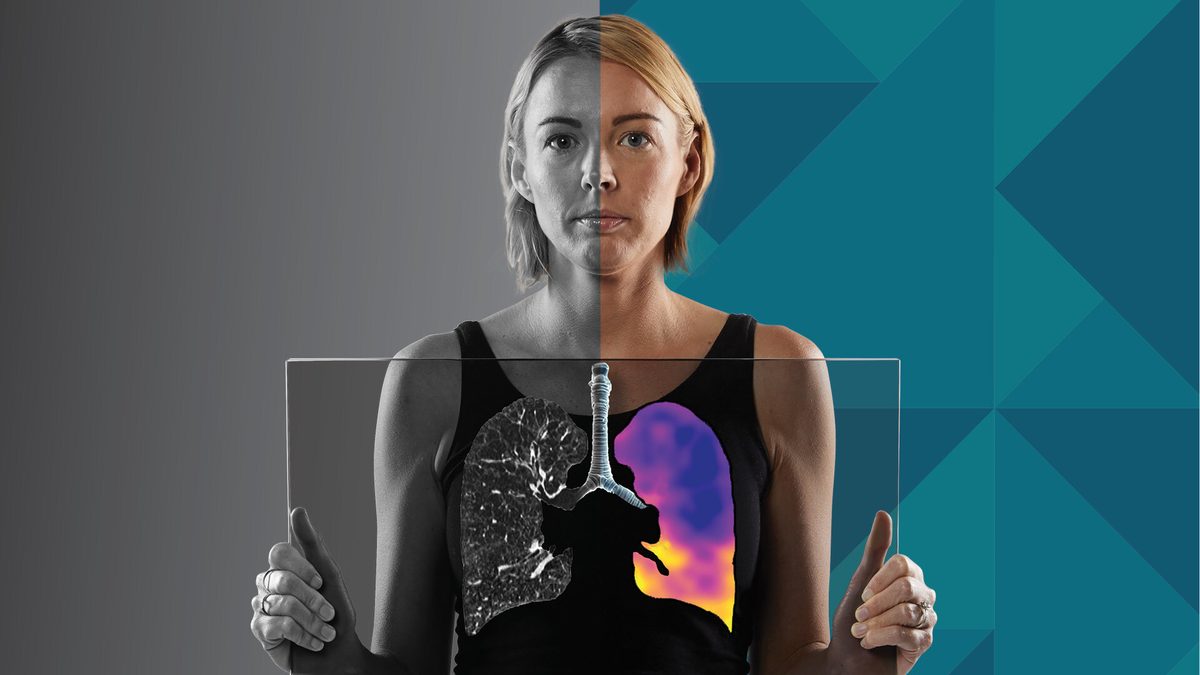
4DMedical Receives TGA Approval for CT:VQ™, Bringing Non-Contrast Ventilation-Perfusion Imaging to Australia | Taiwan News | Jun. 29, 2026 11:04
4DMedical Receives TGA Approval for CT:VQ™, Bringing Non-Contrast Ventilation-Perfusion Imaging to Australia
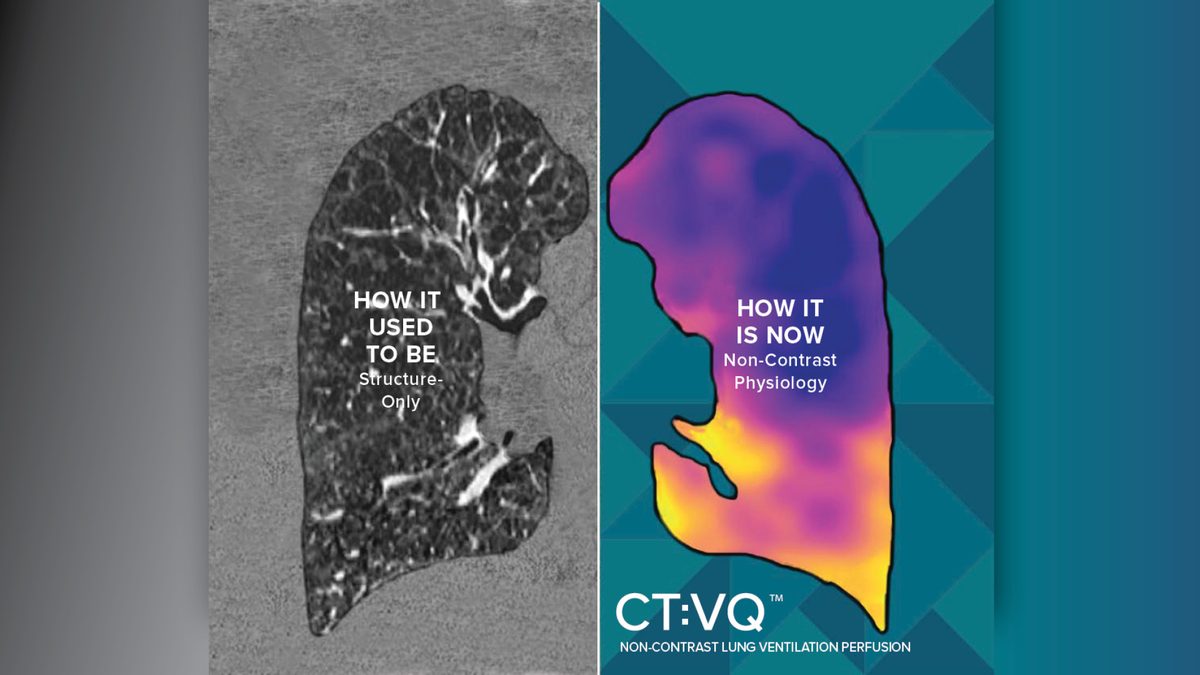
4DMedical's CT:VQ™ Receives FDA 510(k) Clearance; First-and-Only Non-Contrast VQ Imaging - 4DMedical
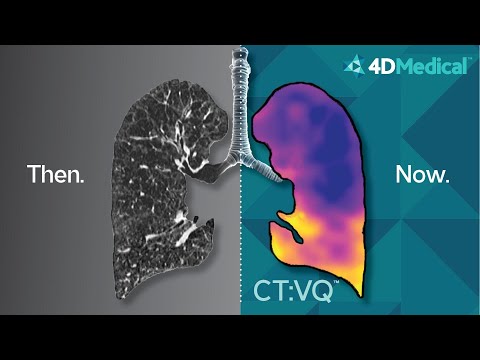
1.2K views
3:06
4DMedical (ASX:4DX): Revolutionizing lung health through ...
4DMedical
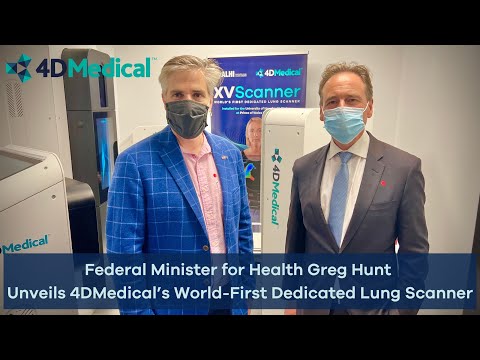
2.1K views
1:17
4DMedical: Unveils World's First 4D Lung Scanner Hardware ...
4DMedical
1.5K views
45:43
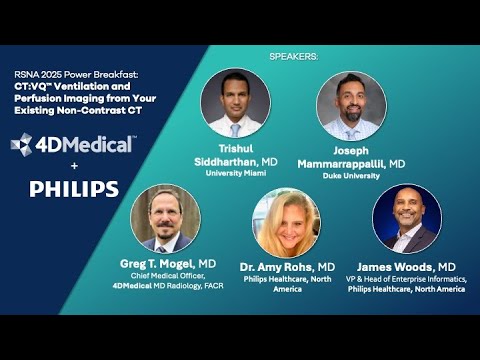
4DMedical-Philips RSNA 2025: CT:VQ™ Ventilation and ...
4DMedical
Images from Openverse under Creative Commons licenses. Videos from YouTube.
Voices
Curated perspectives — historical figures and your fellow readers.
Play
Exploring all sides of a story is often best achieved with Play.
Most of these play right now — no account needed. Sign up to save scores, keep a streak, and unlock Debate and Predict.
Log in
Sign Up
Higher or Lower
A number from this story, against one from elsewhere in the news — guess which is bigger, then keep the chain going. 5 rounds, 3 strikes; a miss costs a strike and resets your streak.
Example
Anchor
EU tariff revenue
$52B
Big for this kind of number
Mystery
Pentagon AI contract
?
Round 1
Streak: 0
Mystery
?
Keyboard: ↓/L lower · ↑/H higher
0 pts
Best streak: 0 · Rounds: 0
0 points — sign up to put that on the leaderboard.
Now try on this story
Connections
Sixteen names from the news. Find the four hidden groups of four. Four mistakes max.
Loading today's puzzle…
0/4 groups
Mistakes
Sign up to keep a daily streak — a new puzzle lands every day.
Now try on this story
Exit debate?
Your progress in this debate will be lost.
How it works
- 1 Two AI personas square off on this story.
- 2 You predict who'll win each round — correct picks earn XP.
- 3 One crossfire question is yours to fire. Pick it carefully.
Couldn't generate a topic
Select Your Champions
Choose one persona for each side of the debate
DEBATE TOPIC
Choose personas with different perspectives for a more dynamic debate.
SIDE A (PRO)
Select debater for this side:
No debate personas available right now.
SIDE B (CON)
Select debater for this side:
No debate personas available right now.
VS
Get ready to make your prediction...
Round of
Claim
Evidence
Stakes
Crossfire Answer
Closing Statement
Claim
Evidence
Stakes
Crossfire Answer
Closing Statement
Your Crossfire Question
Generating arguments...
Who's Got This Round?
Make your prediction before the referee scores
The referee scores both sides on
Correct predictions earn +20 XP
· Press 1 or 2 to pick
Evidence
40%
Logic
30%
Detail
20%
Style
10%
Round Results
Your Pick
Not this time
(%)
Overall Score
/10
Your Pick
Not this time
(%)
Overall Score
/10
Set the Crossfire
Pick the question both personas must answer in the final round
Crafting crossfire questions...
Choosing a question earns +10 XP crossfire bonus
🏆
Total XP Earned
Cred Change
Predictions
Debate Oracle! You called every round!
Sharp Instincts! You know your debaters!
The Coin Flip Strategist! Perfectly balanced!
The Contrarian! Bold predictions!
Inverse Genius! Try betting the opposite next time!
XP Breakdown
Base completion
+20 XP
Rounds played ( rounds x 5 XP)
+ XP
Correct predictions ( correct x 20 XP)
+ XP
Crossfire bonus
+10 XP
Accuracy
%
Prediction History
Round
You picked:
✓
✗
Now try on this story
Keep debating to level up your credibility and unlock achievements
People Involved
Organizations Involved
4DMedical
Medical Technology Company
Maker of CT:VQ; rolling it out across six markets
A Melbourne-based respiratory imaging company that extracts lung-function data from standard scans using software.
Therapeutic Goods Administration
National drug regulator
Granted the approval that cleared CT:VQ for Australian sale
Australia's regulator for medicines and medical devices, which decides what can be sold in the country.
Timeline
May 2020 June 2026
3 events
Latest: June 29th, 2026 · 2 months ago
-
Australia approves CT:VQ for home market
Latest RegulatoryThe TGA approves CT:VQ and adds it to the national register, clearing it for commercial use across Australia. It joins clearances in the US, EU, UK, Canada, and New Zealand.
-
FDA clears CT:VQ in the United States
Regulatory4DMedical wins FDA 510(k) clearance for CT:VQ, billed as the first non-contrast ventilation-perfusion imaging tool drawn from a standard CT scan.
-
First US clearance for XV lung imaging
RegulatoryThe FDA clears 4DMedical's XV LVAS, which maps lung function from X-ray fluoroscopy. It is the platform later products build on.
Historical Context
2 moments from history that rhyme with this story — and how they unfolded.
November 2014
HeartFlow FFR-CT clearance (2014)
HeartFlow won FDA clearance for software that calculates blood-flow significance of coronary blockages from a standard CT scan. It promised to replace an invasive catheter test for many heart patients. The clinical case was strong from the start.
Then
Cardiologists welcomed the tool, but uptake depended on payers agreeing to cover it.
Now
Adoption grew over the following decade as reimbursement expanded, and the company reached a public listing in 2024.
Why this matters now
Like CT:VQ, it extracts functional data from an ordinary CT scan. Its history shows clearance is the start, and reimbursement decides how fast doctors actually switch.
1990s-2000s
CT pulmonary angiography displaces nuclear VQ scans (1990s-2000s)
To diagnose blood clots in the lungs, hospitals long relied on nuclear medicine VQ scans. As CT scanners improved, CT pulmonary angiography became the faster, more available first-line test. Many radiology departments shifted their default within a decade.
Then
CT angiography became the go-to test for suspected pulmonary embolism at most hospitals.
Now
Nuclear VQ scans narrowed to specific cases, such as patients who cannot receive contrast dye.
Why this matters now
It shows lung diagnostics can move from nuclear medicine to CT when CT is more available. CT:VQ pushes that shift further by removing contrast and tracers entirely.