
US finalizes Colorado River plan forcing steep water cuts on three states
Rule ChangesArizona, California and Nevada will give up about 1.25 million acre-feet a year as Lake Mead and Lake Powell sit near record lows
Yesterday: Interior signs final plan and Record of DecisionNew here? Follow stories to track developments over time. Create a free account to get updates when stories you care about change.
Overview
Updated YesterdayFarmers and cities across the Southwest just learned how much less river water they will get. On August 22, the US Department of the Interior signed rules cutting Arizona, California and Nevada by about 1.25 million acre-feet a year, roughly 21% of their Colorado River supply. Arizona takes the deepest cut.
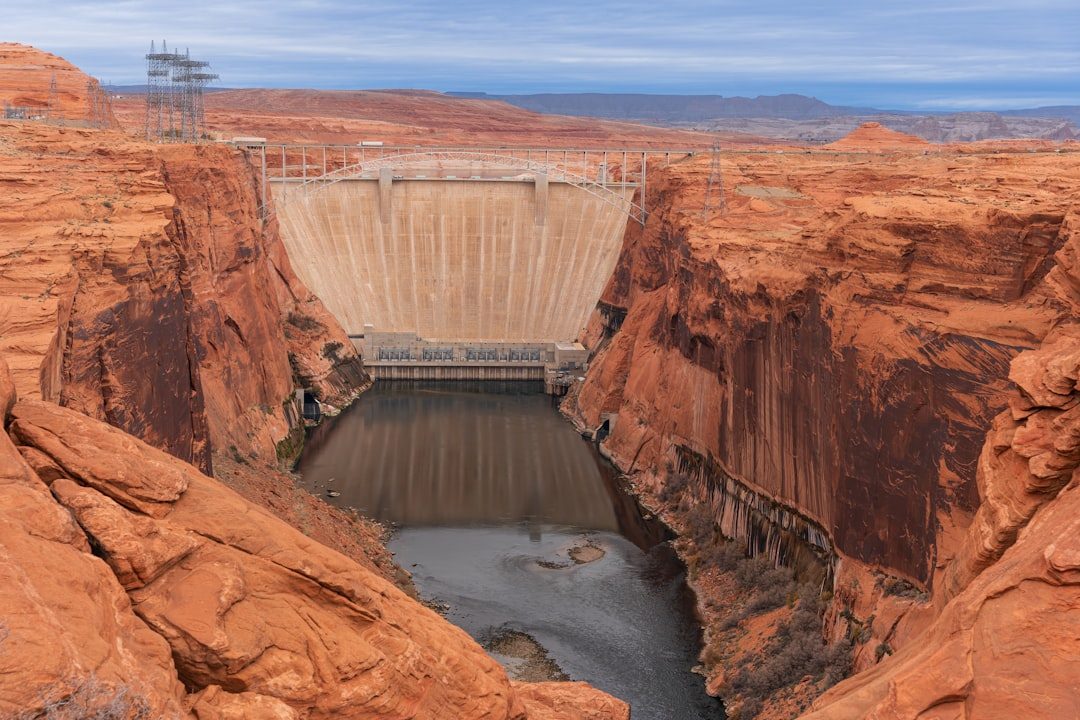
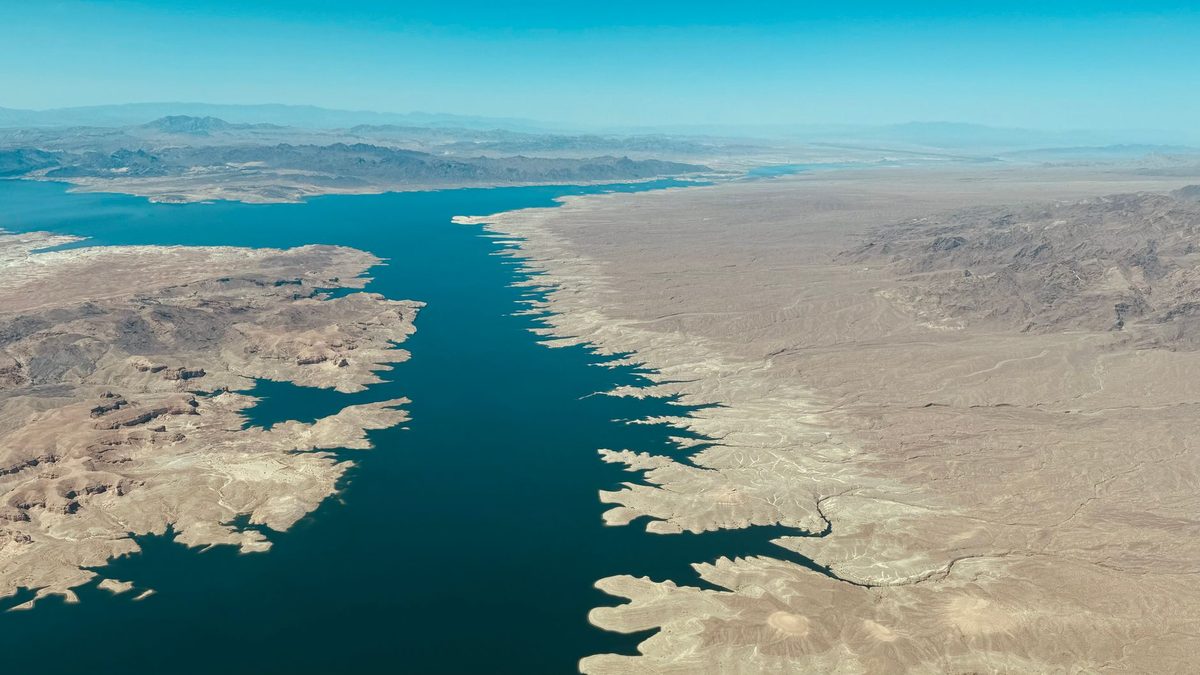
The river feeds about 40 million people. Its two biggest reservoirs, Lake Mead and Lake Powell, have dropped to near record lows. Seven states spent three years failing to agree on who should give up water, so the federal government wrote the rules itself. They take effect October 1.
Why it matters
Cities and farms from Phoenix to Southern California must now run on less river water, and future cuts could nearly double if the reservoirs keep falling.
Questions about this story
Free account needed to ask — your question is kept and asked for you right after sign-up. Answers are public.
No questions yet — be the first to ask.
Key Indicators
Voices
Curated perspectives — historical figures and your fellow readers.
Play
Exploring all sides of a story is often best achieved with Play.
WHO SAID WHAT?
Can you match the quotes to the right people?
- points for each correct match.
- time bonus when you answer in under seconds.
- streak bonus once you hit correct in a row.
— Who said this?
Tip: press 1– to answer.
points — sign up to put that on the leaderboard.
Higher or Lower
A number from this story, against one from elsewhere in the news — guess which is bigger, then keep the chain going. 5 rounds, 3 strikes; a miss costs a strike and resets your streak.
Keyboard: ↓/L lower · ↑/H higher
0 points — sign up to put that on the leaderboard.
Timeline
Order five events from this story, oldest at top. Each in the right slot scores 1 — neighbours within one slot count too. Your previous result — green ✓ for exact slots, yellow ~ for off by one. Cards now in true chronological order.
Sign up to save your score and track a streak across stories.
Connections
Sixteen names from the news. Find the four hidden groups of four. Four mistakes max.
Sign up to keep a daily streak — a new puzzle lands every day.
Exit debate?
Your progress in this debate will be lost.
- 1 Two AI personas square off on this story.
- 2 You predict who'll win each round — correct picks earn XP.
- 3 One crossfire question is yours to fire. Pick it carefully.
Couldn't generate a topic
Select Your Champions
Choose one persona for each side of the debate
DEBATE TOPIC
Choose personas with different perspectives for a more dynamic debate.
Select debater for this side:
No debate personas available right now.
Select debater for this side:
No debate personas available right now.
Who's Got This Round?
Make your prediction before the referee scores
The referee scores both sides on
Round Results
Set the Crossfire
Pick the question both personas must answer in the final round
Debate Oracle! You called every round!
Sharp Instincts! You know your debaters!
The Coin Flip Strategist! Perfectly balanced!
The Contrarian! Bold predictions!
Inverse Genius! Try betting the opposite next time!
XP Breakdown
Prediction History
People Involved
Organizations Involved
The federal department that manages the dams and reservoirs on the Colorado River.
The federal water agency that runs Lake Powell and Lake Mead day to day.
Timeline
November 1922 August 2026
-
Interior signs final plan and Record of Decision
Latest Rule ChangeSecretary Burgum makes the cuts binding, setting 2027-2028 rules and a 10-year framework through 2036. New operations begin October 1.
-
Lake Mead and Lake Powell hit record lows
MilestoneCombined storage falls below any level seen since before Lake Powell began filling in the early 1960s.
-
Federal plan released for public review
ProposalInterior proposes concentrating cuts on the three Lower Basin states, drawing reactions from 'encouraged' to 'draconian.'
-
First federal shortage declared
Rule ChangeThe government declares the river's first official shortage, triggering mandatory 2022 cuts for Arizona and Nevada.
-
Drought Contingency Plan signed
AgreementStates agree to voluntary extra reductions to slow the reservoirs' decline as drought deepens across the basin.
-
Interior adopts interim shortage guidelines
Rule ChangeThe states agree to tiered cuts tied to Lake Mead's level, mostly hitting Arizona and Nevada first. These rules expire at the end of 2026.
-
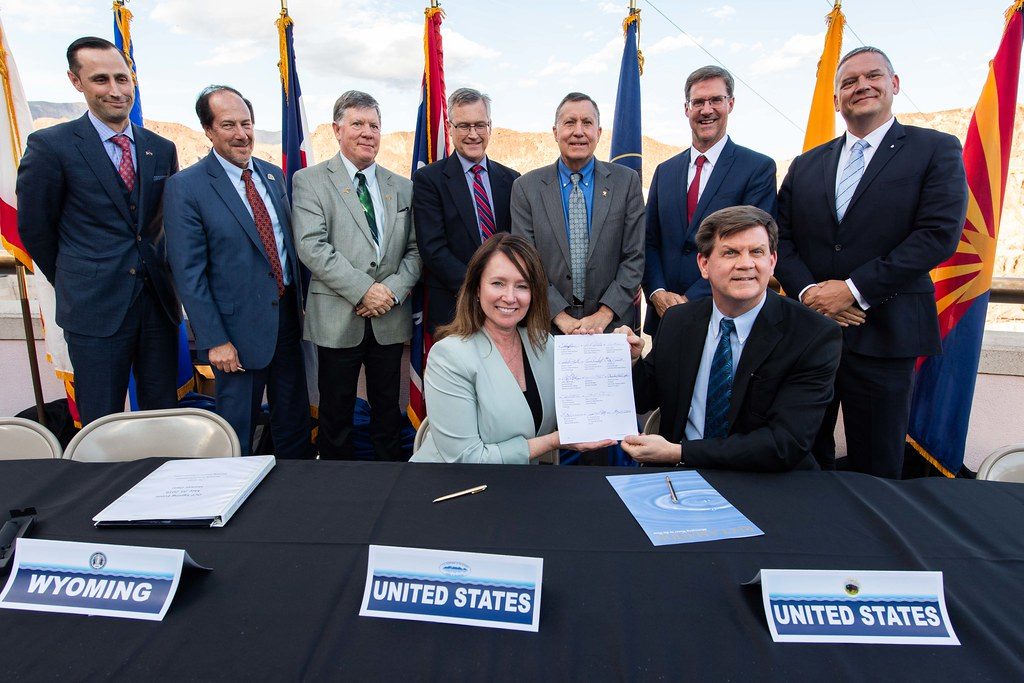
States sign the Colorado River Compact
AgreementSeven states split the river between an Upper and Lower Basin, each promised 7.5 million acre-feet a year. The flow estimates came from unusually wet years.
Historical Context
3 moments from history that rhyme with this story — and how they unfolded.
Colorado River Compact (1922)
Seven states divided the river at Lees Ferry, promising 7.5 million acre-feet a year to each basin. Negotiators relied on flow records from some of the wettest years ever measured, so they promised more water than the river reliably carries.
The deal let the Southwest build dams, farms and cities on the assumption of abundant water.
The over-allocation baked in a structural shortfall that every later drought has exposed.
The 2026 cuts are the bill coming due on a river that was divided as if it held more water than it does.
Drought Contingency Plan (2019)
Facing the threat of federal action, the seven states negotiated voluntary extra cuts to keep the reservoirs from crashing. They chose a shared deal over an imposed one, narrowly beating a federal deadline.
The plan slowed the reservoirs' decline for a few years.
It showed consensus was possible, a precedent this year's negotiators failed to repeat.
In 2026 the states could not agree, so the outcome they avoided in 2019, federal imposition, is what they got.
First federal shortage declaration (2021)
With Lake Mead at record lows, the government declared the river's first official shortage. Mandatory 2022 cuts hit Arizona hardest, reducing the Central Arizona Project supply to farms near Phoenix and Tucson.
Arizona farmers fallowed fields as their junior water rights were cut first.
It established that Washington would enforce cuts by reservoir level, not wait for a crisis vote.
The 2026 plan extends the same logic, but on a much larger scale and across all three Lower Basin states.
