
Pull to refresh
Logo
Lake Powell hits record low amid Colorado River drought

Lake Powell hits record low amid Colorado River drought

Built World

The nation's second-largest reservoir keeps sinking below its April 2023 mark, threatening hydropower and water deliveries for 40 million people

Today: Record-low levels reported

Overview

Updated 6 hours ago

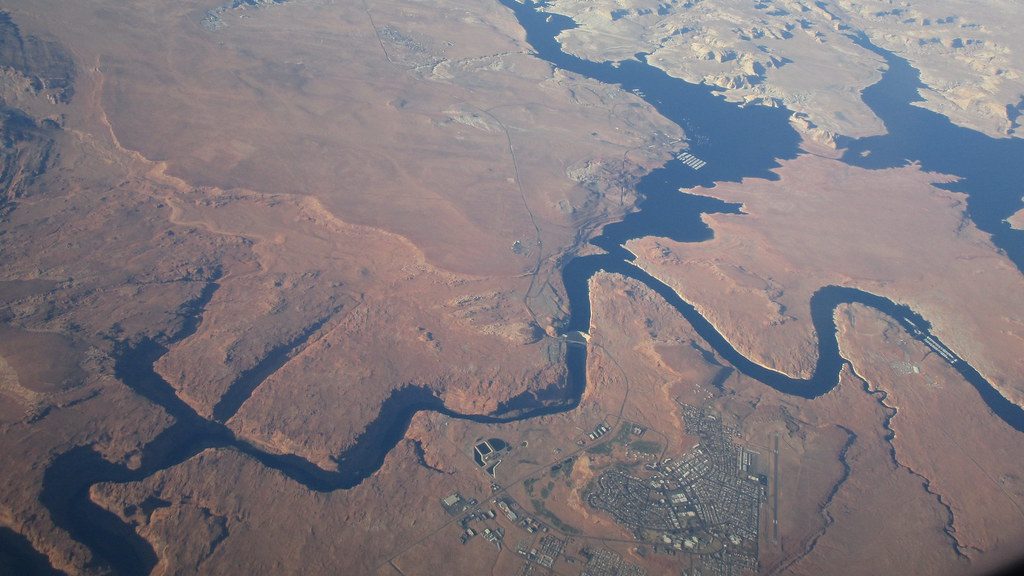
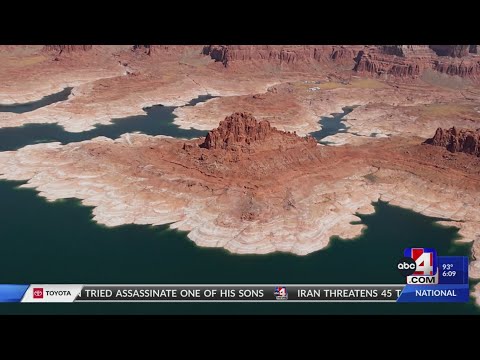
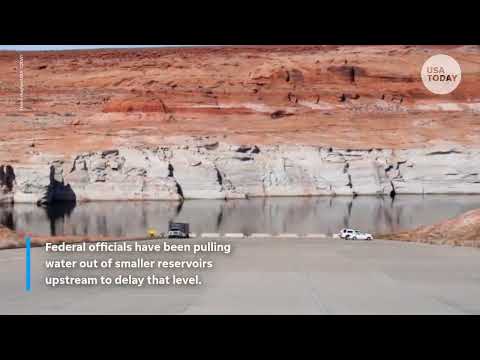
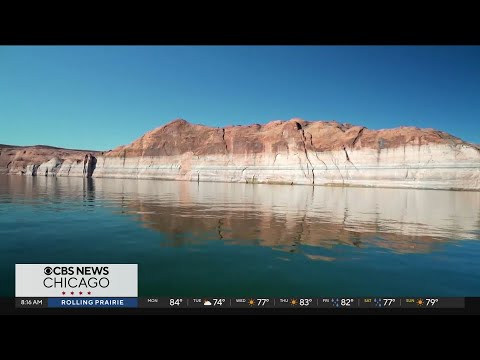
Lake Powell, the second-largest reservoir in the United States, has fallen to its lowest level on record. The surface dropped below the April 2023 mark on August 15 and kept sinking through early September, when it sat at 3,517.24 feet.

A dry, warm winter left the Upper Colorado Basin with little snow to melt into the river that feeds the lake and then Lake Mead downstream. The system supplies water and power to more than 40 million people across the Southwest, from Denver to Los Angeles.

Why it matters

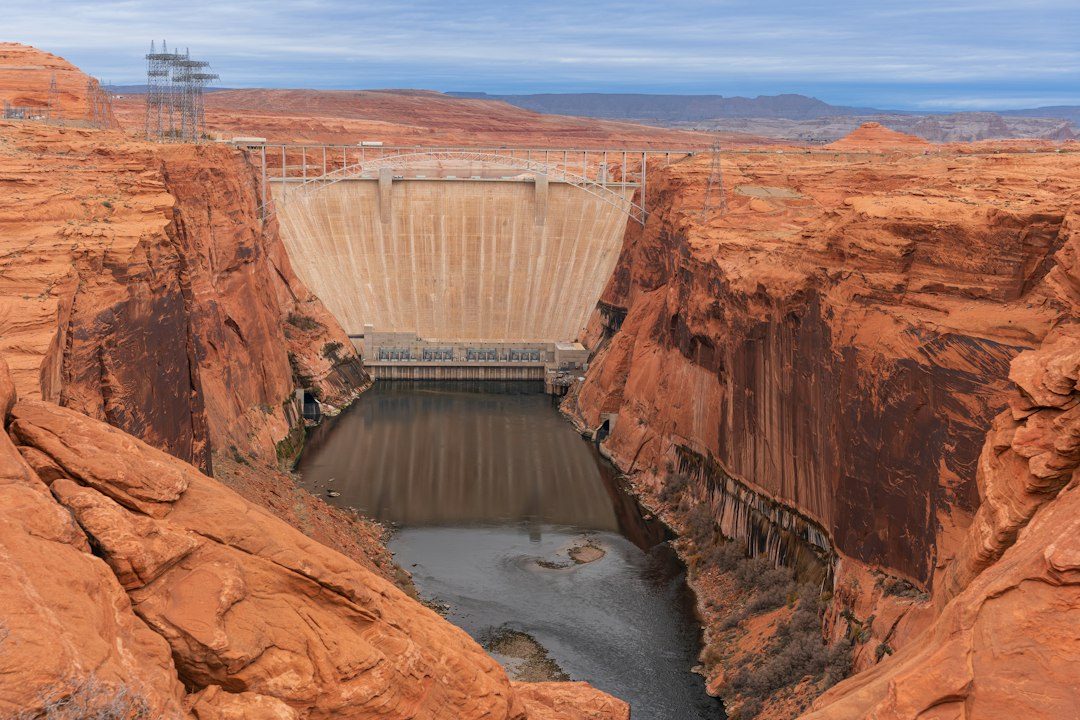
If the lake falls below 3,490 feet, Glen Canyon Dam's turbines stop and water deliveries for 40 million people face steep cuts.

Questions about this story

Free account needed to ask — your question is kept and asked for you right after sign-up. Answers are public.

No questions yet — be the first to ask.

Key Indicators

3,517 ft
Lake elevation on September 10, 2026
Below the previous record of 3,519.92 feet set in April 2023.
3,490 ft
Minimum power pool elevation
Below this, Glen Canyon Dam cannot generate hydroelectric power effectively.
22%
Reservoir capacity
Blue Mesa Reservoir is below 20% full; Flaming Gorge sits near 70%.
40M
People served by the Colorado River
Drinking water and hydropower for cities including Las Vegas, Phoenix and Los Angeles.
5B kWh
Annual hydropower generation at Glen Canyon Dam
Revenue from this power funds conservation projects in Glen and Grand Canyons.

Voices

Curated perspectives — historical figures and your fellow readers.

Ever wondered what historical figures would say about today's headlines?

Sign up to generate historical perspectives on this story.

People Involved

Organizations Involved

Timeline

April 2023 September 2026

7 events Latest: Today
Tap a bar to jump to that date
  1. Record-low levels reported

    Today Report

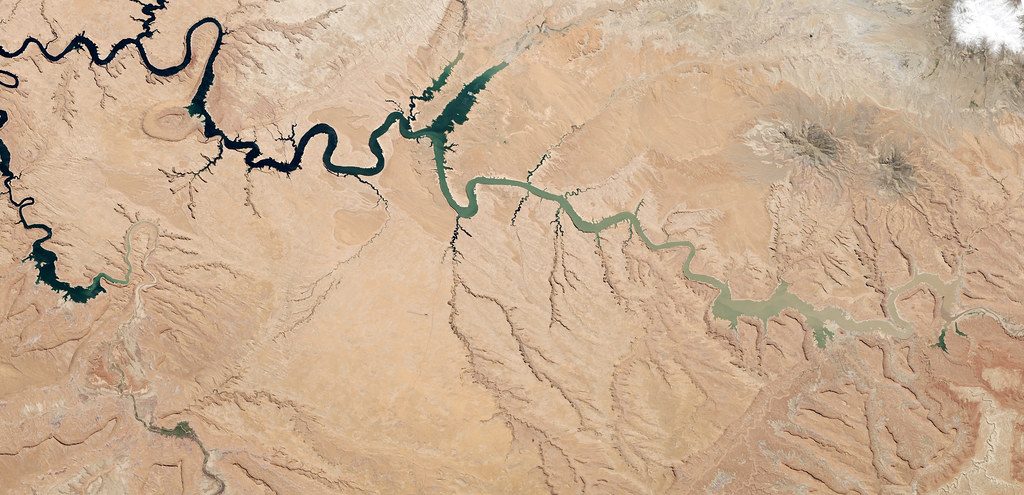
    NASA Earth Observatory and ScienceDaily publish analysis of Lake Powell's record low and the emergency measures taken to stabilize it.

  2. Lake keeps dropping

    Measurement

    Satellite data puts the lake at 3,517.24 feet, still below the 2023 record.

  3. New low of 3,517.97 feet

    Measurement

    Bureau gauge shows elevation falling through the month.

  4. Record low broken

    Measurement

    Lake surface drops to 3,519.91 feet, edging below the April 2023 mark of 3,519.92.

  5. Emergency stabilization begins

    Government action

    Bureau of Reclamation releases Flaming Gorge water into Lake Powell and cuts downstream flows to protect hydropower.

  6. Snow drought confirmed

    Environmental

    Upper Colorado Basin winter snowpack finishes far below average after record warmth.

  7. Previous record low set

    Measurement

    Lake Powell hits 3,519.92 feet, the prior all-time low.

Scenarios

1

Lake Powell drops below minimum power pool

Possible Resolves by Apr 30, 2027

Discussed by: Bureau of Reclamation 24-month study, Denver Gazette reporting

A weak snowpack next winter keeps inflows near the 75-percent-of-average forecast. The lake approaches 3,490 feet by early 2027, forcing Glen Canyon Dam to cut or halt hydropower generation. The Bureau has already said this was possible by August 2026 without its emergency interventions.

2

Winter snowpack rescues the reservoir

Unlikely Resolves by Jun 1, 2027

Discussed by: NASA Earth Observatory, Dr. Jack Schmidt at Utah State University

A wet winter rebuilds the Upper Basin snowpack and spring inflows push the lake back above 3,520 feet. Schmidt cautions that even an exceptional year like 2023 would leave the system in structural crisis, but heavy snow would ease immediate pressure on hydropower and delay cuts.

3

Inter-reservoir transfers expand across the system

Likely Resolves by Q1 2027

Discussed by: Denver Gazette coverage of the Colorado River commission

If Lake Powell drops below 3,500 feet, triggers kick in for releases from the CRISP reservoirs: Blue Mesa, Navajo, Flaming Gorge and Glen Canyon. Blue Mesa is under 20% full, so the Bureau leans on Flaming Gorge, which is near 70% capacity. Further releases would shrink those upstream reserves.

Historical Context

2 moments from history that rhyme with this story — and how they unfolded.

1997-2009

Millennium Drought, Murray-Darling Basin (1997-2009)

Australia's worst drought on record emptied the Murray-Darling system's reservoirs. Cities like Brisbane came within months of running dry, and the federal government capped water diversions and bought back irrigation rights.

Then

Agricultural output fell sharply, cities built desalination plants, and water prices spiked.

Now

Australia permanently restructured its water rights system with binding caps and tradeable entitlements.

Why this matters now

A real-world example of how a river economy adapts to permanent drying, and a model for the structural changes the Colorado River system may need.

August 2021

Lake Mead shortage declaration (2021)

The federal government declared the first-ever Colorado River shortage as Lake Mead fell below 1,075 feet. The trigger forced automatic cutbacks to Arizona, Nevada and Mexico, with Arizona losing about 512,000 acre-feet.

Then

Arizona and Nevada absorbed immediate mandatory cuts; farming bore most of the reductions.

Now

Established the binding trigger system that now shapes every dry year on the river, and set a precedent for cutting deliveries rather than absorbing shortfalls.

Why this matters now

The same threshold logic now applies to Lake Powell: crossing 3,490 feet would force operational changes, and crossing 3,500 feet already triggers releases from upstream reservoirs.

Sources

(8)