Anchor

Texas A&M-Corpus Christi lands NSF grant for confocal microscope
New CapabilitiesAward strengthens STEM research and training across three South Texas institutions
August 4th, 2026: NSF records $625,954 award to TAMU-CCNew here? Follow stories to track developments over time. Create a free account to get updates when stories you care about change.
Overview
Updated 1 hour agoA research-grade confocal microscope is coming to Corpus Christi. The National Science Foundation recorded a $625,954 award to Texas A&M University-Corpus Christi on August 4 to buy the instrument, which images living cells in 3D at high resolution.
The equipment will be shared by TAMU-CC, Del Mar College, and Texas A&M University-Kingsville. That turns one piece of hardware into a training pipeline running from community college to graduate school. South Texas has fewer research-intensive universities than the state's big metro areas.
Why it matters
A research-grade microscope too expensive for one university will now train students and support research across three South Texas institutions, expanding who gets into STEM.
Questions about this story
Free account needed to ask — your question is kept and asked for you right after sign-up. Answers are public.
No questions yet — be the first to ask.
Key Indicators
$625,954
NSF award amount
Federal funding obligated August 4, 2026, to buy the confocal microscope.
3
Institutions sharing the microscope
TAMU-CC, Del Mar College, and Texas A&M-Kingsville gain access.
Track 1
NSF MRI award tier
Track 1 funds equipment acquisition up to $1 million.
Related Media
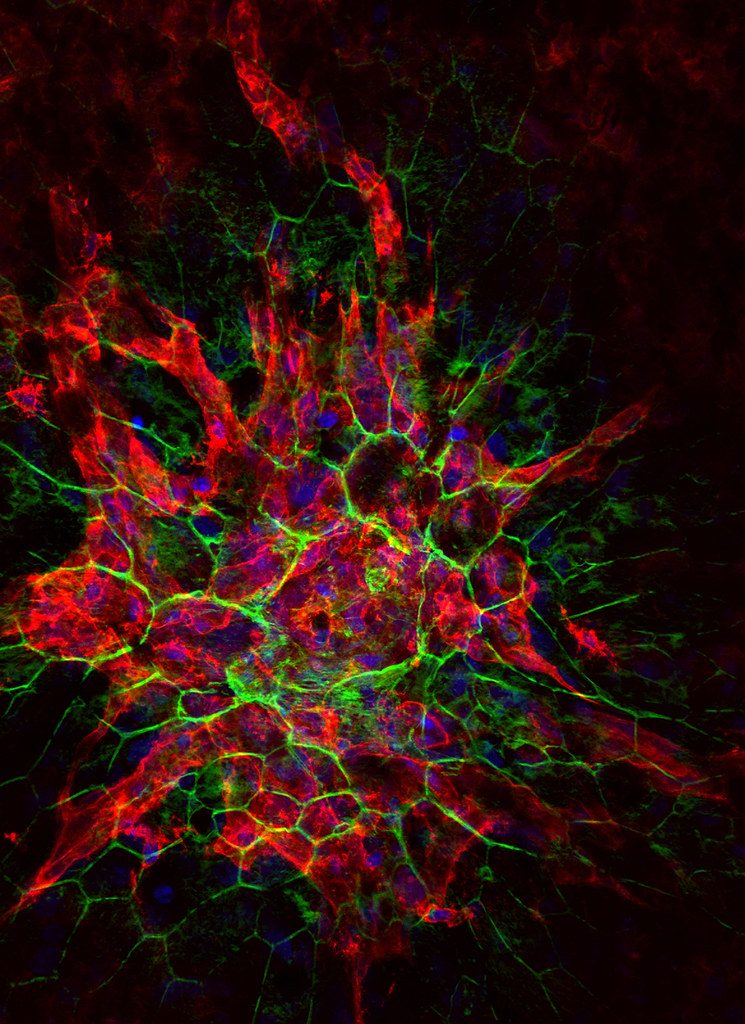
Confocal microscope image of laser-induced choroidal neovascular (CNV)
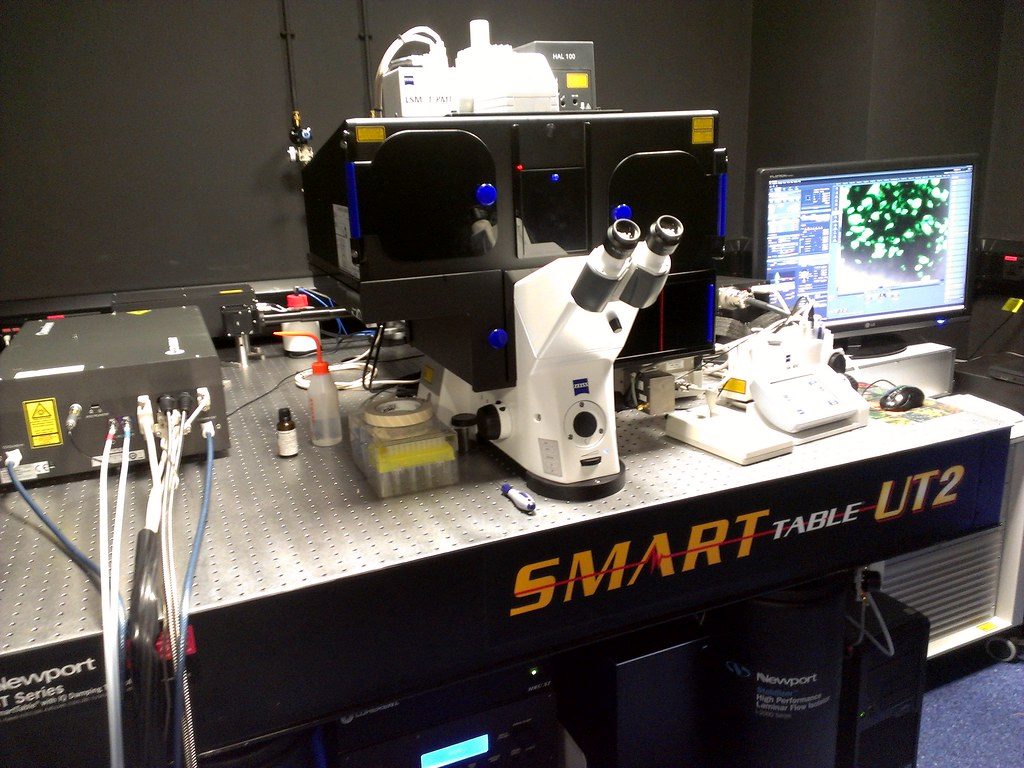
Confocal microscope
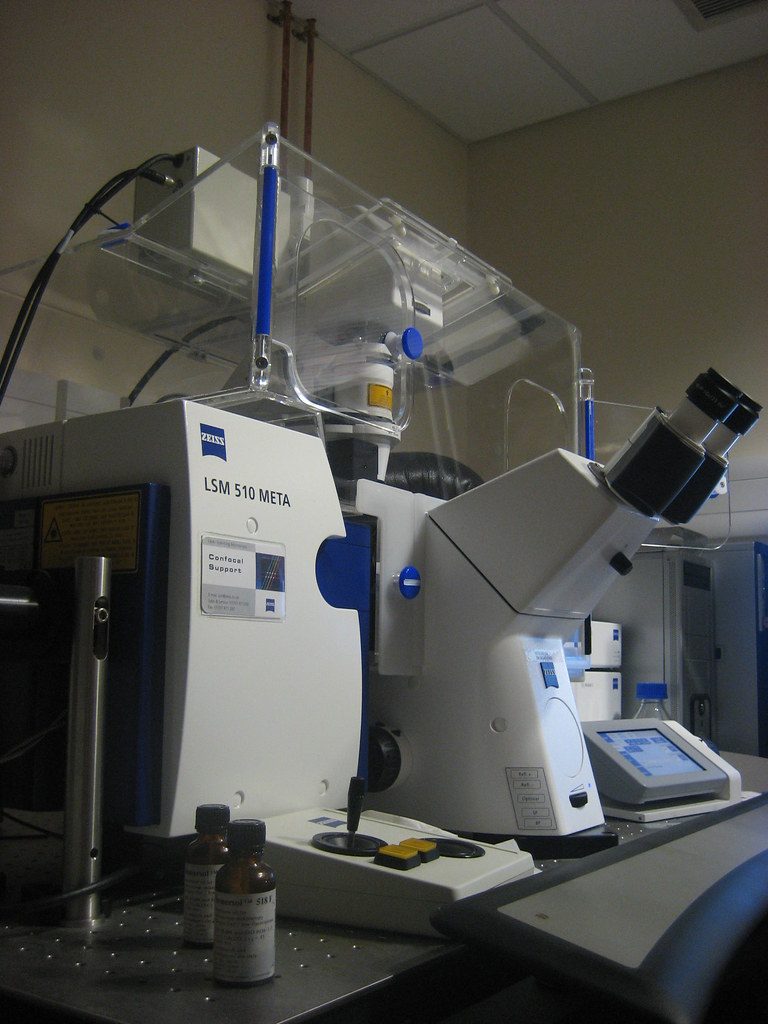
Day 478: Zeiss LSM 510 Confocal Microscope
Images from Openverse under Creative Commons licenses.
Voices
Curated perspectives — historical figures and your fellow readers.
Play
Exploring all sides of a story is often best achieved with Play.
Most of these play right now — no account needed. Sign up to save scores, keep a streak, and unlock Debate and Predict.
Log in
Sign Up
Higher or Lower
A number from this story, against one from elsewhere in the news — guess which is bigger, then keep the chain going. 5 rounds, 3 strikes; a miss costs a strike and resets your streak.
Example
Anchor
EU tariff revenue
$52B
Big for this kind of number
Mystery
Pentagon AI contract
?
Round 1
Streak: 0
Mystery
?
Keyboard: ↓/L lower · ↑/H higher
0 pts
Best streak: 0 · Rounds: 0
0 points — sign up to put that on the leaderboard.
Now try on this story
Connections
Sixteen names from the news. Find the four hidden groups of four. Four mistakes max.
Loading today's puzzle…
0/4 groups
Mistakes
Sign up to keep a daily streak — a new puzzle lands every day.
Now try on this story
Exit debate?
Your progress in this debate will be lost.
How it works
- 1 Two AI personas square off on this story.
- 2 You predict who'll win each round — correct picks earn XP.
- 3 One crossfire question is yours to fire. Pick it carefully.
Couldn't generate a topic
Select Your Champions
Choose one persona for each side of the debate
DEBATE TOPIC
Choose personas with different perspectives for a more dynamic debate.
SIDE A (PRO)
Select debater for this side:
No debate personas available right now.
SIDE B (CON)
Select debater for this side:
No debate personas available right now.
VS
Get ready to make your prediction...
Round of
Claim
Evidence
Stakes
Crossfire Answer
Closing Statement
Claim
Evidence
Stakes
Crossfire Answer
Closing Statement
Your Crossfire Question
Generating arguments...
Who's Got This Round?
Make your prediction before the referee scores
The referee scores both sides on
Correct predictions earn +20 XP
· Press 1 or 2 to pick
Evidence
40%
Logic
30%
Detail
20%
Style
10%
Round Results
Your Pick
Not this time
(%)
Overall Score
/10
Your Pick
Not this time
(%)
Overall Score
/10
Set the Crossfire
Pick the question both personas must answer in the final round
Crafting crossfire questions...
Choosing a question earns +10 XP crossfire bonus
🏆
Total XP Earned
Cred Change
Predictions
Debate Oracle! You called every round!
Sharp Instincts! You know your debaters!
The Coin Flip Strategist! Perfectly balanced!
The Contrarian! Bold predictions!
Inverse Genius! Try betting the opposite next time!
XP Breakdown
Base completion
+20 XP
Rounds played ( rounds x 5 XP)
+ XP
Correct predictions ( correct x 20 XP)
+ XP
Crossfire bonus
+10 XP
Accuracy
%
Prediction History
Round
You picked:
✓
✗
Now try on this story
Keep debating to level up your credibility and unlock achievements
People Involved
Organizations Involved
National Science Foundation
Federal Agency
Funding source
Independent federal agency that funds about a quarter of all federally supported basic research at American colleges and universities.
TU
Texas A&M University-Corpus Christi
Public University
Award recipient
Hispanic-Serving Institution on the Texas coast with roughly 11,000 students.
DM
Del Mar College
Community College
Partner institution
Public community college in Corpus Christi whose students will train on the microscope.
TU
Texas A&M University-Kingsville
Public University
Partner institution
Hispanic-Serving Institution about 40 miles southwest of Corpus Christi sharing access to the microscope.
Timeline
January 2025 August 2026
2 events
Latest: August 4th, 2026 · 4 weeks ago
-
NSF records $625,954 award to TAMU-CC
Latest FundingFederal agency posts funding for a confocal microscope shared by three South Texas colleges.
-
TAMU-CC lands $4.73M White House HSI grant
FundingFederal grant to develop a coastal engineering Ph.D. program and support 60 graduate fellows.
Historical Context
3 moments from history that rhyme with this story — and how they unfolded.
1980
NSF EPSCoR Launch (1980)
In response to complaints that federal research money flowed to a small group of wealthy states, the NSF launched EPSCoR to build research infrastructure in states that historically received little R&D funding. It steered competitive grants, faculty hires, and equipment to those states.
Then
The first cohort of states gained new research capacity and faculty.
Now
The program widened the geography of American science, though a handful of states still capture most federal R&D dollars.
Why this matters now
The microscope award serves the same goal in miniature: building research capacity in South Texas, an area with few research-intensive campuses.
1988
NSF MRI Program Launch (1988)
Congress created the National Science Foundation's Major Research Instrumentation program to buy expensive lab equipment that colleges could not fund on their own. It has since supplied thousands of instruments, from nuclear magnetic resonance machines to supercomputers, to campuses across the country.
Then
Universities gained access to research tools previously confined to the wealthiest institutions.
Now
The program became a routine route for spreading research capacity, and its awards now carry weight as markers of institutional strength.
Why this matters now
This confocal microscope is a direct product of that program, the same mechanism that has been distributing research hardware since 1988.
January 2025
Federal HSI funding push (2025)
The White House awarded Texas A&M-Corpus Christi $4.73 million under an executive order expanding federal support for Hispanic-Serving Institutions. The university was one of five schools funded for engineering and computer science work.
Then
TAMU-CC began developing a Ph.D. program in coastal engineering and hired faculty and graduate fellows.
Now
The award reflected a federal push to strengthen research at institutions serving large Latino student populations.
Why this matters now
The microscope grant continues that investment in TAMU-CC's research capacity, extending equipment access to partner colleges.
Sources
(3)Related Stories
Japanese-U.S. team demonstrates X-ray telescope sharp enough for CubeSats, challenging billion-dollar observatory model
New Capabilities
Updated May 31
Corpus Christi planning panel weighs Bay Breeze manufactured home expansion
Rule Changes
Updated 4 days ago
AgentConnect launches open-source multi-agent collaboration platform
New Capabilities
Updated 3 days ago
PROTEINA and Twist Bioscience partner to speed AI antibody validation
New Capabilities
Updated 3 days ago
Starcloud raises fresh capital to build AI data centers in orbit
New Capabilities
Updated Aug 22
Corpus Christi council seeks closed session to weigh LM & JM Investments settlement
Money Moves
Updated 4 days ago