

Pull to refresh
Logo
Ukraine collapses the road span of the Kerch Strait Bridge

Ukraine collapses the road span of the Kerch Strait Bridge

Force in Play

A seven-stage drone and missile operation cut Russia's only direct road route to occupied Crimea; one rail track is running again

Overview

Updated 9 hours ago

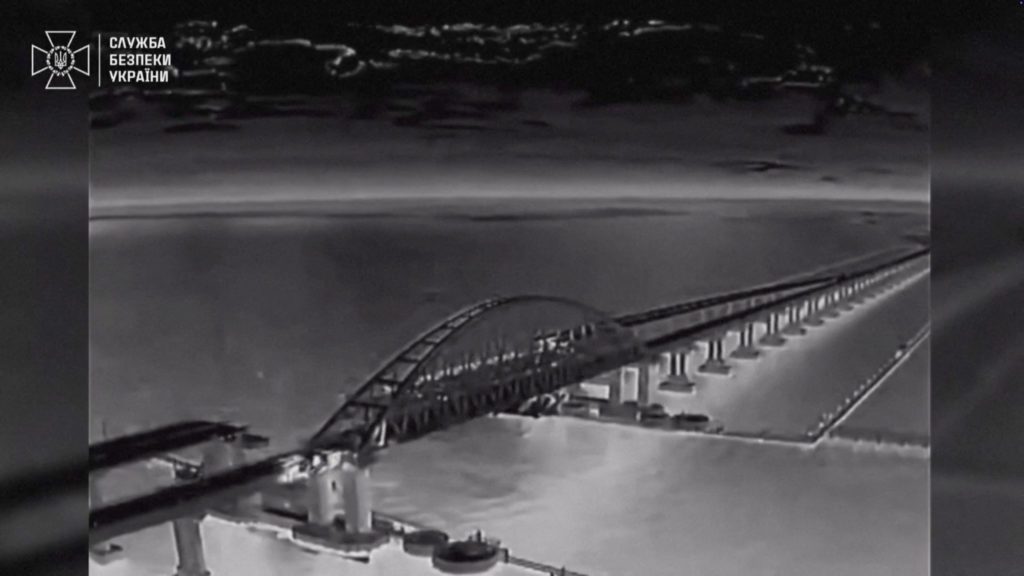
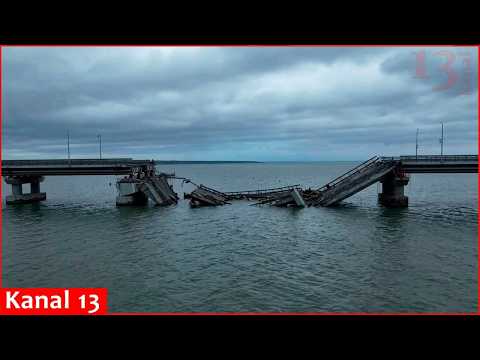
Ukraine dropped the road span of the Kerch Strait Bridge into the water on November 17, severing the only direct road route between Russia and occupied Crimea. A full steel arch fell into the strait, the worst damage to the crossing since Russia built it in 2018.

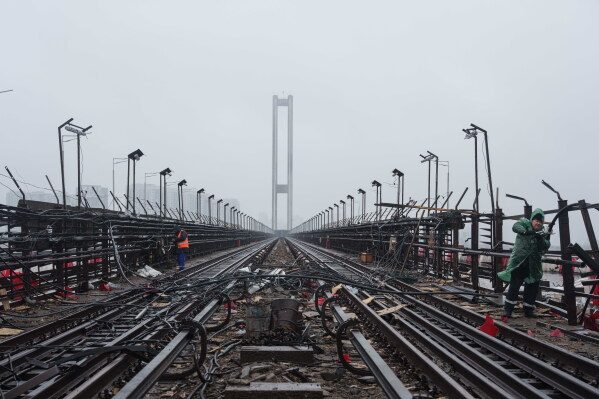
The strike took a month of preparation. Ukrainian drones and missiles first dismantled the air defences around the strait, then hit the weakened arch with domestically built Flamingo cruise missiles. Russia's parallel rail span survived on a single working track.

Crimea's supplies now move by a land corridor through occupied southern Ukraine and by a small ferry crossing that is itself within range of Ukrainian drones. Debris from the fallen arch may also be sitting in the shipping channel that serves the Sea of Azov ports.

Why it matters

Crimea's main road link to Russia is gone. Russian forces there now depend on a land corridor and ferries Ukraine can also strike.

Questions about this story

Free account needed to ask — your question is kept and asked for you right after sign-up. Answers are public.

No questions yet — be the first to ask.

Key Indicators

Out of action
Road span status
Ukraine's military says no vehicle can cross the road section.
1
Rail tracks running
Russia's transport ministry says limited rail service resumed on a single track.
19
Bridge length
The crossing spans the Kerch Strait between mainland Russia and Crimea.
$3.7B
Construction cost
Opened in 2018, four years after Russia seized the peninsula.
2
Killed in Crimea drone strikes
Reported by the Moscow-installed governor as drones hit the peninsula for a second day.
1,728
Days of full-scale war
The count used by the OSW Centre for Eastern Studies on the strike date.

Voices

Curated perspectives — historical figures and your fellow readers.

Sign up to generate historical perspectives on this story.

People Involved

Organizations Involved

Timeline

2018 November 2026

8 events Latest: Yesterday
Tap a bar to jump to that date
  1. Second wave collapses the road span

    Latest Attack

    Flamingo cruise missiles hit the weakened arch before engineers can stabilise it. The roadway falls into the strait.

  2. Rail service resumes on one track

    Infrastructure

    Russia's transport ministry says limited rail traffic is running again; the rail arch is damaged but standing.

  3. Two killed in Crimean drone strikes

    Casualties

    The Moscow-installed governor reports two deaths as drones hit the peninsula for a second day.

  4. Russia strikes bridges in Kyiv

    Retaliation

    Russian forces hit bridges in the Ukrainian capital as the bridge campaign escalates.

  5. First drone wave bends a central arch

    Attack

    Ukrainian drones strike the arch, bending steel ribs and leaving the span tilting under the road's weight.

  6. Sea drones strike the bridge

    Attack

    A naval drone attack follows a year later. The damage is again repaired rather than permanent.

  7. Truck bomb hits the crossing

    Attack

    A truck bomb damages the bridge. Russia repairs it; the Guardian notes the attack did little long-term damage.

  8. Kerch Strait Bridge opens

    Infrastructure

    Russia opens a 19-kilometer road and rail crossing to Crimea, four years after seizing the peninsula. The bill was $3.7 billion.

Scenarios

1

Road span stays shut for the rest of the war

Likely Resolves by End of 2027

Discussed by: Finnish analyst Emil Kastehelmi and the OSW Centre for Eastern Studies

OSW calls reconstruction unfeasible until hostilities end, and Kastehelmi says the road bridge won't be repaired during the war. The arch cannot be assembled over open water, and any repair crew becomes a target. If this holds, Russian military and civilian traffic to Crimea is permanently rerouted through the occupied south and the ferry crossing.

2

Ukraine takes out the rail span too

Possible Resolves by Q2 2027

Discussed by: OSW Centre for Eastern Studies

OSW notes it remains to be seen whether Ukrainian forces will try to destroy the railway bridge, which took only minor damage. Losing rail would force all heavy cargo onto trucks and ferries. A second strike package against the damaged rail arch would be the trigger.

3

Fallen arch blocks Sea of Azov shipping

Possible Resolves by Q1 2027

Discussed by: OSW Centre for Eastern Studies and Al Jazeera

The arch fell into the deepest part of the strait, and OSW warns shipping to Berdiansk, Mariupol and Taganrog stays blocked until debris is cleared. That would cut grain and steel exports through occupied ports and complicate Russian resupply by sea.

4

Russia answers by severing Kyiv's Dnieper crossings

Unlikely Resolves by Q2 2027

Discussed by: Reuters reporting on Russian strikes on Kyiv bridges

Russia has already hit bridges in Kyiv in the days around the Kerch strike. A sustained campaign against Dnieper crossings would slow Ukrainian logistics into the capital and the eastern front. The trigger is a Russian strike that closes a Kyiv bridge for more than a week.

Historical Context

3 moments from history that rhyme with this story — and how they unfolded.

2022

Kerch Bridge truck bombing (2022)

A truck bomb detonated on the road span of the newly built crossing, dropping sections of roadway into the strait. Russia closed the bridge, repaired it, and added layer after layer of defence: long-range missile batteries, jamming gear, smoke generators, and barges strung across the water to stop drones.

Then

Traffic was restored and the bridge kept carrying military freight.

Now

The defences built after 2022 are exactly what Ukraine spent a month dismantling in 2026 before the missiles went in.

Why this matters now

The 2022 attack showed the bridge could be reached. The 2026 attack showed the shield around it could be taken apart first.

1999

NATO's bridge campaign over Serbia (1999)

During the Kosovo war, NATO aircraft destroyed bridges across the Danube at Novi Sad and hit rail and road crossings throughout Serbia to cut military supply lines. The bridges came down; Serbian forces in Kosovo dispersed, used decoys, and kept most of their armour intact.

Then

Serbian logistics slowed sharply and civilian traffic was disrupted for months.

Now

Rebuilding the Danube crossings took years, and the campaign demonstrated that bridge destruction imposes slow, cumulative costs rather than sudden collapse.

Why this matters now

It is the closest modern test of whether knocking down bridges actually strangles an army, and the answer was partly.

March-May 1944

Operation Strangle in Italy (1944)

Allied air forces targeted rail bridges, viaducts and road junctions behind the German Gustav Line to starve front-line units of fuel and ammunition. German engineers repaired at night, rerouted convoys, and moved supplies in small increments.

Then

German supply deliveries fell, but units at the front were never cut off.

Now

Interdiction campaigns became a standard tool, understood to raise costs rather than produce a decisive cut.

Why this matters now

Ukraine's bridge strike is interdiction with better targeting: it raises the price of holding Crimea without necessarily forcing a withdrawal.

Sources

(10)