



Pull to refresh
Logo
CrowdStrike agrees to buy Zscaler in all-stock security merger

CrowdStrike agrees to buy Zscaler in all-stock security merger

Money Moves

A $43.9 billion deal would fold Zscaler's cloud network security into CrowdStrike's Falcon platform, with a shareholder vote and antitrust review running into late 2027

Overview

Updated 1 hour ago

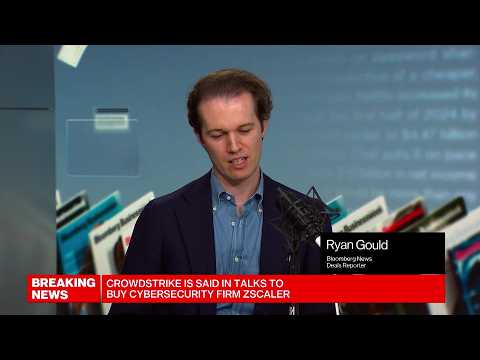
CrowdStrike signed a merger agreement on Nov. 22 to buy Zscaler in stock worth about $43.9 billion. Zscaler shareholders would get 1.135 CrowdStrike shares for each share they own, a 34% premium to Zscaler's $194.82 close on Nov. 20.

The two companies sell different halves of the same problem. CrowdStrike's software watches what runs on laptops and servers. Zscaler sits between employees and the internet, filtering traffic that never passes through a corporate data center. Both boards have approved the deal; Zscaler's shareholders and regulators have not.

Why it matters

Roughly 8,000 companies buy Zscaler's network security but not CrowdStrike's endpoint software. After this deal, they negotiate with one vendor.

Questions about this story

Free account needed to ask — your question is kept and asked for you right after sign-up. Answers are public.

No questions yet — be the first to ask.

Key Indicators

$43.9B
Announced deal value
All-stock enterprise value based on CrowdStrike's Nov. 20 closing price.
$260.41
Implied price per Zscaler share
Derived from the 1.135 exchange ratio and CrowdStrike's Nov. 20 close.
34%
Premium to Zscaler's Nov. 20 close
Zscaler last traded at $194.82 before the announcement.
1.135
CrowdStrike shares per Zscaler share
Fixed exchange ratio written into the merger agreement.
$1.4B
Break fee payable by Zscaler
Owed to CrowdStrike if Zscaler's board switches to a better offer.
34%
Zscaler shares already committed to vote yes
Held by Jay Chaudhry, related trusts and other stockholders under a support agreement.

Voices

Curated perspectives — historical figures and your fellow readers.

Sign up to generate historical perspectives on this story.

People Involved

Organizations Involved

Timeline

3 events Latest: Today
  1. Deal announced; shares move opposite ways

    Today Market

    CrowdStrike falls more than 8% premarket; Zscaler rises more than 17%.

  2. Zscaler closes at $194.82

    Market

    That close becomes the reference price for the 34% premium.

Scenarios

1

Merger closes by January 2028 as guided

Likely Resolves by Feb 23, 2028

Discussed by: CrowdStrike's own closing guidance and Futurum Group's deal analysis

Both boards have signed, stockholders holding about 34% of Zscaler shares have committed to vote yes, and the companies already share more than 2,000 customers. The remaining gate is antitrust clearance in the US and abroad. CrowdStrike guides to the second half of its fiscal 2028, which ends in January 2028.

2

A US or foreign regulator sues to block the deal

Unlikely Resolves by Nov 23, 2027

Discussed by: The merger agreement's termination provisions, which allow either party to walk if an antitrust injunction becomes final

The deal needs Hart-Scott-Rodino clearance in the US and approvals from foreign investment and competition authorities. A second request for information, or a suit from the Federal Trade Commission or the Justice Department's antitrust division, would stop the clock. The agreement already contemplates a regulator imposing a 'burdensome condition' as grounds to terminate.

3

Zscaler shareholders vote the exchange ratio down

Unlikely Resolves by Q3 2027

Discussed by: The merger agreement, which requires a majority of all outstanding Zscaler shares, not just those voting

Approval needs holders of at least a majority of Zscaler's outstanding stock, a higher bar than a majority of votes cast, so abstentions count against the deal. The 34% support agreement helps, but it is not a majority on its own. If the vote fails, either side can terminate and no break fee is owed.

4

A rival bidder tops CrowdStrike's offer

Unlikely Resolves by Nov 23, 2027

Discussed by: The terms of the merger agreement, which let Zscaler's board change its recommendation for a superior proposal

Zscaler's board can switch sides before the vote if a better offer arrives. Doing so costs $1.4 billion. The 34% block already locked into the CrowdStrike deal makes assembling a competing majority expensive, and any interloper would likely face the same antitrust review.

Historical Context

3 moments from history that rhyme with this story — and how they unfolded.

June 2016

Symantec buys Blue Coat (2016)

Symantec, then the largest stand-alone endpoint security vendor, bought Blue Coat Systems, which sold cloud web filtering and a secure web gateway. The pitch was the same as CrowdStrike's: combine what runs on the device with what crosses the network.

Then

Symantec folded Blue Coat into its enterprise security division and bought LifeLock a year later.

Now

Broadcom bought Symantec's enterprise security business in 2019. The Symantec name later reappeared on consumer products.

Why this matters now

Endpoint plus network has been bundled before, and that bundle ended in a sale rather than a permanent merger.

June 2021

FireEye splits off its products business (2021)

FireEye sold its products business, which included network and endpoint detection appliances, to Symphony Technology Group and renamed itself Mandiant, keeping threat intelligence and incident response.

Then

The company traded appliances for services work and a smaller balance sheet.

Now

Google bought Mandiant a year later, putting the services business inside a cloud provider.

Why this matters now

A combined detection company chose to separate hardware-heavy products from services. CrowdStrike is betting the other way, that one vendor should own both.

2022

Google buys Mandiant (2022)

Google bought Mandiant and added incident response and threat intelligence to its cloud security offering, giving Google a security brand it could sell alongside its infrastructure.

Then

Google Cloud gained a named security practice to sell to large customers.

Now

Cloud providers and platform owners kept buying specialists rather than building them.

Why this matters now

Buyers outside traditional security keep absorbing security specialists. CrowdStrike is making the same move from inside the industry.

Sources

(10)