

Pull to refresh
Logo
Datadog launches Journey Monitoring and Bits Testing to verify user journeys

Datadog launches Journey Monitoring and Bits Testing to verify user journeys

New Capabilities

New DEM features track whether critical flows complete and generate tests that adapt as applications change

Today: Datadog launches Journey Monitoring and Bits Testing

Overview

Updated 58 minutes ago

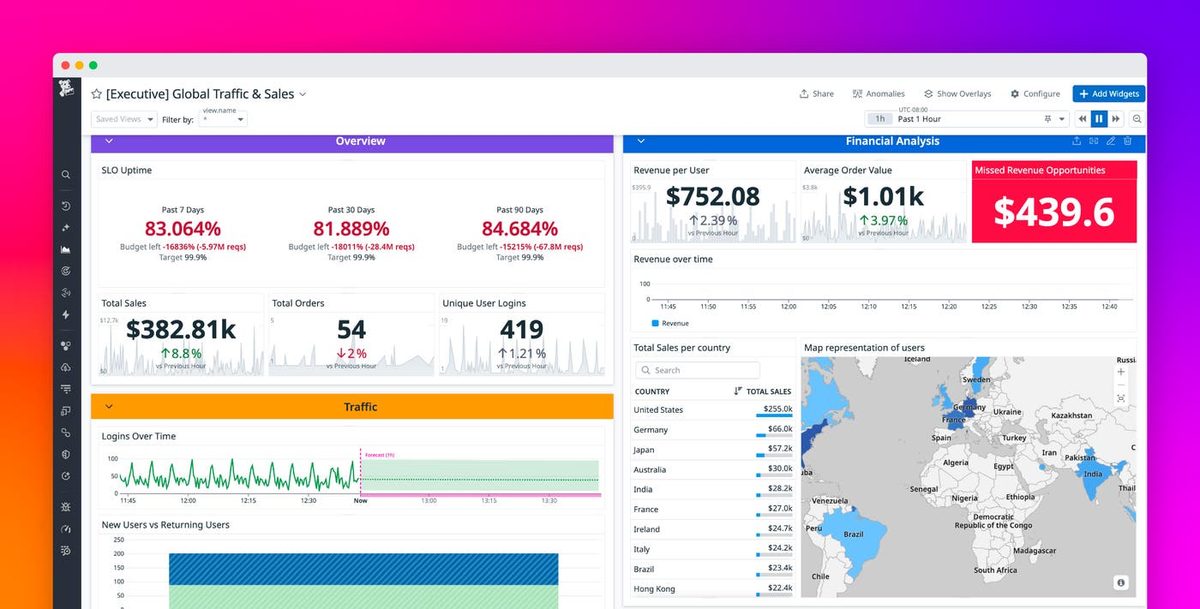
A team watching a checkout flow today can see the same traffic and conversion data a product manager sees, plus the uptime and error signals an engineer acts on. Datadog put both in one view on September 24 with Journey Monitoring, and paired it with Bits Testing, an AI agent that generates and runs tests from a plain-language goal. The two features attack a question monitoring tools have largely ignored: did the user actually finish the thing they came to do?

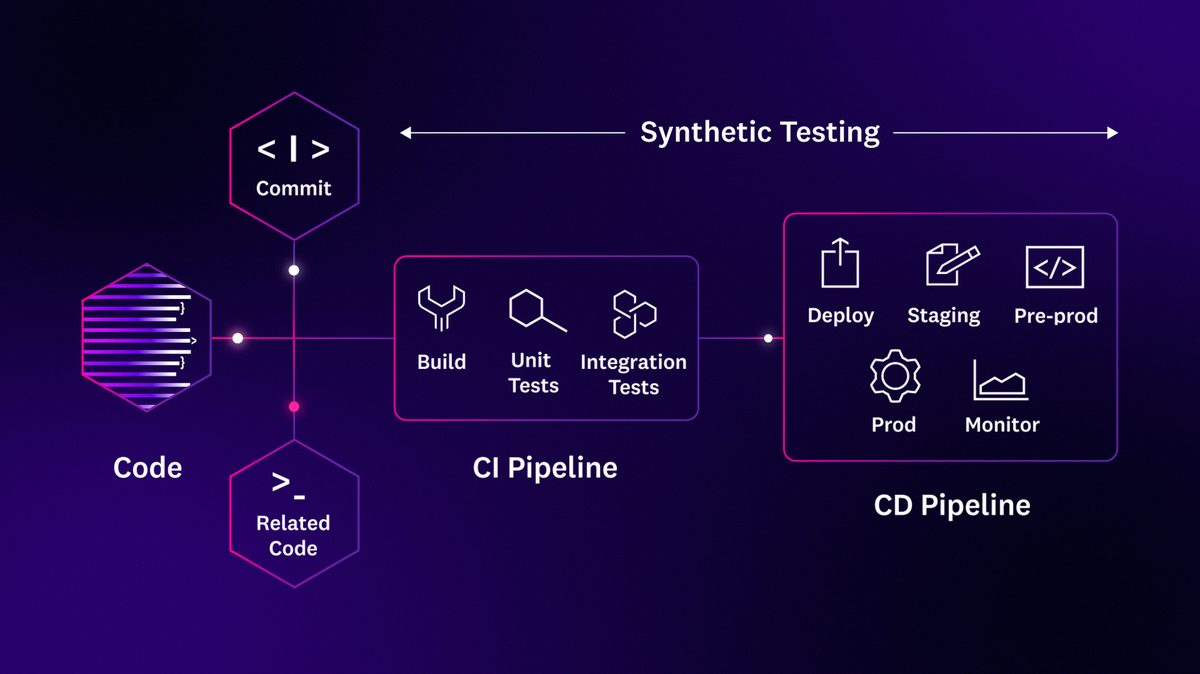
Scripted synthetic tests break the moment a button moves or an AI feature changes its output. Bits Testing's goal-based tests store the intended outcome, not the click path, and the agent rediscovers a working route at runtime. That makes them suited to exactly the apps that have been hardest to test, the ones where every run produces a different response.

Why it matters

Teams stop hand-writing browser tests that break on every redesign—AI generates them and verifies user goals survive as apps change.

Questions about this story

Free account needed to ask — your question is kept and asked for you right after sign-up. Answers are public.

No questions yet — be the first to ask.

Key Indicators

2
New DEM features launched
Journey Monitoring and Bits Testing, both shipping in Preview
4
Data sources unified in Journey Monitoring
Real User Monitoring, Synthetic Monitoring & Testing, Product Analytics, and Session Replay in one view
4
Test types Bits Testing generates
Browser, API, network, and goal-based tests from a plain-language prompt

Voices

Curated perspectives — historical figures and your fellow readers.

Ever wondered what historical figures would say about today's headlines?

Sign up to generate historical perspectives on this story.

People Involved

Organizations Involved

Timeline

1 event Latest: Today
  1. Datadog launches Journey Monitoring and Bits Testing

    Today Product Launch

    Datadog showcased two new DEM features in Sydney: Journey Monitoring tracks critical user flows; Bits Testing generates goal-based synthetic tests. Both ship in Preview.

Scenarios

1

Datadog brings Journey Monitoring and Bits Testing to general availability

Likely Resolves by Q2 2027

Discussed by: Datadog's own launch positioning, which presents both tools as Preview features on a path to GA

Both features ship in Preview on September 24. Datadog's release cadence typically moves previews to general availability within a few quarters. GA would make the tools enterprise-ready with support service level agreements, billing, and broader documentation, and would signal that the company considers the AI-generated testing approach production-proven.

2

A rival ships goal-based AI testing first

Possible Resolves by End of 2027

Discussed by: Observability competitors Dynatrace and New Relic, both of which have been adding AI agents to their platforms

If goal-based testing proves out, Dynatrace or New Relic faces pressure to match it. A competitor announcement of natural-language or goal-based synthetic tests would set up a direct comparison of the two approaches. It would also test whether Datadog's lead in AI-native testing translates into market share.

3

Goal-Based tests expand beyond browser, API, and network

Possible Resolves by End of 2027

Discussed by: Datadog's documentation, which frames goal-based tests as suited to nondeterministic AI features and frequently changing interfaces

Bits Testing currently covers browser, API, network, and goal-based tests. Mobile apps and internal enterprise tools break scripts even faster than web pages. If Datadog extends goal-based testing to those surfaces, it would confirm the approach scales beyond the initial scope and deepen the DEM suite's coverage.

Historical Context

3 moments from history that rhyme with this story — and how they unfolded.

2004-2010

Selenium and the rise of scripted web testing (2004-2010)

Selenium emerged from ThoughtWorks in 2004 as a way to automate browser testing through recorded scripts. By 2010 it had become the default for web test automation, displacing manual regression testing for most teams.

Then

Teams shipped faster but accumulated brittle test suites that broke whenever the user interface changed.

Now

Maintaining those scripts became a permanent tax on engineering teams, costing as much time as writing the tests themselves.

Why this matters now

Bits Testing's goal-based approach attacks exactly this failure mode: instead of replaying a brittle script, the agent rediscovers a path to the goal at runtime.

2015

Datadog enters application performance monitoring (2015)

Datadog launched its application performance monitoring product in 2015, entering a market dominated by New Relic and AppDynamics. Its pitch was to unify infrastructure and application metrics on one platform.

Then

Datadog grew quickly, taking share from incumbents by bundling APM with its infrastructure monitoring.

Now

APM became a core Datadog product, and the integration-focused playbook became the company's signature.

Why this matters now

Journey Monitoring repeats the playbook: unify fragmented views into a single journey-level hub, then win on integration rather than on any single signal.

2021-2022

GitHub Copilot: AI moves from suggestion to action (2021-2022)

GitHub launched Copilot in 2021 as an AI pair programmer that suggests code. By 2022 it was generally available, and rivals rushed to match it.

Then

Copilot changed how developers write code, making AI assistance a default rather than a novelty.

Now

The same pattern is spreading to testing, where AI no longer just suggests a test but autonomously executes and maintains it.

Why this matters now

Bits Testing is the next step in that arc: an agent that explores the app, generates a full test suite, and adapts the tests as the user interface changes underneath them.

Sources

(6)