

Pull to refresh
Logo
Datadog previews Bits Maintenance, an AI agent for open-source upgrades

Datadog previews Bits Maintenance, an AI agent for open-source upgrades

New Capabilities

The agent drafts upgrade pull requests, stages rollouts and checks system health afterward. Datadog's launch materials list no price and no general-availability date.

Overview

Updated 4 minutes ago

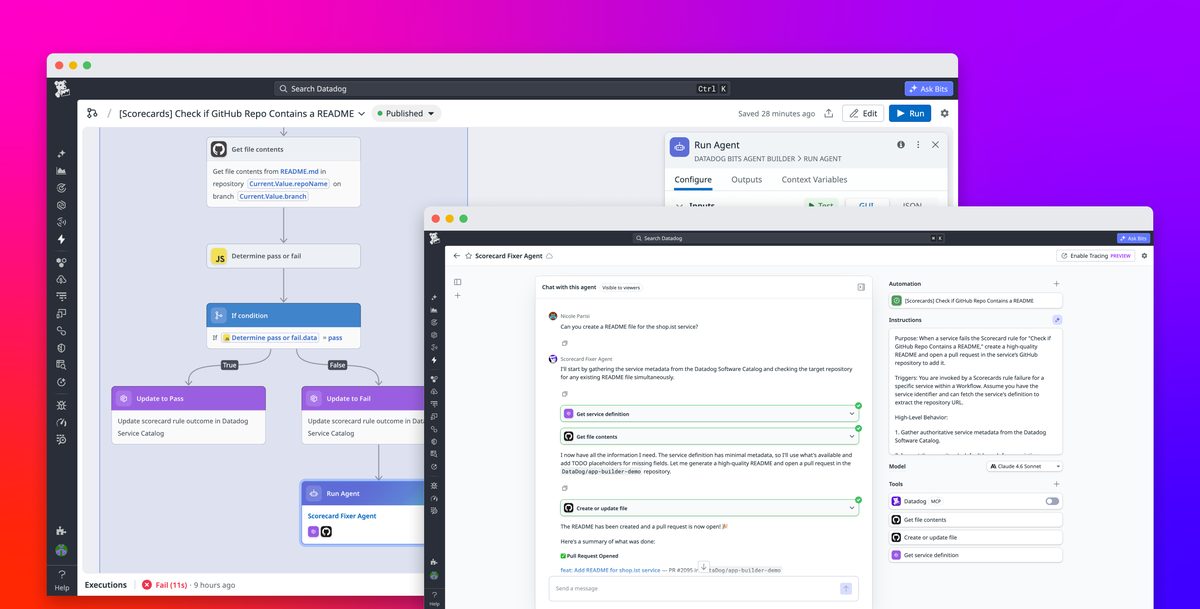
Datadog put a maintenance agent into preview on November 24, 2026. Bits Maintenance reads open-source release notes, works out which changes touch a specific customer's clusters, drafts the upgrade pull requests, and runs the rollout inside limits that customer sets.

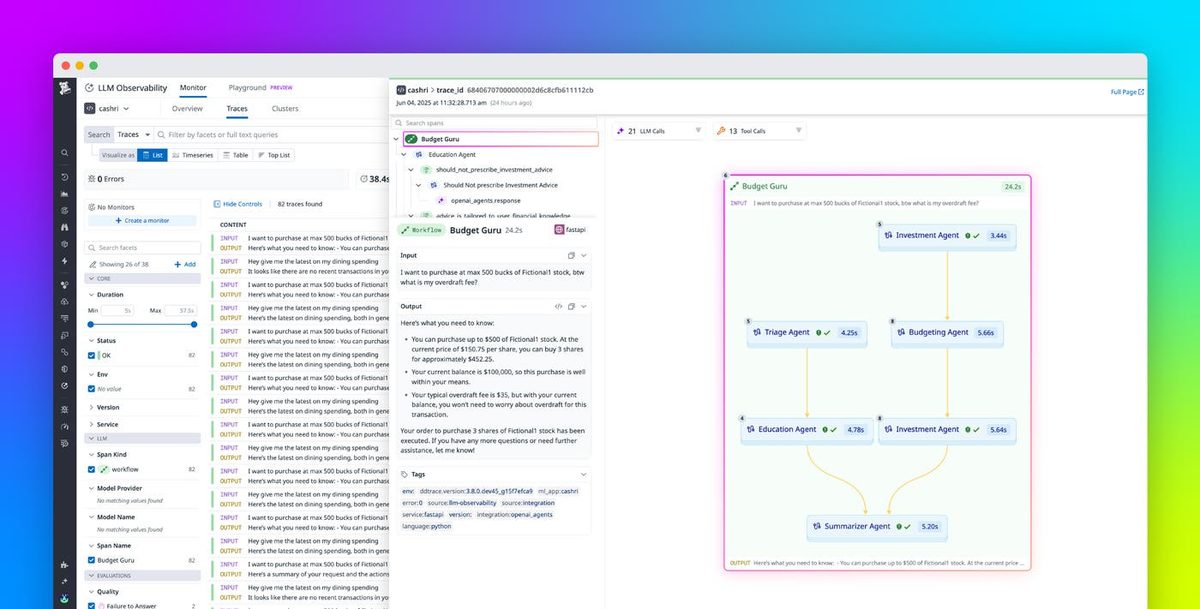
Most of that work is repetitive but not simple. Someone has to decide whether a removed Helm chart value or a renamed metric breaks anything, and that judgment usually sits with a few senior engineers. Datadog's pitch is that the agent does the reading and the drafting while a person keeps the approval.

Why it matters

Upgrade backlogs are where known vulnerabilities sit. An agent that drafts and verifies patches could clear them without new headcount.

Questions about this story

Free account needed to ask — your question is kept and asked for you right after sign-up. Answers are public.

No questions yet — be the first to ask.

Key Indicators

Preview
Release stage
Announced November 24, 2026; Datadog has set no general-availability date.
4
Ways to reach the agent
The Datadog app, a command line, Slack, or the Datadog MCP Server.
24/7
Monitoring cadence
Datadog says the agent tracks releases, security fixes and end-of-life dates continuously.
None published
Public pricing
The launch post and product pages carry no price.

Voices

Curated perspectives — historical figures and your fellow readers.

Sign up to generate historical perspectives on this story.

People Involved

Organizations Involved

Timeline

2010 November 2026

4 events Latest: Today
Tap a bar to jump to that date
  1. Preview runs with no published price or general-availability date

    Today Status

    Datadog's launch materials list neither a price nor a date for general availability. Early independent write-ups recommend testing on small components in development environments while production approvals stay strict.

  2. Bits Maintenance enters preview

    Product launch

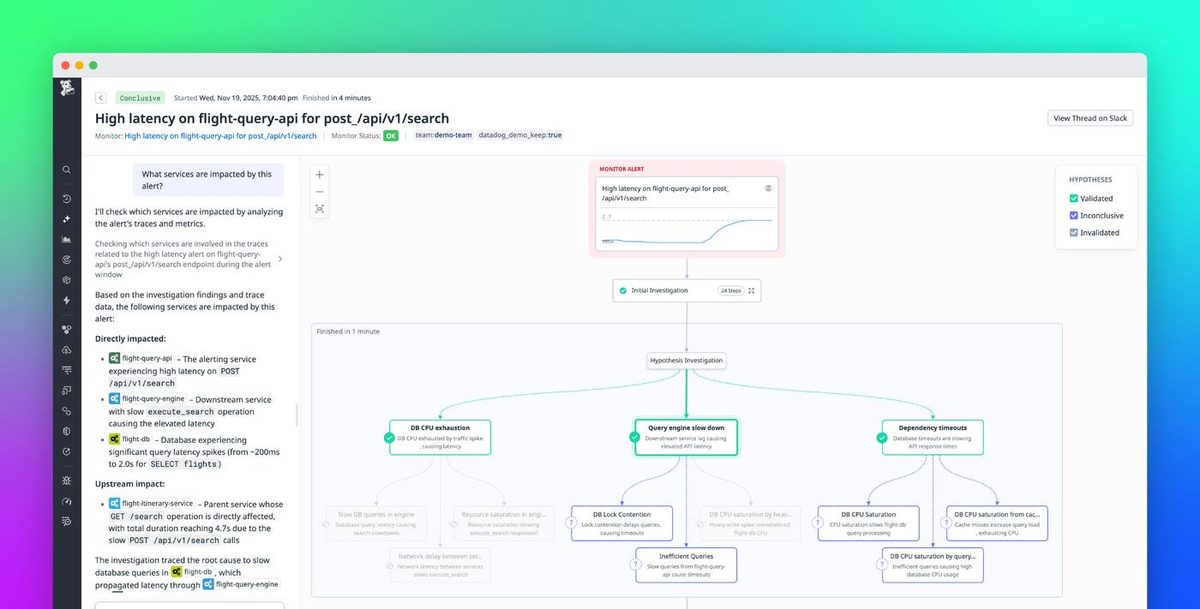
    Datadog announces an agent that plans, executes and verifies open-source upgrades inside customer-set approval rules. It prepares changes as pull requests and uses Datadog telemetry to compare system health before and after each rollout.

  3. Datadog lists on Nasdaq

    Company

    The monitoring company goes public and uses the capital to expand into logs, security and application performance.

  4. Datadog founded in New York

    Company

    Olivier Pomel and Alexis Lê-Quôc start Datadog as a server-monitoring service.

Scenarios

1

Datadog puts a price on Bits Maintenance and ships it for general use

Likely Resolves by Q2 2027

Discussed by: Datadog's launch post, which describes a preview only, and independent write-ups that note the missing price and GA date

A preview with no price and no GA date is normal. The commercial test is whether platform teams keep the agent switched on after a quarter of agent-written pull requests. A per-host price plus a general-availability announcement before mid-2027 would mark Bits Maintenance as a shipping product rather than an experiment.

2

A named customer traces a production incident to a Bits-generated upgrade

Possible Resolves by End of 2027

Discussed by: Sebastian Krötzsch, who argues the guardrails matter more once an agent is doing the work, and Datadog's own documentation of pull-request review

Every agent that writes changes meant for production carries the risk of a plausible-looking patch nobody read closely. Datadog routes changes through pull requests and branch protections, so the failure mode is a reviewer approving an agent-prepared upgrade that breaks something the checks did not cover. The preview's rollback and health-comparison features exist for exactly this case; whether they hold under a real fleet is untested in public.

3

Rival platforms ship their own upgrade-planning agents

Possible Resolves by End of 2027

Discussed by: Independent commentary comparing Bits Maintenance with existing automated dependency tools

Dependency bots already bump library versions and open pull requests. The step Bits Maintenance adds is judging whether a release's breaking changes apply to one specific environment, then verifying the result with telemetry. If that combination holds up, competing source-control, cloud and security platforms have reason to build the same layer into tools customers already run, which would make the patching agent a standard component rather than a Datadog differentiator.

Historical Context

3 moments from history that rhyme with this story — and how they unfolded.

August 2021

Kubernetes 1.22 removes deprecated APIs (2021)

Kubernetes 1.22 stopped serving the v1beta1 versions of Ingress, CustomResourceDefinition and RBAC APIs. Clusters that upgraded without editing their manifests lost objects that had worked for years, even though nothing in the cluster had been misconfigured.

Then

Platform teams converted manifests under deadline pressure, and some rollouts stalled partway through.

Now

Deprecation checks and API-compatibility tooling became routine steps in cluster upgrades.

Why this matters now

Bits Maintenance's core claim is that it can tell which removals in a release actually touch a given environment. That is the exact problem Kubernetes 1.22 created at scale.

2019-2020

GitHub makes Dependabot's updates native (2019-2020)

GitHub acquired Dependabot in 2019 and folded automated dependency-update pull requests into its platform, then made automated security updates free for public repositories. Repositories began receiving machine-written pull requests for outdated libraries without anyone asking.

Then

Version bumps became routine and largely automated across open-source projects.

Now

The volume of pull requests reviewers had to triage rose, and deciding whether an update was safe stayed a human job.

Why this matters now

Bits Maintenance pushes the same pattern up a level: instead of bumping one library, it plans a whole infrastructure upgrade and checks the result. Dependabot shows both the benefit and the review burden that follows.

2005-2010

Puppet and Chef promise repeatable servers (2005-2010)

Puppet and Chef let operations teams describe server configuration in code and apply it automatically, replacing hand-built machines with repeatable recipes. Large web companies adopted both tools to manage thousands of servers.

Then

Configuration drift fell, and rebuilding a server became a scripted job rather than a manual one.

Now

The tools automated the mechanics while leaving the decisions, such as which versions to run and which changes were safe, with engineers.

Why this matters now

Bits Maintenance follows the same division of labor. It takes on the executing and the drafting, and Datadog says it asks the team when the evidence runs out.

Sources

(4)