
Pull to refresh
Logo
Detroit plans street redesigns on 17 corridors to cut traffic deaths

Detroit plans street redesigns on 17 corridors to cut traffic deaths

Built World Detroit, MI local

Federal grants will pay for narrower lanes and new crosswalks on roads where nearly 600 people died in five years.

Overview

Updated 59 minutes ago

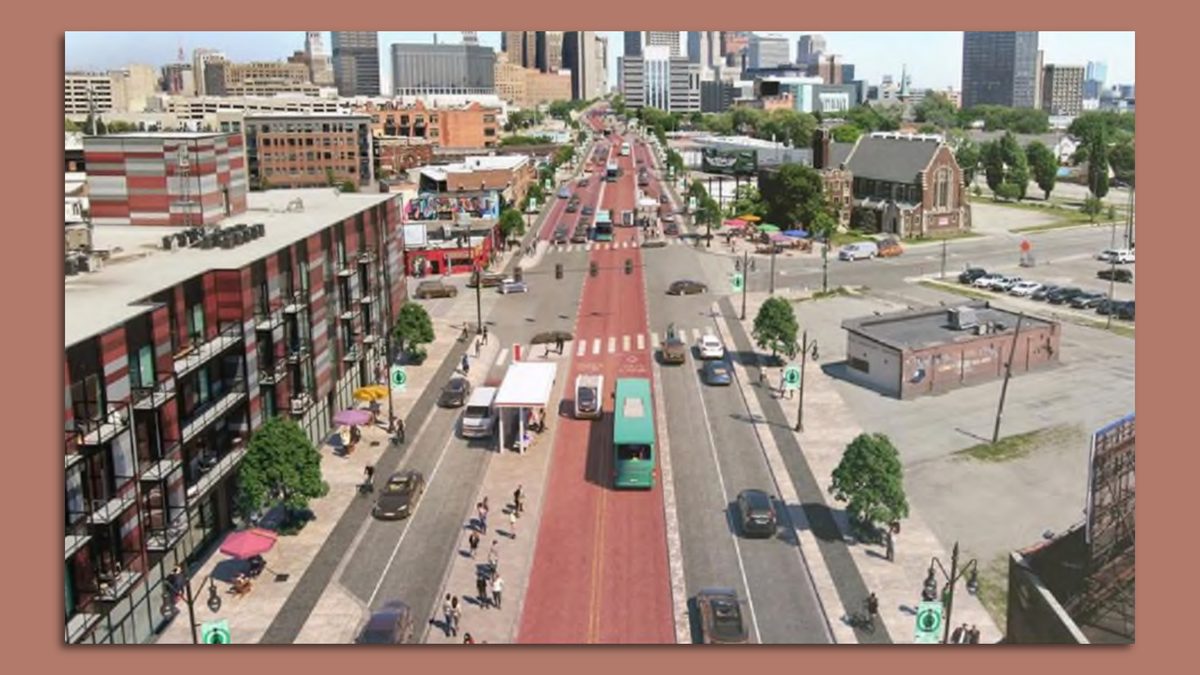
Detroit's non-freeway streets killed nearly 600 people over the last five years, according to the deputy director of the city's public works department. The city's answer is to rebuild the shape of 17 of those corridors: narrower lanes, curb extensions that shorten crossings, and clearer pavement markings. Construction starts next year and runs for three.

The money is mostly federal. Detroit has won close to $60 million through Safe Streets and Roads for All, a grant program created in 2021, and part of it funds this round of work. One figure doesn't line up: the city's program page puts the first grant at 31 miles across the same 17 corridors, while public works now describes more than 40 miles. Neither account explains the difference.

Why it matters

Detroit is testing whether rebuilding street geometry, not just enforcement or education, can cut one of the country's highest traffic death rates.

Last Monday's email for Detroit, MI

Sent Nov 16. It carried:

Get next Monday's: one short email a week. Free. Unsubscribe in one click.

Questions about this story

Free account needed to ask — your question is kept and asked for you right after sign-up. Answers are public.

No questions yet — be the first to ask.

Key Indicators

40+ miles
Street miles in the current upgrade
Public works describes more than 40 miles; the city's program page lists 31 for the 2022 grant.
17
Corridors in the Safe Streets for Detroit program
Includes Schaefer, parts of 7 Mile, and Jos Campau among others.
~600
Non-freeway traffic deaths, last five years
Figure given by DPW deputy director Sam Krassenstein in November 2026.
88%
Rise in Detroit's traffic fatality rate, 2017 to 2020
From 15.3 to 28.7 deaths per 100,000 residents, per the city's program page.
$24.8M
First Safe Streets for All grant to Detroit
Awarded under the fiscal 2022 round for the SS4D program.

Voices

Curated perspectives — historical figures and your fellow readers.

Sign up to generate historical perspectives on this story.

People Involved

Organizations Involved

Timeline

2022 November 2026

5 events Latest: Yesterday
Tap a bar to jump to that date
  1. Public works details 40-plus miles of upgrades

    Latest Announcement

    Construction begins in 2027; west-side community meeting set for Thursday evening.

  2. Third award funds Gratiot Avenue pilot

    Funding

    8.83-mile stretch from Randolph to 8 Mile gets safety countermeasures.

  3. Second $24.8 million grant targets bus stops

    Funding

    Pays for safety work at 56 high-crash intersections served by city buses.

  4. Detroit adopts Streets for People plan

    Policy

    Master plan sets safety and equity goals after more than 2,000 residents give input.

  5. Detroit wins first $24.8 million safety grant

    Funding

    Federal award covers 31 miles across 17 priority corridors.

Scenarios

1

Construction starts on the first corridors in 2027

Likely Resolves by End of 2027

Discussed by: Detroit Department of Public Works, which gave 2027 as the start year

The design work funded by the 2022 grant is complete, contracts go out, and crews begin repaving and restriping at least one of the 17 corridors. This is the trajectory public works described in November 2026: work beginning in many areas next year and continuing for three. Slippage is common in grant-funded street projects, so the test is whether any corridor reaches construction, not all 17.

2

Detroit records fewer traffic deaths in 2027 than in 2026

Uncertain Resolves by End of 2028

Discussed by: Not yet publicly forecast; the city's own data show deaths swinging by more than half since 2018

The program's benchmark outcome. Detroit's pedestrian deaths fell from 142 in 2018 to 84 in 2022, with a pandemic spike to 183 in 2020 in between, so a single-year decline is plausible without the new corridors contributing much. Proving the redesigns caused a drop would take corridor-level crash counts over several years, not a citywide total.

3

The corridor list is trimmed as construction bids come in

Possible Resolves by Q2 2028

Discussed by: No public discussion yet; the city has not published per-corridor cost estimates

Grant money is fixed and construction costs are not. If bids for the first corridors run above the awarded amounts, the city faces a choice between cutting scope, adding local money, or spreading the same dollars over fewer miles. That decision would show up in a revised project list rather than in a press release.

Historical Context

3 moments from history that rhyme with this story — and how they unfolded.

2018 onward

Detroit's speed hump pilot (2018)

Detroit began letting residents request traffic calming on residential blocks, starting with a pilot in 2018. The city has since installed more than 10,000 speed humps on 320 streets, a cheap intervention that changes driver behavior without rebuilding a road.

Then

Crashes on those streets fell 36 percent, according to the city's program data.

Now

The program gave Detroit a low-cost tool and a track record for physical changes to streets, which the corridor work now extends to major roads.

Why this matters now

Speed humps are the small version of the bet behind Safe Streets for Detroit: that changing a road's shape changes how people drive on it.

2018-2022

Detroit pedestrian deaths swing (2018-2022)

Detroit recorded 142 pedestrian deaths in 2018. The number rose to 183 in 2020, then fell to 84 in 2022, even as the city's population grew.

Then

The 2020 spike tracked a national rise in traffic deaths during the pandemic, when U.S. fatalities reached 42,915, the highest since 2005.

Now

Deaths then fell by more than half from the peak, which makes it harder to attribute later changes to any single program.

Why this matters now

Detroit's fatality numbers swing widely from year to year, so the corridor redesigns will be judged against a moving baseline rather than a stable one.

1997

Sweden adopts Vision Zero (1997)

Sweden's parliament adopted a road-safety policy treating death and serious injury on the road as unacceptable, with responsibility shifted to the people who design roads and vehicles rather than to drivers alone.

Then

The policy reframed crashes as a design problem and pushed Swedish road builders toward separation of pedestrians and vehicles and lower urban speeds.

Now

The approach spread to hundreds of cities, including a number of U.S. cities that adopted Vision Zero plans in the 2010s.

Why this matters now

The lane narrowing and curb extensions Detroit is planning come straight out of that framework, which emphasizes changing the street rather than the driver.

Sources

(4)