Anchor

Detroit restaurant owner charged with laundering drug money to Mexican cartels
Force in Play Detroit, MI localFederal inquiry says 100,000 wire transfers moved drug cash from Detroit to cartel-linked states
3 days ago: Charges made publicNew here? Follow stories to track developments over time. Create a free account to get updates when stories you care about change.
Overview
Updated 1 hour agoFederal agents arrested the owner of a Southwest Detroit restaurant on charges he laundered more than $140 million in drug proceeds to Mexican cartels. Juan Romo-Padilla, 58, allegedly ran the scheme through La Posada, his combination restaurant, convenience store, and money remitter.
The criminal complaint describes over 100,000 structured wire transfers to Mexico between 2022 and 2026, nearly all to states controlled by the Jalisco New Generation, La Familia Michoacana, and Sinaloa cartels. Romo-Padilla faces four federal counts, each carrying up to 20 years. DEA and IRS agents spent two years building the case before his Sept. 3 arrest.
Why it matters
Drug money laundered through small remitters like La Posada is the revenue stream that funds cartel operations across the United States.
Questions about this story
Free account needed to ask — your question is kept and asked for you right after sign-up. Answers are public.
No questions yet — be the first to ask.
Key Indicators
$140M+
Alleged laundered funds
Drug proceeds moved from La Posada to Mexico, 2022-2026
100,000+
Wire transfers
Structured transfers to cartel-linked states in Mexico
4
Federal charges
Conspiracy, international money laundering, and Bank Secrecy Act violations
4 years
Alleged laundering period
Transfers spanned 2022-2026 per the federal complaint
Related Media
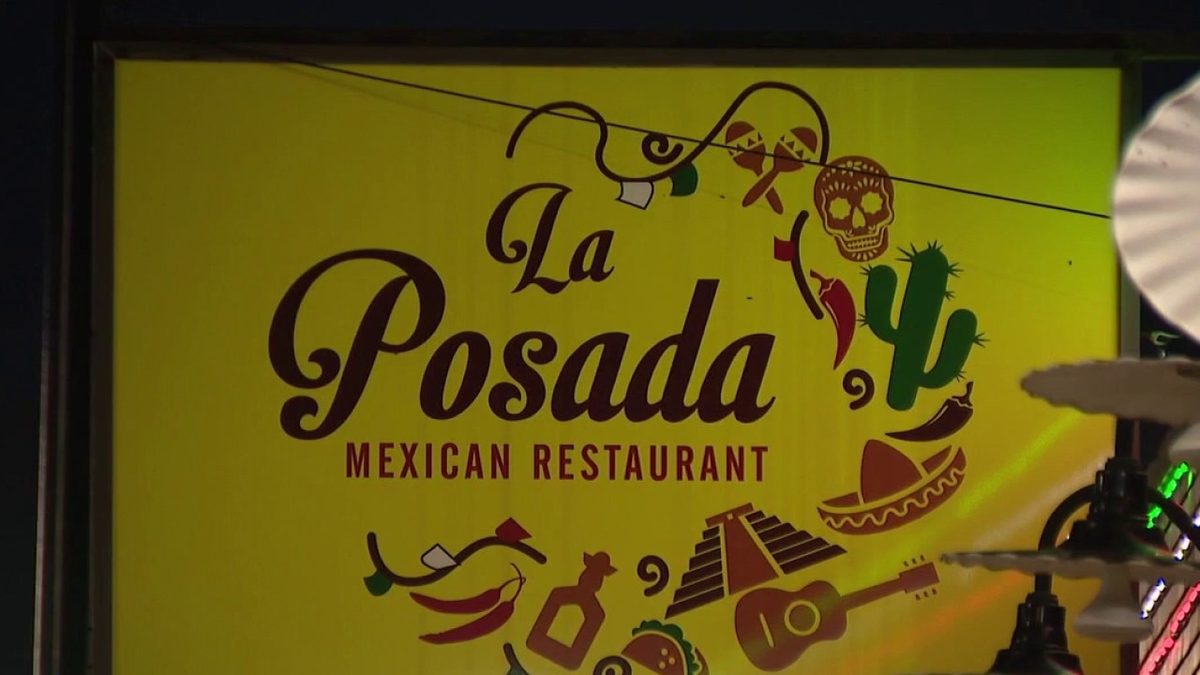
Mexican restaurant owner charged with money laundering
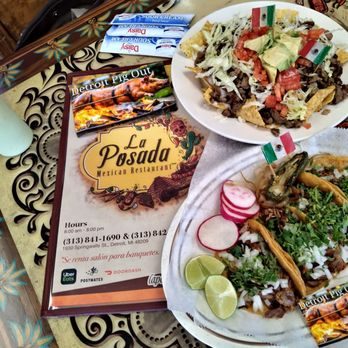
LA POSADA - Updated September 2026 - 66 Photos & 10 Reviews - 1930 Springwells St, Detroit, Michigan - Tacos - Restaurant Reviews - Phone Number - Menu - Yelp
LA POSADA - Updated September 2026 - 66 Photos & 10 Reviews - 1930 Springwells St, Detroit, Michigan - Tacos - Restaurant Reviews - Phone Number - Menu - Yelp
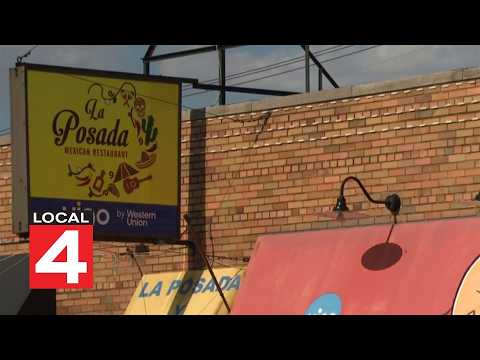
11.4K views
0:45
Southwest <b>Detroit restaurant owner</b> facing federal <b ...
Click On Detroit | Local 4 | WDIV

2.1K views
41:04
Feds announce $100M in rewards, new charges against high- ...
NBC Montana

178.6K views
39:43
Blanche-Patel announces 5 Indictments against Mexican Cartel ...
LiveNOW from FOX
Images from Openverse under Creative Commons licenses. Videos from YouTube.
Voices
Curated perspectives — historical figures and your fellow readers.
Play
Exploring all sides of a story is often best achieved with Play.
Most of these play right now — no account needed. Sign up to save scores, keep a streak, and unlock Debate and Predict.
Log in
Sign Up
Higher or Lower
A number from this story, against one from elsewhere in the news — guess which is bigger, then keep the chain going. 5 rounds, 3 strikes; a miss costs a strike and resets your streak.
Example
Anchor
EU tariff revenue
$52B
Big for this kind of number
Mystery
Pentagon AI contract
?
Round 1
Streak: 0
Mystery
?
Keyboard: ↓/L lower · ↑/H higher
0 pts
Best streak: 0 · Rounds: 0
0 points — sign up to put that on the leaderboard.
Now try on this story
Connections
Sixteen names from the news. Find the four hidden groups of four. Four mistakes max.
Loading today's puzzle…
0/4 groups
Mistakes
Sign up to keep a daily streak — a new puzzle lands every day.
Now try on this story
Exit debate?
Your progress in this debate will be lost.
How it works
- 1 Two AI personas square off on this story.
- 2 You predict who'll win each round — correct picks earn XP.
- 3 One crossfire question is yours to fire. Pick it carefully.
Couldn't generate a topic
Select Your Champions
Choose one persona for each side of the debate
DEBATE TOPIC
Choose personas with different perspectives for a more dynamic debate.
SIDE A (PRO)
Select debater for this side:
No debate personas available right now.
SIDE B (CON)
Select debater for this side:
No debate personas available right now.
VS
Get ready to make your prediction...
Round of
Claim
Evidence
Stakes
Crossfire Answer
Closing Statement
Claim
Evidence
Stakes
Crossfire Answer
Closing Statement
Your Crossfire Question
Generating arguments...
Who's Got This Round?
Make your prediction before the referee scores
The referee scores both sides on
Correct predictions earn +20 XP
· Press 1 or 2 to pick
Evidence
40%
Logic
30%
Detail
20%
Style
10%
Round Results
Your Pick
Not this time
(%)
Overall Score
/10
Your Pick
Not this time
(%)
Overall Score
/10
Set the Crossfire
Pick the question both personas must answer in the final round
Crafting crossfire questions...
Choosing a question earns +10 XP crossfire bonus
🏆
Total XP Earned
Cred Change
Predictions
Debate Oracle! You called every round!
Sharp Instincts! You know your debaters!
The Coin Flip Strategist! Perfectly balanced!
The Contrarian! Bold predictions!
Inverse Genius! Try betting the opposite next time!
XP Breakdown
Base completion
+20 XP
Rounds played ( rounds x 5 XP)
+ XP
Correct predictions ( correct x 20 XP)
+ XP
Crossfire bonus
+10 XP
Accuracy
%
Prediction History
Round
You picked:
✓
✗
Now try on this story
Keep debating to level up your credibility and unlock achievements
People Involved
JR
Juan Romo-Padilla
Owner of La Posada; defendant
Arrested Sept. 3, 2026; facing four federal counts
Joseph Dixon
DEA Special Agent in Charge, Detroit Field Division
Leading the investigation
TS
Todd Strom
Acting Special Agent in Charge, IRS Criminal Investigation Detroit Field Office
Co-investigating
JJ
Jerome F. Gorgon Jr.
U.S. Attorney, Eastern District of Michigan
Prosecuting the case
Organizations Involved
La Posada
Business
Subject of investigation; owner charged
Mexican restaurant, convenience store, and money remitter in Southwest Detroit.
Drug Enforcement Administration (DEA)
Federal Agency
Lead investigative agency
U.S. agency responsible for combating drug trafficking and its financial networks.
IRS Criminal Investigation
Federal Law Enforcement
Co-investigating agency
The IRS division that investigates tax and financial crimes, including money laundering.
U.S. Attorney's Office, Eastern District of Michigan
Federal Prosecutorial Office
Prosecuting the case
The federal prosecutor for Michigan's eastern half.
Timeline
January 2022 September 2026
4 events
Latest: 3 days ago
Tap a bar to jump to that date
-
Charges made public
Latest LegalU.S. Attorney's Office details alleged $140 million scheme and 100,000 transfers to cartel states.
-
Romo-Padilla arrested
LegalFederal agents take the 58-year-old into custody on money laundering charges.
-
DEA and IRS open investigation
InvestigationAgents begin tracing Romo-Padilla's wire transfers and business records.
-
Alleged laundering begins at La Posada
Alleged activityFederal complaint says structured wire transfers of drug proceeds to Mexico started this year.
Historical Context
3 moments from history that rhyme with this story — and how they unfolded.
May 1998
Operation Casablanca (1998)
Undercover DEA agents posed as corrupt bankers and money launderers, infiltrating Mexican banks that moved drug cash through the U.S. financial system. The sting resulted in 110 arrests and penalties against 12 Mexican banks, some of which had processed billions in laundered funds.
Then
Mexican officials protested the arrests, producing a diplomatic row and policy changes.
Now
It demonstrated how deeply cartel money ran through legitimate finance and marked an early federal effort to follow the money rather than just seize drugs.
Why this matters now
Casablanca exposed banks as laundering conduits; the La Posada case shows the same phenomenon now operating through smaller, family-owned remittance businesses.
January 2017
Western Union money laundering settlement (2017)
Western Union paid $586 million to resolve U.S. Justice Department allegations that it processed hundreds of thousands of transactions linked to drug trafficking. Prosecutors said the company failed to maintain adequate anti-money-laundering controls, allowing couriers and traffickers to use its wire service to move cash.
Then
Western Union strengthened compliance, hired monitors, and changed its reporting practices.
Now
The case established remittance companies as high-risk channels for cartel money, pushing enforcement scrutiny onto the industry.
Why this matters now
The Detroit case shows the same vulnerability at the small-business end of the remittance market, where a single restaurant and money-transfer shop moved nine figures.
1980s-2000s
Black Market Peso Exchange (1980s-2000s)
Colombian cartels converted U.S. drug dollars into pesos without moving cash across borders. Drug money in the U.S. was sold at a discount to brokers who used it to buy American goods for export to Colombia, laundering the proceeds through trade.
Then
U.S. regulators strengthened currency transaction reporting requirements to catch the structuring that the peso exchange relied on.
Now
The system remained the dominant laundering method for decades, forcing law enforcement to target financial intermediaries rather than traffickers.
Why this matters now
The Detroit case relies on the same logic — convert U.S. drug cash into value that reaches cartel leadership abroad — but uses wire transfers through a licensed remitter instead of trade goods.
Sources
(4)Related Stories
Kent County narcotics team seizes fentanyl, cash and guns in Muskegon raid
Force in Play
Updated Sep 2
US Treasury targets Jalisco cartel's fuel-theft money
Money Moves
Updated Jul 1
US prosecutes Sinaloa cartel's founders
Rule Changes
Updated Jul 21
Treasury goes after Mexico’s “gasoline cartel”
Rule Changes
Updated May 15
Mexican military kills CJNG leader El Mencho, triggering nationwide cartel retaliation
Force in Play
Updated May 29
Los Dos Amigos receives county license to open in Grand Rapids
Money Moves
Updated Aug 28