
Pull to refresh
Logo
Daily Brief
Following
Why Ranks Sign Up
US Treasury targets Jalisco cartel's fuel-theft money

US Treasury targets Jalisco cartel's fuel-theft money

Money Moves

Washington expands financial pressure on CJNG from drugs to stolen fuel, freezing assets and warning banks

Yesterday: Treasury sanctions smuggling facilitators, alerts banks

Overview

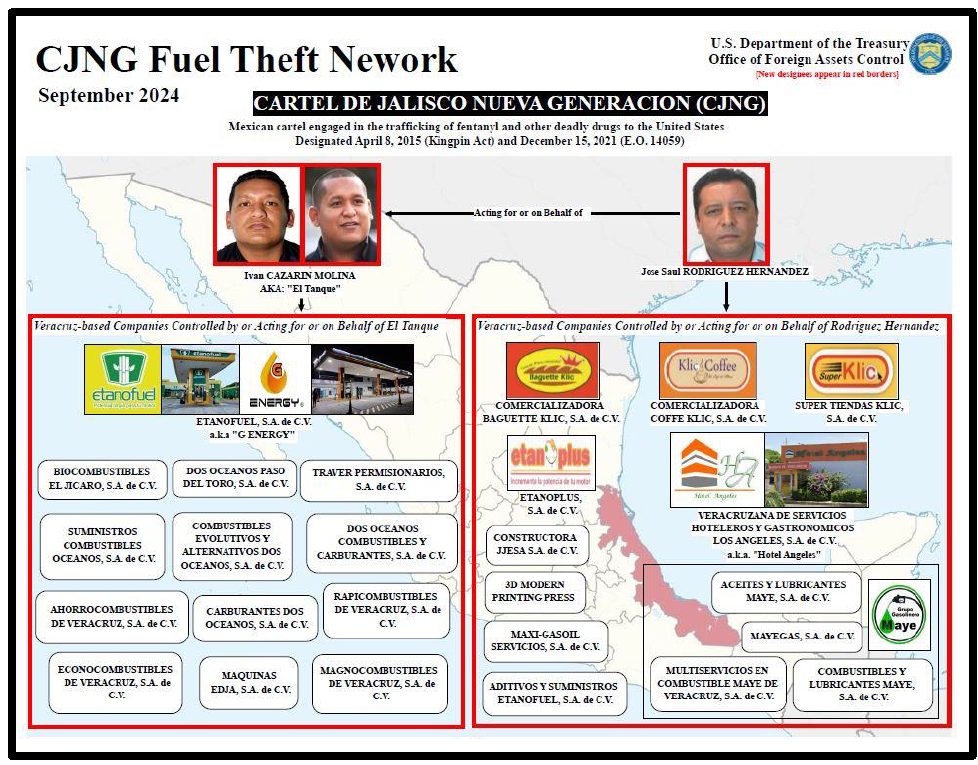
The U.S. Treasury froze the American assets of two Mexican men and nine companies on June 30, accusing them of running a fuel-smuggling ring that funnels tens of millions of dollars a year to Mexico's most powerful cartel. On the same day, Treasury warned banks to watch for the money moving through their accounts.

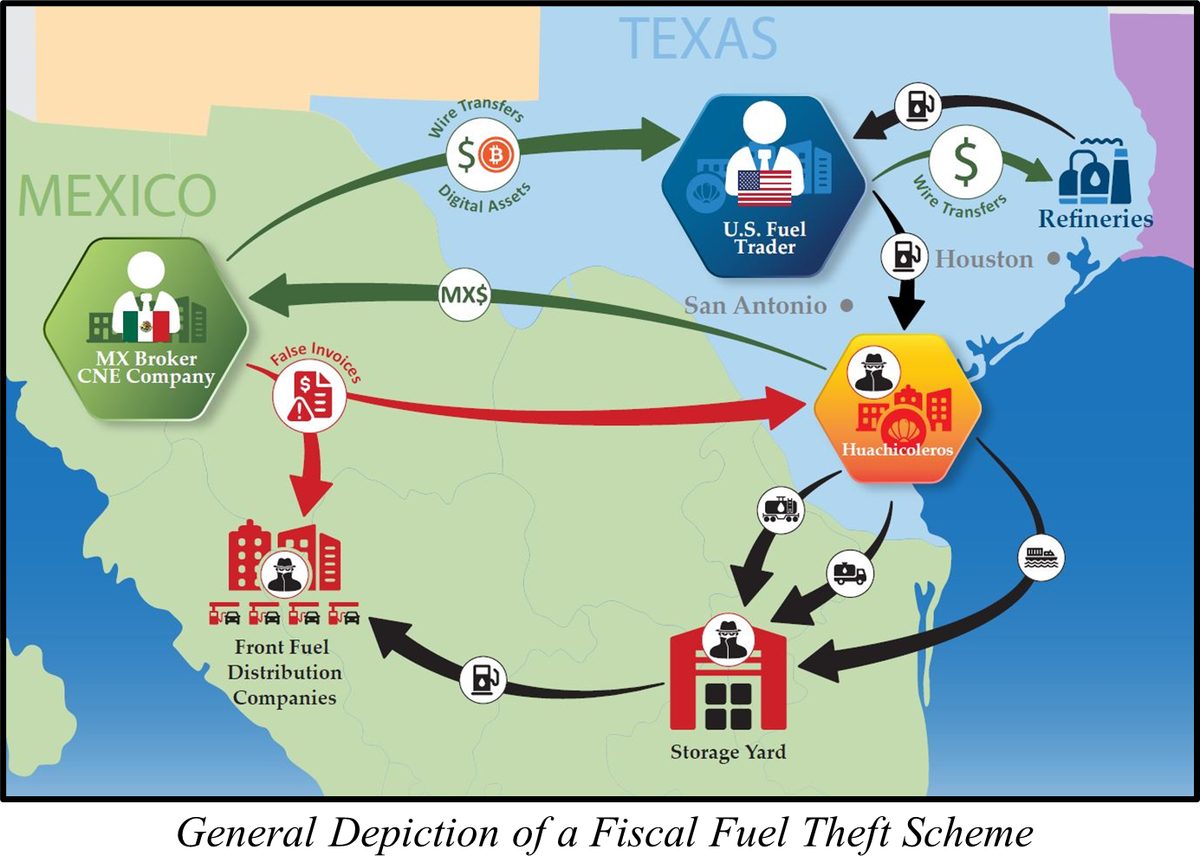
For years, Washington fought the Jalisco New Generation Cartel (CJNG) mainly over drugs. This action goes after a different pipe: stolen and mislabeled fuel, now the cartels' biggest earner after narcotics. The bet is that choking the cash is slower than seizing a drug load, but harder to replace.

Why it matters

Fuel theft is now cartels' largest income source after drugs. Cutting it off tests whether U.S. financial pressure can shrink CJNG's budget.

Questions about this story

No questions yet — be the first to ask.

Key Indicators

11
Targets sanctioned June 30
Two Mexican men and nine firms in transport, finance, and real estate.
$7B
Suspicious activity flagged
Banks reported this much in 160-plus filings over the year after a May 2025 FinCEN alert.
$11B
Annual cost to Mexico
Estimated yearly loss to Mexico from illegal fuel smuggling.
Feb 2025
CJNG named a terrorist group
The 2025 designation opened new sanctions and prosecution tools against the cartel.

Voices

Curated perspectives — historical figures and your fellow readers.

Ever wondered what historical figures would say about today's headlines?

Sign up to generate historical perspectives on this story.

Play

Exploring all sides of a story is often best achieved with Play.

Log in to play. Track your picks, climb the leaderboards. Log in Sign Up
Predict 4 ways this could play out. Contrarian picks score more — points lock when the scenario resolves. Log in to play
Higher or Lower Two numbers from this story. Guess which is bigger. 5 rounds to set a streak. Log in to play
Connections Sixteen names from the news. Find the four hidden groups of four. Log in to play

People Involved

Organizations Involved

Timeline

January 2025 June 2026

4 events Latest: Yesterday
Tap a bar to jump to that date
  1. Trump orders cartel terrorist designations

    Policy

    An executive order directs the State Department to label major cartels as Foreign Terrorist Organizations.

Historical Context

3 moments from history that rhyme with this story — and how they unfolded.

October 1995

Cali Cartel front-company sanctions (1995)

President Clinton used a new executive order to name Colombia's Cali Cartel and hundreds of its front businesses as Specially Designated Narcotics Traffickers. The goal was to freeze the commercial empire, not just the drug loads. Pharmacies, real estate, and finance firms landed on the list.

Then

U.S. assets were blocked and American firms had to cut ties with the listed companies.

Now

The approach became a template for attacking cartel finances, though many businesses simply re-formed under new names.

Why this matters now

It is the original playbook for the June 30 action: sanction the accountants and shell firms, not only the gunmen.

January 2019

Mexico's pipeline fuel-theft crackdown (2019)

Mexico's government shut down major fuel pipelines to stop theft, or huachicol, that was draining billions from state oil company Pemex. The move caused weeks of gas shortages and long station lines. It exposed how deeply theft networks had penetrated the fuel supply.

Then

Fuel shortages spread across central Mexico, and one illegal tap explosion killed more than 100 people.

Now

Theft dipped but adapted; cartels shifted toward smuggling and mislabeled imports rather than tapping pipelines.

Why this matters now

It shows why huachicol is worth billions and why the current scheme leans on customs fraud instead of pipeline taps.

2013-2019

Kingpin sanctions on Sinaloa's business network (2013)

Under the Kingpin Act, OFAC repeatedly sanctioned businesses and family members tied to the Sinaloa Cartel and Joaquín 'El Chapo' Guzmán. Targets ranged from ranches to a soccer team. The aim was to strip the cartel of legitimate cover for its money.

Then

Named companies lost access to the U.S. financial system and legitimate banking partners.

Now

The cartel endured and El Chapo was convicted in 2019, but the sanctions complicated laundering and warned banks off cartel clients.

Why this matters now

It sets expectations: financial pressure squeezes cartel operations over time but rarely delivers a quick knockout.

Sources

(7)