
Pull to refresh
Logo
Justice Department says drone detection does not require wiretap authority

Justice Department says drone detection does not require wiretap authority

Rule Changes

A legal opinion clears cameras, radar, microphones and radio scanners for routine police use, while leaving the interception of drone transmissions to case-by-case review

Overview

Updated 14 minutes ago

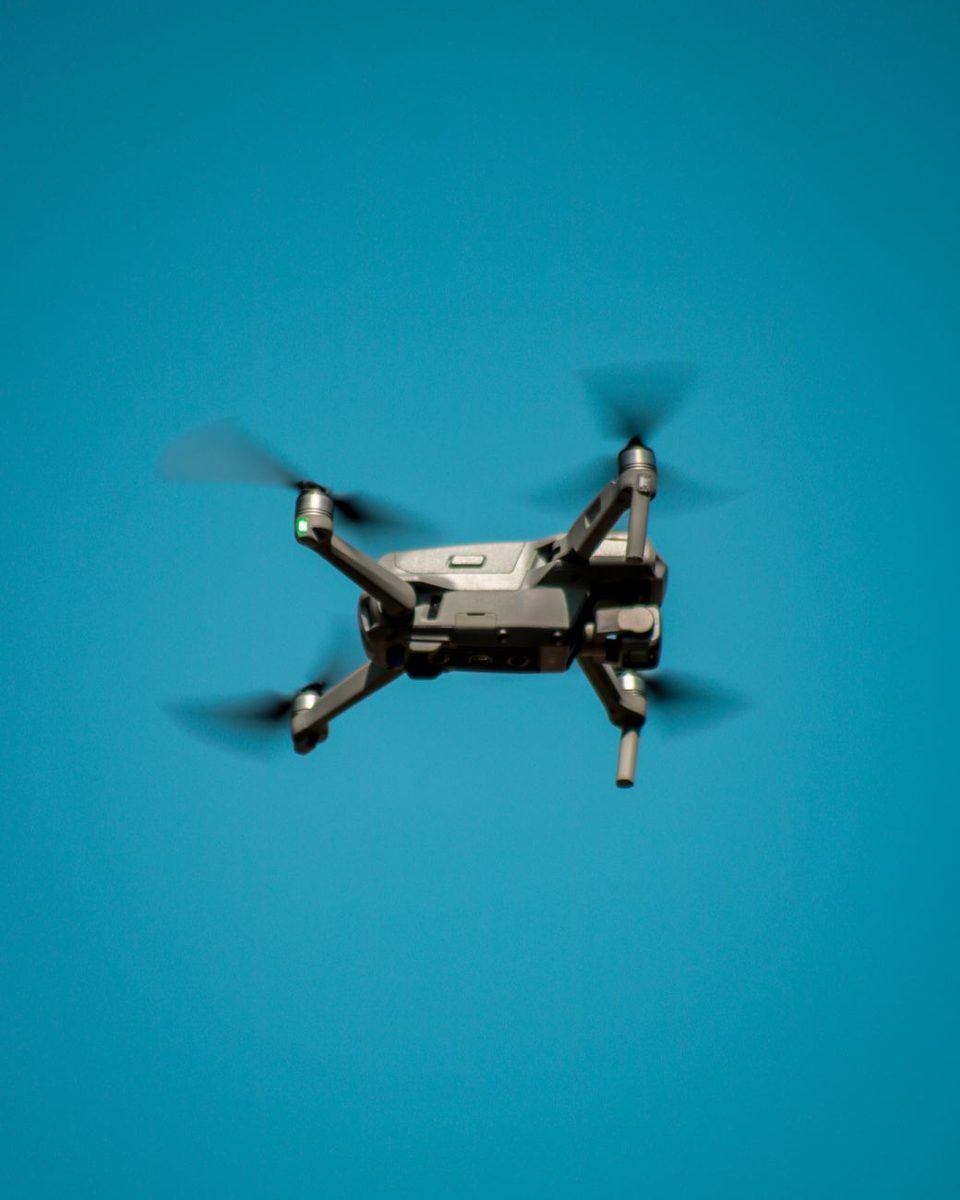
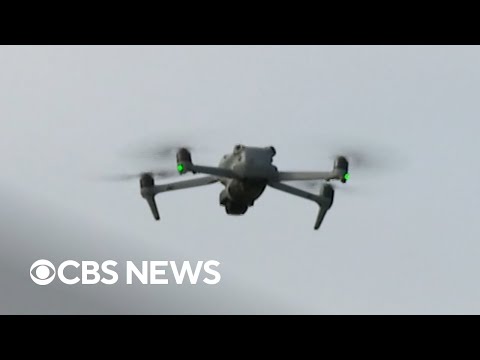
A police department that spots a drone over a stadium can point a camera, a radar set or a radio scanner at it without a wiretap order. The Justice Department said so in a written opinion on Nov. 25, answering a question that had slowed local counter-drone work since agencies began buying the equipment.

The opinion comes from the department's Office of Legal Counsel and works through four detection technologies: acoustic sensors, electro-optical and infrared cameras, radar, and radiofrequency receivers. It concludes that most of them never touch the two federal statutes governing eavesdropping and call records. That matters because state and local agencies had been told their sensors might require specialized counter-drone authority, which few of them held.

Why it matters

Police can point cameras and radios at a drone without a wiretap order; pulling data from the drone's own transmissions is still unsettled.

Questions about this story

Free account needed to ask — your question is kept and asked for you right after sign-up. Answers are public.

No questions yet — be the first to ask.

Key Indicators

4
Detection technologies addressed
Acoustic, electro-optical and infrared, radar, and radiofrequency systems.
2
Federal statutes analyzed
The Pen-Trap Statute and the Wiretap Act.
2
Certification tiers for local agencies
Detection and warning operations carry lighter requirements than mitigation.

Voices

Curated perspectives — historical figures and your fellow readers.

Sign up to generate historical perspectives on this story.

People Involved

Organizations Involved

Timeline

December 2025 November 2026

4 events Latest: Today
Tap a bar to jump to that date
  1. Agencies agree to share counter-drone testing

    Agreement

    Homeland Security, Transportation, the FAA and the FCC coordinate research and evaluation of drone threat systems.

  2. Counter-drone rule for local agencies takes effect

    Rule

    Justice and Homeland Security set two certification tiers, approved technologies, spectrum coordination and privacy requirements.

  3. SAFER SKIES Act signed into law

    Legislation

    Congress extends counter-drone authority to state, local, tribal and territorial agencies as part of the fiscal 2026 defense authorization law.

Scenarios

1

Federal judge suppresses evidence from drone detection

Possible Resolves by Q3 2027

Discussed by: Defense lawyers in drone cases; the Congressional Research Service, which flagged Wiretap Act exposure in its 2026 overview of police counter-drone work

A defendant argues that a radiofrequency sensor captured the contents of a communication rather than just metadata. If a district judge agrees, the evidence is excluded and agencies have to rebuild how their receivers are configured, which would turn a legal opinion into a court-tested limit.

2

Justice Department writes a follow-on opinion on drone traffic

Possible Resolves by Q2 2027

Discussed by: Surveillance-law practitioners, who noted the opinion explicitly leaves interception of drone communications to case-by-case review

The Nov. 25 opinion covers remote identification broadcasts, which are public by design. Everything else a drone transmits, including telemetry and video links, remains unaddressed. A second opinion, or detailed guidance from the Office of Legal Policy, would settle how police may read those signals.

3

State police use new mitigation power at a mass event

Likely Resolves by End of 2027

Discussed by: Legal analysts tracking the SAFER SKIES rule, which created a separate certification tier for mitigation

The 2026 rule lets certified state and local officers not just detect but disable or seize a drone under defined conditions. The first public use at a stadium, prison or large gathering would show whether the two-tier framework works in practice, and whether privacy safeguards in the rule hold up.

Historical Context

3 moments from history that rhyme with this story — and how they unfolded.

December 1967

Katz v. United States (1967)

FBI agents attached a listening device to the outside of a public phone booth in Los Angeles and recorded a bookmaker's calls. The Supreme Court ruled that the interception was a search under the Fourth Amendment, even though the booth was glass and the device never entered it.

Then

Congress passed Title III of the Omnibus Crime Control and Safe Streets Act in 1968, the statute now known as the Wiretap Act.

Now

The decision established the reasonable expectation of privacy test that governs surveillance cases, including the ones the drone opinion works through.

Why this matters now

The Wiretap Act the opinion interprets descends directly from this case, and the same question applies: does the sensor capture a protected communication or just a signal?

January 1986

California v. Ciraolo (1986)

Santa Clara police, suspecting marijuana growing, flew a plane 1,000 feet over a fenced backyard and photographed the plants without a warrant. The Supreme Court held the observation was not a search because the airspace is public and the yard was visible from it.

Then

The photographs were admissible and the case went forward.

Now

Courts have generally allowed warrantless observation from public airspace, a principle that cheap drones now test at far greater scale.

Why this matters now

The opinion addresses the communications statutes, not the Fourth Amendment, so the aerial-observation line of cases still sets the outer boundary for what police may watch.

October 2018

Preventing Emerging Threats Act (2018)

Congress gave the Justice and Homeland Security departments limited authority to detect and, in narrow circumstances, disable drones near covered facilities such as prisons and airports. State and local agencies were left out.

Then

Federal agencies could act; local police watching the same airspace had no equivalent authority and bought sensors with legal risk.

Now

The gap drove years of requests from state and local officials, and Congress closed it in the 2025 SAFER SKIES Act.

Why this matters now

The Nov. 25 opinion says many of the technologies local agencies bought during that gap can be used without the specialized authority at all.

Sources

(9)