FAA moves to standardize commercial drone delivery rules
Rule Changes
After years of one-off waivers, the federal government proposes a repeatable framework for beyond-visual-line-of-sight operations — but safety incidents and municipal land-use approval are emerging as dual bottlenecks
After years of one-off waivers, the federal government proposes a repeatable framework for beyond-visual-line-of-sight operations — but safety incidents and municipal land-use approval are emerging as dual bottlenecks
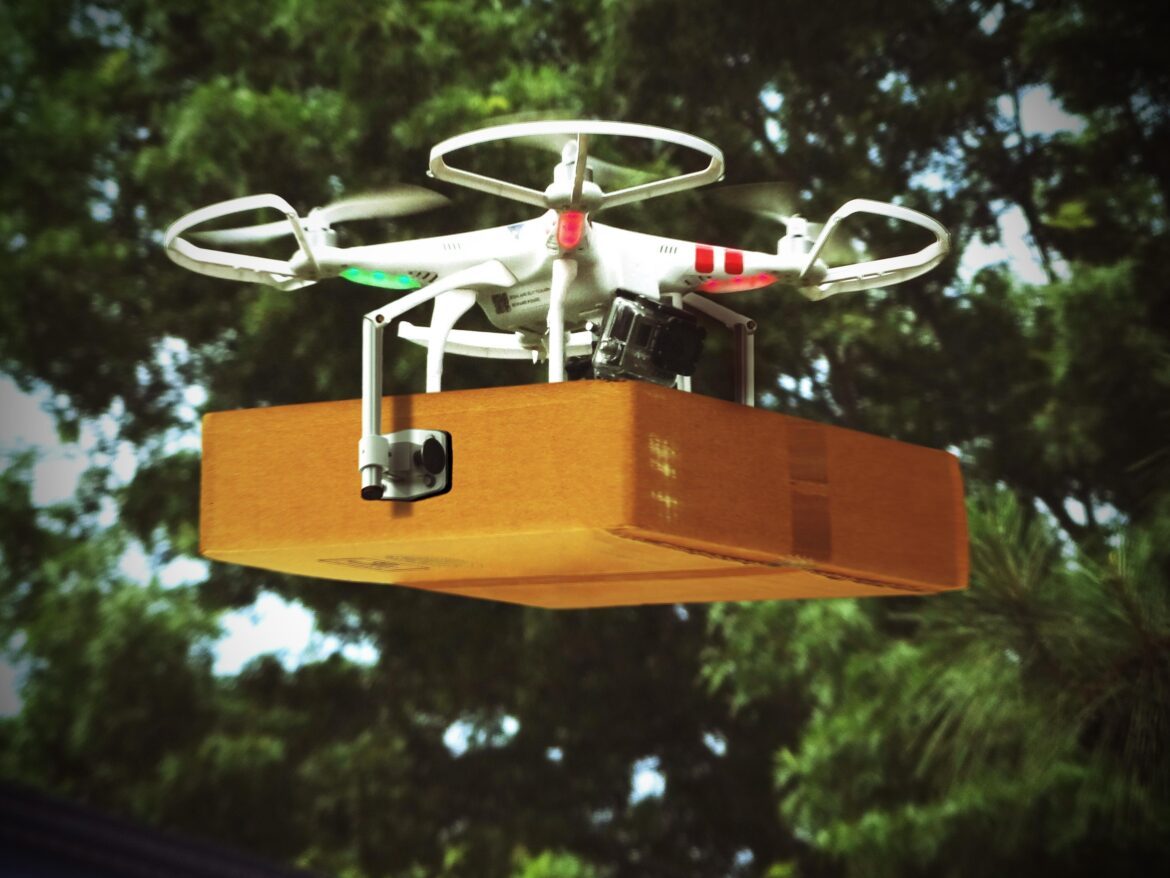
For nearly a decade, every U.S. commercial drone operator wanting to fly beyond a pilot's line of sight needed an individual FAA waiver — a slow, bespoke process that capped the industry at small pilot programs. On August 7, 2025, the FAA proposed Part 108: a new, standardized framework for routine beyond-visual-line-of-sight (BVLOS) operations replacing individual waivers. In January 2026, the FAA reopened the comment period for 14 days (closing February 11, 2026) to refine the rule before finalizing it in March 2026.
This rule standardizes what was previously only available through individual waivers, a major shift from Part 107's 2016 framework. Federal flight permissions are being standardized, but the emerging bottleneck is municipal land-use approval: zoning variances, noise ordinances, community opposition, and local council votes over where drone hubs can operate.
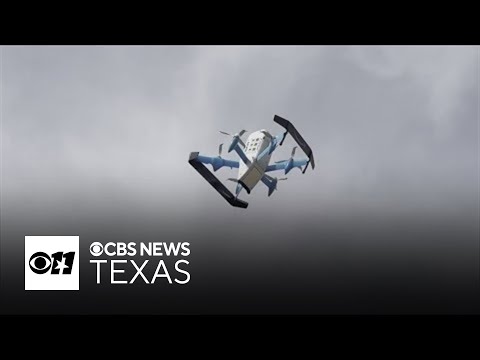
Safety incidents involving Amazon Prime Air's MK30 drone, including crashes into apartment buildings, internet cables, and construction cranes, are intensifying scrutiny of sense-and-avoid systems. They're also raising pressure on the FAA for stricter oversight before finalizing Part 108. The regulatory bottleneck is migrating from the sky to the ground, and from federal approval to operational safety validation.
Questions about this story
Free account needed to ask — your question is kept and asked for you right after sign-up. Answers are public.
No questions yet — be the first to ask.
Key Indicators
2,000,000+
Zipline Total Deliveries
Zipline surpassed 2 million global deliveries in January 2026, more than all other drone delivery providers combined; Wing has completed just over 500,000
125,000,000+
Zipline Autonomous Miles
Zipline drones have flown over 125 million autonomous commercial miles, delivering over 20 million items as of January 2026
7
Amazon Prime Air Markets
Amazon expanded to Kansas City on February 9, 2026, its seventh U.S. metropolitan area, despite recent MK30 crash incidents
700+
Pages in proposed rule
The BVLOS Notice of Proposed Rulemaking is the largest drone-specific regulation the FAA has ever issued
3,000+
Public comments received
Comments submitted during the 60-day period that closed October 6, 2025, with a 14-day reopened comment window closing February 11, 2026
16 events
Latest: February 9th, 2026 · 8 months ago
Showing 8 of 16
JK to step
Tap a bar to jump to that date
Jump to
February 2026
Amazon Prime Air Launches in Kansas City, Seventh U.S. Market
LatestIndustry Expansion
Amazon activated Prime Air drone delivery in Kansas City, Kansas, offering deliveries up to 5 pounds within a 7.5-mile radius. The launch occurred five days after an MK30 drone crashed into a Richardson, Texas apartment building, intensifying safety scrutiny.
Amazon MK30 Drone Crashes Into Richardson, Texas Apartment Building
Safety Incident
An Amazon Prime Air MK30 hexacopter collided with an apartment complex on Routh Creek Parkway in Richardson, Texas, leaving propeller fragments and smoke. The incident raised questions about the drone's sense-and-avoid system's ability to detect stationary obstacles.
January 2026
FAA Reopens Part 108 Comment Period for 14 Days
Regulatory Process
The FAA reopened the comment period on the proposed Part 108 BVLOS rule for 14 days, with comments due February 11, 2026. The reopening signals active refinement of the rule ahead of expected March 2026 finalization.
Zipline Raises $600 Million, Surpasses 2 Million Deliveries
Industry Milestone
Zipline announced $600 million in new funding at a $7.6 billion valuation and revealed it had surpassed 2 million global deliveries and 125 million autonomous commercial miles. The company plans to expand to at least four new U.S. states in 2026.
December 2025
FAA Releases Draft Programmatic Environmental Assessment for Drone Delivery
Regulatory Process
The FAA published a draft Programmatic Environmental Assessment that would allow it to clear environmental reviews for drone delivery operations nationwide rather than conducting individual assessments for each site — potentially eliminating the biggest procedural bottleneck for scaling delivery hubs.
October 2025
Part 108 Comment Period Closes With 3,000+ Submissions
Regulatory Process
The FAA received over 3,000 public comments on the proposed rule. Industry reaction was sharply divided: delivery operators supported standardization, while smaller operators and manned aviation groups warned the rule would restrict operations more than existing waivers.
August 2025
FAA Publishes Proposed Part 108 BVLOS Rule
Regulation
The FAA published a 700-plus-page proposed rule to standardize beyond-visual-line-of-sight drone operations, replacing the existing system of individual waivers with a performance-based framework scaled by operational risk. The rule would create permits for lower-risk operations and certificates for complex ones.
June 2025
Walmart and Wing Launch 100-Store Drone Delivery Expansion
Industry Expansion
Walmart and Wing announced drone delivery from 100 stores across five metro areas — Atlanta, Charlotte, Houston, Orlando, and Tampa — the largest single drone delivery deployment ever attempted.
April 2025
Drone Integration and Zoning Act Introduced in Senate
Legislation
Senate Bill 1249 proposed granting states and property owners control over airspace below 200 feet, directly challenging the FAA's exclusive authority and threatening the viability of low-altitude drone delivery corridors.
March 2025
Zipline Surpasses 100 Million Autonomous Miles
Industry Milestone
Zipline reached 100 million commercial autonomous miles flown across operations in 10 countries, underscoring the gap between demonstrated technical capability and the pace of U.S. regulatory approval.
July 2024
College Station Mayor Asks FAA to Block Amazon Drone Expansion
Community Opposition
College Station, Texas Mayor John Nichols wrote to the FAA requesting it halt Amazon Prime Air's plan to increase flights from 200 to 469 per day, citing approximately 150 resident complaints about noise.
May 2024
FAA Reauthorization Act Signed Into Law
Legislation
Congress passed the FAA Reauthorization Act of 2024, which directed the agency to develop standardized BVLOS rules and adopt programmatic environmental review approaches for drone delivery, setting deadlines for the rulemaking.
January 2021
Part 107 Amended for Night Flying and Operations Over People
Regulation
The FAA updated Part 107 to allow night operations and flights over people without individual waivers, removing two significant barriers to commercial drone scaling.
September 2019
UPS Flight Forward Launches First Commercial Drone Deliveries
Milestone
UPS Flight Forward received its Part 135 certificate and began delivering medical supplies by drone at WakeMed hospital in Raleigh, North Carolina.
April 2019
Wing Receives First FAA Drone Delivery Air Carrier Certificate
Milestone
Wing Aviation became the first company to receive an FAA Part 135 air carrier certificate for drone delivery operations, transitioning from experimental waivers to an operator license.
August 2016
Part 107 Takes Effect, Opening Commercial Drone Flights
Regulation
The FAA's Part 107 rule took effect, creating the first standardized pathway for commercial drone operations. Flights were limited to under 400 feet, within visual line of sight, and under 55 pounds.
Scenarios
1
FAA Finalizes Part 108, Drone Delivery Scales Rapidly in Permissive Municipalities
Likely
Discussed by: DLA Piper, Pillsbury Law, AUVSI — industry groups and law firms tracking the rulemaking expect finalization by mid-2026
The FAA publishes a final Part 108 rule by spring 2026, incorporating industry feedback to smooth the transition from Part 107 waivers. The programmatic environmental assessment clears site-level review bottlenecks. Operators like Wing and Zipline rapidly expand in municipalities that have already rezoned for drone infrastructure — primarily Sun Belt suburbs with cooperative local governments. The constraint shifts entirely to community acceptance and local land-use approvals, creating a patchwork where drone delivery is available in some metro areas but not others. This scenario is the path of least regulatory resistance and tracks the current trajectory.
2
Local Opposition and Noise Complaints Force Industry to Slow Expansion
Possible
Discussed by: NBC News, Fortune, and legal scholars at SMU Dedman School of Law analyzing federal preemption limits on drone noise regulation
Even with federal BVLOS rules in place, community opposition — amplified by the College Station and Wylie, Texas precedents — spreads to new markets. Municipal councils impose restrictive zoning requirements, flight-hour limits, or outright bans on drone launch facilities in residential areas. The Drone Integration and Zoning Act (S.1249) or similar legislation gains traction, granting states and property owners authority over low-altitude airspace. Industry growth stalls not because of federal rules but because operators cannot secure enough ground-level sites in attractive markets.
3
Final Rule Heavily Restricts Small Operators, Concentrates Market Among Large Players
Possible
Discussed by: Commercial UAV News, AOPA (Aircraft Owners and Pilots Association), and operators with existing Part 107 waivers who submitted critical comments
The FAA finalizes Part 108 largely as proposed, with its emphasis on highly automated systems, simplified user interfaces, and complex certification requirements. The framework proves workable for well-capitalized operators like Wing, Zipline, and Amazon but prohibitively expensive for smaller drone companies. The Part 107 waiver pathway is eliminated without a clear transition mechanism. The U.S. drone delivery market consolidates around three to four large operators, while agricultural, inspection, and public safety drone operators find themselves more restricted than before.
4
Rulemaking Stalls, Industry Continues Under Waiver System
Unlikely
Discussed by: Government Accountability Office (GAO), which flagged FAA timeline risks in a June 2025 audit, and AeroVision Global tracking regulatory delays
Political shifts, budget constraints, or unresolved technical concerns push the final rule beyond 2026. The FAA continues to process BVLOS operations through individual Part 107 waivers, limiting scale. Operators with existing waivers — particularly Zipline, which holds a waiver through January 2028 — continue growing incrementally, but the industry cannot reach the scale needed to make drone delivery economically viable in most markets. U.S. operators fall further behind international competitors operating under more permissive frameworks in Rwanda, Australia, and the European Union.
5
Safety Incidents Force FAA to Impose Mandatory Reporting and Tighter Oversight Before Part 108 Finalization
Possible
Discussed by: DroneXL analysis, AOPA (Aircraft Owners and Pilots Association), FAA safety review boards
Amazon Prime Air's recurring MK30 collisions with stationary objects — cranes, cables, apartment buildings — trigger FAA and NTSB investigations that delay Part 108 finalization beyond March 2026. The FAA imposes mandatory incident reporting requirements for all operators and tightens sense-and-avoid system validation standards. The final rule incorporates stricter safety thresholds, raising compliance costs for smaller operators and potentially consolidating the market further around well-capitalized players with proven safety records.
Historical Context
3 moments from history that rhyme with this story — and how they unfolded.
1 of 3
August 2016
Part 107 Commercial Drone Rules (2016)
The FAA finalized Part 107, the first standardized regulatory framework for commercial drone flights in the United States. Before Part 107, every commercial drone operator needed an individual exemption under Section 333 of the FAA Modernization and Reform Act — a process that generated a backlog of months. Part 107 replaced that with a licensing test and a set of operating rules: fly under 400 feet, within visual line of sight, under 55 pounds, and during daylight.
Then
The number of commercially registered drones surged from a few thousand to over 300,000 within two years, creating the foundational market for aerial surveying, inspection, and photography.
Now
Part 107 proved that standardized rules could unlock a commercial drone sector — but its visual-line-of-sight restriction became the binding constraint for delivery and other autonomous applications, leading directly to the Part 108 effort nine years later.
Why this matters now
Part 108 follows the same regulatory playbook as Part 107: replacing bespoke waivers with standardized rules. The question is whether it will produce a similar market acceleration — or whether ground-level constraints (zoning, noise, community acceptance) will limit the effect in ways that airspace rules alone did not.
2 of 3
2011-2017
Rideshare Regulation by Cities (2011-2017)
When Uber and Lyft launched in major U.S. cities starting in 2011, they operated in a regulatory gray area — licensed neither as taxis nor as private car services. Over the next six years, the regulatory battle played out city by city. Some municipalities (San Francisco, Austin) initially banned or severely restricted the services. Others (most Sun Belt cities) welcomed them. State legislatures eventually passed framework laws, but implementation still varied by jurisdiction.
Then
Rideshare companies grew rapidly in permissive cities while facing bans and legal challenges in restrictive ones, creating a patchwork regulatory map across the country.
Now
By 2017, all 50 states had legalized rideshare in some form. But the city-by-city fights — over licensing, insurance, driver background checks, airport access — delayed national scaling by years and shaped the companies' deployment strategies permanently.
Why this matters now
Drone delivery faces a structurally similar challenge: even as federal rules standardize flight permissions, ground-level deployment requires municipal approval for launch sites, zoning, and noise. The rideshare precedent suggests the industry may grow fastest in permissive jurisdictions while spending years fighting for access in others.
3 of 3
October 2016 - Present
Zipline's Rwanda Blood Delivery Program (2016-Present)
In October 2016, Zipline launched the world's first national drone delivery service in Rwanda, dropping blood and medical supplies to remote hospitals by parachute. The Rwandan government adopted a performance-based regulatory framework: rather than prescribing how drones must operate, it specified safety outcomes and let operators demonstrate compliance. Within three years, Zipline was serving over 80% of Rwanda's hospitals.
Then
Maternal mortality from postpartum hemorrhage dropped measurably in areas served by Zipline, as hospitals that previously waited hours for blood deliveries received them in under 30 minutes.
Now
Rwanda became the global proof-of-concept for routine drone delivery at national scale, with Zipline completing over 2 million deliveries and 100 million autonomous miles. The Rwandan model influenced drone regulators worldwide.
Why this matters now
The FAA's proposed Part 108 rule adopts a performance-based approach similar to Rwanda's framework — a direct acknowledgment that the prescriptive, waiver-by-waiver model was failing. But the U.S. faces complexity that Rwanda did not: a dense existing aviation system, strong local government authority over land use, and politically organized community opposition to noise.

![BVLOS: The Future of Commercial Drone Ops [New for 2026]](/api/story/1502/photo/1588)