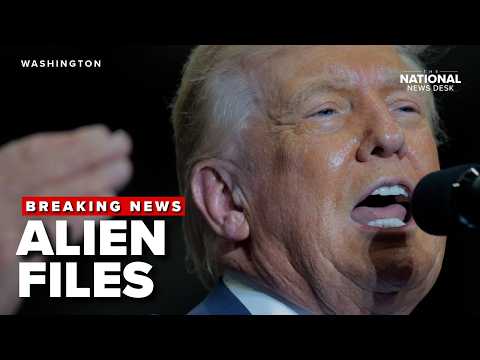
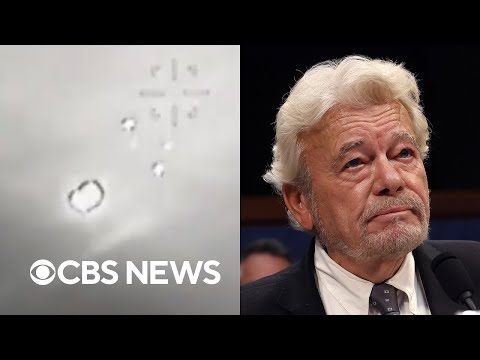
For nearly eight decades, the United States government has investigated reports of unidentified objects in its airspace while keeping most of its findings classified. On February 19, 2026, Trump directed Defense Secretary Pete Hegseth and federal agency heads to identify and release government files on UAPs, UFOs, and extraterrestrial life — the broadest UFO transparency directive ever issued.
The directive arrives at a peculiar moment: former President Barack Obama recently told a podcast audience that aliens are 'real,' then walked the comment back. Congress has held three major hearings since 2023 with military witnesses testifying under oath about unexplained encounters; a 2024 Pentagon report found no evidence that government investigations confirmed extraterrestrial life. Whether Trump's order produces genuinely new information will depend on how agencies interpret a directive that lacks specific timelines, enforcement mechanisms, or clarity on whether classified material will reach the public.
Questions about this story
Free account needed to ask — your question is kept and asked for you right after sign-up. Answers are public.
No questions yet — be the first to ask.
Key Indicators
78
Years of government UAP investigations
Formal U.S. government programs investigating unidentified aerial objects date to 1947's Project Sign.
12,618
Project Blue Book sightings logged
Total reports collected from 1947 to 1969, with 701 remaining officially 'unidentified.'
0
Confirmed extraterrestrial cases
The Pentagon's All-domain Anomaly Resolution Office reported in 2024 that no investigation has confirmed extraterrestrial activity.
3
Congressional UAP hearings since 2023
The House and Senate have held major public hearings featuring military witnesses and whistleblowers.
16 events
Latest: February 20th, 2026 · 8 months ago
Showing 8 of 16
JK to step
Tap a bar to jump to that date
Jump to
February 2026
Trump Directs Pentagon to Identify and Release UAP Files
LatestExecutive Action
Trump posted on Truth Social directing Defense Secretary Hegseth and other agencies to 'begin the process of identifying and releasing' government files on UAP, UFOs, and extraterrestrial life, citing 'tremendous interest.' The directive did not specify timelines, scope, or whether classified material would be made public.
Trump Accuses Obama of Leaking Classified Information
Statement
Trump characterized Obama's podcast comments as disclosing classified information, calling it a 'big mistake,' though he did not specify which information he believed was secret.
Obama Walks Back Alien Remarks
Statement
Obama clarified that he saw no evidence during his presidency that extraterrestrials have made contact with Earth, citing the vast distances between solar systems.
Obama Says Aliens Are 'Real' on Podcast
Statement
Former President Obama told podcast host Brian Tyler Cohen that aliens are 'real but I haven't seen them' and that they aren't kept at Area 51. The comment went viral and triggered a news cycle about government knowledge of extraterrestrial life.
January 2025
Trump Orders Declassification of Assassination Records
Executive Action
Trump signed an executive order releasing classified files on the assassinations of John F. Kennedy, Robert F. Kennedy, and Martin Luther King Jr. — establishing a precedent for his later UAP directive.
November 2024
Second House UAP Hearing Features Expanded Testimony
Hearing
The House Oversight Committee held a follow-up hearing with returning witnesses including Commander David Fravor and pilot Ryan Graves, alongside testimony about an allegedly classified program called 'Immaculate Constellation' that tracked UAP.
March 2024
Pentagon Historical Report Finds No Evidence of Alien Technology
Report
AARO released a historical review covering all U.S. government UAP investigations from 1945 to present, concluding that no investigation had confirmed off-world technology or that any secret reverse-engineering program exists.
December 2023
Stripped-Down UAP Disclosure Provisions Signed Into Law
Legislative
President Biden signed the 2024 defense spending bill, which included a weakened version of Senator Schumer's UAP Disclosure Act. Key provisions — including an independent review board and eminent domain over recovered technologies — were removed during negotiations.
July 2023
Whistleblower Tells Congress U.S. Has Recovered Non-Human Craft
Hearing
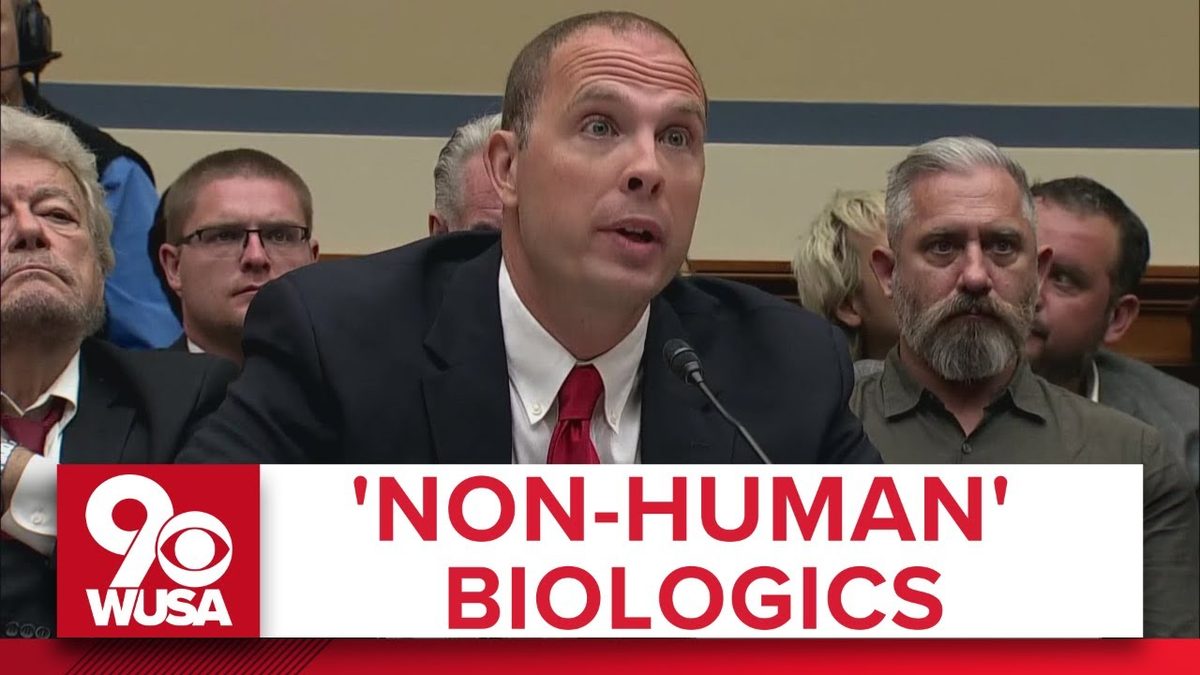
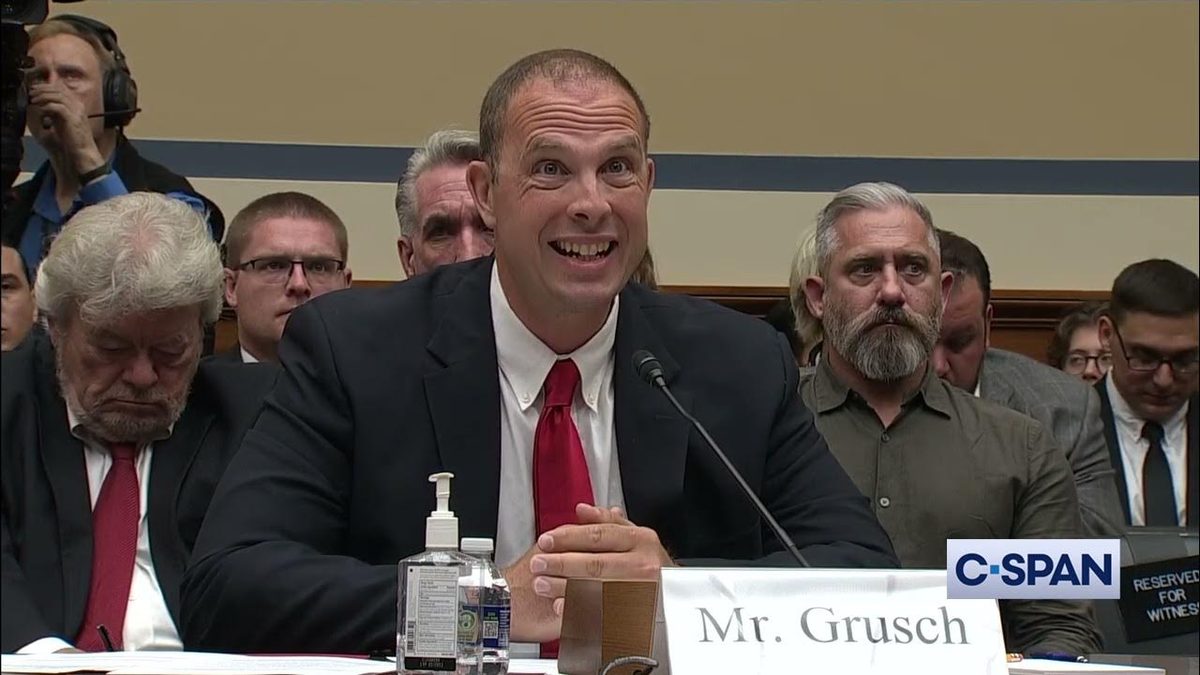
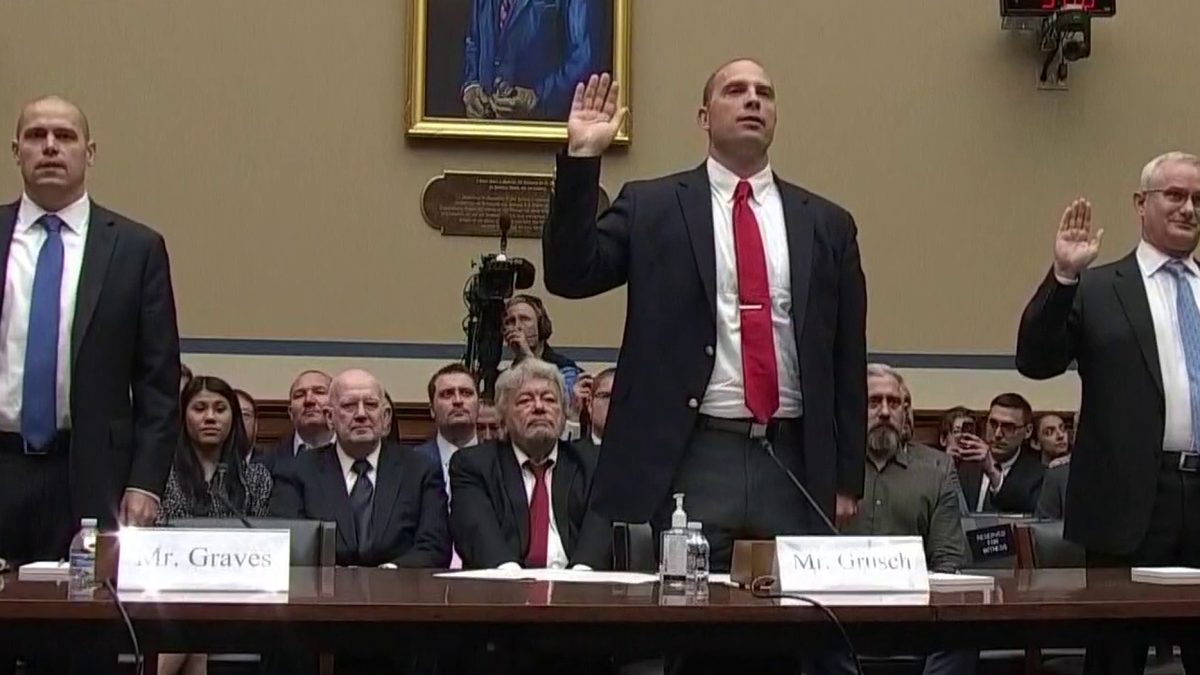
Former intelligence officer David Grusch testified under oath before the House Oversight Committee that the government operates a secret multi-decade program to retrieve and reverse-engineer crashed UAP, and that 'non-human biologics' had been recovered. The Pentagon said it found no evidence to support these claims.
The Department of Defense created AARO as a permanent office to investigate UAP reports across all domains — air, sea, space, and land — with bipartisan congressional backing.
April 2020
Pentagon Officially Releases Navy UAP Videos
Disclosure
The Department of Defense formally released three infrared videos showing encounters between Navy aircraft and unidentified objects, confirming the footage was authentic and the objects remained unidentified.
December 2017
New York Times Reveals Secret Pentagon UAP Program
Disclosure
The New York Times published an investigation revealing the Advanced Aerospace Threat Identification Program, a classified Pentagon effort to study UAP reports. The story included Navy infrared videos of unexplained encounters and was catalyzed by former program director Luis Elizondo's resignation.
November 2004
Navy Pilots Encounter 'Tic Tac' Object Off California
Incident
Pilots from the USS Nimitz carrier group encountered and recorded a white, wingless object that appeared to defy known flight characteristics. The infrared video later became central to the public UAP debate.
December 1969
Project Blue Book Terminated
Policy
The Air Force shut down its public UFO investigation program after a University of Colorado study concluded no sighting had demonstrated extraterrestrial origin or national security threat.
March 1952
Air Force Launches Project Blue Book
Investigation
The Air Force replaced earlier programs with Project Blue Book, which would investigate 12,618 reported sightings over 17 years, leaving 701 officially unexplained.
June 1947
First Major UFO Wave Triggers Government Investigation
Origin
Businessman Kenneth Arnold reported nine unusual objects near Mount Rainier in Washington State, coining the term 'flying saucers' and prompting the U.S. Air Force to establish Project Sign.
Scenarios
1
Agencies Release Previously Classified UAP Records Revealing New Details
Possible
Discussed by: UAP transparency advocates including former Navy aviator Ryan Graves and Senator John Fetterman, who called it 'a bipartisan thing'
If the directive leads to a structured declassification review similar to the JFK records process, agencies could release sensor data, intelligence assessments, or investigation files not previously available. This would likely take months, require inter-agency coordination, and still involve redactions for sources and methods. Even without confirming extraterrestrial life, new details about military encounters or past investigation conclusions could significantly advance public understanding.
2
Directive Produces Limited Results as Agencies Cite National Security Exemptions
Likely
Discussed by: Defense analysts and former intelligence officials noting that past declassification efforts have been narrowed during implementation
Without an executive order, specific timelines, or enforcement mechanisms, agencies may interpret the directive narrowly. The Pentagon could release material already cleared for public distribution — such as AARO's existing reports — while withholding classified sensor data, intelligence community assessments, or information about detection capabilities. This outcome would mirror the pattern of incremental disclosure that has characterized the topic since 2017.
3
Congress Uses Directive as Leverage to Pass Stronger UAP Disclosure Law
Possible
Discussed by: Representatives Anna Paulina Luna and Tim Burchett, and Senator Schumer, who has advocated for applying the JFK Records Act model to UAP files
Trump's directive could give congressional UAP advocates the political cover to revive the stripped provisions of the 2023 UAP Disclosure Act — particularly an independent review board and the presumption of disclosure for UAP records. If legislation passes with real enforcement mechanisms, it would be more durable than a social media directive and harder for agencies to circumvent. Bipartisan interest exists, but defense industry opposition previously blocked key provisions.
4
Public Interest Fades as Released Files Confirm Existing Pentagon Findings
Possible
Discussed by: Skeptics including Pentagon officials who have repeatedly stated AARO found no evidence of extraterrestrial technology
If released files largely confirm what AARO has already reported — that no investigation has verified extraterrestrial activity and that many sightings have prosaic explanations — public and media interest could dissipate. The 2024 AARO historical report attributed persistent rumors of secret programs to 'circular reporting from a group of individuals who believe this to be the case.' A release that reinforces this conclusion would satisfy transparency demands while disappointing those expecting revelations.
Historical Context
3 moments from history that rhyme with this story — and how they unfolded.
1 of 3
October 1992 - March 2025
JFK Assassination Records Declassification (1992-2025)
Congress passed the President John F. Kennedy Assassination Records Collection Act in 1992, mandating the presumption of disclosure for all government records related to the assassination. The law created an independent review board and ultimately led to the release of nearly 5 million pages — roughly 99% of the collection. President Trump ordered the release of remaining withheld documents in January 2025.
Then
The review board processed millions of documents and established precedent for overriding agency classification decisions on a specific topic.
Now
The JFK Records Act became the model for UAP transparency legislation. Senator Schumer explicitly cited it when drafting the UAP Disclosure Act of 2023.
Why this matters now
Trump's UAP directive follows his JFK declassification order by 13 months, and supporters hope it follows the same playbook. The key difference: the JFK Act was a law with enforcement mechanisms, while the UAP directive is a social media post without specified legal authority.
2 of 3
December 1969
Project Blue Book Termination and Aftermath (1969)
The Air Force terminated Project Blue Book, its 17-year public investigation of 12,618 UFO reports, after the Condon Committee at the University of Colorado concluded that further study was unlikely to advance science. Of the reports logged, 701 remained officially unexplained. The program's closure left the U.S. government without a public-facing UFO investigation for over four decades.
Then
The government stopped publicly accepting and investigating UFO reports, pushing the topic to the fringes of official discourse.
Now
The 48-year gap between Blue Book's closure and the Pentagon's 2017 acknowledgment of AATIP fueled distrust and conspiracy theories that now complicate transparency efforts.
Why this matters now
Blue Book's closure created the secrecy vacuum that today's disclosure efforts are trying to fill. The tension between 'we investigated and found nothing extraordinary' and 'we stopped looking publicly for half a century' remains central to the debate.
3 of 3
December 2017
2017 New York Times UAP Investigation (2017)
The New York Times published an investigation revealing the Advanced Aerospace Threat Identification Program, a classified $22 million Pentagon effort to study UAP reports run by Luis Elizondo. The story included infrared video of a 2004 encounter by Navy pilots from the USS Nimitz. Elizondo had resigned from the Pentagon months earlier, protesting what he called excessive secrecy around the program.
Then
The Pentagon confirmed the program and the videos were authentic, marking the first official acknowledgment of an active UAP investigation program since 1969.
Now
The story catalyzed congressional interest, leading to the creation of AARO, multiple hearings, and the UAP Disclosure Act — fundamentally shifting UAP from a fringe topic to a legislative priority.
Why this matters now
The 2017 story established the disclosure trajectory that Trump's directive now accelerates. Each subsequent step — confirmed videos, whistleblower testimony, legislative action — built on the credibility that first story established.