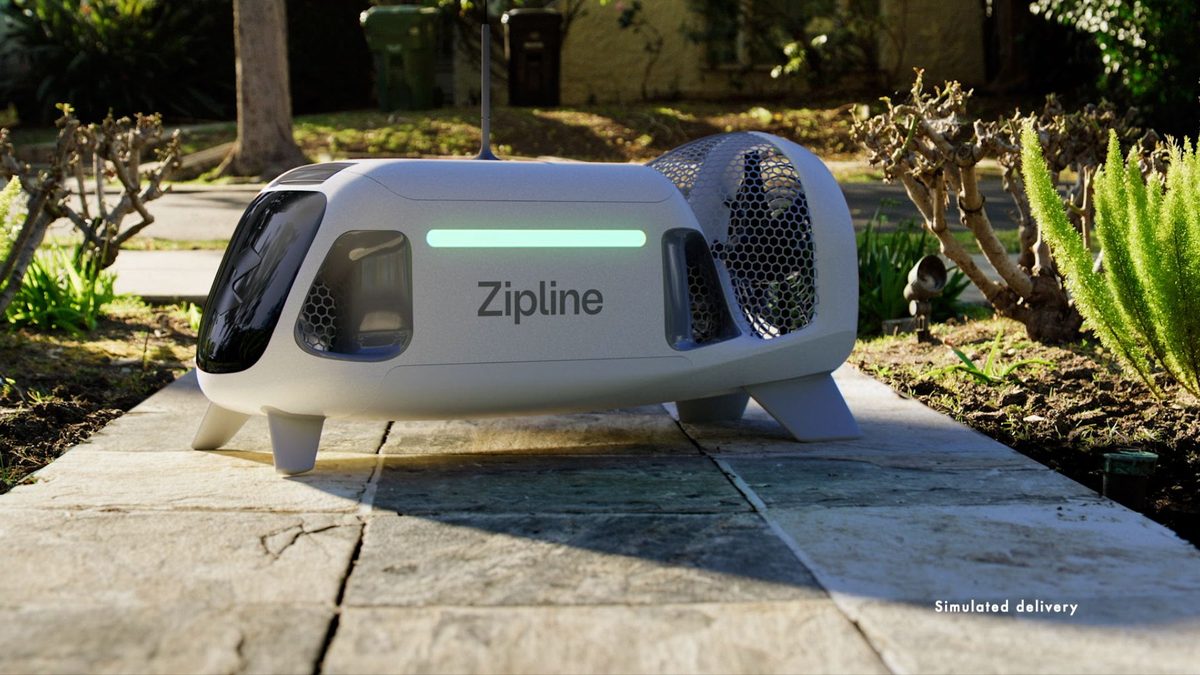
Zipline spent eight years delivering blood to remote Rwandan clinics before Americans could order lunch from one of its drones. Now the company has crossed 2 million commercial deliveries—more than every competitor combined—and raised $600 million in January 2026 to bring its autonomous aircraft to Houston and Phoenix. At a $7.6 billion valuation, Zipline's strategy is proving the drone delivery market by starting where regulation permitted, then scaling into U.S. consumer markets.
The expansion marks a pivot from proving drones can work to proving they can scale—just as regulatory and competitive pressures intensify. Wing's January announcement of 150-store Walmart expansion to 40 million Americans and California's challenge to FAA environmental approvals show the market entering a critical phase. With FAA's final Part 108 BVLOS rule expected by March-April 2026, the question shifts from whether drone delivery is possible to which companies survive the race to ubiquity.
Questions about this story
Free account needed to ask — your question is kept and asked for you right after sign-up. Answers are public.
No questions yet — be the first to ask.
Key Indicators
2M+
Commercial Deliveries
More than all other drone delivery companies combined
20 events
Latest: January 28th, 2026 · 8 months ago
Showing 8 of 20
JK to step
Tap a bar to jump to that date
Jump to
January 2026
FAA Reopens Part 108 Comment Period on Right-of-Way Rules
LatestRegulation
FAA reopens comment period for Part 108 BVLOS rulemaking through February 11, 2026, focusing specifically on right-of-way rules and electronic conspicuity devices after receiving over 3,100 comments with more than half addressing the contentious right-of-way proposal.
California AG Challenges FAA Drone Environmental Review
Regulation
California AG Rob Bonta leads 17-state coalition criticizing FAA's Draft Programmatic Environmental Assessment, asserting it fails to adequately address lithium battery fire risks and other environmental impacts of commercial drone delivery.
Autonomous Last Mile Delivery Market Report
Market
Industry report highlights Zipline's 1.45 million commercial deliveries in 2025 as demonstration of growing feasibility of autonomous delivery networks.
Delivery Drones Market Projected at $27.5B by 2031
Market
Global delivery drones market analysis projects growth from $5.04 billion in 2025 to $27.5 billion by 2031, expanding at 32.68% CAGR driven by consumer demand for instant fulfillment.
2 Million Deliveries and $600M Funding
Funding
Zipline announces it has surpassed 2 million deliveries, raised $600 million at $7.6 billion valuation, and will expand to Houston and Phoenix.
Wing Launches Houston Operations with Walmart
Operations
Wing begins Houston drone deliveries as part of 150-store Walmart expansion reaching 40 million Americans across major metros including Los Angeles, St. Louis, Cincinnati, and Miami.
Amazon Begins UK Drone Test Flights
Operations
Amazon Prime Air begins test flights in Darlington, UK following Civil Aviation Authority approval, with official service launch planned for late 2026.
FAA Part 108 Final Rule Timeline Clarified
Regulation
Industry analysts project FAA will publish final Part 108 BVLOS rule by March-April 2026 following executive order deadline, with implementation expected 6-12 months after publication.
August 2025
FAA Proposes BVLOS Rule
Regulation
FAA releases 700-page proposed rule for routine beyond-visual-line-of-sight drone operations.
March 2025
100 Million Autonomous Miles
Operations
Zipline crosses 100 million autonomous commercial miles flown without serious injury.
January 2025
Walmart Partnership Launches
Partnership
Zipline begins Platform 2 deliveries from Walmart stores in Dallas-Fort Worth.
April 2024
1 Million Deliveries Milestone
Operations
Zipline completes its one millionth commercial drone delivery in Ghana.
April 2023
$4.2 Billion Valuation
Funding
Zipline raises $330 million in Series F funding, increasing valuation by 55%.
March 2023
Platform 2 Unveiled
Technology
Zipline announces Platform 2, a quieter drone system using a self-steering droid to lower packages to homes from 300 feet.
October 2022
First U.S. Healthcare Delivery
Operations
Zipline begins commercial deliveries in Salt Lake City with Intermountain Healthcare.
May 2020
COVID-19 Delivery Operations
Operations
Zipline begins delivering COVID-19 tests, PPE, and eventually vaccines across Ghana and Rwanda.
April 2019
Ghana Operations Begin
Operations
First Zipline drone delivers yellow fever vaccines to Tafo Hospital in Ghana under government contract.
October 2016
First Commercial Drone Delivery Service Launches
Operations
Zipline begins delivering blood and medical supplies to rural clinics in Rwanda—the world's first commercial drone delivery operation.
April 2016
Series A Funding from Sequoia
Funding
Sequoia Capital and Google Ventures make first investments in Zipline.
January 2014
Zipline Founded
Corporate
Keller Rinaudo Cliffton and co-founders pivot from Romotive to develop fixed-wing drones for medical delivery.
Discussed by: TechCrunch, healthcare industry analysts, venture capital investors
Zipline's healthcare partnerships with Memorial Hermann, Cleveland Clinic, WellSpan, and others expand rapidly. Same-day prescription delivery becomes standard in major metros. Hospital systems see reduced waste, faster emergency response, and lower logistics costs. Zipline captures significant share of the $100+ billion U.S. pharmaceutical distribution market.
2
Retail Giants Dominate, Squeeze Out Zipline
Possible
Discussed by: Morgan Stanley analysts, logistics industry publications
Amazon's Prime Air and Wing's Walmart partnership achieve superior scale through captive retail demand. Zipline's white-label model loses ground to vertically integrated competitors. The company remains strong in healthcare but becomes a niche player in consumer delivery as Amazon and Alphabet dominate the space.
3
Regulatory Delays Stall Industry-Wide Growth
Possible
Discussed by: Drone industry associations, FAA Office of Inspector General
Part 108 final rule faces legal challenges or implementation delays. Complex certification requirements favor only the largest operators. Industry growth stalls at current pilot-program levels. Venture capital retreats, and several smaller drone delivery companies fold, echoing the startup failures of 2019-2024.
4
Public Backlash Over Noise and Privacy
Unlikely
Discussed by: Local news outlets in pilot cities, community groups
As drone density increases, residents in Houston, Phoenix, and Dallas organize against overhead aircraft. Cities impose operational restrictions on hours, routes, or density. Zipline's 'quiet as rustling leaves' engineering proves insufficient at scale. The industry faces a NIMBY moment similar to early cell tower disputes.
Discussed by: Retail analysts at eMarketer, drone industry publications
Wing's 150-store Walmart expansion reaches 40 million Americans with captive retail demand and instant product availability. The vertically integrated model proves unbeatable: Walmart provides free real estate, guaranteed volume, and merchandising control. Zipline's white-label healthcare model thrives in its niche but loses the broader consumer market to platform owners with physical retail footprints.
Historical Context
3 moments from history that rhyme with this story — and how they unfolded.
1 of 3
April 1973
FedEx Overnight Delivery (1973)
Fred Smith launched Federal Express with 14 small jets and 389 packages on the first night. The company operated at a loss for two years and nearly went bankrupt before its Memphis hub-and-spoke model proved viable. Smith had to convince the FAA to create new rules for all-cargo airlines.
Then
FedEx lost $29 million in its first two years. Smith famously gambled company funds in Las Vegas to make payroll.
Now
FedEx created the overnight delivery industry and proved that speed could command premium pricing. The company now moves 15 million packages daily.
Why this matters now
Like FedEx, Zipline spent years proving an unproven logistics model before scaling. Both required regulatory innovation—FedEx needed all-cargo airline rules, Zipline needs BVLOS authorization. The question is whether drone delivery follows FedEx's trajectory from skepticism to ubiquity.
2 of 3
December 2013
Amazon Prime Air Announcement (2013)
Jeff Bezos announced on 60 Minutes that Amazon planned to deliver packages by drone within five years. The demonstration went viral. Over the next decade, Amazon's drone program cycled through leadership changes, layoffs, and regulatory delays while competitors like Zipline actually launched commercial operations.
Then
Amazon received enormous publicity and filed hundreds of drone patents. But Prime Air remained in perpetual pilot mode.
Now
By 2024, Amazon had conducted limited test deliveries while Zipline crossed 1 million commercial flights. Amazon is now scaling aggressively but from behind.
Why this matters now
Amazon's struggles show that technology alone doesn't guarantee market leadership. Zipline's 'start in Rwanda' strategy—building operational expertise in permissive environments—proved faster than Amazon's domestic-first approach. The race now is whether Amazon's resources can overcome Zipline's head start.
3 of 3
2019-2024
Drone Startup Collapse (2019-2024)
After venture capitalists poured $2.6 billion into drone startups, at least 25 companies shut down. Flirtey (later SkyDrop), which conducted the first FAA-approved consumer drone delivery, filed for bankruptcy in 2024. Swoop Aero folded after burning through $26 million. CyPhy Works, founded by a Roomba creator, collapsed in 2018.
Then
The industry consolidated around a handful of well-funded survivors: Zipline, Wing, and Amazon Prime Air.
Now
The shakeout established that drone delivery requires sustained capital, regulatory patience, and operational expertise—not just technology demonstrations.
Why this matters now
Zipline survived where dozens of competitors failed by starting in markets without FAA restrictions (Africa), building real operational data, and maintaining investor confidence through visible progress. Its $7.6 billion valuation reflects this survival premium.