
Pull to refresh
Logo
Daily Brief
Following
Why
U.S. blocks new foreign drone models in national security crackdown

U.S. blocks new foreign drone models in national security crackdown

Rule Changes
By Newzino Staff |

FCC Adds DJI and Foreign-Made Drones to Covered List, Ending New Market Access

December 23rd, 2025: FCC Adds Foreign Drones to Covered List

Overview

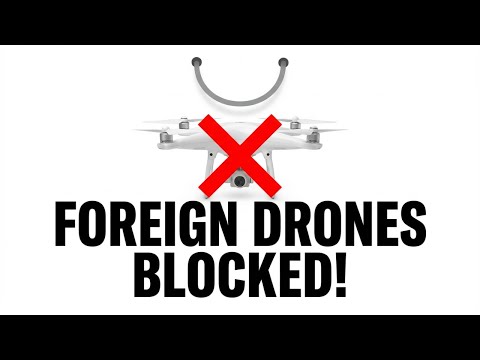
For nearly a decade, Chinese drone manufacturer DJI dominated the American skies. The company held 70 to 90 percent of the U.S. drone market—used by hobbyists, farmers, real estate agents, and 90 percent of first responders with drone programs. On December 23, 2025, that dominance hit a wall: the Federal Communications Commission (FCC) added all foreign-made drones and critical components to its Covered List, blocking any new models from receiving the equipment authorization required for U.S. sale.

The action doesn't ground existing drones or revoke prior authorizations. But it freezes the market in place. No new DJI models can enter the country. Retail inventory will deplete. American alternatives cost two to ten times more and lag years behind in capability. For the 460,000 commercial drone operators in the United States, the calculus just changed—and the domestic drone industry has roughly two years to catch up before shelves go bare.

Key Indicators

70-90%
DJI U.S. Market Share
Estimated share of American consumer and commercial drone market held by DJI before the ban
97%
Operators Using DJI
Percentage of surveyed U.S. drone operators who use at least one DJI product
43%
Business-Ending Impact
Share of operators who said the ban would have extremely negative or potentially business-ending effects
5-10x
Price Gap
How much more American-made alternatives typically cost compared to equivalent DJI drones

Interactive

Exploring all sides of a story is often best achieved with Play.

Ever wondered what historical figures would say about today's headlines?

Sign up to generate historical perspectives on this story.

Sign Up

Debate Arena

Two rounds, two personas, one winner. You set the crossfire.

People Involved

Brendan Carr
Brendan Carr
Chairman, Federal Communications Commission (Led the FCC action adding foreign drones to Covered List)
Frank Wang (Wang Tao)
Founder and CEO, DJI (Leading company response to U.S. restrictions)
Adam Welsh
Adam Welsh
Head of Global Policy, DJI (Leading DJI's engagement with U.S. regulators)
Elise Stefanik
Elise Stefanik
U.S. Representative (R-NY), Sponsor of Countering CCP Drones Act (Key architect of legislative restrictions on DJI)

Organizations Involved

DJI (Da-Jiang Innovations)
Drone Manufacturer
Status: Added to FCC Covered List; new models blocked from U.S. market

Chinese drone manufacturer holding 70-90% of the U.S. consumer and commercial drone market.

Federal Communications Commission (FCC)
U.S. Federal Regulatory Agency
Status: Implementing foreign drone restrictions via Covered List

U.S. agency regulating communications infrastructure, including equipment authorization required for wireless devices sold in America.

Skydio
Skydio
Drone Manufacturer
Status: Leading American alternative to DJI

U.S.-based drone maker known for AI-driven autonomous flight, focused on enterprise and government markets.

Timeline

  1. FCC Adds Foreign Drones to Covered List

    Regulatory

    The FCC added all foreign-made uncrewed aircraft systems and critical components to its Covered List, blocking new equipment authorizations. DJI and Autel were specifically named as required by the NDAA.

  2. White House Finalizes National Security Determination

    Government Action

    An executive-branch interagency group convened by the White House concluded that foreign-produced drones and components pose "unacceptable risks to the national security of the United States."

  3. DJI Issues Final Plea for Audit

    Corporate

    With weeks remaining before the deadline, DJI sent letters to five national security agencies urging them to begin the mandated security review immediately.

  4. DJI Begins Outreach for Security Audit

    Corporate

    DJI first contacted federal leadership offering to support the congressionally mandated security review and provide internal technical information.

  5. NDAA Signed with Drone Provisions

    Legislative

    President signed the Fiscal Year 2025 National Defense Authorization Act, including Section 1709 requiring a security audit of DJI within one year or automatic placement on the FCC Covered List.

  6. House Passes Countering CCP Drones Act

    Legislative

    The House of Representatives passed the Countering CCP Drones Act with bipartisan support, sending it toward inclusion in the defense authorization bill.

  7. Countering CCP Drones Act Introduced

    Legislative

    Representative Elise Stefanik introduced the Countering CCP Drones Act, which would add DJI to the FCC Covered List and block new equipment authorizations.

  8. DOD Identifies DJI as Chinese Military Company

    Government Action

    The Department of Defense officially identified DJI as a "Chinese military company," adding regulatory pressure but not directly restricting consumer sales.

  9. Treasury Designates DJI as Chinese Military Company

    Government Action

    The Department of the Treasury added DJI to its list of Chinese Military-Industrial Complex companies, prohibiting U.S. investment in the firm.

  10. Commerce Department Adds DJI to Entity List

    Regulatory

    The Department of Commerce added DJI to its Entity List, citing human rights abuses related to surveillance of Uyghurs in Xinjiang. The listing restricted U.S. companies from exporting technology to DJI but did not affect consumer sales.

  11. U.S. Army Bans DJI Drones

    Government Action

    The U.S. Army issued a directive ordering all units to stop using DJI drones, citing cybersecurity vulnerabilities. This marked the first major federal restriction on DJI products.

Scenarios

1

American Drone Industry Fills Gap Within Two Years

Discussed by: FCC Chairman Brendan Carr, domestic drone manufacturers, defense industry analysts

Domestic manufacturers like Skydio, Teal Drones, and Inspired Flight scale production to meet demand as DJI inventory depletes. Government contracts and consumer desperation drive rapid growth, though prices remain elevated. The restriction becomes a successful case of industrial policy forcing domestic production.

2

Market Contraction Devastates Commercial Drone Industry

Discussed by: Pilot Institute survey respondents, drone service operators, agricultural and public safety users

American alternatives fail to match DJI's price-performance ratio. The 43% of operators predicting business-ending impacts prove correct. Commercial drone operations decline sharply outside well-funded government and enterprise sectors. The hobbyist market collapses.

3

Exemptions or Modifications Ease Restrictions

Discussed by: Industry lobbyists, legal analysts at Wiley and Akin Gump, first responder advocacy groups

Pressure from public safety agencies, agricultural users, and commercial operators forces regulatory adjustments. The FCC grants expanded exemptions for critical infrastructure uses, or Congress modifies the NDAA provisions to allow certified foreign drones under strict security protocols.

4

FCC Revokes Existing DJI Authorizations

Discussed by: Drone law attorneys, FCC legal analysts, worst-case industry forecasters

The FCC exercises its authority to revoke previously issued equipment authorizations for DJI products, making operation of existing drones illegal. This would affect millions of drones already in circulation and trigger significant legal challenges.

Historical Context

Huawei 5G Ban (2019)

May 2019

What Happened

The Trump administration added Huawei to the Commerce Department Entity List and effectively banned the company from U.S. telecommunications networks, cutting off access to Google services and American chip suppliers. The action extended globally as the U.S. pressured allies to exclude Huawei from 5G infrastructure.

Outcome

Short Term

Huawei's smartphone business collapsed outside China, losing access to Google's Android services. The company stockpiled chips before restrictions tightened.

Long Term

The ban reshaped global telecommunications supply chains. European carriers faced costly Huawei equipment removal. China accelerated domestic semiconductor development. The precedent established a template for technology decoupling.

Why It's Relevant Today

The DJI ban follows the same playbook: national security justification, Covered List mechanism, exemption of existing equipment, and pressure on domestic alternatives to fill the gap. The Huawei case shows both the feasibility and the costs of such restrictions.

Kaspersky Lab Ban (2017-2024)

September 2017 - June 2024

What Happened

The Department of Homeland Security ordered federal agencies to remove Kaspersky antivirus software, citing Russian government ties. In 2024, the Commerce Department issued a final determination prohibiting Kaspersky sales to U.S. consumers entirely.

Outcome

Short Term

Federal agencies removed Kaspersky products. The company disputed allegations and offered source code review, similar to DJI's audit requests.

Long Term

Kaspersky's U.S. market share evaporated. The case demonstrated that security concerns about foreign software companies could evolve from federal restrictions to complete market bans.

Why It's Relevant Today

Like DJI, Kaspersky offered transparency measures and independent audits that failed to satisfy U.S. regulators. The progression from federal use ban to consumer ban suggests a possible trajectory for drone restrictions.

Japanese Auto Voluntary Export Restraints (1981)

1981-1994

What Happened

Facing pressure from U.S. automakers and unions, Japan agreed to voluntary export restraints limiting car shipments to America. At their peak, Japanese automakers held about 22% of the U.S. market, triggering fears of domestic industry collapse.

Outcome

Short Term

Japanese automakers raised prices and shifted to higher-margin vehicles. American consumers paid more for cars.

Long Term

Japanese manufacturers built U.S. factories to circumvent quotas, eventually employing hundreds of thousands of Americans. Detroit automakers failed to use the breathing room to become competitive, and market share continued declining after quotas ended.

Why It's Relevant Today

The auto restraints show that protecting domestic industry doesn't guarantee its revival. American drone manufacturers face similar questions: will restricted competition spur innovation or merely raise prices while underlying competitive gaps persist?

12 Sources: