




Pull to refresh
Logo
Daily Brief
Following
Why
FDA shifts to single-study standard for drug approvals

FDA shifts to single-study standard for drug approvals

Rule Changes
By Newzino Staff | |

Agency formally abandons six-decade-old two-trial requirement, expanding the change to common diseases

4 days ago: FDA Announces Single-Trial Default Standard

Overview

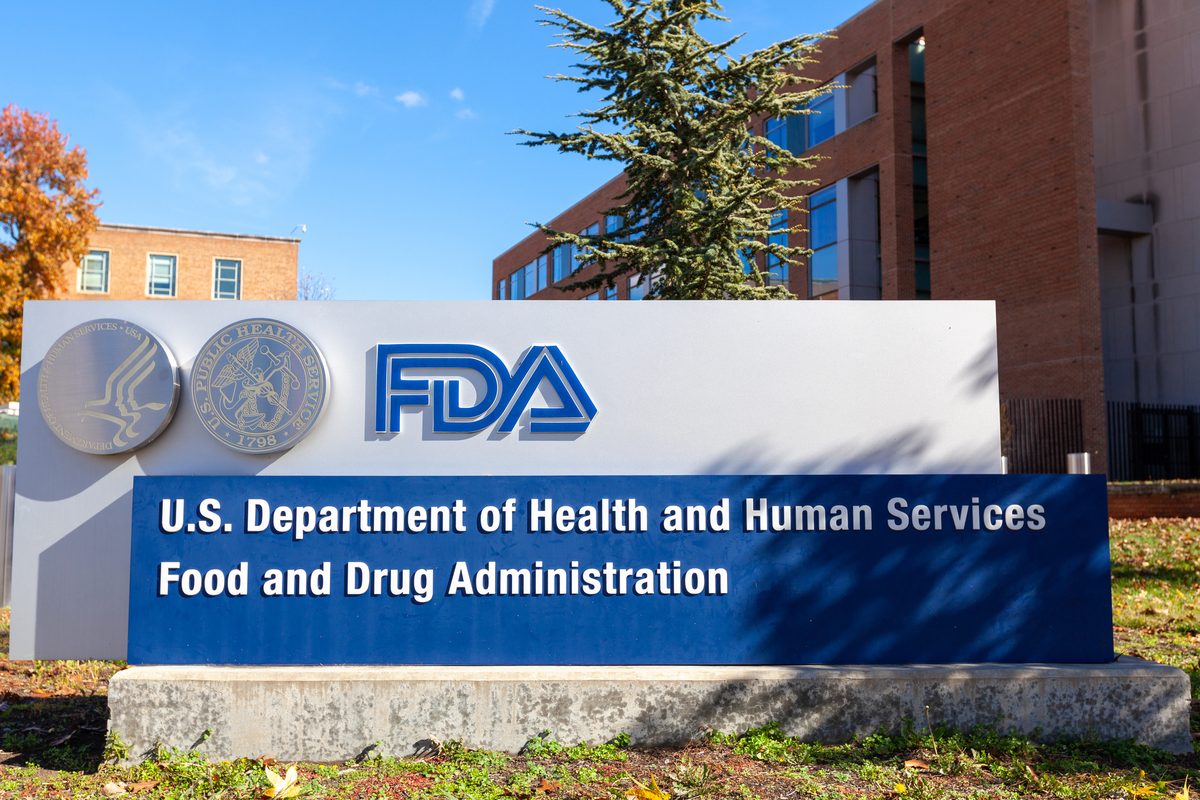
For 63 years, the Food and Drug Administration required drugmakers to prove their products worked in at least two rigorous clinical trials before Americans could take them. On February 18, 2026, Commissioner Marty Makary formally ended that standard, announcing that one trial will now be the "default position" for all new drugs—not just treatments for rare and fatal diseases, but medications for common conditions affecting millions of patients. In accompanying articles published in the New England Journal of Medicine and JAMA, Makary and Deputy Commissioner Vinay Prasad emphasized that the single-trial standard does not eliminate evidence requirements; instead, sponsors must provide "confirmative evidence" through mechanistic data, findings from related indications, animal models, real-world evidence, or data from drugs in the same class.

The change codifies a trend already underway: roughly 60% of first-of-a-kind drugs approved in recent years cleared on a single study. But by extending the single-trial standard to drugs for common diseases—previously ineligible—the FDA is making its largest reduction in evidence requirements since Congress mandated proof of effectiveness in 1962. However, the policy announcement coincided with internal FDA turbulence: on the same week, Deputy Commissioner Prasad rejected Moderna's flu vaccine application by overruling career staff, triggering White House intervention and a rapid reversal. The incident exposed tensions between Makary's stated commitment to predictability and Prasad's pattern of unilateral rejections, raising industry concerns about whether the new single-trial standard will actually reduce regulatory uncertainty or create new bottlenecks.

Key Indicators

60%
Recent approvals on single trial
Share of first-of-a-kind drugs already approved based on one study in recent years
63 years
Duration of two-trial standard
Time since the Kefauver-Harris Amendment established the requirement for proving effectiveness
40%
Incomplete confirmatory trials
Share of accelerated-approval drugs that have not completed required follow-up studies

Interactive

Exploring all sides of a story is often best achieved with Play.

Ever wondered what historical figures would say about today's headlines?

Sign up to generate historical perspectives on this story.

Sign Up

Debate Arena

Two rounds, two personas, one winner. You set the crossfire.

People Involved

Marty Makary
Marty Makary
FDA Commissioner (In office since March 2025)
Vinay Prasad
Vinay Prasad
FDA Chief Medical and Scientific Officer; Director of Center for Biologics Evaluation and Research (Active, serving in dual roles)
Janet Woodcock
Janet Woodcock
Former FDA Drug Center Director (Retired from FDA in 2024 after 20+ years leading drug center)

Organizations Involved

U.S. Food and Drug Administration
Federal Regulatory Agency
Status: Undergoing significant regulatory changes under new leadership

Federal agency responsible for protecting public health by regulating drugs, medical devices, food, and other products.

Timeline

  1. FDA Announces Single-Trial Default Standard

    Policy Change

    Commissioner Makary and Deputy Prasad publish New England Journal of Medicine article stating the FDA's "default position" will now be to require one study for new drugs, extending this standard to common diseases previously requiring two trials.

  2. Makary and Prasad Publish NEJM/JAMA Articles on Single-Trial Standard

    Policy Clarification

    FDA leaders detail confirmatory evidence requirements in peer-reviewed journals, specifying that sponsors must provide mechanistic data, related indication findings, animal models, or real-world evidence alongside single pivotal trial.

  3. FDA Reverses Moderna Flu Vaccine Rejection After White House Pressure

    Regulatory Reversal

    FDA agrees to review Moderna's mRNA flu vaccine after initially refusing to file. Deputy Commissioner Prasad had overruled career staff in rejecting the application over trial design concerns. President Trump called Makary to White House to express frustration with FDA vaccine handling.

  4. FDA Signals Intent to Reduce Trial Requirements

    Policy Signal

    FDA indicates it is considering lowering the number of trials required for approval of drugs and other medical products.

  5. Senate Confirms Makary as FDA Commissioner

    Confirmation

    U.S. Senate confirms Makary in bipartisan vote. He becomes the 27th commissioner of food and drugs.

  6. Trump Nominates Makary to Lead FDA

    Nomination

    President-elect Donald Trump selects Johns Hopkins surgeon Marty Makary, a longtime FDA critic, to serve as Commissioner.

  7. Aduhelm Removed From Market

    Withdrawal

    Aducanumab withdrawn after confirmatory trial fails to show benefit, prompting further scrutiny of accelerated approval pathway.

  8. Congress Strengthens Accelerated Approval Oversight

    Legislation

    Consolidated Appropriations Act grants FDA new authorities and imposes obligations for accelerated approvals, requiring conditions for confirmatory trials.

  9. FDA Approves Aduhelm Despite Advisory Committee Opposition

    Approval

    FDA approves Alzheimer's drug aducanumab under accelerated approval despite zero advisory committee members recommending approval. Decision triggers resignations and investigations.

  10. Vioxx Withdrawn After 80 Million Patients

    Safety Event

    Merck withdraws arthritis drug Vioxx after studies show excess heart attack risk. Estimates suggest 38,000 to 60,000 deaths. FDA reviewer calls agency "incapable of protecting America."

  11. FDA Formalizes Two-Trial Standard

    Guidance

    FDA guidance explicitly presents the "conduct of at least two pivotal, adequate, and well-controlled trials" as the standard effectiveness requirement.

  12. Accelerated Approval Program Created

    Policy

    FDA establishes pathway for faster approval of drugs for serious conditions using surrogate endpoints, responding to HIV/AIDS activism. Begins shift toward flexibility in evidence requirements for fatal diseases.

  13. Kefauver-Harris Amendment Signed

    Legislation

    President Kennedy signs law requiring drug manufacturers to prove effectiveness, not just safety. Congress acts after thalidomide causes over 10,000 birth defects globally. FDA interprets "adequate and well-controlled investigations" as requiring at least two studies.

Scenarios

1

Drugs Reach Patients Faster, Benefits Validated

Discussed by: FDA leadership, pharmaceutical industry analysts at BioPharma Dive and Clinical Leader

The single-trial standard accelerates availability of effective medications without increasing safety problems. Modern biomarkers, genetic targeting, and real-world evidence systems prove sufficient to identify problematic drugs post-approval. Confirmatory studies validate initial findings. The policy is seen as a successful modernization of regulatory science.

2

Safety Signal Emerges From Single-Trial Drug

Discussed by: Former FDA officials, public health researchers, medical journal analysts

A drug approved on a single trial causes serious harm that a second trial might have detected. The incident triggers congressional hearings, potential legislation to restore stricter standards, and renewed scrutiny of the accelerated approval pathway. Comparisons to Vioxx and Aduhelm resurface.

3

Industry Operational Burden Increases Despite Fewer Trials

Discussed by: Clinical operations leaders cited in Clinical Leader, biotech executives

Pharmaceutical companies discover that the single-trial standard compresses rather than removes the evidence burden. Every enrolled patient becomes pivotal data. Companies that cut corners on Phase 2 learning face more rejections. The policy change produces faster timelines for well-prepared sponsors but more failures for others.

4

Policy Reversal Under Future Administration

Discussed by: Public health advocates, congressional Democrats, medical journal editorialists

A change in administration or FDA leadership restores the two-trial requirement, either through new guidance or congressional action. Drugmakers face uncertainty about which standard applies to their programs. The regulatory environment becomes less predictable.

5

Prasad's Unilateral Authority Becomes Flashpoint for Policy Reversal

Discussed by: Wall Street Journal editorial board, industry analysts at Leerink Partners and Leavitt Partners, FDA career staff

Prasad's pattern of overruling staff and making high-profile rejections (Moderna, prior gene therapy disputes) creates regulatory whiplash that undermines Makary's single-trial credibility message. Industry uncertainty about whether Prasad or Makary sets actual standards leads to companies hedging bets with two-trial designs anyway, negating cost savings. Pressure mounts for Makary to clarify Prasad's authority or remove him.

6

Single-Trial Policy Becomes Casualty of Internal FDA Conflict

Discussed by: Congressional oversight committees, public health advocates, medical journal editorialists

Prasad's controversial decisions and White House intervention expose the single-trial policy as a top-down directive lacking internal consensus. Career scientists and review staff resist implementation. Policy becomes entangled in broader questions about FDA leadership stability, delaying actual guidance issuance and first approvals under the new standard.

Historical Context

Thalidomide Tragedy and Kefauver-Harris Amendment (1962)

1957–1962

What Happened

Thalidomide, marketed as a sedative in Europe, caused over 10,000 babies to be born with severe birth defects. FDA reviewer Frances Kelsey refused to approve the drug for the U.S. market, limiting American casualties to 17 cases from physician samples. Congress responded by passing the Kefauver-Harris Amendment in October 1962.

Outcome

Short Term

The law required drug manufacturers to prove both safety and effectiveness before approval, creating the evidentiary framework the FDA used for six decades.

Long Term

The "adequate and well-controlled investigations" language became the foundation for the two-trial standard, establishing that one study could be a fluke and replication was necessary for confidence.

Why It's Relevant Today

The current policy change directly reverses the interpretation of the 1962 law that created modern drug regulation. Whether the FDA's new approach can provide equivalent protection without requiring replication is the central question.

Vioxx Withdrawal (2004)

1999–2004

What Happened

Merck's arthritis drug Vioxx (rofecoxib) was approved by the FDA and taken by over 80 million patients worldwide. Post-approval studies revealed the drug roughly tripled the risk of heart attacks and strokes. Researchers later estimated the drug caused 38,000 to 60,000 deaths.

Outcome

Short Term

Merck withdrew Vioxx voluntarily in September 2004. FDA investigator David Graham testified that the agency was "incapable of protecting America against another Vioxx."

Long Term

The scandal led to increased scrutiny of FDA-industry relationships and post-market surveillance, but did not fundamentally change pre-approval evidence requirements.

Why It's Relevant Today

Vioxx was approved based on clinical trials that did not adequately capture cardiovascular risk. Critics of the single-trial standard argue that reducing the evidence threshold increases the chance of missing serious risks that emerge over time or in larger populations.

Accelerated Approval for HIV/AIDS Drugs (1992)

1987–1992

What Happened

AIDS activists, facing a fatal disease with no treatments, demanded faster access to experimental drugs. They argued that requiring years of trials while patients died was itself unethical. The FDA created the Accelerated Approval Program in 1992, allowing drugs for serious conditions to be approved based on surrogate endpoints with required confirmatory trials.

Outcome

Short Term

HIV drugs reached patients years earlier than under traditional pathways. The program was credited with saving thousands of lives.

Long Term

The program established the precedent that evidence requirements should vary based on disease severity and unmet need—a principle the current policy extends to common diseases.

Why It's Relevant Today

The 1992 program began the FDA's shift from a single evidence standard to a flexible framework. The 2026 policy extends that flexibility beyond life-threatening diseases to medications for common conditions, raising questions about whether the same logic applies.

20 Sources: