


Pull to refresh
Logo
Daily Brief
Following
Why
New antipsychotic approvals expand treatment options for schizophrenia and bipolar disorder

New antipsychotic approvals expand treatment options for schizophrenia and bipolar disorder

New Capabilities
By Newzino Staff |

After decades of incremental progress, a burst of new psychiatric drug approvals is reshaping how clinicians treat two of the most disabling mental illnesses

Yesterday: FDA approves Bysanti for bipolar I and schizophrenia

Overview

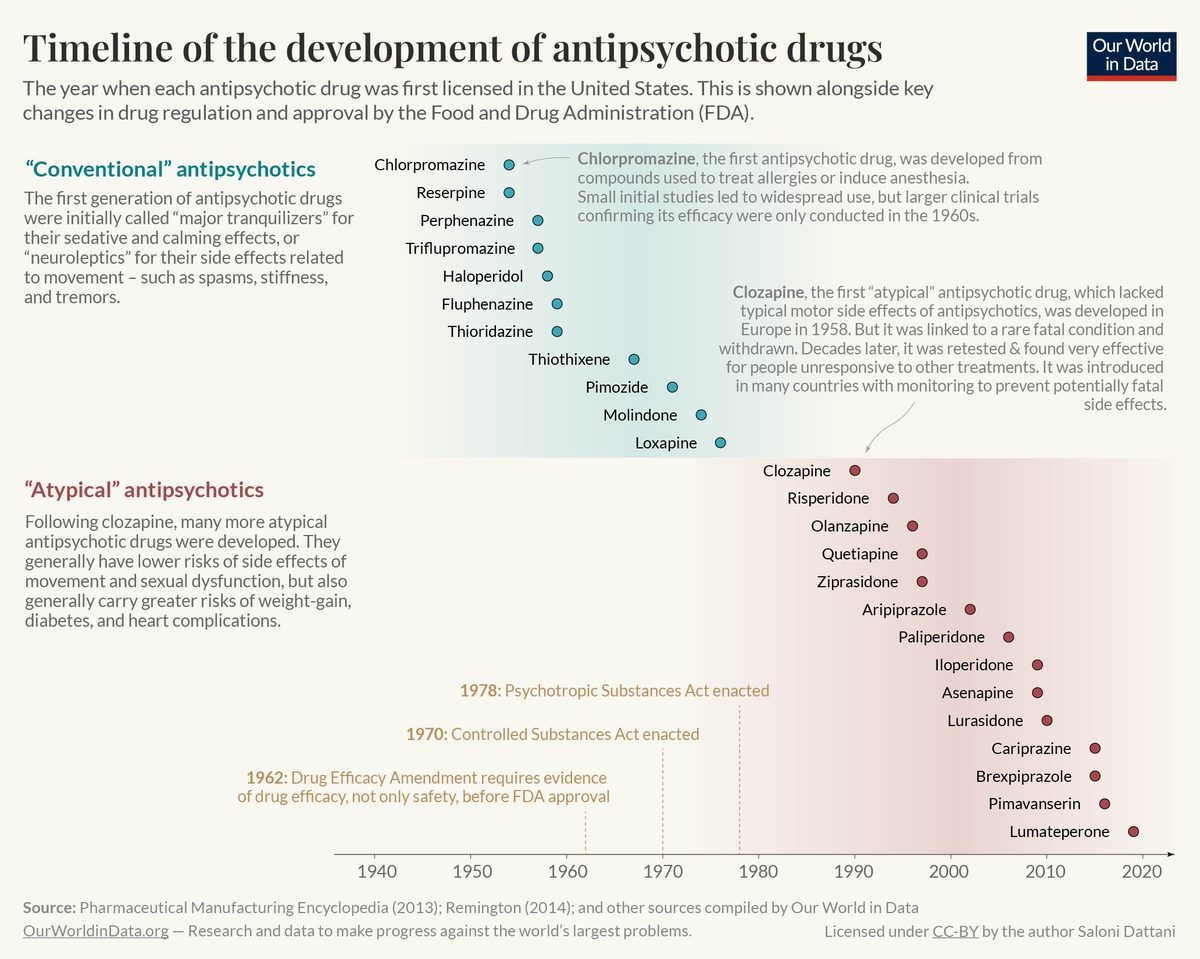
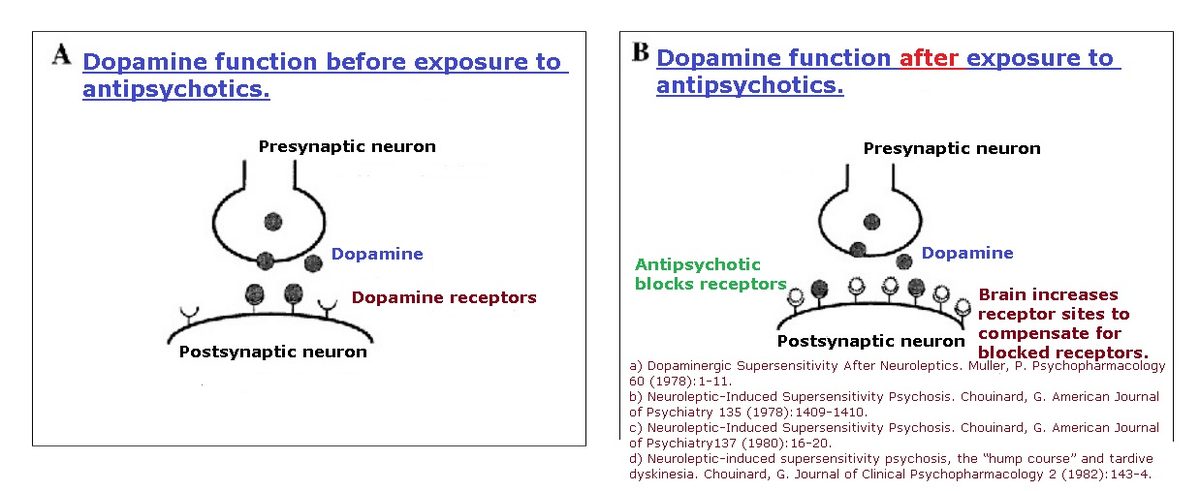
Every atypical antipsychotic approved since the early 1990s has worked the same basic way: blocking dopamine receptors in the brain. In the past 17 months, the Food and Drug Administration (FDA) has approved three new psychiatric drugs—including Cobenfy, the first schizophrenia treatment with a genuinely novel mechanism in over 50 years, and now Bysanti, a new chemical entity from Vanda Pharmaceuticals cleared for both bipolar I disorder and schizophrenia. For the roughly 7 million Americans living with these conditions, the options just got meaningfully wider.

Bysanti (milsaperidone), approved on February 21, 2026, is Vanda's second FDA approval in under two months, following its motion-sickness drug Nereus in December 2025. Milsaperidone is chemically distinct from but closely related to iloperidone (sold as Fanapt), rapidly converting to it in the body—which allowed Vanda to leverage over 100,000 patient-years of real-world safety data to win approval without large new clinical trials. The drug is expected to reach pharmacies in the third quarter of 2026, with patent protection extending to 2044.

Key Indicators

~7M
Americans affected
Approximate number of U.S. adults living with schizophrenia or bipolar I disorder
100,000+
Patient-years of safety data
Real-world experience with the related drug iloperidone (Fanapt) that supported Bysanti's approval
$19B
Global antipsychotic market
Estimated 2026 global market value for antipsychotic medications, projected to exceed $32 billion by 2032
2
Vanda FDA approvals in 2 months
Bysanti is Vanda's second new drug cleared by the FDA since December 2025

Interactive

Exploring all sides of a story is often best achieved with Play.

Ever wondered what historical figures would say about today's headlines?

Sign up to generate historical perspectives on this story.

Sign Up

Debate Arena

Two rounds, two personas, one winner. You set the crossfire.

People Involved

MP
Mihael H. Polymeropoulos
President, Chief Executive Officer, and Chairman, Vanda Pharmaceuticals (Leading Vanda through dual drug launches in 2026)

Organizations Involved

Vanda Pharmaceuticals
Biopharmaceutical Company
Status: Preparing dual commercial launches in 2026

A Washington, D.C.-based biopharmaceutical company focused on central nervous system disorders, now with four FDA-approved products.

U.S. Food and Drug Administration
Federal Regulatory Agency
Status: Continuing active review of psychiatric drug applications

The federal agency responsible for evaluating and approving new drugs, including the regulatory pathway that allowed Bysanti's accelerated approval based on existing safety data.

Bristol Myers Squibb
Pharmaceutical Company
Status: Commercializing Cobenfy for schizophrenia

The pharmaceutical company behind Cobenfy (xanomeline and trospium chloride), the first antipsychotic with a non-dopamine mechanism approved in over 50 years.

Timeline

  1. FDA approves Bysanti for bipolar I and schizophrenia

    Regulatory

    Milsaperidone received approval as a new chemical entity, giving Vanda fresh patent protection through 2044 for a drug closely related to its existing Fanapt franchise. Commercial launch is planned for Q3 2026.

  2. FDA approves Nereus, Vanda's motion-sickness drug

    Regulatory

    Vanda's tradipitant became the first new motion-sickness drug approved in over 40 years, sending the company's stock up more than 20% and setting the stage for a second approval weeks later.

  3. Vanda files Bysanti application with FDA

    Regulatory

    Vanda submitted a new drug application for milsaperidone (Bysanti), seeking approval for bipolar I disorder and schizophrenia. The FDA set a February 2026 decision target.

  4. Cobenfy approved as first non-dopamine antipsychotic

    Regulatory

    Bristol Myers Squibb's Cobenfy became the first schizophrenia drug with a genuinely novel mechanism—targeting muscarinic receptors instead of dopamine—to win FDA approval in over 50 years.

  5. Fanapt label expanded to bipolar I disorder

    Regulatory

    The FDA approved iloperidone for acute treatment of manic or mixed episodes in bipolar I disorder, broadening the drug's market 15 years after its initial approval.

  6. FDA approves iloperidone (Fanapt) for schizophrenia

    Regulatory

    Vanda Pharmaceuticals won its first major approval for Fanapt, an atypical antipsychotic that blocks dopamine and serotonin receptors. The drug became a steady revenue source for the company.

  7. Clozapine approved, launching atypical antipsychotic era

    Regulatory

    The FDA approved clozapine, the first atypical antipsychotic, after decades of delay due to a rare but serious blood disorder risk. It remains the only drug proven effective for treatment-resistant schizophrenia.

Scenarios

1

Bysanti captures significant market share from older antipsychotics

Discussed by: Pharmaceutical industry analysts at Managed Healthcare Executive and investment research firms covering Vanda (VNDA)

If Bysanti's tolerability profile proves meaningfully better than generic alternatives in real-world use, and if insurance coverage is secured without prohibitive co-pays, the drug could carve out a substantial niche in the $19 billion antipsychotic market. Vanda's existing relationships with psychiatrists from marketing Fanapt would accelerate adoption. The drug's patent protection through 2044 provides a long commercial runway.

2

Payers resist Bysanti pricing, limiting adoption to a narrow patient population

Discussed by: Managed Healthcare Executive, pharmacy benefit analysts

Many existing atypical antipsychotics are available as low-cost generics. Insurance companies and pharmacy benefit managers could impose prior authorization requirements or step therapy protocols that force patients to try cheaper alternatives first. If Bysanti's clinical advantages over generic iloperidone are viewed as marginal—since milsaperidone converts to iloperidone in the body—prescribers may face resistance from payers, limiting the drug to patients who specifically need a branded option.

3

Next wave of psychiatric drugs with novel mechanisms reshapes treatment guidelines

Discussed by: Psychiatric Times, American Journal of Psychiatry, pipeline analysts at DelveInsight

With Cobenfy already on the market and several candidates in late-stage trials—including brilaroxazine and evenamide for treatment-resistant schizophrenia—psychiatric treatment guidelines could undergo significant revision within the next few years. If drugs targeting muscarinic or glutamate pathways prove effective with fewer metabolic side effects than dopamine-blocking drugs, clinicians may shift first-line treatment away from the antipsychotics that have dominated for three decades.

4

Bysanti's prodrug approval strategy becomes a template for other companies

Discussed by: FDA regulatory specialists, pharmaceutical development consultants

Vanda's approach—creating a new chemical entity that converts to an existing approved drug, leveraging existing safety data while gaining fresh patent protection and new-chemical-entity exclusivity—could be replicated by other pharmaceutical companies facing patent cliffs on established drugs. If this pathway becomes widely used, it could trigger regulatory scrutiny about whether such approvals genuinely offer clinical value or primarily extend commercial exclusivity.

Historical Context

Clozapine reintroduction (1989)

February 1989

What Happened

The FDA approved clozapine—first synthesized in 1959—for treatment-resistant schizophrenia, 14 years after it was withdrawn from the European market when eight Finnish patients died from a dangerous drop in white blood cells. The approval came with an unprecedented mandatory blood-monitoring requirement, a compromise that gave patients access to the only drug proven effective when others failed.

Outcome

Short Term

Clozapine's reintroduction demonstrated that a drug with serious risks could still reach patients if monitoring systems were put in place. It immediately became the treatment of last resort for the most difficult schizophrenia cases.

Long Term

Clozapine's success launched the atypical antipsychotic era. Every major antipsychotic approved in the following 35 years—risperidone, olanzapine, quetiapine, aripiprazole, and others—used some variant of dopamine and serotonin receptor blocking. That paradigm held until Cobenfy broke it in 2024.

Why It's Relevant Today

Bysanti sits within the atypical antipsychotic tradition that clozapine began. Its approval shows this class of drugs is still expanding, even as fundamentally new approaches like Cobenfy emerge.

Nexium and the branded reformulation model (2001)

February 2001

What Happened

AstraZeneca launched Nexium (esomeprazole), a purified version of its blockbuster heartburn drug Prilosec (omeprazole), just as Prilosec's patent was expiring. Nexium was marketed as a next-generation treatment, though critics argued the clinical improvement over Prilosec was minimal. The strategy succeeded commercially—Nexium became one of the best-selling drugs in history, generating over $6 billion in annual revenue at its peak.

Outcome

Short Term

Nexium captured billions in revenue that would have been lost to generic omeprazole. AstraZeneca invested heavily in direct-to-consumer advertising to drive the switch.

Long Term

The strategy became widely debated as "evergreening"—extending the commercial life of a drug through molecular modifications rather than genuine therapeutic advances. It prompted greater scrutiny from insurers and pharmacy benefit managers about the clinical value of branded reformulations.

Why It's Relevant Today

Bysanti's relationship to Fanapt (iloperidone) raises similar questions. Milsaperidone converts to iloperidone in the body, and its approval grants Vanda new-chemical-entity exclusivity and patent protection through 2044. Whether it offers meaningful clinical advantages over the existing drug will determine whether it is viewed as genuine innovation or lifecycle management.

Cobenfy approval breaks the dopamine-blocking paradigm (2024)

September 2024

What Happened

Bristol Myers Squibb's Cobenfy (xanomeline and trospium chloride) became the first schizophrenia drug in over 50 years to work through an entirely different mechanism—targeting muscarinic receptors in the brain rather than blocking dopamine. The approval came after two clinical trials showed significant symptom reduction with a side-effect profile dominated by gastrointestinal issues rather than the metabolic problems common with traditional antipsychotics.

Outcome

Short Term

Cobenfy's approval generated significant interest among psychiatrists, particularly for patients who had struggled with weight gain, diabetes risk, and other metabolic side effects of dopamine-blocking drugs.

Long Term

The approval validated muscarinic targeting as a viable approach and energized research into other non-dopamine pathways for psychotic disorders. Multiple companies accelerated development of next-generation psychiatric drugs.

Why It's Relevant Today

Bysanti's approval arrives in a moment when the psychiatric drug landscape is more dynamic than it has been in decades. While Bysanti works through the traditional dopamine-blocking mechanism, it expands the menu of options at a time when the field is also exploring fundamentally new approaches.

10 Sources: