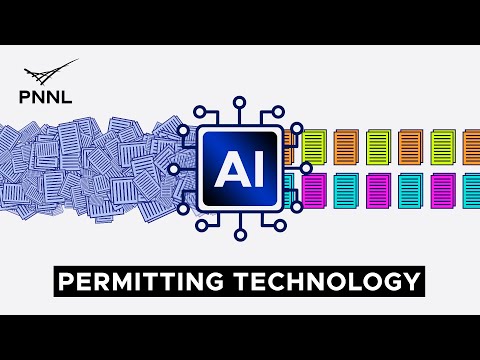
The National Environmental Policy Act (NEPA) has governed federal environmental reviews since 1970. For most of that time, the process relied on paper, siloed databases, and ad hoc searches. Now the federal government is assembling a public digital stack. It includes a common data standard, a searchable database of 2,290 categorical exclusions across 60-plus agencies, a workflow tool for completing environmental reviews, and APIs with shared schemas for developers.
The January 29, 2026 launch of CE Works — a pilot tool that lets Bureau of Land Management (BLM) staff in Moab, Utah select, route, and approve categorical exclusion determinations digitally — is the latest piece. But the underreported story is the stack itself. In roughly ten months, the Council on Environmental Quality (CEQ) and the General Services Administration (GSA) have shipped a data standard, a public reference dataset, a workflow tool, and implementation resources. Together they form infrastructure other agencies can build on. If this architecture holds, a process that took federal staff months — searching for cross-agency permitting precedents — could take minutes.
Questions about this story
Free account needed to ask — your question is kept and asked for you right after sign-up. Answers are public.
No questions yet — be the first to ask.
Key Indicators
2,290
Categorical exclusions digitized
Number of federal categorical exclusions searchable in the CE Explorer database across 60-plus agencies
120,000
NEPA documents in AI corpus
Environmental review documents spanning 50-plus years indexed in the Department of Energy's NEPATEC 2.0 dataset
4.5 years
Average environmental impact statement
Average completion time for a full Environmental Impact Statement over the past decade, the bottleneck this stack aims to reduce
10 months
Stack assembly time
Time from the presidential memorandum in April 2025 to the CE Works pilot launch in January 2026
CEQ Chair Katherine Scarlett finalizes removal of NEPA implementing regulations, marking a significant deregulatory shift. Scarlett states that under the Trump administration, 'NEPA's regulatory reign of terror has ended,' creating a new regulatory environment for environmental reviews.
Senate Introduces Bipartisan ePermit Act Companion Bill
Legislative
Senators John Curtis (R-UT), Cory Booker (D-NJ), Dave McCormick (R-PA), Mark Kelly (D-AZ), Steve Daines (R-MT), John Hickenlooper (D-CO), Ted Budd (R-NC), and Alex Padilla (D-CA) introduce the Senate companion to the House-passed ePermit Act, codifying digital permitting requirements and cloud-based platforms across federal agencies.
January 2026
CE Works Pilot Launches with BLM Moab Field Office
Technology
CEQ launches CE Works, a digital workflow tool that lets agency staff select a categorical exclusion, collaborate with resource experts, route for approval, and generate a publishable record. The pilot begins with the Bureau of Land Management's Moab, Utah field office.
August 2025
PNNL Releases NEPATEC 2.0 AI Corpus
Technology
The Pacific Northwest National Laboratory publishes NEPATEC 2.0, a machine-readable dataset of roughly 120,000 NEPA documents from 60,000 projects across more than 60 agencies, and begins beta-testing SearchNEPA, an AI-powered plain-language search interface.
NEPA Data and Technology Standard v1.2 Published
Standards
CEQ releases version 1.2 of the government-wide NEPA data standard, defining a common schema across nine entities — projects, processes, documents, comments, public engagement, case events, geographic data, user roles, and legal structures — to enable interoperability between agency systems.
July 2025
Bipartisan ePermit Act Introduced in Congress
Legislative
Representatives Dusty Johnson (R-SD) and Scott Peters (D-CA) introduce the ePermit Act to codify digital permitting requirements, including data standards and a unified portal. The bill later passes the House unanimously.
June 2025
CE Explorer Launches as First Public Tool
Technology
The Permitting Innovation Center debuts CE Explorer, a searchable public database of 2,290 federal categorical exclusions across agencies, with machine-readable downloadable data.
May 2025
Permitting Technology Action Plan Released
Policy
CEQ publishes the Permitting Technology Action Plan, establishing data standards, minimum software requirements for agency systems, an implementation timeline, and a governance structure. Agencies are given 90 days to begin adopting the standards.
April 2025
CEQ Establishes Permitting Innovation Center
Institutional
CEQ formally creates the Permitting Innovation Center, staffed by CEQ and supported by GSA's Technology Transformation Services, to design and test prototype permitting tools.
President Trump signs "Updating Permitting Technology for the 21st Century," directing CEQ to establish a Permitting Innovation Center and issue a technology action plan within 45 days.
June 2023
First NEPA Amendments Since 1970
Legislative
The Fiscal Responsibility Act of 2023 amends NEPA for the first time, establishing a process for agencies to adopt other agencies' categorical exclusions and capping Environmental Impact Statements at 150 pages.
December 2015
FAST-41 Creates Federal Permitting Dashboard
Legislative
Title 41 of the Fixing America's Surface Transportation Act establishes the Federal Permitting Improvement Steering Council and a public online dashboard for tracking covered infrastructure projects — an earlier transparency effort, though not a full digital workflow system.
January 1970
NEPA Signed into Law
Legislative
President Nixon signs the National Environmental Policy Act, requiring federal agencies to evaluate the environmental effects of major proposed actions. CEQ is established to oversee implementation.
Scenarios
1
Digital Permitting Stack Scales Across Federal Agencies
Possible
Discussed by: National Association of Manufacturers, Environmental Policy Innovation Center, Bipartisan Policy Center
If CEQ expands the CE Works pilot beyond the BLM Moab office successfully and agencies adopt the data standard as directed, a critical mass of federal environmental reviews could move onto interoperable digital systems within two to three years. The ePermit Act — which passed the House unanimously and has bipartisan Senate sponsors — would codify these requirements into law, making the architecture durable across administrations. In this scenario, routine categorical exclusion determinations (the majority of NEPA actions) shift from weeks of ad hoc document searches to structured digital workflows, and the time savings compound as more agencies contribute data to common systems.
2
Agencies Resist, Stack Fragments into Bespoke Systems
Possible
Discussed by: Environmental Policy Innovation Center, Federal technology analysts, Congressional Research Service
Federal agencies have a long history of building or buying their own IT systems that don't talk to each other. Despite CEQ's data standard, agencies could implement it superficially — meeting the letter of the requirement while maintaining incompatible internal systems. Without sustained funding, technical support, and enforcement, the Permitting Innovation Center's tools could remain pilot-scale while agencies continue using legacy workflows. The 2023 Fiscal Responsibility Act's cross-agency CE adoption provision could remain underused if the digital infrastructure to make it practical doesn't scale.
3
Policy Fights Over NEPA Override Technology Progress
Possible
Discussed by: Harvard Environmental and Energy Law Program, Sabin Center for Climate Change Law, environmental advocacy groups
The Trump administration is simultaneously pursuing broader NEPA deregulation — including a January 2026 proposed rule to remove CEQ's NEPA implementing regulations entirely. If permitting technology modernization becomes entangled with polarized debates over whether NEPA review requirements should exist at all, political opposition could slow or defund the technology buildout. Environmental groups that support NEPA review rigor but oppose regulatory rollbacks may resist tools perceived as accelerating approvals at the expense of environmental scrutiny, even if the technology itself is neutral infrastructure.
4
Technology Layer Persists, Outlasts Policy Swings
Likely
Discussed by: Environmental Policy Innovation Center, government technology observers, GSA digital services advocates
Public data standards, open APIs, and searchable databases tend to outlast the administrations that create them — the FAST-41 Permitting Dashboard created under Obama in 2015 still operates a decade later. If the Permitting Innovation Center's tools reach a level of utility where agency staff depend on them for daily work, the technology infrastructure could become durable regardless of which party controls the White House. The ePermit Act's bipartisan support — unanimous House passage, eight Senate cosponsors from both parties — suggests the digitization effort specifically may be more resilient than the broader NEPA policy debate.
Discussed by: Environmental policy analysts, federal technology observers
CEQ's January-February 2026 repeal of NEPA implementing regulations creates a paradox: the agency is simultaneously building digital tools to streamline environmental review while removing the regulatory framework that makes rigorous review necessary. If agencies interpret the deregulated environment as permission to minimize environmental scrutiny, the technology stack could become a tool for faster approvals rather than better-informed decisions. This could alienate environmental groups and complicate Senate passage of the ePermit Act, which frames digitization as improving transparency and coordination, not weakening environmental standards.
Historical Context
3 moments from history that rhyme with this story — and how they unfolded.
1 of 3
December 2015
FAST-41 Permitting Dashboard (2015)
Title 41 of the Fixing America's Surface Transportation Act created the Federal Permitting Improvement Steering Council and a public online dashboard to track timelines for major infrastructure projects requiring federal permits. The effort launched with 34 covered projects and established a 16-agency steering council to coordinate reviews.
Then
The dashboard provided unprecedented transparency into permitting timelines, letting project sponsors and the public track where reviews stood across agencies.
Now
The dashboard still operates a decade later, but it tracked projects rather than transforming the underlying review process. Agencies continued using their own siloed systems; average Environmental Impact Statement timelines remained at 4.5 years.
Why this matters now
The current effort goes beyond FAST-41's tracking approach by building the actual workflow tools and data standards agencies use to conduct reviews. The contrast illustrates the difference between transparency (watching the process) and capability (changing the process).
2 of 3
2001 - present
Estonia's X-Road Digital Government Infrastructure (2001-present)
Estonia built X-Road, a decentralized data exchange layer that lets government systems share information through standardized APIs. Starting with basic services, the system expanded to connect nearly all government databases. By 2024, Estonia declared 100% of government services digitalized, estimating the reduced bureaucracy saves the equivalent of 800 working years annually.
Then
Government processes that previously required in-person visits and paper forms moved online, with business registration dropping to 15 minutes and tax filing to under 3 minutes.
Now
The interoperability layer became foundational infrastructure that subsequent governments built upon regardless of political changes, demonstrating that well-designed government technology platforms can persist across administrations.
Why this matters now
The CEQ data standard and API-based architecture mirror Estonia's interoperability-first approach. The question is whether a U.S. federal system — far larger and more fragmented — can achieve similar results, and whether the standards will reach the critical mass needed to become self-sustaining infrastructure.
3 of 3
June 2023
Fiscal Responsibility Act NEPA Amendments (2023)
Congress amended NEPA for the first time since its 1970 enactment as part of the bipartisan debt ceiling deal. The amendments established a process for agencies to adopt other agencies' categorical exclusions, capped Environmental Impact Statements at 150 pages, and narrowed the scope of required environmental analysis to "reasonably foreseeable" effects.
Then
The amendments created a legal framework for cross-agency categorical exclusion sharing, but without digital tools to make that sharing practical, uptake was limited.
Now
The provision served as a policy enabler waiting for technology to catch up. CE Explorer and CE Works directly operationalize what the 2023 law made legally possible — agencies can now actually find and use each other's categorical exclusions through a searchable interface.
Why this matters now
This is the direct policy precursor to the technology being built now. The 2023 law said agencies could share categorical exclusions; the 2025-2026 technology stack makes it practically possible for the first time.