




Pull to refresh
Logo
FERC approves Duke large-load tariff that shields ratepayers from data center costs

FERC approves Duke large-load tariff that shields ratepayers from data center costs

Rule Changes

The 4-1 vote requires loads of 100 MW or more to commit to 75% of planned transmission value for 15 years

Today: FERC approves Duke's large-load tariff

Overview

Updated 43 minutes ago

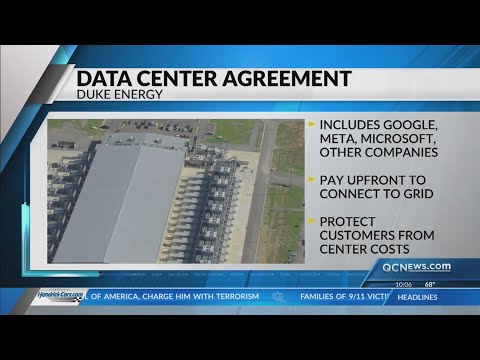
A data center that asks Duke Energy Carolinas for grid upgrades must now commit to paying for at least 75% of its planned transmission service for 15 years, even if actual usage falls short. The Federal Energy Regulatory Commission (FERC) approved Duke's revised tariff on a 4-1 vote, the first ruling to emerge from the agency's June show cause orders on large-load interconnection.

The rule treats large loads as the grid's biggest new risk: when a data center requests upgrades and then underuses or cancels them, residential and small-business customers have been left absorbing the stranded costs. FERC commissioners called the protections 'meaningful, if imperfect' and warned more action may follow.

Why it matters

When data centers request grid upgrades and then underuse them, residential ratepayers get the bill. This rule shifts that risk back to the large loads.

Questions about this story

Free account needed to ask — your question is kept and asked for you right after sign-up. Answers are public.

No questions yet — be the first to ask.

Key Indicators

75%
Committed revenue contribution
Large loads must pay at least 75% of planned transmission service value for 15 years, even if actual usage is lower.
15 years
Commitment term
Payment obligation runs from the in-service date of the network upgrades built for the load.
100 MW
Large-load threshold
Rules apply to new or transferred loads of 100 megawatts or more.
4-1
FERC vote
Commission approved the tariff with one dissent from Commissioner Judy Chang.

Voices

Curated perspectives — historical figures and your fellow readers.

Ever wondered what historical figures would say about today's headlines?

Sign up to generate historical perspectives on this story.

People Involved

Organizations Involved

Timeline

May 2026 October 2026

3 events Latest: Today
  1. FERC approves Duke's large-load tariff

    Today Regulatory Decision

    FERC approves Duke's 15-year, 75% committed revenue contribution for loads of 100 MW or more, 4-1.

  2. FERC issues show cause orders on large-load rules

    Regulatory Action

    FERC orders RTOs and ISOs to show their large-load interconnection rules adequately protect existing customers.

  3. Duke proposes large-load tariff revisions

    Regulatory Filing

    Duke Energy Carolinas files NITSA revisions adding large-load cost-shift protections.

Scenarios

1

RTOs and ISOs adopt Duke-style large-load protections

Likely Resolves by Aug 1, 2027

Discussed by: FERC show cause orders; Commissioner Rosner's concurrence; Utility Dive

FERC's June orders require RTOs and ISOs to file large-load rule responses by November 2026. If those filings are inadequate, Rosner's concurrence signals FERC is prepared to order committed revenue contributions or equivalent protections across the country.

2

Duke tightens financial security requirements after FERC signal

Possible Resolves by Q2 2027

Discussed by: Commissioner Chang's dissent; Commissioner See's concurrence

Both commissioners flagged the mismatch between Duke's 15-year payment commitment and the thin security backing it. FERC's order encourages Duke to enter individual agreements or add further protections. A revised filing adding explicit security requirements would address the gap Chang identified.

3

State regulators extend protections to 50 MW loads

Likely Resolves by Q2 2027

Discussed by: Duke Energy news release

Duke has proposed a separate state-level agreement covering loads of 50 MW or more with an 80% load factor, below FERC's 100 MW threshold. If Carolinas state regulators approve it, cost-shift protections would reach smaller data centers than the federal rules cover.

Historical Context

2 moments from history that rhyme with this story — and how they unfolded.

July 2023

FERC Order 2023 interconnection overhaul (2023)

FERC issued Order 2023, overhauling generator interconnection rules after queues ballooned into multi-year waits. The order set deadlines, required cluster studies, and made generators post financial commitments to stay in the queue.

Then

Reduced speculative projects; generators now face stricter deadlines and commercial readiness requirements.

Now

Established the precedent that new grid entrants bear more of the cost and risk they create.

Why this matters now

Same agency using tariff reform to fix cost allocation. Duke's large-load rules apply the same logic to the demand side — new loads must commit to paying for upgrades.

2023-2025

Data center load boom pressures utility planning (2023-2025)

Utilities from Virginia to Texas sharply raised load forecasts as data centers requested hundreds of megawatts each. The requests overwhelmed interconnection studies and raised questions about who pays for resulting grid upgrades.

Then

States and utilities began debating cost-recovery mechanisms; some proposed dedicated data center tariffs.

Now

Pushed FERC to examine large-load rules, leading to the June 2026 show cause orders.

Why this matters now

This demand surge is the direct backdrop for Duke's tariff and FERC's broader large-load review.

Sources

(6)