




1996
The Travel Rule (1996)
The Bank Secrecy Act's travel rule, added in 1996, requires financial institutions to pass customer information to the next institution in a wire transfer chain. The rule works because both ends of a wire transfer are regulated institutions.
Then
Financial institutions began sharing customer data on wire transfers above $3,000.
Now
The travel rule became a template for extending AML requirements to new payment methods, including crypto.
Why this matters now
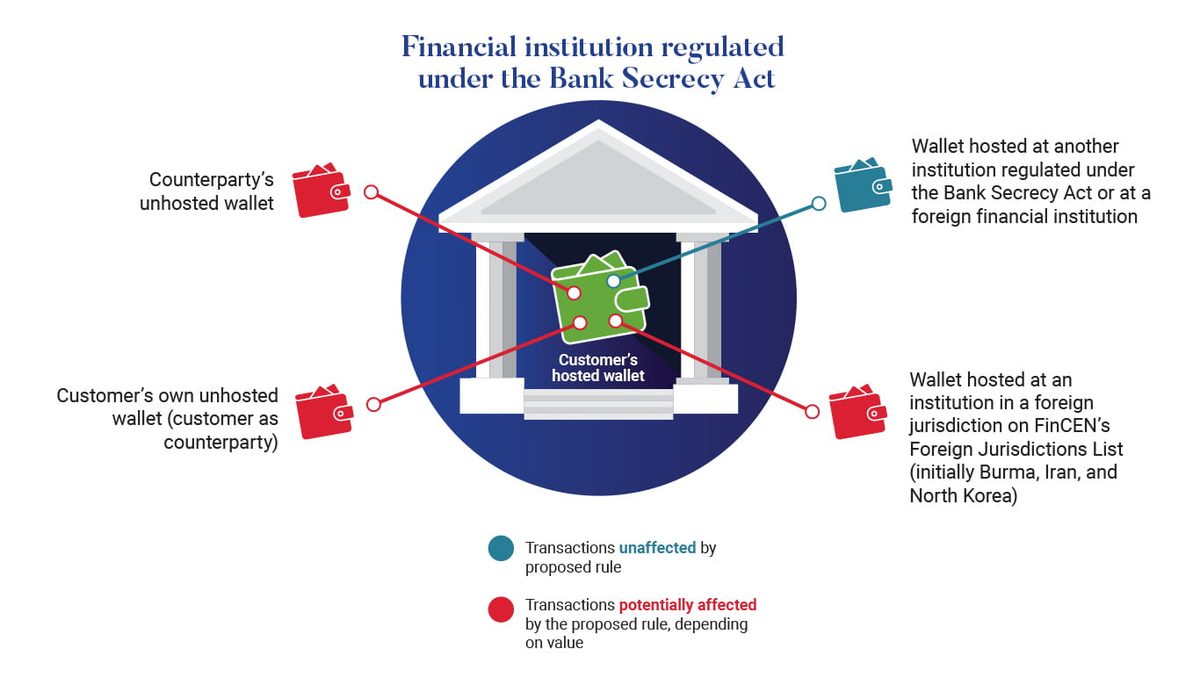
The unhosted wallet rule was an attempt to extend the travel rule concept to self-custody crypto wallets, where the counterparty is not a customer of the institution.