


Pull to refresh
Logo
Commercial goods stop entering Gaza amid Hamas tax dispute

Commercial goods stop entering Gaza amid Hamas tax dispute

Force in Play

Israel's military body that runs the crossings says merchants halted coordination; Hamas calls the claim a smear.

Today: Halt enters second day; health warnings mount

Overview

Updated 44 minutes ago

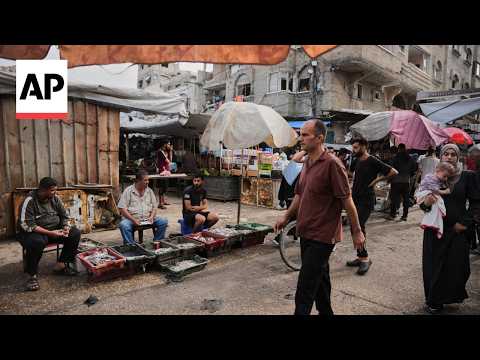
Fresh fruit, vegetables, meat, and winter clothing stopped entering Gaza on October 14. Israel's military body that runs the border crossings says merchants refused to coordinate because Hamas imposed a 10,000 shekel fee on each truck.

Gaza's 2.1 million residents depend almost entirely on what Israel lets through, and commercial imports are the main source of perishable food. Famine was declared there in August 2025, and 67% of the population faces crisis-level food insecurity. If the halt drags on, prices rise and recent gains against malnutrition could reverse.

Why it matters

If commercial imports stay halted, Gaza's food prices rise and malnutrition gains reverse — 466 people have already died of starvation there.

Questions about this story

Free account needed to ask — your question is kept and asked for you right after sign-up. Answers are public.

No questions yet — be the first to ask.

Key Indicators

2 days
Commercial halt duration
Days since commercial goods stopped entering Gaza as of October 16.
$3,226
Alleged per-truck fee
Fee COGAT says Hamas imposed on each commercial truck; Hamas calls it a voluntary donation.
466
Malnutrition deaths since 2024
Palestinians who have died of malnutrition and starvation, per the Gaza Health Ministry.
67%
Population facing crisis-level food insecurity
Projected share of Gaza's population through the end of 2026, per the Health Ministry.

Voices

Curated perspectives — historical figures and your fellow readers.

Ever wondered what historical figures would say about today's headlines?

Sign up to generate historical perspectives on this story.

People Involved

Organizations Involved

Timeline

August 2025 October 2026

5 events Latest: Today
Tap a bar to jump to that date
  1. Halt enters second day; health warnings mount

    Today Report

    Gaza Health Ministry reports 466 malnutrition deaths since 2024; UNICEF says halt may reverse gains.

  2. Hamas denies tax claims

    Statement

    Gaza government media office denies tax claims, calls them a 'blatant disinformation campaign.'

  3. Israel halts commercial shipments

    Policy

    COGAT announces suspension of commercial goods, saying merchants halted coordination over a Hamas truck fee.

  4. US-brokered ceasefire takes effect

    Ceasefire

    Ceasefire allows more humanitarian and commercial goods into Gaza, easing the famine.

  5. Famine declared in Gaza

    Humanitarian

    Integrated Food Security Phase Classification declares famine in Gaza after nearly two years of war.

Scenarios

1

Merchants resume truck coordination, commercial goods flow again

Likely Resolves by Nov 30, 2026

Discussed by: COGAT said the suspension could be reversed at the merchants' request; Al Jazeera and AP covered the coordination process.

COGAT frames the halt as the merchants' own decision and says it can be reversed whenever they resume coordination. A resolution of the fee dispute — or an agreement that the payments are voluntary — would let trucks through again. Given the famine backdrop, pressure on both sides to restore the flow is high.

2

Suspension drags on, food prices spike and malnutrition worsens

Possible Resolves by Dec 15, 2026

Discussed by: Norwegian Refugee Council spokesperson Shaina Low and UNICEF both warned that supply disruptions could reverse gains.

If the dispute persists, perishable foods vanish from markets and prices climb. UNICEF warned that even small disruptions to humanitarian access could rapidly reverse recent gains. A prolonged halt during winter could push acute malnutrition back toward famine levels.

3

Aid agencies scale up to compensate for the commercial halt

Possible Resolves by Nov 30, 2026

Discussed by: UNICEF and Gaza Health Ministry both urged crossings to remain open and supplies to keep flowing.

Humanitarian groups mainly deliver staples like flour, while merchants bring perishables. If aid truck entries rise sharply, basic needs could be met even as fresh food stays scarce. COGAT says Gaza needs about 250 trucks daily — far below the 600-a-day target in the ceasefire deal — leaving room for a scaled-up aid response.

Historical Context

2 moments from history that rhyme with this story — and how they unfolded.

August 2025

Famine declared in Gaza (2025)

After nearly two years of war and tight restrictions on aid, the Integrated Food Security Phase Classification (IPC) declared famine in Gaza in August 2025. The declaration meant people in parts of the Strip were already dying of starvation.

Then

A scaled-up aid response and the October 2025 ceasefire pushed famine back, but the IPC said conditions remained at crisis levels.

Now

The episode set the baseline of deprivation that now makes any disruption to supply a life-threatening event.

Why this matters now

This is the recent backdrop for the current commercial halt — a territory still recovering from declared famine, where any cut to supplies risks re-triggering it.

June 1948 – May 1949

Berlin Blockade (1948-1949)

The Soviet Union cut all land and water routes into West Berlin, trapping 2.5 million people without food or coal. The US and Britain responded with an airlift that flew in supplies around the clock.

Then

The airlift sustained the city for nearly a year; the Soviets lifted the blockade in May 1949.

Now

It set a precedent for supplying a besieged civilian population from outside and showed how food access can become a weapon in a standoff.

Why this matters now

Gaza is the inverse: a single party fully controls every entry point and can halt supply, leaving civilians dependent on the party running the crossings.

Sources

(6)