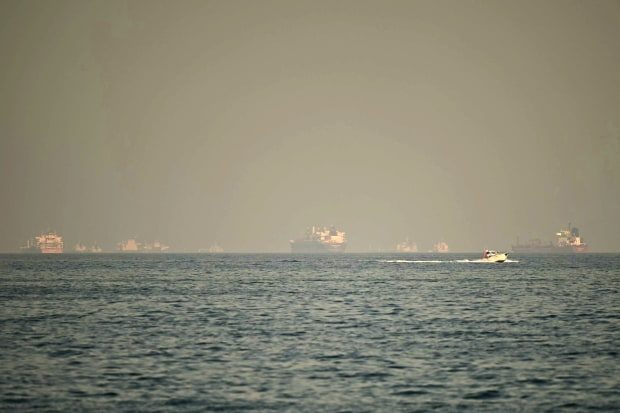
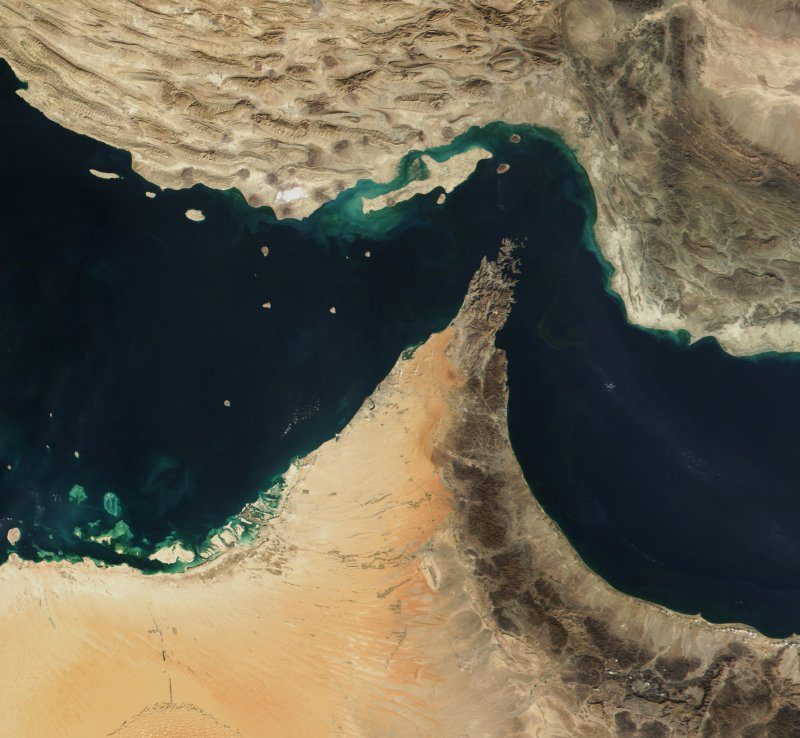
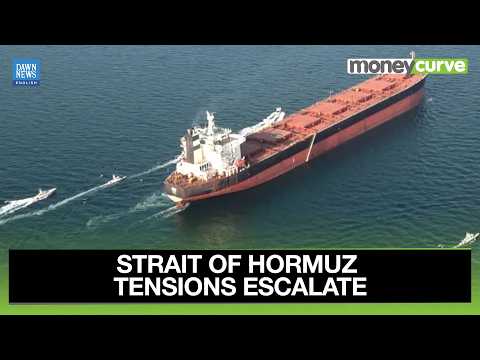
Oil tankers halt Strait of Hormuz transit after US-Israel strikes on Iran
Force in Play
Iran's new attack tactics crashed Hormuz oil flows after a September recovery, pushing Brent above $106; Trump promises no strikes before the US midterms but threatens post-election attacks.
Iran's new attack tactics crashed Hormuz oil flows after a September recovery, pushing Brent above $106; Trump promises no strikes before the US midterms but threatens post-election attacks.
Tanker attacks in the Strait of Hormuz hit their worst stretch since the war began in February, and oil flows crashed after a September recovery. Iran's navy deployed new surveillance units east of the strait, and an Iranian official said Tehran switched to different offensive tactics about 10 days ago, partly to influence the November US midterms.
Kpler counted just 2.9 million barrels crossing on October 11, the month's lowest, after nearly 20.8 million on October 8; Brent traded above $106. Trump, who promised no strikes before the midterms, said Iran is 'ready to fold up' and threatened post-election attacks. Iran's foreign minister said Tehran still awaits a formal US response to its seven-day plan.
Why it matters
Hormuz has run near-empty for weeks: about 520 vessels are stuck and every single-digit day drains the world's oil buffers.
Questions about this story
Free account needed to ask — your question is kept and asked for you right after sign-up. Answers are public.
No questions yet — be the first to ask.
Key Indicators
2.9M bpd
Barrels crossing Hormuz daily (Oct 11)
Kpler logged just 2.9 million barrels of oil through the waterway on October 11, the month's lowest, versus nearly 20.8 million on October 8. The pre-war average was 17.1 million barrels a day.
26
Tankers struck since Sept 28
Kpler counted 10 tankers struck in the strait between September 28 and October 4, plus one more on October 5. UKMTO recorded 15 further attacks between October 6 and 14, 11 of them in the four days to October 14.
$106.58
Brent crude per barrel
Brent futures climbed to $106.58 a barrel on October 14, up 0.8 percent, as the attack surge tightened supply. WTI settled at $94.14.
244 events
Latest: 7 days ago
Showing 8 of 244
JK to step
Tap a bar to jump to that date
Jump to
October 2026
Iran expands Hormuz surveillance; attacks reach wartime high
LatestMilitary
Iran's navy deployed operational units east of the strait across the Sea of Oman and the Arabian Sea, promising 'real time surveillance' of maritime traffic. An Iranian official told Reuters Tehran switched to different offensive tactics about 10 days earlier, partly to influence the US midterms. Kpler counted 10 tankers struck Sept 28-Oct 4 and one more Oct 5; UKMTO logged 15 further attacks Oct 6-14.
Trump promises no US strikes before midterms
Diplomatic
Trump said the US would not resume strikes on Iran before the November midterm elections. Oil prices, which had jumped on reports he was considering more attacks, dropped after the promise.
Projectiles strike tanker north of Qatar; casualties reported
Maritime Incident
UK Maritime Trade Operations said projectiles struck a tanker 51 nautical miles north of Qatar's Madinat ash Shamal, with casualties reported, as tanker attacks reached their peak weekly level.
Rubio says Iran lost 'complete control' of Hormuz; CENTCOM rejects closure claim
Diplomatic
Secretary of State Marco Rubio said Iran had lost complete control of the strait and oil flows had returned to near pre-war levels. CENTCOM disputed an IRGC general's claim that the strait was closed, saying traffic was carrying 20 million barrels of crude.
IRGC adviser says Hormuz stays closed until Iran's demands met
Diplomatic
A senior adviser to the commander of Iran's Revolutionary Guards said the strait remained closed and would stay that way until Tehran's conditions were met.
Hormuz crossings fall to two-month low as tanker attacks hit wartime high
Maritime
Kpler counted seven commodity vessels crossing the strait, the lowest since July 23, after tanker attacks reached their highest weekly level of the war. Brent crude climbed above $100 per barrel.
Mediators keep pressing Iran-US deal; US issues counterproposal after Trump's rejection
Diplomatic
Three regional officials and a senior US official told AP that Qatar is still brokering between Washington and Tehran, and the US issued a counterproposal after Trump's public rejection of Iran's seven-day plan. Iran's FM Araghchi said Tehran is waiting for a definitive US response.
Kpler: Hormuz reopening no longer hinges on a US-Iran deal
Analysis
Kpler analysts said combined Gulf crude exports, including diverted volumes loaded from Saudi and Emirati west and east coast ports, are near pre-war levels. They revised their base case to a flatter recovery through 2027 and said they do not expect full reopening within six months.
Trump says Iran 'ready to fold up'; US begins carrier buildup
Diplomatic
Trump told reporters in Denton, Texas that Iran is 'ready to fold up' and the US would win the war 'right after the election.' He told TIME the US could resume military action after the midterms if no deal emerges. The Pentagon is sending another carrier and an amphibious group, which could put three carriers in the region by the end of October.
FinCEN proposed a rule blocking transmittals involving the A7 Network, a Russia-linked shadow banking network Iran uses to evade sanctions, and sanctioned it as a 'significant transnational criminal organization' under 'Operation Economic Outcast.' New sanctions also hit Iran's rail and auto industries.
September 2026
Iran awaits 'definitive' US response; Araghchi insists conditions unchanged
Diplomatic
Foreign Minister Abbas Araghchi said mediators had not officially relayed a US rejection and Iran would make decisions based on their response. He said Iran would not back down from its conditions for reopening the strait.
Unconfirmed blasts reported near Qeshm Island
Maritime Incident
Iranian media reported explosions near Qeshm Island, suggesting anti-ship missiles and drones were fired at vessels. Iranian authorities did not confirm any attacks.
Trump rejects Iran's seven-day Hormuz plan
Diplomatic
Trump publicly rejected the proposal, saying the US blockade would continue. Iran's Persian Gulf Strait Authority separately said it would blacklist charterers ordering crews to use unauthorized routes.
Iran details seven-day plan to reopen Hormuz
Diplomatic
Iran's plan resembles the June 17 memorandum of understanding and would reopen the strait seven days after US acceptance. Araghchi said the plan also asks Washington to accept a maritime transit route Iran and Oman agreed.
Sailor killed as projectiles strike bulk carrier Cape Dao off Oman
Maritime Incident
A sailor was killed when projectiles struck the bulk carrier Cape Dao off Oman. Brent traded near $104 a barrel.
US-Iran shuttle talks resume for first time in months
Diplomatic
US and Iranian officials resumed shuttle talks after months, and a senior Iranian official said Iran could reopen the strait within seven days if its conditions were met.
Oman postpones Iran-Gulf meeting on Hormuz shipping route
Diplomatic
Oman said a planned meeting between Iran and Gulf states on shipping routes through the strait was postponed, citing the need for 'consensus.' Iran said it will not reopen Hormuz until the US meets its demands. Oil prices jumped more than 3%.
Trump says US has 'almost total control' of Hormuz; Iran insists it remains blocked
Diplomatic
Trump wrote on Truth Social that he is not trying to force Iran to the bargaining table and claimed 'almost total control' of the strait with Iran's economy suffering. Iran's deputy foreign minister had earlier insisted the strait 'has been Iranian, is Iranian, and will remain Iranian.' Ship-tracking data shows activity at roughly 5-15% of normal volumes.
JMIC rates Hormuz risk 'severe'; traffic stays far below baseline
Maritime
The Joint Maritime Information Center said commercial traffic through Hormuz was 'far below baseline' despite a modest uptick, and rated risk 'severe' citing a 'continued risk of drifting or uncharted mines' despite US claims to have cleared the strait. Kpler logged 6 crossings Wednesday, 11 Tuesday, 5 Monday; Lloyd's List Intelligence recorded about 12 transits a day from August 26 to September 1.
August 2026
Iran's Persian Gulf Strait Authority blacklists 45 tankers
Maritime
The PGSA named 45 tankers it says broke its rules for crossing the Strait of Hormuz, threatening fines, detention, and cargo confiscation, and warning it would act against any vessel transferring loads with them. US Energy Secretary Chris Wright said the 7-day average of oil leaving the strait is over 8 million barrels a day.
IMO: 17 mariners killed in 65 attacks on commercial vessels since Feb 28
Maritime Incident
The International Maritime Organization said at least 17 mariners have been killed in 65 attacks on commercial vessels since the war began February 28. Observed ship traffic through Hormuz stayed low: 10 crossings Monday, two on Sunday.
Islamabad MOU window expires without extension; Hormuz traffic falls to single digits
Diplomatic
The 60-day window set by the June 17 Islamabad memorandum lapsed with neither side willing to extend, despite Pakistan's August 13 claim that consent had been conveyed. Hormuz traffic fell 64% from its post-deal peak: 3 vessels crossed Sunday, 5 Saturday, 12 Friday. Kpler estimates about 520 commercial vessels are stuck in the Gulf, and Iranian oil exports through the strait fell 94% to about 91,900 barrels a day in the week of August 3.
Iran shifts to 'fully offensive' posture over Hormuz deadlock
Diplomatic
A senior Iranian official told Reuters Iran has decided to move from a defensive to a 'fully offensive' posture because talks on a permanent end to the war are deadlocked. Iran set a deadline for the US to implement all provisions of the agreement as a precondition for further negotiations.
Gharibabadi rejects Trump's 'territory' claim as 'fanciful delusions'
Diplomatic
Iran's deputy foreign minister wrote that Trump had "suffered strategic and heavy defeats" and that the strait "cannot be seized by tweet, nor by aircraft carrier, nor by issuing an order." He said Iran would keep enforcing the blockade until the US "accepts the reality of defeat."
Araghchi: Oman route deal is separate from reopening the strait
Diplomatic
Iran's foreign minister called the near-finished Oman shipping-route agreement "a technical issue" distinct from reopening Hormuz. He said reopening still depends on the US meeting conditions tied to the June memorandum of understanding.
Unknown projectile strikes bulk carrier hull in Hormuz
Maritime Incident
UK Maritime Trade Operations reported a bulk carrier's hull was hit by an unidentified projectile in the strait. No injuries were reported.
CENTCOM's Brad Cooper visits USS Abraham Lincoln amid morale concerns
Military
Admiral Brad Cooper spent several hours aboard the Lincoln during a 10-day regional tour, addressing reports of food shortages, broken showers, and mental health strain after nine months at sea without a port call.
Trump says he'll declare Strait of Hormuz US 'territory' once Iran is defeated
Diplomatic
Trump told reporters at a New York police academy, "After we finish defeating Iran, which is being very badly defeated, pretty soon I'll be declaring the Hormuz Strait a territory of the United States." He pointed to the naval blockade as evidence: "No ships get through unless we want them to."
UAE says Iran struck two more ADNOC tankers; 15th attack since February
Maritime Incident
The UAE accused Iran of hitting two Abu Dhabi National Oil Company vessels while transiting Hormuz on August 14, the third such incident in under a week. ADNOC says 15 of its ships have now been attacked since the war began.
Bessent: US to roll out 'unprecedented' economic isolation of Iran next week
Diplomatic
Treasury Secretary Scott Bessent said Washington will combine new sanctions with the continued naval blockade, calling the coming measures "economic isolation like the world has never seen before." He gave no specific date beyond "next week."
USS George Washington heads to Gulf to replace USS Abraham Lincoln
Military
The USS George Washington carrier group is sailing to the Middle East to relieve the USS Abraham Lincoln, which has been deployed more than 250 days without a port call. Families of Lincoln sailors had reported food shortages and mental health strain.
Araghchi warns US of 'bigger miscalculation' over Hormuz; Iran's PGSA says strait 'remains blocked'
Diplomatic
Iran's Foreign Minister Abbas Araghchi wrote that US intelligence failures led to prior miscalculations and warned of an even bigger one over Hormuz, calling Trump's control claim 'fake intelligence.' Iran's Persian Gulf Strait Authority separately said the strait 'remains blocked and will not be reopened until Iran's conditions are accepted.'
Hormuz traffic sinks to near 3-month low; Brent falls below $87
Market
The strait logged just 3 vessel transits in the 24 hours ending August 12, down from 14 the day before. Brent crude fell below $87 a barrel on August 13 after five straight sessions of gains, as investors weighed the standoff against softer demand signals.
Pakistan says US and Iran agree to extend Islamabad MOU deadline past August 17
Diplomatic
Pakistani officials said Washington and Tehran had conveyed consent to extend the Islamabad Declaration's 60-day negotiating window, set to expire August 17, though the exact length was still being discussed. Interior Minister Mohsin Naqvi met President Pezeshkian and FM Araghchi in Tehran to press the mediation.
Pakistan says US and Iran near 'some sort of arrangement' as deadline nears
Diplomatic
Pakistan's defense minister said the two sides are close to an arrangement despite their hardened public stances. Pakistani officials said they were intensifying mediation with days left in the current negotiating window.
Trump claims 'total control' of Hormuz, calls blockade a 'wall of steel'
Diplomatic
Trump posted on Truth Social that 'The U.S.A. has total control over the Strait of Hormuz. I THINK WE WILL KEEP IT!' He described the naval blockade as a 'wall of steel' Iran can't get past.
The International Energy Agency said global oil inventory buffers are shrinking fast and raised its third-quarter 2026 supply deficit forecast to 1.8 million barrels a day, more than double its estimate from a month earlier.
Houthi double-tap strike kills four crew on Red Sea cargo ship
Maritime Incident
Yemen's government said Houthi missiles hit the food cargo ship Tihamah in the Bab el-Mandeb Strait, killing four crew members. A second strike during the rescue operation killed a rescue worker and injured others.
Trump claims '100% control' of Hormuz, demands 50 years of reparations
Diplomatic
Trump said the US Navy has cleared mines from the strait and holds full control of it, calling the US posture a 'steel wall.' He said Iran should pay for damage he claims it caused over the past 50 years.
US Navy disables blockade-runner Vela Nova with Hellfire missiles off Pakistan
Military
A Navy MH-60 helicopter fired two Hellfire missiles into the engine room of the Panama-flagged container ship Vela Nova after its crew ignored warnings to turn back from an Iranian port. All 17 crew members were unhurt; it was the third vessel disabled since the blockade's July 14 reimposition.
Trump demands Iran pay compensation for war deaths
Diplomatic
Trump said Iran should pay families of the 17 sailors killed in the 2000 USS Cole bombing and compensate decades of protester deaths, plus damages in Lebanon, Syria, Yemen, and Gaza. The counter-demand came a day after Iran's own list of conditions and further stalled the Hormuz talks.
Houthis strike Saudi Aramco's Jazan refinery and Saudi forces in Mocha
Military
Yemen's Houthis said a drone hit Saudi Aramco's Jazan refinery, which processes 400,000 barrels a day; Aramco extinguished the resulting fire with no injuries. The group separately claimed an attack on Saudi forces in the Yemeni port city of Mocha.
Khamenei replaces Iran's security chief, formalizes new IRGC commanders
Political
Supreme Leader Mojtaba Khamenei replaced Mohammad Bagher Zolghadr with Mohsen Rezaei as secretary of the Supreme National Security Council. He also formally named Ahmad Vahidi as IRGC commander-in-chief and Ali Ozmaei as IRGC Navy commander, both filling posts left vacant since their predecessors were killed in February and March strikes.
Iran lists six conditions for reopening Hormuz
Diplomatic
Security chief Mohammad Bagher Zolghadr said Iran would reopen the strait only if the US ends threats and attacks, lifts its naval blockade and sanctions, releases frozen assets, and pays reparations for two 'imposed wars.' The IRGC said the conditions are separate from Iran's talks with Oman.
Pentagon gives weapons makers 21 days to speed up production
Military
Deputy Defense Secretary Steve Feinberg told defense industry leaders to submit faster delivery plans within 21 days, writing that 'years-long development cycles are not acceptable.' CSIS estimates Patriot stocks are down more than 65% and THAAD stocks at least 38% since the war began.
Saudi Arabia, Turkey, and Pakistan sign Mecca Joint Deterrence Agreement
Diplomatic
Erdogan, Crown Prince Mohammed bin Salman, and PM Shehbaz Sharif signed a mutual-defense pact treating an attack on any member as an attack on all. Pakistan's Foreign Ministry said it was meant to strengthen collective deterrence after repeated Iranian and Houthi strikes on Saudi territory.
Iran says Oman deal won't automatically reopen strait; Pezeshkian calls this Iran's hardest period since 1979
Diplomatic
Iran's deputy foreign minister said the shipping-route agreement with Oman does not by itself make the strait safe, citing the ongoing US naval blockade. President Masoud Pezeshkian said Iran faces 'the toughest conditions' since the 1979 revolution.
Trump denies munitions shortage, vows to prosecute 'leakers'; says war will end 'pretty soon'
Political
Trump called reports of depleted missile stockpiles 'treasonous' and said leakers would face 'long-term jail sentences.' He separately said he expects the Iran war to end 'pretty soon' and predicted lower gas prices once it does.
Houthis claim missile strike on Saudi tanker Wafa; Brent rises above $80
Maritime Incident
Yemen's Houthi rebels said they hit the Saudi-flagged tanker Wafa with ballistic missiles off Yanbu in the Red Sea, the eighth Saudi tanker they've claimed since declaring a blockade on July 20. Brent crude rose to about $80.87 a barrel on the news.
Washington Post: Trump and Hegseth clashed at Camp David over missile depletion
Political
Trump accused Hegseth of previously telling him the munitions issue 'had been fixed.' Hegseth reportedly blamed his deputy for not keeping Trump fully informed.
Iran's deputy foreign minister said reopening still requires the US to lift its naval blockade, roll back oil sanctions, and resume frozen-assets talks. Parliament Speaker Ghalibaf mocked Trump's on-again, off-again attack threats as 'theater diplomacy on loop.'
Houthis strike second Saudi tanker, threaten northern Red Sea escalation
Maritime Incident
Yemen's Houthis said they hit the Saudi tanker Daisy in the Gulf of Aden, the eighth Saudi vessel struck since their July 20 blockade declaration. They also said they would start targeting tankers in the northern Red Sea.
Bessent says Hormuz deal could come 'today or tomorrow'; oil falls, S&P 500 hits record
Market
Treasury Secretary Scott Bessent said the US was in talks with Iran and could reach a deal to reopen the Strait of Hormuz within a day. Oil prices fell and the S&P 500 hit an intraday record on the comment.
Report: Pentagon accounting change hides true scale of US casualties
Investigation
The Intercept reported the Pentagon's official wounded count of 687 undercounts the real toll after the Defense Department began tracking post-July 7 casualties in a separate database. A US official told the outlet the change 'was designed to obscure the count.'
Reports: US has used nearly all ATACMS and Precision Strike Missiles, 80% of THAAD interceptors
Military
Reuters reported the Army has used 'virtually all' its ATACMS and Precision Strike Missiles fighting Iran, plus roughly half its global Tomahawk supply. CNN separately reported the US has used nearly 80% of its THAAD interceptors and about half its Patriot stock.
Trump warns Iran of 'last chance before decapitation'
Diplomatic
Trump told reporters Iran had one last chance to sign a deal before facing what he called 'decapitation,' tying the threat to strikes on Iran's leadership if the Strait of Hormuz stays closed.
Trump cancels planned attack, citing 'perimeters of a deal'
Diplomatic
Trump said he called off a planned strike on Iran after Saudi Arabia, the UAE, Qatar and Iran asked him to hold off while a deal took shape. He said the emerging deal would include full reopening of the Strait of Hormuz and an end to Iran's nuclear threat.
Iran denies resumed talks; Trump calls Tehran 'unbelievably duplicitous'
Diplomatic
Iran's foreign ministry denied any direct negotiations with Washington were underway, saying Hormuz talks remained mediated by Oman. Trump responded by calling Iran's leadership 'unbelievably duplicitous.'
Iran warns against 'flames of war' as US threatens energy sites
Diplomatic
Iran's government warned against what it called the 'flames of war' after the US again threatened to strike Iranian energy infrastructure. Rubio told Fox News Iran was facing 'someone that actually takes action' in Trump.
July 2026
Trump confronts Hegseth over munitions at televised Camp David Cabinet meeting
Political
Trump raised media coverage of low munitions stocks during a Cabinet meeting at Camp David, angry that the shortage had become public at a sensitive point in the war. He called Deputy Defense Secretary Steve Feinberg that evening and threatened to fire him.
Pentagon holds emergency meeting on weapons shortfall after Trump's angry call
Military
Deputy Defense Secretary Steve Feinberg gathered top military and acquisitions officials Friday night to find ways to speed up weapons production. The meeting ended without agreement on how to fix the shortage.
US strikes Iran again after Jordan attack; blockade has redirected 20 ships
Military
US forces launched new strikes on Iran at 8 p.m. ET in response to the Jordan missile attack. CENTCOM said the reimposed naval blockade had by then redirected 20 commercial vessels, disabled two, and boarded two.
Iran fires ballistic missiles at US forces in Jordan, breaking the pause
Military
Iran launched a surprise ballistic missile attack on US forces in Jordan. CENTCOM said all the missiles were intercepted, but the attack ended the brief mutual halt in strikes that had held since July 25.
US pauses strikes for a second night; Iran halts retaliation as talks move in 'positive direction'
Diplomatic
The US held off new strikes on Iran for a second straight night. Iran's military said it also stopped retaliatory attacks on US allies, and CBS News reported the pause reflected talks moving in a more positive direction.
IRGC stops four ships on southern Hormuz route; US holds fire for first time in 14 days; Iran also pauses retaliation
Military
The US did not announce new strikes on Iran for the first time since July 11 — and Iran also halted its retaliatory attacks on US Gulf bases. Iran's IRGC Navy separately stopped four vessels attempting the southern Hormuz route without authorization, firing warning shots before intercepting them.
US completes 14th consecutive night of strikes; Iran launches Operation Sa'eqeh against Bahrain, Jordan, and Kuwait
Military
CENTCOM completed its 14th straight night of airstrikes on Iranian military targets. Iran's IRGC responded with Operation Sa'eqeh phases 24 and 25, striking Bahrain's Sheikh Isa Air Base, Jordan's Al Azraq Air Base, and Kuwait's Camp Al Udairi and Camp Doha.
Trump says he is 'close to making a decision' on 'massive attack'; also says Iran 'getting more serious'
Diplomatic
Trump told reporters he was 'close to making a decision' on what he called a 'massive attack' larger than any previous US strike. He also said Iran was 'getting more serious' about negotiations, holding open both escalation and diplomacy as live options on the same day.
Brent crude surges to $100 per barrel as Houthis attack two Saudi tankers in Red Sea
Market
Brent crude hit $100 per barrel on July 23, its highest since late May, after Yemen's Houthis attacked two Saudi oil tankers in the Red Sea. WTI crude rose above $92 per barrel, with both main Gulf export corridors, the Strait of Hormuz and Bab el-Mandeb, now under active attack.
House votes 214-208 to restrict Trump's Iran war powers; Senate blocks similar measure 49-47
Political
The House voted 214-208 to halt Trump's Iran military campaign without congressional authorization, with Reps. Thomas Massie, Brian Fitzpatrick, Tim Barrett, and Warren Davidson crossing party lines. The Senate failed to advance a parallel measure 49-47.
Trump threatens 'massive attack' on Iran 'bigger than ever before'
Diplomatic
Trump threatened a 'massive attack' on Iran larger than any previous strike. He vowed to hit Iranian bridges and power plants for every tanker Iran attacks in the Strait of Hormuz.
Three crude supertankers slip through Strait of Hormuz via northern corridor
Maritime
Bloomberg tracked three crude supertankers that exited the Persian Gulf through the Strait of Hormuz on July 23, using the Iran-controlled northern corridor. It was the first confirmed set of major vessel transits through the northern route since fighting resumed on July 7.
US completes 12th consecutive night of strikes; B-1 bomber deployed for first time; war cost $37.5 billion
Military
CENTCOM completed its 12th straight night of airstrikes on Iranian military targets, deploying a B-1 long-range bomber against IRGC sites for the first time in this conflict. Defense Secretary Pete Hegseth said the campaign has cost $37.5 billion.
IRGC strikes Saudi Arabia for first time; US death toll reaches 18
Military
The IRGC struck Saudi Arabia's King Abdulaziz Air Base in Dhahran — the first confirmed Iranian attack on Saudi territory since fighting resumed July 7. Iran also targeted Jordan and Kuwait; the US combat death toll since July 7 rose to 18.
Trump rejects 10-day ceasefire as 'absurd' after attending Dover dignified transfer
Diplomatic
Trump attended the dignified transfer of four US service members at Dover Air Force Base and afterward dismissed the Qatar-Pakistan 10-day ceasefire proposal as 'absurd' and 'illogical.' He demanded a longer pause with Hormuz transit guarantees before any ceasefire could begin.
Iran's Interior Minister flies to Islamabad for ceasefire talks; Rubio says Iran 'not serious'
Diplomatic
Iranian Interior Minister Eskander Momeni traveled to Islamabad to advance the 10-day ceasefire proposal with Pakistani mediators. Secretary of State Rubio said Iran 'does not appear serious' about reaching a deal, pushing oil prices above $95 per barrel.
Iran strikes Kuwait desalination plant and power facility; two tankers catch fire in Hormuz; 17 US service members killed since July 7
Military
The IRGC struck Kuwait's desalination facility and a power plant on July 21, setting both on fire, while two oil tankers caught fire in separate incidents in the Strait of Hormuz. The Pentagon said nearly 100 US service members had been injured since July 7; Hormuz traffic fell 66% to 53 vessel transits in the week ending July 20.
Mediators propose 10-day ceasefire; Houthis declare maritime blockade of Saudi Arabia; Brent tops $90
Diplomatic
Qatar and Pakistan proposed a 10-day ceasefire on July 20 to try to restart the Islamabad Declaration framework, which neither side publicly accepted. Yemen's Houthis declared a maritime blockade of Saudi Arabia the same day, threatening to close Bab el-Mandeb alongside the Strait of Hormuz; Brent crude surpassed $90 a barrel.
Ninth US strike wave reaches Tabriz; one US service member killed in Iraq
Military
US forces struck targets in Tabriz on July 19, extending strikes into northwestern Iran alongside hits in Chabahar, Konarak, Bandar Mahshahr, Bandar Imam Khomeini, Jask, Sirik, and Bushehr. One US service member was killed in Iraq by a downed Iranian drone.
Two US service members killed in Jordan by Iranian drone-and-missile attack; US launches eighth consecutive night of strikes
Military
Iran fired missiles and drones at a US military base in Jordan on July 18, killing two American service members, the first US combat deaths from Iranian strikes since fighting resumed July 7. CENTCOM launched an eighth consecutive night of airstrikes in response, targeting air defense systems, coastal surveillance, and missile storage sites.
US seventh consecutive strike night destroys six bridges in Hormozgan province; Iran hits Kuwait water supply for first time
Military
CENTCOM strikes on July 17 took down at least six bridges in Iran's Hormozgan province near the Strait of Hormuz, fulfilling Trump's threat from the prior week. Iran retaliated by firing missiles at Kuwait's water infrastructure, the first time it targeted civilian water facilities in the conflict.
Iran declares Hormuz 'unbreakable red line'; threatens crushing strikes on all Gulf infrastructure
Military
Iranian military spokesman Brigadier General Mohammad Akraminia said the Strait of Hormuz was Iran's 'unbreakable red line.' The Khatam al-Anbiya Central Headquarters warned that a US strike on Iranian power plants or bridges would trigger retaliation against all infrastructure across West Asia, vowing 'no trace' would remain.
IRGC claims radar and command center hits at Isa Air Base and Al Azraq
Military
The IRGC said it destroyed air surveillance radar and a fuel pumping station at Isa Air Base in Bahrain and struck a US fighter jet ramp and command-and-control center at Al Azraq Air Base in Jordan with ballistic missiles.
Trump says Iran called wanting to meet; 'I don't want to negotiate now'
Diplomatic
At a Fox Business roundtable in Pennsylvania, Trump said he had received a call from Iran saying it wanted fresh talks. He then said he did not want to negotiate and repeated his threat to hit Iranian power plants and bridges starting next week.
US fifth strike wave hits Greater Tunb Island; Trump threatens to target power plants 'next week'
Military
CENTCOM launched a fifth wave of strikes targeting coastal defense systems and cruise missile storage on Greater Tunb Island. Trump told reporters the strikes would continue until he personally decides 'it's enough,' and threatened to hit Iran's power plants and bridges starting next week.
IRGC hits US Fifth Fleet headquarters in Bahrain; Iran threatens to halt all energy exports; Brent peaks near $87
Military
The IRGC claimed strikes on the NSI Management Center, Command and Control Center, warehouses, and fuel depots at the US Fifth Fleet's Bahrain base. Iran threatened to halt all energy exports in retaliation for the renewed blockade; Brent crude peaked near $87 — its highest since mid-June.
Iran formally voids Islamabad Declaration; Ghalibaf declares 'existential war with America'
Diplomatic
Foreign Ministry spokesman Esmaeil Baghaei said Iran had abandoned its MOU commitments because the US reneged on its side of the deal. Parliament Speaker Ghalibaf said Iran was in an 'essential and existential war with America' and that its armed forces had 'complete freedom of action' against US aggression.
US naval blockade of Iranian ports reimposed effective 4pm ET
Military
CENTCOM announced the US naval blockade of Iranian ports — suspended under the Islamabad Declaration on June 15 — was back in force at 4 p.m. ET, targeting all ships entering or leaving Iranian ports regardless of nationality.
Iran strikes UAE tankers Mombasa and Al Bahiyah; one Indian crew member killed, eight wounded
Maritime Incident
The IRGC struck two UAE-operated tankers with cruise missiles in the Strait of Hormuz's southern lane inside Omani waters, killing one Indian crew member and wounding eight others — four seriously. Iran cited 'non-compliance'; the UAE condemned the attacks as violations of international law.
Trump reverses 20% Hormuz toll; Gulf states to make investment deals instead
Diplomatic
Trump dropped the 20% Hormuz transit fee after calls from Gulf kings and emirs objecting to the plan. He said Middle Eastern nations would instead make investment and trade deals with the US in exchange for security services.
US strikes Iranian targets near Hormuz; IRGC hits US bases in Bahrain, Kuwait, Jordan; Treasury sanctions Iranian oil network
Military
American forces struck dozens of Iranian military targets near the Strait of Hormuz while the IRGC retaliated with missiles and drones at US bases in Bahrain, Kuwait, and Jordan. The US Treasury simultaneously sanctioned an Iranian oil tycoon's network over continued illicit oil sales.
IRGC claims to destroy HIMARS launchers in Kuwait, radar in Oman; Jordan intercepts four Iranian missiles
Military
The IRGC said it hit US bases in Bahrain, Kuwait, Jordan, and Oman in retaliation for the fourth US strike wave. It claimed to have set fire to two HIMARS launcher systems and missile warehouses in Kuwait and to have destroyed long-range aerial and vessel-detection radar in Oman. Jordan's military confirmed it intercepted four missiles that entered its airspace from Iranian territory.
Trump says US will be 'guardian' of Hormuz and expects to be paid for the role
Diplomatic
Trump told reporters the US would become 'guardian of the strait' and expects reimbursement: 'Now we're going to guard it, and we're going to get paid for guarding it.' The statement shifts US framing from defending free transit under international law to asserting a paid American security mandate over the waterway.
Reports: Ahmadinejad arrested by IRGC after Mossad contacts revealed
Political
The New York Times and Israeli media reported that former Iranian president Mahmoud Ahmadinejad has been placed under arrest by IRGC intelligence after authorities uncovered his contacts with Israel's Mossad. Israeli officials had reportedly met him secretly and planned to install him as Iran's leader following regime change; Ahmadinejad had not been seen publicly since late February, aside from a brief appearance at Ali Khamenei's funeral.
Brent crude rises to ~$79, highest since June 22; Hormuz crossing count near zero
Market
Brent crude rose roughly 4% to about $79 a barrel on July 13, its highest since the weeks following the MOU signing. About 14 vessels crossed Hormuz on July 12, half of them Iranian-flagged — far below the pre-crisis daily average of roughly 120.
Trump announces 20% Hormuz transit toll and naval blockade reinstatement
Diplomatic
Trump posted on Truth Social and told Fox News the US would reimpose the naval blockade on Iranian ports and charge a 20% fee on all cargo transiting the Strait of Hormuz. He declared the US would 'be, from this point forward, known as the Guardian of the Hormuz Strait.'
IMO rejects Hormuz transit fee as contrary to international law
Diplomatic
The International Maritime Organization said charging tolls in the Strait of Hormuz contradicts the UN Convention on the Law of the Sea, which guarantees freedom of transit passage through international straits.
Araghchi meets Omani FM in Muscat; Oman tables two-corridor Hormuz plan
Diplomatic
Iranian FM Araghchi met Omani FM Badr Albusaidi in Muscat, where Oman proposed managing the strait through two corridors: a free-navigation southern lane through Omani waters, and a northern lane through Iranian waters requiring prior approval but no tolls. Araghchi took the proposal to Tehran without approving it.
Iran targets two more ships in Hormuz; US launches additional strikes; Gulf states intercept attacks
Military
Iran targeted two more commercial vessels in the strait and continued missile and drone attacks on Jordan, UAE, Bahrain, Qatar, and Kuwait. The US launched additional airstrikes on Iran; total Iranian targets hit since July 7 exceeded 300.
CENTCOM: 'Traffic is flowing' after third round of ~140 strikes; Iran 'does not control the strait'
Military
After hitting roughly 140 Iranian military targets overnight and bringing the three-round total above 300 since July 7, CENTCOM posted that 'traffic is flowing' and said Iran 'does not control the strait.' Iran maintained its closure declaration and continued attacking Gulf state territories.
Trump on NBC: Iran 'agreed to a deal' before launching drone at ship
Diplomatic
Trump told NBC that Iran had agreed to terms including no nuclear weapons and no Hormuz attacks, then 'within an hour launched a drone at a ship.' He called them 'sick' and 'a little out of control' but said they want a deal 'so badly.'
Oman summons Iranian ambassador over drone strikes in Musandam and Al Wusta
Diplomatic
Oman's Foreign Ministry summoned Iran's ambassador Mousa Farhang to deliver a formal protest after Iranian drones struck sites in its Musandam and Al Wusta governorates. The summons came hours after Araghchi had met Oman's FM Albusaidi in Muscat to discuss the two-corridor Hormuz plan; the drone attacks directly damaged Oman's mediating role.
White House: No US negotiators physically in Oman; remote contacts continuing
Diplomatic
A White House official told CBS News that Vance, Rubio, Witkoff, and Kushner did not travel to Oman, contradicting earlier Fox News reports. Remote conversations with Omani and Qatari intermediaries continued.
India confirms one crew member missing from GFS Galaxy; 10 others rescued
Maritime Incident
India confirmed that one of its nationals was missing after the IRGC attack on the Cyprus-flagged container ship GFS Galaxy, while 10 other Indian crew members were rescued. The vessel was left burning with major engine-room damage.
US gives Iran Saturday deadline to publicly renounce Hormuz attacks
Diplomatic
The Trump administration gave Tehran until Saturday (July 12) to publicly state that Hormuz is open and renounce attacks on commercial shipping as a precondition for diplomacy. US officials warned there would be no 'good outcome' if Iran refused.
Iran expands retaliatory strikes to UAE, Jordan, Qatar (Al Udeid), and Oman (Port of Duqm)
Military
The IRGC fired ballistic missiles at Qatar's Al Udeid Air Base and Jordan's Prince Hassan Air Base, then launched drones at UAE, Bahrain, and Kuwait, and claimed strikes on US naval logistics facilities at Oman's Port of Duqm. UAE and Bahrain air defenses intercepted incoming threats.
Ali Khamenei buried at shrine of Imam Reza in Mashhad; six-day funeral concludes
Political
Former Supreme Leader Ali Khamenei was interred at the shrine of Imam Reza in Mashhad on July 10, ending six days of state funeral ceremonies. His flag-draped coffin was carried into the shrine as crowds gathered outside. Supreme Leader Mojtaba Khamenei did not attend; his brothers represented the family.
Fighting lull; Qatari negotiators travel to Tehran; US says it is pausing strikes to allow diplomacy
Diplomatic
No fresh US or Iranian strikes were reported on July 10. A US official told CNN the military was deliberately pausing after each strike to let diplomacy work. Qatari negotiators traveled to Tehran; Pakistan and Qatar conducted a flurry of calls with both sides. Trump said the US would give Iran 'a week off' for Khamenei's burial. Pakistan said it remained confident the Islamabad MOU would stay intact.
Hormuz AIS-active traffic at zero; Brent eases to $76.58
Maritime
No large vessel above 10,000 DWT crossed the Hormuz Strait via the southern route with AIS broadcasting since July 7; two ships are believed to have crossed dark. Brent crude eased to $76.58, down from the $78 peak on July 8, as traders monitored mediation efforts.
Araghchi calls Turkey, Oman, and Saudi Arabia FMs; Iran contacts US for new deal; Pakistan and Qatar push talks restart
Diplomatic
Iranian FM Araghchi called his counterparts in Turkey, Oman, and Saudi Arabia to stress the need for diplomatic channels and prevent further escalation. Iran separately contacted US officials seeking a new framework; Trump said he didn't know if Iran was 'worthy of making a deal.'
Iran says US struck Bushehr nuclear plant perimeter; Iran fires 10 missiles at Jordan, drones at Qatar
Military
Iran said a US projectile struck the perimeter of its Bushehr nuclear power plant and a railway bridge in northeastern Iran used for trade with Russia and China — the first time strikes had reached a nuclear facility. Iran retaliated by firing 10 ballistic missiles at Jordan's Al-Azraq air base and launching drones at Kuwait, Qatar, and Bahrain; Jordan said missiles were intercepted without significant damage.
Iran Health Ministry: 14 killed, 78 wounded across five provinces in two days of US strikes
Military
Iran's Health Ministry said US strikes on July 8–9 killed at least 14 people and wounded 78 others across five provinces, with 47 still hospitalized. State news agency IRNA reported only eight military deaths; Iran issued conflicting figures, with government media downplaying civilian casualties.
US launches second wave of strikes hitting ~90 Iranian targets along Persian Gulf coastline
Military
CENTCOM struck roughly 90 Iranian military targets in a second consecutive night of strikes, hitting air defense systems, coastal surveillance assets, missile and drone storage sites, naval capabilities, and logistics infrastructure along Iran's coastline.
Trump declares ceasefire 'over' at NATO summit in Ankara; threatens to reimpose naval blockade
Diplomatic
Trump said the ceasefire with Iran was 'over' at the NATO summit in Ankara, Turkey, calling Iran's leadership 'scum' and negotiations 'a waste of time.' He threatened to reimpose the US naval blockade of Iranian ports but acknowledged Iran could respond by mining the strait.
Iran strikes pier near Asaluyeh; IRGC fires missiles and drones at US bases in Kuwait and Bahrain for second straight day
Military
Two projectiles struck a pier near Asaluyeh in southern Iran's Bushehr province, setting ten fishing boats on fire. The IRGC fired missiles and drones at US military bases in Kuwait and Bahrain — the second consecutive day of such retaliation following American strikes.
Brent surges 5.2% to ~$78; Hormuz tanker traffic falls to 13 ships as shippers reassess transit risk
Market
Brent crude settled at roughly $78, up 5.2%, as Hormuz tanker crossings fell to 13 ships on July 8 — down from about 33 per day the prior week. WTI rose 4.4% to about $73.52. Trump's ceasefire declaration and the second US strike wave drove both moves.
IRGC blocks Omani corridor; strikes Qatari LNG tanker Al Rekayat, Saudi supertanker Wedyan, and a third vessel
Maritime Incident
IRGC patrol boats blockaded the Oman-IMO corridor before striking three ships in 24 hours: Qatar's LNG tanker Al Rekayat suffered an engine room fire and risk of explosion, Saudi supertanker Wedyan was struck, and a third vessel was hit. Qatar publicly accused Iran of the attack on its tanker — a notable breach since Qatar has co-mediated the nuclear talks.
Iran fires at 85 US sites in Bahrain and Kuwait after CENTCOM strikes 80+ targets at Sirik, Bandar Abbas, Qeshm
Military
CENTCOM struck more than 80 Iranian targets — including 60-plus IRGC small boats, air defense systems, radar sites, and anti-ship missile positions at Sirik, Bandar Abbas, and Qeshm Island — in what it called the largest strike wave since the ceasefire. Iran then fired missiles and drones at 85 US military sites in Bahrain and Kuwait, including the 5th Fleet headquarters at Salman Port and Ali Al Salem air base, triggering air defense sirens at both locations.
Iran threatens complete halt to nuclear talks; US says negotiations will continue
Diplomatic
Araghchi warned that final-deal negotiations under the 60-day MOU framework will not begin if US military threats continue, calling Trump's 'finish the job' statement a breach of MOU terms. A US official countered that talks would proceed. The same day, the US Treasury revoked Iran's oil sales license and gave Tehran until July 17 to wind down transactions.
Trump issues 'finish the job' ultimatum; Iran's security council calls it 'delusional'
Diplomatic
Trump said the US would 'make a deal or finish the job' with Iran, adding that he did not want to harm 91 million Iranians but would do so if diplomacy failed. Iran's Supreme National Security Council called the statement 'delusional' and said Tehran would respond in its own terms.
State funeral for Ali Khamenei begins; Mojtaba Khamenei absent; nuclear talks pause
Political
Iran began a five-day state funeral for former Supreme Leader Ali Khamenei, killed February 28. Current Supreme Leader Mojtaba Khamenei did not attend, with officials citing security concerns; he was reported to have suffered severe injuries in the same strike. US-Iran nuclear talks paused during the mourning period.
Qatar says US-Iran Doha talks made 'positive progress'; Iran agrees to breach-reporting channel
Diplomatic
Qatar announced that US-Iran technical talks in Doha concluded with 'positive progress' on implementing the Islamabad Declaration MOU, including agreement to open a communication channel to report ceasefire breaches. Both sides discussed releasing $6 billion in frozen Iranian funds; Qatari Emir Sheikh Tamim met US envoys Steve Witkoff and Jared Kushner separately.
Brent falls to $72.25; indirect US-Iran talks open in Doha; IMO evacuation remains paused
Diplomatic
Brent crude fell to $72.25, its lowest since before the war, as Iran reported exporting 40 million barrels since the blockade lifted. Indirect US-Iran technical talks opened in Doha with Qatar and Pakistan as mediators; the IMO's ship-evacuation plan remained paused after the June 27 Kiku attack.
June 2026
IRGC strikes oil tanker Kiku — second vessel hit since Islamabad Declaration signing
Maritime Incident
The IRGC struck the oil tanker Kiku in the Strait of Hormuz on June 27, the second vessel attacked since the MOU was signed on June 17. Bahrain's Foreign Ministry condemned simultaneous Iranian drone attacks on its territory.
US retaliates with airstrikes; IRGC fires missiles and drones at Bahrain and Kuwait
Military
CENTCOM struck Iranian military communications sites near the Strait after the Kiku attack; the IRGC then fired missiles and drones at US facilities in Bahrain and Kuwait, which air defenses in both countries intercepted.
JMIC announces widened maritime corridor near Oman; Iran warns against separate routes
Maritime
The US-overseen Joint Maritime Information Center announced a wider navigable corridor through the strait near Oman, backing the IMO-Oman route Iran had rejected. Foreign Minister Araghchi warned that any separate routing arrangement would 'only lead to more complicated situations and delays.'
Trump claims record 19 million barrel Hormuz transit day; Brent falls to $72.86
Market
Trump claimed 19 million barrels of oil transited the strait on June 25, calling it a historical record, and insisted Hormuz was open despite the IMO pause. Brent crude fell to $72.86, its lowest since before Operation Epic Fury; overall weekly shipping traffic held its recovery trajectory despite the Ever Lovely attack.
US strikes Iranian missile storage and radar sites in retaliation for Ever Lovely attack
Military
CENTCOM struck Iranian missile storage depots and coastal radar sites on June 26, one day after the IRGC drone hit the container ship Ever Lovely. Trump called the attack a 'foolish violation' of the ceasefire agreement.
The IRGC declared a shipping lane Oman and the IMO created without Tehran's input 'unacceptable and poses serious safety risks,' warning vessels to use only Iran-approved routes. An IRGC drone then struck the Singapore-flagged container ship Ever Lovely near Dahit, Oman, as it traveled the Oman-IMO lane; the ship's bridge was damaged but no crew were hurt.
Rubio rules out Iran Hormuz fees; 62 vessel crossings — highest daily total since war started; Brent at $75.57
Diplomatic
Rubio said Iran would not charge transit fees on the Strait of Hormuz under any final deal: 'No country is allowed to charge tolls or fees on an international waterway.' That day, 62 vessels crossed the strait, the highest daily count since the war began, and Brent crude fell to $75.57 as roughly 35 million barrels of stored Gulf crude exited in the week following the MOU signing.
Rubio begins Gulf tour in Abu Dhabi; Trump repeats IAEA claim as technical talks continue at Bürgenstock
Diplomatic
Rubio started a three-country Gulf tour in Abu Dhabi, meeting UAE President Sheikh Mohammed bin Zayed Al Nahyan to address concerns the $300 billion reconstruction fund could let Iran rebuild its military. Trump told reporters Iran had agreed to nuclear inspections, repeating a claim Iran's Foreign Ministry had denied the day before.
Qatar and Pakistan announce US-Iran 60-day roadmap; Brent eases to $80.26
Diplomatic
Mediators Qatar and Pakistan issued a joint statement confirming US and Iran agreed on a roadmap toward a final deal within 60 days, with a High Level Committee providing political oversight, three working groups covering nuclear, sanctions, and monitoring, a Lebanon de-confliction cell, and a Hormuz 'line of communication' for safe passage. Brent crude futures fell 0.38% to $80.26 per barrel on the announcement.
Vance claims Iran agreed to IAEA inspectors; Iran denies new nuclear commitments
Diplomatic
Vance said Iran agreed to invite IAEA nuclear inspectors back into the country, calling it 'a major milestone' and 'the first step in permanently denuclearizing Iran.' Iran's Deputy FM Gharibabadi denied any new nuclear commitments were made, saying IAEA cooperation would continue only 'under current procedures' — which Iranian law passed last summer effectively suspends.
Ghalibaf delegation departs Bürgenstock after 18 hours; Gharibabadi leads technical team; Araghchi calls Lebanon cell 'first real test'
Diplomatic
Iran's Parliament Speaker Ghalibaf and his senior delegation left Switzerland after roughly 18 hours of talks; Deputy FM Gharibabadi stayed to lead the Iranian technical team. Vance called the first round 'successful' and said talks had set 'a good foundation.' Araghchi said the Lebanon de-confliction cell — a joint US-Iran-Lebanon mechanism facilitated by Qatar and Pakistan — is the 'first real test' of the MOU.
Hormuz transits fall to 12 Sunday; 5 of 8 inbound vessels running dark
Maritime
Windward data showed 12 vessel transits through the Strait of Hormuz on Sunday, down from 35 the prior day, after Iran's June 20 closure declaration. Five of eight inbound vessels were running dark — disabling AIS to hide location and identity. Windward described the traffic profile as 'resembling the late-blockade baseline more than a functioning open strait.'
Vance meets Araghchi and Ghalibaf in Switzerland; Trump threat briefly halts talks
Diplomatic
VP Vance, Jared Kushner, and Steve Witkoff met Iranian FM Araghchi and Parliament Speaker Ghalibaf at a Swiss resort for an 80-minute session with Pakistani and Qatari mediators present. Trump's Truth Social post threatening to 'hit Iran very hard again' over Hezbollah briefly stopped the talks; an Iranian negotiator warned the US to 'be careful with their statements' before discussions resumed. Araghchi reported 'major progress' on ending the Lebanon war.
Trump threatens US Hormuz tolls if no deal in 60 days
Diplomatic
Trump posted on Truth Social that the US would begin charging its own transit tolls in the Strait of Hormuz if a final deal is not reached within 60 days, calling the fees payment for 'services rendered as the Guardian Angel to the countries of the Middle East.'
Burgenstock signing ceremony canceled after Israeli strikes kill 18 in Lebanon
Diplomatic
Switzerland confirmed the planned ceremony at the Burgenstock resort was called off after Israeli strikes on southern Lebanon killed at least 18 people overnight and Iran withdrew its delegation. VP Vance pulled out of the trip; Brent crude rose 0.9% to $80.57 on the news.
Three Iranian tankers exit blockade with ~5M barrels of crude
Maritime
Supertankers Diona and Hero 2, plus a third vessel, carried roughly five million barrels of Iranian crude out of the blockade zone. It was the first major Iranian oil export in months, with enforcement winding down ahead of the June 19 Geneva ceremony.
Trump releases deal text at G7 close; Israeli ministers say Israel not bound by agreement
Diplomatic
Trump released the full Islamabad Declaration text at his G7 closing press conference in Évian. Israeli ministers responded that Israel would not be bound by the deal and could act independently against Iran; opposition figures attacked Netanyahu for an 'absolute failure' on Israeli security interests.
Trump physically signs MOU at Palace of Versailles; Pezeshkian signs remotely
Diplomatic
Trump signed the Islamabad Declaration MOU with his Sharpie at a candlelit dinner at the Palace of Versailles, with French President Macron and Secretary Rubio present; Pezeshkian signed remotely from Tehran. Macron posted on X that the agreement 'paves the way for lasting peace and allows the reopening of the Strait of Hormuz.'
Bloomberg reported the agreement offers Iran immediate rights to restart oil exports, access to a $300 billion regional reconstruction fund with more than half already committed, and eventual access to its frozen assets — all performance-based. Brent fell below $80 for the first time since early March, its fifth straight session of declines.
Trump at G7 says Iran can keep some ballistic missiles; pledges to release deal text
Diplomatic
At the G7 summit in Évian-les-Bains, Trump defended the agreement and said Iran would be allowed to retain some ballistic missiles. He pledged to release the full deal text within days, while G7 allies pressed for specifics on the nuclear terms.
Trump and Vance sign MOU digitally; Iran's Ghalibaf signs; Brent drops 4.7% to $83
Diplomatic
Trump and Vance signed the Islamabad Declaration digitally; Ghalibaf and Araghchi signed for Iran, with Araghchi confirming nuclear talks begin after the Geneva ceremony. Brent closed at $83.17, down 4.7%, and WTI at $80.75, down 4.8% — their lowest since early March.
US and Iran announce agreement to end war and reopen Hormuz; Geneva signing set for June 19
Diplomatic
Trump and Pakistan PM Sharif jointly announced the US and Iran had reached an agreement ending the conflict and reopening the Strait of Hormuz. Iran's Deputy Foreign Minister Kazem Gharibabadi confirmed the deal on state television and said implementation begins after the formal signing ceremony in Geneva on June 19.
Pakistan PM says Islamabad Declaration text agreed, signing expected within 24 hours; Iran FM rules out Sunday
Diplomatic
Pakistan Prime Minister Shehbaz Sharif said both sides had agreed on the Islamabad Declaration's final text and Pakistan was preparing for a possible electronic signing ceremony. Iran's foreign ministry spokesperson Esmaeil Baghaei said the MOU would not be signed Sunday, with Iran in final internal deliberations.
Axios reported the Islamabad Declaration's main terms: Hormuz reopens toll-free within 30 days, the US lifts its port blockade, and Iran's 440 kg of 60%-enriched uranium stays in Tehran during a follow-on 60-day nuclear negotiation — not removed as Trump had demanded. Treasury Secretary Scott Bessent said a deal could arrive 'in the next few days'; Brent crude fell below $86.50, down roughly 4% on deal optimism.
Trump cancels strikes, announces 'great settlement'; Iran submits draft but denies finalized deal; US evacuates Iraq personnel
Diplomatic
Trump canceled strikes planned for June 11 and announced 'We just made a great settlement with Iran'; Netanyahu halted Israeli strikes on Iran at Trump's request, saying Israel was 'not party' to the deal. Iran submitted a new draft to Washington but its foreign ministry denied any final deal, and the State Department ordered non-emergency personnel to leave Iraq.
CENTCOM completes retaliatory strikes on Iranian air-defense and radar sites near Hormuz
Military
CENTCOM struck Iranian air-defense systems, ground control stations, and radar sites near the Strait of Hormuz, concluding the second round of retaliatory strikes by 9pm ET. Iran denied any Strait closure.
Iranian drone shoots down US Apache near Hormuz; US strikes Iran; Iran hits US bases in Bahrain, Jordan, Kuwait
Military
An Iranian drone struck a US Army AH-64 Apache helicopter near the Strait of Hormuz; both pilots were rescued by drone boat. CENTCOM launched strikes against multiple targets in Iran in response, and Iran retaliated by striking the 5th Fleet headquarters in Bahrain, Al-Azraq air base in Jordan, and Ali Al-Salem air base in Kuwait.
Iran fires 24 ballistic missiles at Israel, breaking April ceasefire; Israel strikes back across Iran
Military
Iran launched 24 ballistic missiles at Israel's Ramat David airbase on the night of June 7-8, the first direct strike from Iranian territory since the April ceasefire, saying Israel 'crossed all red lines' with strikes on Beirut's Dahieh suburb. The IDF and US forces intercepted the missiles with no serious injuries; Israel struck military and petrochemical sites across Iran hours later.
Pakistan's Interior Minister Naqvi arrives in Tehran with letter for Khamenei on war's Day 100
Diplomatic
Pakistani Interior Minister Mohsin Naqvi flew to Tehran carrying a letter from Pakistan's army chief and prime minister addressed to Supreme Leader Khamenei. The visit marks the latest Pakistani mediation effort on the war's 100th day, with Strait traffic still at roughly 5% of its pre-war level.
Iran adviser declares talks deadlocked over $24B frozen assets; US floats redirecting funds to Gulf allies; 2 more drones downed
Diplomatic
Mohsen Rezaei, military adviser to Supreme Leader Khamenei, told CNN that talks are at a deadlock and 'the ball is in Trump's court,' with Iran demanding $12 billion of its frozen assets released on signature. Bloomberg reported the US is exploring steering those funds to Gulf allies for reconstruction instead. CENTCOM downed two more Iranian drones near Hormuz with no retaliatory US strike on Iranian territory.
US downs 4 Iranian drones near Hormuz; strikes radar sites in Goruk and Qeshm Island; blockade reaches 129 ships
Military
CENTCOM downed four Iranian one-way attack drones launched toward the Strait of Hormuz, then struck Iranian coastal surveillance radar sites in Goruk and on Qeshm Island. The blockade count reached 129 ships redirected and 6 vessels disabled, with 36 humanitarian vessels permitted through since the blockade began.
Trump says Iran deal could come 'over the weekend'; Hezbollah rejects Lebanon ceasefire plan
Diplomatic
Trump told reporters that Iran negotiations are going 'very well' and a deal could arrive over the coming weekend, though he added it 'might not happen.' Iran denied significant progress; Hezbollah's rejection of a Lebanon-Israel ceasefire plan on the same day kept alive Iran's stated precondition that any Hormuz deal requires Israeli withdrawal from Lebanon.
Trump sanctions Iran's largest cryptocurrency exchange; Brent rises toward $98
Market
The Trump administration imposed new sanctions on Iran's largest cryptocurrency exchange amid the continuing standoff. Brent crude rose toward $98 a barrel, gaining for a third straight session as risk premiums returned after the June 2 exchange.
US strikes Qeshm Island military station; Iran fires missiles and drones at Kuwait and Bahrain
Military
US forces struck an Iranian military ground control station on Qeshm Island near the strait entrance. Iran retaliated with at least 10 ballistic missiles and drones targeting US bases in Kuwait and Bahrain; Kuwait's international airport was damaged, several people were injured, and flights were suspended, while US and Bahraini air defenses intercepted missiles aimed at Bahrain.
Iran halted back-channel communications on June 1, citing Israeli strikes in Lebanon and alleged US ceasefire violations. Trump publicly insisted talks were 'continuing at a rapid pace' and that a deal remained possible.
May 2026
IAEA confirms Iran has amassed record 440.9 kg of uranium enriched to 60% purity
Diplomatic
The IAEA reported Iran's stockpile of 60%-purity enriched uranium had reached a record 440.9 kg — a short technical step from the 90% level needed for a weapon. The report complicated Trump's demand that all enriched material be physically removed.
Trump stated Iran must commit to never developing nuclear weapons, open Hormuz immediately with no tolls, and allow its enriched uranium to be physically excavated and destroyed under IAEA supervision. Both demands required substantive changes to the draft MOU text.
Trump's Situation Room meeting on MOU ends after two hours with no decision
Diplomatic
Trump convened a Situation Room meeting to reach a 'final determination' on the MOU; it ended after two hours without a decision. Iran's top negotiator separately told media that 'no negotiations' were taking place on its nuclear program.
US and Iran reach tentative MOU — Trump and Iran's supreme leader withhold sign-off
Diplomatic
Negotiators agreed on a tentative memorandum of understanding: a 60-day ceasefire, Hormuz open toll-free, the US naval blockade lifted, and nuclear talks including disposal of Iran's enriched uranium stockpile. Trump had not approved the text; VP Vance said it was 'TBD' whether Trump would sign.
Trump says Hormuz 'will be open to everybody'; US will 'watch over' the strait
Diplomatic
Trump said the Strait of Hormuz 'will be open to everybody' and that the US 'will watch over it.' He reiterated he would not rush a deal but said both sides were close and final terms would include 'strong inspections.'
US strikes Iranian military site; IRGC claims it downed US MQ-9 Reaper drone
Military
US forces struck an Iranian military site that CENTCOM said threatened US forces and commercial shipping. Iran condemned it as a ceasefire violation. The IRGC claimed it downed a US MQ-9 Reaper drone over the strait.
Iran nuclear team returns from Doha after MOU framework talks
Diplomatic
Iran's negotiating delegation, including Foreign Minister Araghchi and parliament speaker Ghalibaf, returned to Tehran from Doha. The talks centered on a 14-point MOU framework and terms for releasing roughly $24 billion in frozen Iranian assets.
Iran says deal 'not imminent' despite broad principles progress; accuses Washington of shifting positions
Diplomatic
Iran's Foreign Ministry said the two sides had reached conclusions on a 'large portion of issues' but warned a deal was not imminent, accusing Washington of 'frequent changes' that created obstacles. The ministry also said Iran was 'not seeking to collect tolls' on the Strait of Hormuz.
US official: negotiators agreed to 'broad principles'; Iran accepted in principle to dispose of HEU
Diplomatic
A senior Trump administration official told CBS News that both sides agreed to broad principles of a deal. Iran accepted in principle to dispose of its highly enriched uranium and reopen the Strait of Hormuz in exchange for the US lifting its naval blockade and easing sanctions.
Brent falls ~6% to $97 on Memorial Day as deal optimism offsets unresolved gaps
Market
Brent crude dropped from $104 to about $97 a barrel and WTI fell from $97 to roughly $90 as markets priced in deal progress. US markets were closed for Memorial Day. Gas prices averaged $4.51 per gallon nationwide — up about 51% from the February pre-war level and the most expensive Memorial Day weekend in four years, according to AAA.
Axios reports full 60-day deal terms; Rubio says US still waiting for Iran's formal response
Diplomatic
Axios published terms of the emerging agreement: a 60-day ceasefire with Hormuz open and toll-free, Iran clearing mines, the US lifting its port blockade and issuing sanctions waivers, followed by nuclear talks. Rubio said Friday the US was still waiting for Iran's formal answer through Pakistani mediators.
Trump calls GOP critics 'losers,' tells negotiators not to rush; blockade stays until deal is signed
Diplomatic
Trump posted on Truth Social that critics of the deal were 'losers' who knew nothing about something not yet fully negotiated. He told his team 'not to rush into a deal' because 'time is on our side' and confirmed the US naval blockade of Iranian ports would remain until a deal was 'reached, certified, and signed.'
Iranian President Pezeshkian says Iran 'ready to reassure world' it is not seeking nuclear weapons
Diplomatic
Iranian President Masoud Pezeshkian said Iran was 'ready to reassure the world' it was not seeking nuclear weapons but 'will not compromise when it comes to Iran's honor and dignity.'
Tillis and Cruz join Republican critics of Iran deal; Rand Paul defends Trump's approach
Political
Sen. Thom Tillis (R-NC) called the deal potentially 'doomed to fail' and said accepting nuclear material inside Iran made no sense. Sen. Ted Cruz said Trump should not ease pressure after making the 'most consequential' decision of his second term. Sen. Rand Paul countered that 'war virtually always ends with negotiations.'
Trump posted on Truth Social that 'An agreement has largely been negotiated' with Iran, saying the Strait of Hormuz will reopen and 'final aspects and details' would be announced shortly. Reported terms: a 60-day truce where Iran clears mines and stops tolls, the US lifts its port blockade and issues sanctions waivers, and both sides start nuclear talks.
Iran disputes Trump deal claim; says nuclear issues absent, Hormuz stays under Iranian control
Diplomatic
Iran's Foreign Ministry spokesperson Esmaeil Baghaei told IRNA that nuclear issues are not part of current negotiations and Iran's priority is ending the war and lifting sanctions first. Iran's Fars news agency said the Strait of Hormuz would remain under Iranian management and called Trump's announcement 'incomplete and inconsistent with reality.'
Graham, Wicker, and Pompeo blast Iran deal framework as inadequate on nuclear terms
Political
Sen. Lindsey Graham said the deal would put 'Hezbollah on steroids' if Iran survived and retained Hormuz influence; Sen. Roger Wicker agreed. Former Secretary of State Mike Pompeo called the framework 'Not remotely America First,' saying it resembled an Obama-era deal that left Iran's nuclear threat intact.
US Marines board M/T Celestial Sea — first boarding under blockade enforcement
Military
US Marines from the 31st Marine Expeditionary Unit boarded the tanker M/T Celestial Sea in the Gulf of Oman, the first boarding carried out under the blockade, then released it after directing the crew to alter course. The total blockade count reached 91+ ships redirected.
Trump calls off scheduled Iran strike at Gulf allies' request; oil prices fall $2
Military
Trump announced on Truth Social he was holding off a planned Iran strike, scheduled for Tuesday May 19, at the request of Qatar, Saudi Arabia, and UAE leaders who said serious negotiations were underway and asked him to wait two to three days. Oil prices fell by more than $2 per barrel on the news.
Trump rejects Iran counterproposal; declares ceasefire on 'massive life support'; new sanctions announced
Diplomatic
Trump called Iran's peace proposal "totally unacceptable" after Tehran submitted a phased framework deferring nuclear talks to a later stage. He declared the ceasefire "on massive life support" with "approximately 1%" survival odds, announced new Iran sanctions, and said he would meet military commanders to discuss options.
US-Iran exchange fire in Hormuz; US disables M/T Sea Star III and M/T Sevda; Iran seizes Ocean Koi
Maritime Incident
US Navy F/A-18s disabled Iranian tankers M/T Sea Star III and M/T Sevda in the Gulf of Oman after both attempted to breach the blockade. Iran's IRGC seized the tanker Ocean Koi the same day, claiming it had tried to disrupt Iranian oil exports; Trump said Iran had attacked three US Navy destroyers in the strait.
CMA CGM San Antonio struck in Strait of Hormuz; US disables Iranian tanker M/T Hasna
Maritime Incident
CMA CGM's container ship San Antonio was struck by an unknown projectile while transiting the Strait of Hormuz eastbound, injuring crew members — France's government said the attack was not aimed at France specifically. US forces disabled the Iranian tanker M/T Hasna in the Gulf of Oman the same day for attempting a blockade violation.
Axios: US and Iran closing in on 14-point MOU framework to end war
Diplomatic
Axios reported that Trump envoys Steve Witkoff and Jared Kushner were negotiating a 14-point memorandum of understanding with Iranian officials. The draft MOU would declare an end to the war and open a 30-day negotiating window on Hormuz, nuclear limits, and sanctions; Time reported mixed messages from both sides on the deal's progress the next day.
Project Freedom paused within 24 hours; Iran founds Persian Gulf Strait Authority
Diplomatic
Trump paused Project Freedom by "mutual agreement" the day after its launch, citing progress in negotiations with Iran. The same day, Iran established the Persian Gulf Strait Authority (PGSA) to administer transit permits and tolls for Hormuz — formalizing the IRGC's existing checkpoint system.
Trump launches 'Project Freedom'; Alliance Fairfax exits Hormuz under US Navy escort
Military
Trump announced Operation Project Freedom, deploying guided-missile destroyers, over 100 aircraft, and 15,000 service members to escort commercial vessels through the Strait of Hormuz. Maersk's US-flagged Alliance Fairfax — stranded in the Gulf since late February — exited under US military escort without incident, the first escorted commercial transit since the crisis began.
Hormuz commercial transits hit lowest level since Operation Epic Fury started
Maritime
USNI News reported commercial transits through the Strait of Hormuz fell to their lowest point since the US-Israel strikes began on February 28, with shipping data showing the US naval blockade deterring the small number of vessels still attempting passage.
April 2026
Islamabad talks stall; Brent tops $108 as ceasefire limbo deepens
Diplomatic
Second-round US-Iran talks remained deadlocked over nuclear sequencing and the Hormuz blockade, with no formal session convened, per Al Jazeera. Brent crude topped $108 per barrel as markets priced in an extended standoff.
Trump extends ceasefire indefinitely; second Islamabad round fails to convene
Diplomatic
Trump extended the Pakistan-brokered ceasefire at Pakistan's request, saying the extension would hold "until discussions are concluded, one way or another," giving Iran time to submit a formal peace proposal. The second round of US-Iran talks targeted for April 21 in Islamabad did not produce a formal negotiating session.
Trump threatens to 'blow up whole country,' confirms US delegation heading to Islamabad
Diplomatic
Trump threatened to destroy Iran's bridges and power plants — warning 'the whole country is going to get blown up' if Tehran does not sign a deal — while confirming a US delegation was en route to Islamabad for a second negotiating round before the April 21 ceasefire expiry. Trump also said he had asked Chinese President Xi Jinping not to supply weapons to Iran and called the IRGC's re-closure of the strait a 'serious violation' of the ceasefire.
IRGC fires on India-flagged tankers; India summons Iran's ambassador
Maritime Incident
IRGC gunboats fired on at least two India-flagged vessels — the Sanmar Herald and Jag Arnav — whose crews cited Iranian Foreign Ministry clearance for transit. The ships were ordered away under fire. India's Foreign Ministry summoned Iran's ambassador in protest, marking the first formal diplomatic protest from a major Asian power over an IRGC vessel attack during the crisis.
IRGC/government divide widely documented; internal Iran power struggle confirmed
Political
International analysts and press formally documented the power struggle between Iran's Foreign Ministry and the IRGC Navy after the latter closed the strait hours after Araghchi declared it open. Euronews reported the 'IRGC appears to now shape Iran's decisions'; Fortune cited analysts saying 'the fight between different factions has started'; Defense News headlined the contradiction as exposing an 'internal divide.' Iran's parliament speaker Ghalibaf said talks show 'progress' but remain 'far from a final deal.'
Rubio urges Europe to reimpose Iran sanctions; US internal divide on resumed strikes reported
Diplomatic
Secretary of State Marco Rubio urged European nations to move quickly on reimposing sanctions on Iran, warning Tehran is nearing nuclear weapons capability. Reports emerged of an internal US divide between Defense Secretary Hegseth and National Security Advisor Waltz on whether to resume strikes. Trump said he was 'in no rush' to attack Iran.
IRGC commanders contradict Araghchi; Iranian hardliners slam FM for Hormuz declaration
Diplomatic
Senior IRGC Navy commanders stated only non-military vessels with explicit IRGC permission would be allowed through the strait — directly contradicting Foreign Minister Araghchi's 'completely open' announcement. Iranian hardline state media criticized Araghchi for handing Trump a political win. In practice, ships moved toward the strait then turned back; major shippers Maersk and Hapag-Lloyd said they were still 'assessing' before resuming transits.
Second-round US-Iran talks targeted for Monday April 21 in Islamabad; Trump says ceasefire may not extend
Diplomatic
Pakistani sources confirmed the next round of US-Iran negotiations is being targeted for Monday, April 21 in Islamabad — the same day the ceasefire expires. Trump told reporters the ceasefire may not be extended, raising the stakes. Pakistan's Foreign Ministry cautioned no dates were formally set.
IRGC gunboats fire on commercial tanker northeast of Oman
Maritime Incident
Two IRGC gunboats approached and fired on a commercial tanker approximately 20 nautical miles northeast of Oman without issuing a VHF radio challenge. The UK Maritime Trade Operations centre confirmed the tanker and crew were safe with no injuries or vessel damage. A separate Indian-flagged supertanker was turned back by IRGC naval units the same day.
Iran declares Strait of Hormuz 'completely open'; oil drops ~10% but US blockade holds
Diplomatic
Iranian Foreign Minister Abbas Araghchi announced the Strait of Hormuz is 'completely open' to commercial vessels for the remaining ceasefire period, in coordination with a concurrent Lebanon ceasefire. Brent crude fell ~8% to ~$90/bbl and US crude dropped ~10% to ~$85/bbl on the news. Trump responded that the US naval blockade of Iranian ports 'will remain in full force' until a peace deal is signed. Tanker traffic remained near zero at ~8 ships/day.
Paris summit of 49 nations convenes on Hormuz crisis
Diplomatic
France and the United Kingdom convened a summit of 49 countries in Paris on April 17 to coordinate international response to the Strait of Hormuz closure and the broader US-Iran conflict.
Pakistan-flagged tanker first crude carrier to exit Hormuz since US blockade began
Maritime
A Pakistan-flagged oil tanker became the first vessel to exit the Strait of Hormuz with a crude cargo since the US naval blockade of Iranian ports took effect April 13, according to Bloomberg ship-tracking data.
Hormuz blockade stirs tension at Malacca Strait near Singapore
Maritime
Bloomberg reported the prolonged Hormuz closure has begun generating secondary shipping congestion and tension at the Strait of Malacca near Singapore, as vessels rerouted from the Persian Gulf compete for passage through Asia's main maritime chokepoint.
Trump claims Iran agreed to 'never' close Hormuz again; says deal coming 'soon'
Diplomatic
After Iran's Hormuz opening declaration, Trump posted on Truth Social claiming Iran had agreed to 'never' close the strait again and predicted a peace deal 'soon,' adding talks could occur 'over the next two days.' Iran's Foreign Ministry rejected the framing, warning the continued US blockade of Iranian ports violates the ceasefire and threatening 'necessary reciprocal measures.'
Pentagon: 13 ships turned back by blockade; Hegseth warns US 'locked and loaded' on Iran energy
Military
Pentagon confirmed 13 vessels turned back and no ships boarded since blockade began; over 10,000 US troops enforcing it. Defense Secretary Hegseth warned: 'We are locked and loaded on your critical dual-use infrastructure, on your remaining power generation and on your energy industry,' and said the blockade would last 'as long as it takes.'
Trump posted on Truth Social claiming Iran had agreed to hand over its enriched uranium — which he called 'nuclear dust' entombed underground after US B-2 bomber strikes on Iranian nuclear sites — and said the US would excavate and remove the material. Iran's Foreign Ministry spokesperson Esmaeil Baghaei stated: 'Iran's enriched uranium is not going to be transferred anywhere; transferring uranium to the United States has not been an option for us.' Iranian Parliament Speaker Ghalibaf accused Trump of 'several false claims.'
Pakistan Army Chief Munir flies to Tehran carrying US message ahead of April 21 ceasefire expiry
Diplomatic
Pakistan Army Chief Asim Munir and Interior Minister Mohsin Naqvi traveled to Tehran and met Iranian Foreign Minister Abbas Araghchi, carrying a Washington message aimed at arranging a second negotiating round. Axios reported the US and Iran were 'inching toward a framework deal.'
House Democrats introduce six articles of impeachment against Hegseth over Iran war
Political
House Democrats introduced six articles of impeachment against Defense Secretary Pete Hegseth, accusing him of war crimes in connection with US military operations in Iran and abuse of power.
Trump publicly rebukes Vance's 20-year enrichment moratorium, demands permanent ban
Diplomatic
In a New York Post interview, Trump rejected the 20-year uranium enrichment freeze his own negotiating team had proposed in Islamabad, saying 'I don't like the 20 years.' By April 17 he sharpened the demand, stating any moratorium would need to be 'unlimited.' The shift widened the already large gap with Iran's counter-offer of five years, and publicly undercut Vice President Vance's negotiating position.
White House denies formally requesting ceasefire extension
Diplomatic
Press Secretary Karoline Leavitt rejected reports the US had formally sought to extend the two-week ceasefire beyond April 21, stating: 'That is not true at this moment.' She added the US felt 'good about the prospects of a deal' and that negotiations were 'ongoing.'
Hormuz traffic near-zero under dual blockades; VLCC Agios Fanourios I first crude carrier to transit
Maritime
USNI News reported Strait of Hormuz traffic significantly down as US blockade deters commercial shipping. Malta-flagged VLCC Agios Fanourios I became first crude carrier to sail west through the strait since the blockade took effect, bound for Basrah, Iraq. White House said more US-Iran peace talks were 'in discussion.'
US imposes naval blockade of Iranian ports after Islamabad talks collapse
Military
Trump announced a naval blockade of Iranian ports—targeting all ships regardless of nationality entering or leaving Iran—after ceasefire talks failed. Joint Chiefs Chairman Dan Caine clarified the blockade targets Iranian ports, not the strait itself.
US-Iran Islamabad talks collapse after 21 hours; sticking points: nuclear enrichment and full strait reopening
Diplomatic
VP JD Vance led 21-hour negotiations in Islamabad that ended without agreement. Iran refused to commit to not developing nuclear weapons; sticking points included enrichment, full Hormuz reopening, and Iran's demand for a broader regional ceasefire covering Hezbollah.
China and Russia veto UN Security Council resolution on Hormuz
Diplomatic
Russia and China vetoed the Bahrain-backed Chapter VII resolution authorizing 'all necessary means' to protect Strait of Hormuz shipping; 11 voted in favor, Colombia and Pakistan abstained. Russia called it one-sided; China cited failure to address 'root causes.'
US strikes Kharg Island military targets hours before ceasefire
Military
US Air Force struck 50+ military targets on Kharg Island—including naval mine storage and missile bunkers—deliberately sparing oil infrastructure. Brent spiked above $116/barrel. Iran reported 15+ explosions.
Pakistan brokers two-week ceasefire 90 minutes before Trump's Tuesday deadline
Diplomatic
Trump suspended Iran bombing for two weeks after Pakistan PM Shehbaz Sharif brokered a ceasefire, announced roughly 90 minutes before the 8PM ET Tuesday deadline. Trump had earlier warned 'a whole civilization will die tonight.'
Trump extends Hormuz deadline to Tuesday evening, threatens energy infrastructure after original April 6 expiration
Diplomatic
President Trump's April 6 8PM ET deadline expired without Strait reopening; extended to Tuesday while threatening strikes on Iran's energy infrastructure and bridges if blockade persists. Iran formulated response to ceasefire proposals but rejected direct talks; IEA labels closure largest supply disruption since 1970s with 10M bpd offline.
Iran's military command rejects Trump's 48-hour Strait of Hormuz ultimatum
Diplomatic
Iran's central military command called Trump's April 4 demand 'helpless, nervous, unbalanced and stupid,' warning 'gates of hell will open' if US strikes energy infrastructure; strait remains disrupted with US crude above $100/bbl.
First LNG tanker exits Strait of Hormuz since Iran war began
Maritime
Panama-flagged Sohar LNG (Japan-linked) became first LNG carrier to transit under IRGC toll regime since February 28, exiting empty after 45 Japan ships stranded; reached Oman waters but single ballast run far from oil flow normalization.
Trump issues 48-hour ultimatum: Reopen Hormuz by April 6 or face power grid strikes
Diplomatic
Trump threatened 'all hell' via strikes on electric plants and Kharg Island if blockade persists past April 6 8PM ET; follows failed talks via Pakistan/Egypt/Turkey; markets price escalation risk.
March 2026
Iran formalizes IRGC-tolled checkpoint for 'non-hostile' vessels in Strait of Hormuz
Maritime
Iran's foreign ministry declared 'non-hostile' vessels may transit under IRGC safety requirements and tolls, excluding US/Israel/allied ships. Restrictions disrupt 20% of world oil supply; Brent peaked above $126 — fastest conflict surge in history.
Iran opens Strait of Hormuz to 'non-hostile' vessels amid oil crisis
Diplomatic
Iran announced through its United Nations mission that 'non-hostile' ships may transit the Strait of Hormuz under new safety regulations, a partial reopening excluding US- and Israel-linked vessels. Daily transits had collapsed from ~120 to 5; Brent fell to $99.75 as IEA released 400M barrels from reserves.
Bahrain submits UN Security Council resolution authorizing force to protect Strait of Hormuz shipping
Diplomatic
Bahrain circulated a draft UN Security Council resolution, backed by Gulf states and US, authorizing 'all necessary means' to protect commercial shipping under Chapter VII. France tabled conciliatory alternative; passage unlikely due to Russia/China vetoes.
Iran threatens to mine Persian Gulf as Trump's 48-hour Hormuz ultimatum expires
Maritime Incident
Iran's National Defence Council warned of mining Gulf communication lines if US attacks coastal areas; over 3,000 vessels stranded per IMO; Iranian missiles hit southern Israel.
Trump postpones Iran power plant strikes for five days, claims negotiations underway
Diplomatic
Trump delayed strikes citing 'productive conversations' with Tehran on nuclear halt and Hormuz reopening; Iran denied direct talks, cited intermediaries; oil prices dropped on news.
Commodity carriers record just 114 crossings since March 1 amid 95% traffic drop
Maritime
Kpler data shows 95% reduction in Strait of Hormuz traffic from March 1-19, with 69 oil tanker crossings (mostly loaded outbound); over 130 container ships trapped inside Gulf.
US allows select Iranian tankers to transit Hormuz; outbound ships increase slightly
Maritime
AIS tracks show Iranian verification for some exits; outbound traffic rises to 5 ships on March 12 amid dark vessel activity, but volumes far below normal.
Multiple commercial vessels struck near Strait; traffic at 1-2 ships/day with dark activity
Maritime Incident
Reports confirm several ships hit on March 11; Hormuz sees 1-2 crossings daily (e.g., 2 outbound on March 10), remote sensing detects 8 dark vessels inside amid mine deployment fears.
Hormuz traffic drops to 3 ships including sanctioned Iranian VLCC to China
Market
S&P Global reports 3 exits on March 9 (down from 4 prior day); US-sanctioned CUME tanker loads Iranian crude for China reroute via Southeast Asia.
20 confirmed shipping incidents since March 1 per Joint Maritime Information Center
Advisory
JMIC updates critical risk level with 20 incidents; Hormuz transits average 135 ships below normal weekly, GPS disruptions widespread.
Mojtaba Khamenei named Iran's new Supreme Leader after IRGC pressure on Assembly of Experts
Political
Iran's Assembly of Experts named Mojtaba Khamenei — son of Ali Khamenei — as the country's third Supreme Leader after a vote from March 3–8. IRGC commanders applied heavy pressure on Assembly members to back him despite theological objections to dynastic succession.
Oil markets open with sharp price spike as shipping carriers suspend Hormuz transits
Market
Brent crude opened significantly higher than Friday's $72.87 close as markets priced in the Strait of Hormuz closure. Global shipping giants Maersk, Hapag-Lloyd, and Mediterranean Shipping Company (MSC) announced suspension of all vessel transits through the strait. Ship-tracking data showed 70% reduction in traffic through the chokepoint.
Commercial vessel struck by projectile near UAE; tanker targeted off Oman coast
Maritime Incident
UK Maritime Trade Operations Centre reported at least one ship struck by a projectile in waters near the United Arab Emirates. Oman confirmed an oil tanker off its coast was targeted by Iranian forces, injuring four crew members.
French shipping company CMA CGM announced suspension of vessel passage through the Suez Canal, citing regional security concerns stemming from the US-Israel strikes on Iran and Iranian retaliation.
February 2026
US and Israel launch Operation Epic Fury against Iran
Military
The United States and Israel launched nearly 900 strikes in the first 12 hours against Iranian air defenses, missile sites, IRGC facilities, and leadership compounds in Tehran, Isfahan, and Qom. Israel used approximately 200 fighter jets to hit 500 military targets.
Trump says Khamenei killed in strike on Tehran
Statement
President Trump and Israeli sources claimed Iranian Supreme Leader Khamenei was killed when seven missiles struck the Tehran district housing his residence, the presidential palace, and the National Security Council. Iran has not confirmed this.
Iran retaliates with missiles and drones across the Gulf
Military
Iran launched approximately 300 missiles in the first 12 hours, targeting US military assets in Bahrain, Kuwait, Qatar, the UAE, Saudi Arabia, and Jordan. Drones struck near Dubai's Burj Khalifa and the Fairmont hotel on Palm Jumeirah. The 5th Fleet headquarters in Bahrain was targeted directly.
IRGC Navy broadcasts closure of Strait of Hormuz
Maritime
Ships in the strait reported receiving radio broadcasts from what claimed to be the Iranian navy, declaring the Strait of Hormuz closed to all transit. The UK Maritime Trade Operations cautioned this was not legally binding under international law.
Oil tankers halt Strait of Hormuz transit
Maritime
Tankers piled up both inside and outside the strait entrance. The US Navy issued a maritime warning zone across the Persian Gulf and surrounding waters, advising commercial vessels to avoid the area. An unidentified vessel reportedly was fired upon by Iranian warships while attempting to transit.
Multiple Gulf states close airspace
Response
The UAE, Qatar, Kuwait, and Bahrain temporarily closed their airspace. Dubai suspended all flights. All four countries condemned Iran's strikes on their territory.
Oman announces 'breakthrough' in nuclear talks
Diplomatic
Oman's Foreign Minister said Iran had agreed to halt uranium stockpiling and accept full verification by the International Atomic Energy Agency (IAEA). The deal would be overtaken by events within 24 hours.
VLCC tanker rates hit six-year high
Market
The cost of hiring a supertanker from the Middle East to China surpassed $200,000 per day, tripling from the start of the year as risk premiums surged.
Iran-Russia joint naval exercises begin in Gulf of Oman
Military
Iran and Russia launched joint naval exercises in the Gulf of Oman and northern Indian Ocean, adding another layer of military activity near the strait.
IRGC begins 'Smart Control of the Strait' naval exercises
Military
Iran launched live-fire naval drills in the Strait of Hormuz, causing GPS and navigation interference for commercial vessels and partially closing sections of the waterway.
MARAD issues shipping advisory for Strait of Hormuz
Advisory
The US Maritime Administration warned of Iranian illegal boarding, detention, and seizure threats to commercial vessels in the Persian Gulf and Strait of Hormuz.
First round of indirect US-Iran talks in Oman
Diplomatic
CENTCOM Commander Admiral Brad Cooper joined indirect negotiations with Iran in Muscat — the first time a senior US military commander had been present at such talks.
Iran seizes two foreign oil tankers near Farsi Island
Incident
The IRGC Navy seized two foreign oil tankers in the Persian Gulf and transferred them to the port of Bushehr, claiming the vessels were involved in fuel smuggling.
IRGC gunboats attempt to seize US-flagged tanker
Incident
Six IRGC Navy gunboats tried to stop the tanker Stena Imperative in the Strait of Hormuz. The vessel continued under escort from the USS McFaul.
January 2026
Trump announces 'massive Armada' heading to Iran
Statement
Trump declared a large naval force was moving toward Iran and warned that if Tehran did not agree to a deal, 'the next attack will be far worse.'
USS Abraham Lincoln carrier strike group deploys to Persian Gulf
Military
The United States accelerated the movement of a carrier strike group, accompanied by additional Navy and Air Force assets, toward the Persian Gulf region.
Iran warns it is 'ready for war'
Escalation
Iranian officials warned they were prepared for war after President Trump threatened military action in response to Iran's crackdown on nationwide anti-government protests.
Scenarios
1
US Navy escorts tankers through Hormuz under convoy; oil flows resume within days
Possible
Discussed by: Bloomberg commodity analysts, Council on Foreign Relations, former US Navy officers
The United States organizes convoy operations similar to Operation Earnest Will in 1987, escorting oil tankers through the strait under naval protection. This requires degrading Iranian anti-ship missile positions and mine-clearing operations first. If Iran's shore-based missile launchers and fast-attack boat fleet are significantly damaged by ongoing strikes, convoys could resume within a week. Oil prices spike sharply but retreat once flows restart. This scenario depends on the US military's ability to suppress IRGC Navy threats while maintaining a presence large enough to credibly protect commercial shipping.
2
Strait remains effectively closed for weeks as conflict widens
Likely
Discussed by: CSIS, Lloyd's List, Vandana Hari of Vanda Insights, energy risk consultants
Iran's asymmetric naval capabilities — over 1,500 fast attack boats, naval mines, shore-based anti-ship missiles, and electronic warfare systems — prove sufficient to keep commercial shipping out of the strait even as the US military operates there. Insurance companies refuse to cover vessels transiting the area. With 20 million barrels per day offline, global oil prices surge toward $100 per barrel. Strategic petroleum reserves are tapped by consuming nations, but the physical absence of Gulf crude creates shortages in Asian refineries dependent on these specific grades. The disruption lasts until either Iran's coastal defenses are comprehensively destroyed or a ceasefire is reached.
3
Gulf producers reroute exports through pipelines, limiting damage
Possible
Discussed by: Energy analysts at Kpler, International Energy Agency observers, Saudi Aramco watchers
Saudi Arabia and the UAE activate alternative export routes to partially offset the strait closure. The UAE's ADNOC pipeline can move 1.5 million barrels per day to Fujairah on the Gulf of Oman coast, bypassing the strait entirely. Saudi Arabia has the East-West Pipeline (Petroline) capable of carrying up to 5 million barrels per day to Red Sea terminals. Together, these alternatives could restore 6-7 million barrels per day of the 20 million normally transiting Hormuz — still a massive shortfall, but enough to prevent a full-blown supply crisis. Iraq and Kuwait, which lack bypass pipelines, remain cut off.
4
Iran deploys mines in the strait, triggering months-long clearance operation
Possible
Discussed by: US Naval Institute, Lloyd's List Intelligence, maritime security firm Dryad Global
Iran lays naval mines across the strait's shipping channels, as it did during the 1980s Tanker War. Even a small number of mines would halt commercial traffic indefinitely, since insurers will not cover vessels transiting mined waters and tanker operators will not risk their crews. Mine clearance in the 21-mile-wide strait — with its strong tidal currents and heavy traffic when operational — could take months. This would represent the most severe disruption to global energy supply since Iraq's invasion of Kuwait in 1990, and would force the activation of strategic petroleum reserves worldwide while restructuring global oil trade flows away from the Persian Gulf.
5
60-day deal signed; Hormuz opens and mine clearance begins within days
Iran formally accepts the 60-day framework, both governments issue a joint announcement, and Hormuz reopens toll-free while Iran begins mine clearance. The US lifts its port blockade and issues sanctions waivers. Brent crude falls toward the low $80s as roughly 20 million barrels per day of trade routes reopen. Nuclear talks begin within the window but face the same sequencing disputes that have stalled prior rounds.
6
Deal collapses under GOP pressure or Iranian rejection; Trump orders new strikes
Deadline passed (Jun 15, 2026)
Discussed by: Senators Lindsey Graham and Roger Wicker, former Secretary Mike Pompeo, Foundation for Defense of Democracies analysts
Republican pressure from Graham, Wicker, and Pompeo — combined with Iran's contradictory public signals and Supreme Leader Mojtaba Khamenei's directive keeping HEU inside Iran — causes talks to collapse. Trump, facing criticism from his own party that the framework is an 'Obama-era deal,' reverts to military threats or orders new strikes. Brent crude surges back toward $114 or higher.
7
Lebanon deal unlocks Iran nuclear talks; Hormuz reopens within 30 days
Deadline passed (Aug 1, 2026)
Discussed by: US State Department officials cited in Axios and Reuters reporting on parallel Lebanon-Hormuz nexus in late May and early June 2026
Iran tied resumption of Hormuz talks to Israeli withdrawal from Lebanon and a halt to operations in Gaza. If US-mediated Lebanon talks at the State Department succeed, Tehran could drop the Lebanon precondition and re-engage on the MOU framework. A rapid Lebanon agreement could unlock a signed ceasefire deal within weeks.
8
Military exchange escalates into resumed large-scale US airstrikes on Iran
Deadline passed (Jul 15, 2026)
Discussed by: Defense Secretary Pete Hegseth, CNN and NBC News on US military posture after the June 2 Qeshm-Kuwait-Bahrain exchange
The June 2 strikes and missile retaliation could trigger further tit-for-tat escalation. Hegseth warned US forces are ready to resume full combat operations in the Gulf. If Iran mines Hormuz or conducts another significant attack on Gulf facilities, Trump may authorize new airstrikes on Iranian energy or nuclear sites beyond the targeted responses of late May and early June.
9
Iran-US deal signed in Europe; Hormuz mine-clearing begins within 30 days
Deadline passed (Jun 21, 2026)
Discussed by: Trump administration officials cited by CNBC and Times of Israel; Iran's Mehr News Agency on deal terms; CNBC reporting on 12–15 year enrichment moratorium
Trump says VP Vance, Steve Witkoff, and Jared Kushner will attend a signing ceremony in Europe within days. Iran submitted a draft on June 11 with reported terms: reopening Hormuz within 30 days, lifting US oil sanctions, releasing frozen assets in tranches, and a 12–15 year moratorium on nuclear enrichment. If Iran's supreme leader confirms the draft, a signed agreement would open a 60-day nuclear negotiating window and lift the US blockade. Brent would likely fall below $80 on signature.
10
US charges Hormuz tolls as 60-day nuclear window closes without a deal
Deadline passed (Aug 18, 2026)
Discussed by: Trump (Truth Social, June 20, 2026); PBS NewsHour, The Hill, Al Jazeera
Trump threatened June 20 that the US will charge its own transit tolls in the Strait of Hormuz if no final nuclear deal arrives within 60 days. If the working groups fail to bridge gaps on enrichment, sanctions, and inspections by mid-August, Trump could implement a US toll regime as leverage — effectively replacing Iran's PGSA system with an American-administered one. Iran has not indicated it would accept this, and a new toll standoff could spike oil prices and stall the broader deal.
The IRGC struck the Ever Lovely because it was traveling an Oman-IMO lane Tehran had not approved. If Iran accepts a revised shared route — or Oman redraws the lane closer to the Iranian coast as Tehran has demanded — the IMO could restart its evacuation plan and daily crossings could approach the pre-war baseline of 120-plus. This requires Iran to formally drop its objection to the Oman corridor, something Tehran has not yet indicated it will do within the 60-day window.
12
Third IRGC ship attack collapses the 60-day nuclear window before August 16
Deadline passed (Aug 16, 2026)
Discussed by: US diplomatic officials cited by CBS News and CNN; maritime security analysts at Windward AI and gCaptain
The IRGC struck the Ever Lovely on June 25 and the Kiku on June 27. Each attack triggered US airstrikes, and each risks eroding Trump's political will to keep the MOU intact. A third vessel strike before any frozen-asset release or verifiable IAEA progress would give the administration justification to declare the 60-day framework void and restore the naval blockade. Brent would likely spike back above $85 on that announcement.
13
Iran ignores July 17 oil deadline; US reimpose full blockade and MOU collapses
Deadline passed (Jul 17, 2026)
Discussed by: US Treasury officials cited by NOTUS; Bloomberg commodity analysts; Arms Control Association
If Iran does not halt oil transactions by July 17, the Trump administration faces a choice: enforce full sanctions snapback (effectively restoring the naval blockade) or back down and undercut its own deadline. Reimposing the blockade would give the IRGC cover to declare the MOU void, ending the 60-day nuclear window and likely pushing Brent back above $85. Iran's oil exports since the blockade lifted have reached 40 million barrels, making compliance economically painful.
14
Iran accepts Oman two-corridor plan; Hormuz reopens without US deal
Deadline passed (Jul 26, 2026)
Discussed by: Omani government officials, CNN and Fortune reporting on Araghchi-Albusaidi talks
If Iran's leadership approves the Omani two-corridor proposal, commercial traffic could resume without Tehran formally capitulating to US demands. The plan would create a free-navigation southern lane through Omani waters and a northern lane through Iranian waters requiring prior approval but no tolls. Success requires IRGC compliance alongside Foreign Ministry approval — the same gap that collapsed prior Hormuz reopening attempts.
15
CENTCOM's open-Hormuz claim holds; shippers and insurers re-enter without formal deal
Deadline passed (Jul 20, 2026)
Discussed by: Lloyd's Market Association underwriters, Windward AI maritime analysts, CNBC commodities desk
With CENTCOM saying 'traffic is flowing' and Iran having absorbed 300+ precision strikes on its naval and missile infrastructure, commercial shippers may begin transiting under de facto US protection even without a formal agreement. The test is whether war-risk insurers restore cover. If P&I clubs and Lloyd's syndicates do so within the next week, oil flows could recover meaningfully before the July 17 sanctions deadline — but this requires Iran not to attack vessels for several consecutive days.
16
US strikes Iranian power grid and bridges; energy disruption deepens
Deadline passed (Jul 25, 2026)
Discussed by: Trump (July 15, 2026); energy analysts at CNBC and Bloomberg
Trump explicitly threatened to hit Iran's power plants and bridges starting the week of July 20 if Tehran does not return to negotiations. Strikes on Iran's power grid would affect civilian infrastructure and carry high international condemnation risk. An attack on power generation or railway bridges could push Brent above $90 if it triggers mine deployment or a halt to remaining Hormuz traffic.
Discussed by: Trump (July 14, 2026); Gulf diplomatic sources cited by NBC News and PBS NewsHour
Trump's quick reversal of the 20% toll after Gulf leaders called shows a pattern: he announces an escalatory measure, accepts Gulf state objections, and replaces it with an investment pledge. If Saudi Arabia, the UAE, and Kuwait commit to major investment packages, Trump may pause strikes and the IRGC may quietly allow commercial transit to resume without a new formal agreement.
18
Houthi blockade closes Bab el-Mandeb while Hormuz stays shut, cutting both main Persian Gulf export routes
Deadline passed (Aug 20, 2026)
Discussed by: Bloomberg commodity analysts, Reuters energy desk, Windward AI maritime analysts, Foreign Policy
Yemen's Houthis declared a maritime blockade of Saudi Arabia at Bab el-Mandeb on July 20. If enforced alongside the ongoing Strait of Hormuz crisis, it would simultaneously threaten the two routes that move the bulk of Persian Gulf oil exports. Saudi Arabia has its East-West pipeline to bypass Bab el-Mandeb, but that line's capacity is limited to roughly 5 million barrels per day. A sustained dual closure would push Brent toward or above $100 and trigger emergency strategic petroleum reserve releases worldwide.
19
Congress passes bipartisan war powers measure, forcing Trump to seek authorization
Deadline passed (Q3 2026)
Discussed by: House Republicans Massie, Fitzpatrick, Barrett, Davidson; Senate Democrats; Washington Post and CNN on July 23 war powers vote
Four Republican House members joined Democrats to pass a war powers measure 214-208. If Senate sentiment shifts — spurred by more US casualties or sustained $100 oil — a bipartisan majority could force Trump to seek formal congressional authorization. That would slow or halt the strike campaign before any deal is reached.
20
Mutual strike pause leads to resumed ceasefire negotiations
Deadline passed (Aug 10, 2026)
Discussed by: Qatar and Pakistan mediators; Trump administration officials cited by CNN and NPR
The July 25 mutual pause is the first window since July 11 where both sides pulled back simultaneously. If Iran publicly commits to honoring Hormuz transit guarantees, Qatar and Pakistan could broker a short-term ceasefire framework within days. Trump's framing that Iran is 'getting more serious' suggests he may be testing Tehran's resolve before acting on the 'massive attack' threat.
21
Trump launches 'massive attack' on Tehran-area targets or Iran's power grid
Deadline passed (Aug 5, 2026)
Discussed by: Trump (July 23-24, 2026); CENTCOM officials cited by NBC News and NPR
Trump said on July 23 he was 'considering' and on July 24 he was 'close to making a decision' on an attack 'bigger than ever before.' Such a strike would likely hit Tehran-area command infrastructure, Iran's power grid, or oil production facilities — targets the US has so far avoided. If the mutual pause fails to produce a diplomatic signal, this is the probable next step.
22
Iran-Oman route deal is signed, but the strait stays effectively closed without a US blockade lift
Deadline passed (Aug 15, 2026)
Discussed by: Iranian Deputy Foreign Minister Kazem Gharibabadi; Gulf official cited by CNN
Iran and Oman have agreed on shipping-route coordinates and a joint coordination center after three weeks of talks. A Gulf official put the odds of a signed joint statement by Friday at 50-50. Even if signed, Iran says commercial traffic won't resume unless the US ends its naval blockade and stops strikes on Iranian territory.
23
Trump orders strikes aimed at Iranian leadership if talks collapse again
Deadline passed (Sep 6, 2026)
Discussed by: Trump (Oval Office remarks, August 3, 2026)
Trump has now threatened Iran directly, calling it Iran's 'last chance before decapitation.' If the Oman shipping deal falls apart or Iran attacks US forces again, Trump has signaled he could authorize strikes aimed at Iranian leadership rather than just military infrastructure.
24
Munitions shortage pushes Trump toward the Oman deal instead of a new strike wave
Deadline passed (Sep 15, 2026)
Discussed by: Reuters and NBC News national security reporters; Pentagon officials cited by the Washington Post and CNN
The US has nearly exhausted its ATACMS and Precision Strike Missile stocks and burned through 80% of its THAAD interceptors. If Feinberg's Pentagon can't quickly rebuild supply, CSIS estimates full THAAD restocking alone could take three years. That could leave Trump with less capacity for the 'massive attack' he's repeatedly threatened, pushing him to accept the Oman shipping-route deal even without a full Iranian rollback of its blockade demands.
Discussed by: Iran's Mohammad Bagher Zolghadr and Mohsen Rezaei; Trump (press remarks, August 10-11, 2026)
Iran wants a US blockade rollback and war reparations. Trump wants Iran to pay for the USS Cole bombing and decades of protester deaths. Neither side has dropped its compensation claim, which could stall the Oman shipping-route deal even after its text is finalized.
26
IEA member states announce coordinated emergency oil reserve release
Deadline passed (Q3 2026)
Discussed by: International Energy Agency
The IEA has doubled its third-quarter deficit forecast and warned global stockpiles are falling fast. If the Strait of Hormuz stays largely closed through September, member countries could follow the March 2026 precedent and coordinate another emergency reserve release to cushion prices.
27
Oman-Iran corridor reopens enough traffic to clear the vessel backlog
Possible
Resolves by Oct 31, 2026
Discussed by: Kpler trade risk analyst Ana Subasic; Gulf officials cited by CNN
Iran and Oman have agreed on shipping-route coordinates and a joint coordination center, with ships to use a central channel once Iran's conditions are met. Kpler's Ana Subasic estimates clearing the ~520-vessel backlog would take six to eight weeks even after mines are cleared, depending on operators' willingness to resume transits.
28
Seven-day plan rejected; Hormuz stays near a fifth of normal traffic into the fourth quarter
Likely
Resolves by Oct 31, 2026
Discussed by: Reuters, Al Jazeera, US and Iranian officials
Trump rejected Iran's seven-day reopening plan in late September, and a US official said Washington was 'in no rush,' noting nearly 40 million barrels transited in the prior 48 hours. Without a formal US response, traffic stays near 20 ships a day and the ~520-vessel backlog persists. Kpler puts clearing time at six to eight weeks even if flows resume.
29
Hormuz stays largely closed into 2027 as bypass routes carry the load
Likely
Resolves by Q1 2027
Discussed by: Kpler analysts Emmanuel Belostrino and Yui Torikata; commodity traders at the Energy Intelligence Forum
Kpler's analysis says combined Gulf crude exports, including volumes diverted to Saudi and Emirati west and east coast ports, are around pre-war levels, so the physical market depends less on a Hormuz reopening. Kpler revised its base case to a flatter recovery through 2027 and says it does not expect full reopening within six months. The stress test is refined products: if constrained Gulf refinery runs tighten product markets, the price pressure for a faster resolution rises.
30
Mediators finalize a counterproposal; Iran accepts and Hormuz reopens within a week
Possible
Resolves by End of 2026
Discussed by: Qatar, Oman and Pakistan mediators cited by AP and Al Jazeera
The US has not formally rejected Iran's seven-day plan; regional officials said Trump's public remarks may be a negotiating tactic. A draft counterproposal under discussion would reopen the strait, lift the US naval blockade, remove oil sanctions, and see Iran readmit IAEA inspectors. If Iran accepts, Hormuz could reopen within a week of a deal.
31
Iran's attack surge persists through the November midterms
Likely
Resolves by Nov 3, 2026
Discussed by: Iranian officials cited by Reuters, Kpler analysts, JMIC
Iran said it switched to new offensive tactics against vessels it deems in violation of its restrictions, changing both the type and pace of attacks, with one goal being to influence the midterm outcome. If the campaign holds, oil flows stay near recent lows and Brent holds above $100 into November.
32
Trump resumes strikes after the midterms
Possible
Resolves by Nov 15, 2026
Discussed by: Trump (TIME interview and Texas remarks), US officials cited by CBS
Trump told TIME that US military action against Iran could resume after the midterm elections if no satisfactory agreement is reached, and separately said Iran is 'ready to fold up.' A post-election strike wave could hit Iranian infrastructure. The US is also building toward three carriers in the region by the end of October.
Historical Context
3 moments from history that rhyme with this story — and how they unfolded.
1 of 3
1987-1988
The Tanker War and Operation Earnest Will (1987-1988)
During the Iran-Iraq War, both sides attacked oil tankers in the Persian Gulf, hitting a total of 451 merchant vessels. After Kuwait asked for protection, the Reagan administration reflagged 11 Kuwaiti tankers as American vessels and organized the largest naval convoy operation since World War II, involving up to 30 US Navy ships. Iran laid mines that struck the reflagged supertanker Bridgeton on its first escorted voyage.
Then
The US Navy destroyed half of Iran's operational naval fleet in a single day during Operation Praying Mantis in April 1988, after the frigate USS Samuel B. Roberts struck an Iranian mine. Despite the fighting, the strait never fully closed, and less than 2% of transiting ships were actually hit.
Now
The episode established the precedent that the US Navy would use military force to keep the Strait of Hormuz open. It also demonstrated that even limited mine warfare and asymmetric attacks could not fully close the strait, though they dramatically increased costs and risks for commercial shipping.
Why this matters now
The current situation has already exceeded the 1980s precedent — the IRGC Navy has far more capable anti-ship missiles and fast attack boats than Iran possessed in 1988, and the 2026 conflict involves direct US strikes on Iranian territory rather than a proxy war between Iran and Iraq. Whether the US can replicate the Earnest Will convoy model against a more capable adversary is the central question for oil markets.
2 of 3
August 1990 - January 1991
Iraq's invasion of Kuwait and the 1990 oil price shock
Iraq's invasion of Kuwait on August 2, 1990 took 4.3 million barrels per day of combined Iraqi and Kuwaiti crude oil offline. Oil prices doubled from $21 to $46 per barrel within weeks as markets priced in the possibility that Saddam Hussein would invade Saudi Arabia next. The S&P 500 fell 18%, and the price spike contributed to the early 1990s US recession.
Then
The US-led coalition's military success in Operation Desert Storm caused prices to collapse almost as fast as they had risen, falling back below pre-invasion levels by early 1991.
Now
The crisis accelerated efforts to diversify energy supplies away from the Persian Gulf and led to the expansion of strategic petroleum reserve systems. It demonstrated that sudden removal of several million barrels per day of supply causes immediate economic damage, even if the disruption is ultimately short-lived.
Why this matters now
The 1990 shock removed 4.3 million barrels per day from markets. A sustained closure of the Strait of Hormuz would remove roughly 20 million barrels per day — nearly five times as much. Even with pipeline alternatives, the potential shortfall dwarfs any previous supply disruption. The 1990 precedent also shows how quickly oil shocks transmit into broader economic damage.
3 of 3
October 1956 - April 1957
Suez Canal closure (1956-1957)
After Britain, France, and Israel attacked Egypt during the Suez Crisis, Egyptian president Gamal Abdel Nasser blocked the canal by sinking 40 ships in the waterway. The closure cut off the route through which 66% of Europe's oil imports traveled, forcing tankers to reroute around the Cape of Good Hope — adding thousands of miles and weeks to each voyage.
Then
Middle East oil's share of Western European imports dropped from 74% to 48% within months. Britain was forced to buy more expensive American and Venezuelan crude. The crisis contributed to fuel rationing in parts of Europe.
Now
The closure accelerated the construction of supertankers (VLCCs) designed to make the longer Cape route economically viable, and spurred development of pipelines bypassing the canal. It permanently demonstrated that chokepoint closures reshape global shipping infrastructure.
Why this matters now
The Suez closure showed that blocking a maritime chokepoint — even temporarily — forces permanent changes in how energy is transported globally. If the Strait of Hormuz remains closed for more than a few days, the same restructuring dynamic could accelerate pipeline construction, strategic reserve drawdowns, and long-term shifts in which suppliers serve which markets.