
Pull to refresh
Logo
Fort Worth police add a 60-second supervisor check to high-speed pursuits

Fort Worth police add a 60-second supervisor check to high-speed pursuits

Rule Changes Fort Worth, TX local

Nearly 1,000 chases over four years, a 36% crash rate, and 10 deaths led to a rule that puts a second officer on the radio deciding whether a chase continues

Overview

Updated 1 hour ago

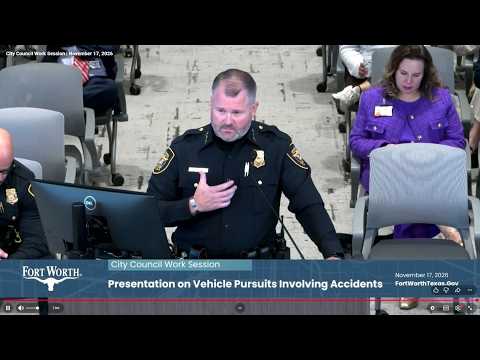
Fort Worth police officers chased suspects 998 times over four years. About 36% of those chases ended in a crash, and 10 people died, according to department data presented to the City Council.

The new rule does not change which offenses allow a chase. It requires a supervisor to come on the radio within roughly 60 seconds, confirm the pursuit is within policy, and order it terminated if supervisors do not respond in time.

Why it matters

Fort Worth's rule tests whether a second pair of eyes, in real time, can cut chase deaths without giving up the ability to catch fleeing suspects.

Last Monday's email for Fort Worth, TX

Sent Nov 23. It carried:

Get next Monday's: one short email a week. Free. Unsubscribe in one click.

Questions about this story

Free account needed to ask — your question is kept and asked for you right after sign-up. Answers are public.

No questions yet — be the first to ask.

Key Indicators

998
Pursuits over four years
Officer-initiated chases counted by the Fort Worth Police Department before the policy change.
36%
Chases ending in a crash
Share of the 998 pursuits that ended in a collision, per the department's briefing.
10
Deaths in pursuit crashes
Fatalities tied to the four-year pursuit record presented to the City Council.
60 sec
Supervisor check-in window
Time a supervisor has to confirm on the radio that a chase complies with policy.
200+
Arrests per year from pursuits
Suspects Chief Eddie Garcia says chases help officers apprehend annually.

Voices

Curated perspectives — historical figures and your fellow readers.

Sign up to generate historical perspectives on this story.

People Involved

Organizations Involved

Timeline

March 2026 November 2026

4 events Latest: Yesterday
Tap a bar to jump to that date
  1. Department unveils 60-second supervisor rule

    Latest Policy

    Fort Worth police told the City Council that 998 pursuits over four years produced hundreds of crashes and 10 deaths, and outlined a requirement that supervisors confirm a chase is within policy within about a minute or it ends.

  2. Second fatal tree crash, passenger seriously hurt

    Incident

    A driver died and a passenger sustained significant injuries when a pursued vehicle left the road and hit a tree.

  3. Kendrick Gibson dies in pursuit crash

    Incident

    Officers chased a vehicle linked to an aggravated kidnapping; Gibson, who was not the suspect, crashed into a concrete pillar and died.

  4. Another pursuit ends in a tree crash and a death

    Incident

    Police later cited a March 2026 chase in which the driver lost control and struck a tree and died.

Scenarios

1

One-Minute Rule Holds, Chase Deaths Fall

Possible Resolves by Nov 30, 2027

Discussed by: Fort Worth Police Department leadership and WFAA's reporting on the policy briefing

Supervisors use the radio window to call off marginal chases, and the share of pursuits ending in crashes drops below the 36% the department reported for the prior four years. Chief Garcia keeps the eligible-offense list unchanged and points to the arrest count to justify retaining pursuits. This is the outcome the department has publicly aimed at.

2

Council Presses for a Narrower List of Chaseable Offenses

Uncertain Resolves by Q3 2027

Discussed by: Fort Worth City Council members who questioned the department during the briefing

The supervisor rule satisfies the council for a year, then a new fatal crash revives the question of which offenses justify a chase at all. Members push the department to drop pursuits for non-violent property crimes and traffic offenses. The department resists, citing arrests, and the dispute plays out in budget and briefing sessions rather than in court.

3

Supervisors Miss the Window and Chases Collapse

Unlikely Resolves by Nov 30, 2027

Discussed by: Policing analysts and department critics weighing the tradeoff between oversight and arrests

Sixty seconds turns out to be tight for supervisors managing multiple calls. Officers break off chases they would have completed, and the department's annual pursuit-related arrest figure drops. The department adjusts the window or adds staffing to the supervisor role, and the change becomes a staffing question rather than a safety question.

Historical Context

2 moments from history that rhyme with this story — and how they unfolded.

March 1989

Brower v. County of Inyo (1989)

A driver fleeing police died when he hit a roadblock officers had placed across the highway. His family sued, arguing the roadblock was an unconstitutional seizure under the Fourth Amendment. The Supreme Court agreed the roadblock could count as a seizure, sending the case back for trial.

Then

Departments had to treat pursuit tactics as constitutional questions, not just operational ones.

Now

Pursuit policy manuals became legal documents, written with an eye on liability for how a chase is conducted.

Why this matters now

Explains why departments write detailed pursuit rules in the first place: the tactics used to stop a fleeing car can be judged as government seizures.

May 1998

County of Sacramento v. Lewis (1998)

A passenger on a fleeing motorcycle died after a high-speed chase ended in a crash. His family argued the officer's conduct violated the passenger's right to due process. The Supreme Court ruled that police do not violate due process during a pursuit unless their conduct shocks the conscience, a high bar.

Then

The ruling limited federal civil liability for chase deaths, closing one route to reform.

Now

Pressure shifted to departments, city councils and state legislatures, which write pursuit policies and can be pushed to change them.

Why this matters now

Fort Worth's change came through a council briefing and an internal rule, not a courtroom, because the courts left the operating decisions to the agencies.

Sources

(2)