
Pull to refresh
Logo
Freeport approves $4.5 billion expansion of Arizona copper mine

Freeport approves $4.5 billion expansion of Arizona copper mine

Built World Interactive

The Bagdad project would more than double output and add molybdenum supply, with first production targeted for mid-2030.

Overview

Updated 6 hours ago

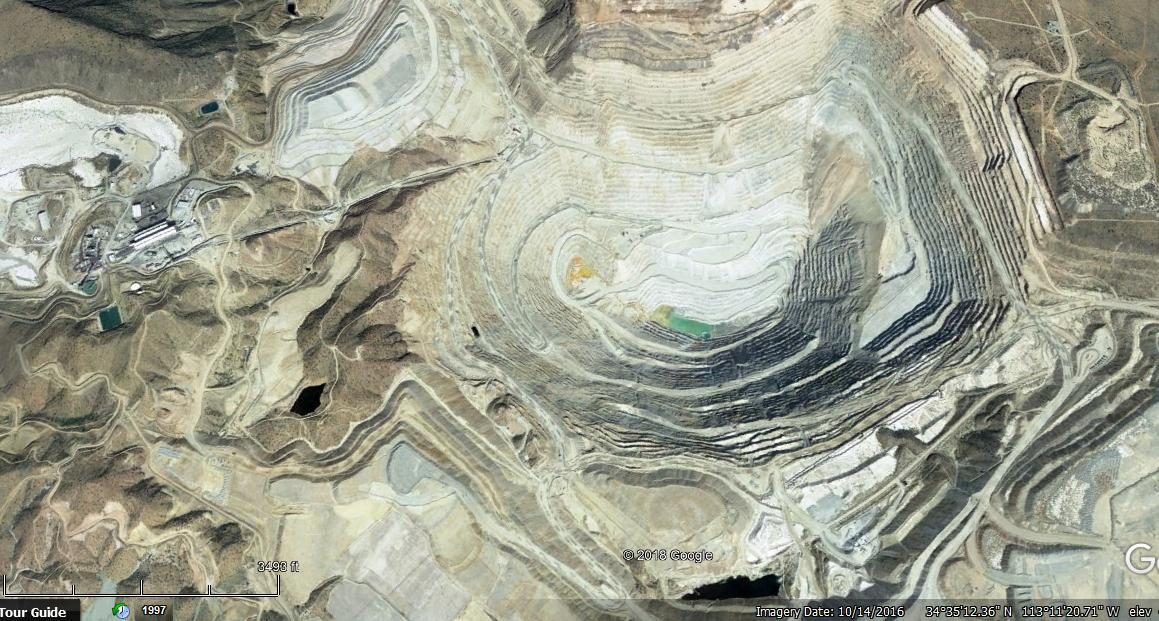
Freeport-McMoRan's board approved a $4.5 billion expansion of its Bagdad mine in northwest Arizona on November 4, 2026. The project would more than double mining and milling rates, lifting long-term copper output above 400 million pounds a year and molybdenum above 20 million pounds.

The approval commits the largest U.S. copper producer to a brownfield build at a time when domestic metal supply matters more to power grids and electric vehicles. It also carries a $1 billion increase over earlier guidance and a break-even copper price of about $4.00 a pound.

Why it matters

The mine would become America's second-largest copper source, adding domestic supply of a metal central to power grids and electric vehicles.

Where it ranks

Doubling Bagdad would still leave the US 6th in world copper

It would add about 102,000 tonnes a year. Chile mined an estimated 5.3 million tonnes in 2025, 5x the US. Toggle it: the US bar grows, nobody is passed.

United States: 1000 → 1102 thousand t. Ranks 6 of 14.

As of 2026-11-05. USGS 2025 mine output estimates, all 14 countries it lists with mine output ('Other countries', 3,000, left out). 'With Bagdad' is our sum: US 2025 plus Freeport's stated long-term extra ~225 million lb a year (~102 thousand t), others at 2025. First output targeted mid-2030. Sources: USGS Mineral Commodity Summaries 2026: Copper, Freeport-McMoRan 8-K, November 4, 2026: Bagdad expansion approved.

Questions about this story

Free account needed to ask — your question is kept and asked for you right after sign-up. Answers are public.

No questions yet — be the first to ask.

Key Indicators

$4.5B
Approved capital cost
Up about $1 billion from earlier guidance.
400M lb
Long-term annual copper output
Incremental production of about 225 million pounds per year.
20M lb
Long-term annual molybdenum output
Incremental 12 million pounds per year.
115,000 t/day
Incremental processing capacity
New concentrator nameplate capacity.
20%
Long-term unit cost reduction
From scale, automation and molybdenum by-product credits.
4,000+
Construction jobs
Direct and indirect jobs during the build.

Voices

Curated perspectives — historical figures and your fellow readers.

Sign up to generate historical perspectives on this story.

People Involved

Organizations Involved

Timeline

1945 2030

10 events Latest: Today
Tap a bar to jump to that date
  1. Initial production targeted for mid-2030

    Upcoming Milestone

    Freeport expects the expanded concentrator to start producing.

  2. Balance of capital spent through 2030

    Upcoming Spending

    The remaining project cost falls across 2029 and 2030.

  3. 30-35% of project capital expected

    Upcoming Spending

    Spending rises as construction moves into full swing.

  4. About 20% of project capital expected

    Upcoming Spending

    Freeport plans to fund roughly a fifth of the cost in 2027.

  5. Freeport approves $4.5 billion Bagdad expansion

    Today Investment

    The board signed off on November 4; the program targets first production in mid-2030.

  6. Hudbay approves Copper World project

    Competitor

    A rival Arizona copper mine gets a final construction decision.

  7. Quirk signals approval at a higher figure

    Statement

    The CEO points to approval at a cost above earlier guidance.

  8. Freeport guides about $3.5 billion for Bagdad

    Guidance

    Earlier presentations put the incremental investment near $3.5 billion.

  9. Bagdad completes autonomous haulage conversion

    Operations

    It becomes the first major U.S. mine with a fully autonomous truck fleet.

  10. Bagdad mine begins operation

    History

    The Arizona open-pit mine starts producing copper.

Scenarios

1

Bagdad expansion reaches first production on schedule in mid-2030

Possible Resolves by End of 2030

Discussed by: Freeport management guidance

Freeport targets initial production in mid-2030 after a construction period of about 3.5 years. Meeting that date would require engineering, procurement and early works to stay on track, with about 20% of capital spent in 2027 and 30-35% in 2028.

2

Bagdad capital cost climbs above $4.5 billion

Possible Resolves by End of 2028

Discussed by: Freeport's own caution about inflation; Construction Review

Freeport raised the estimate from about $3.5 billion earlier in 2026 and warns that inflation and cost escalation could push it higher. A further overrun would test the project's break-even economics at $4.00 copper.

3

Molybdenum deficit keeps by-product credits high

Likely Resolves by End of 2027

Discussed by: BMO Capital Markets

BMO forecasts a sixth consecutive annual molybdenum deficit in 2027, with prices up more than 50% in 2026. Sustained high prices would improve Bagdad's by-product credits and support the 20% unit cost reduction Freeport projects.

4

Copper falls below $4.00 break-even and the build slows

Unlikely Resolves by End of 2028

Discussed by: Freeport break-even disclosure

Freeport says the project breaks even at about $4.00 a pound copper and $20 a pound molybdenum. A sustained copper price below that level would pressure returns, though the company has not said it would halt work.

Historical Context

3 moments from history that rhyme with this story — and how they unfolded.

2008-2019

Rio Tinto's autonomous haulage rollout, Pilbara (2008-2019)

Rio Tinto began running autonomous haul trucks at its West Angelas iron ore mine in 2008 and expanded the fleet across the Pilbara. By 2019 it operated one of the world's largest autonomous haulage systems, alongside driverless trains.

Then

Automation cut operating costs and removed workers from hazardous areas.

Now

Autonomous haulage became standard in large open-pit mining, and rivals including BHP and Fortescue adopted it.

Why this matters now

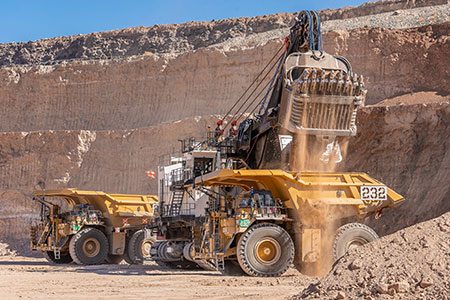
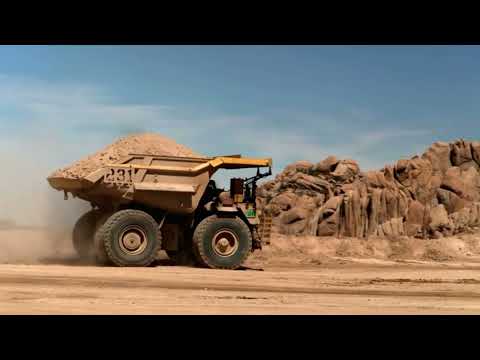
Bagdad completed a fully autonomous haulage conversion in 2025, and the expansion relies on driverless trucks to cut unit costs.

2004-2012

The copper supercycle capex boom (2004-2012)

Copper prices rose from under $1 a pound to more than $4, and miners approved a wave of mega-projects. Many ran over budget and behind schedule as costs for labor, steel and equipment climbed.

Then

Several projects were delayed or written down when prices fell after 2011.

Now

The boom left miners more cautious about large greenfield builds and more focused on brownfield expansions at existing sites.

Why this matters now

Freeport's $4.5 billion Bagdad approval is a brownfield bet at a $4.00 break-even, a structure shaped by that earlier overrun cycle.

1916-present

Climax molybdenum mine, Colorado (1916-present)

Climax began producing molybdenum in Colorado in 1916 and became the world's largest primary molybdenum mine. It has opened and closed repeatedly with prices.

Then

It anchored U.S. molybdenum supply for decades.

Now

About 60% of world molybdenum now comes as a by-product of copper mining, reducing the sway of primary mines like Climax.

Why this matters now

Bagdad would add about 12 million pounds of annual molybdenum against Climax's roughly 30 million pounds of nominal capacity.

Sources

(6)