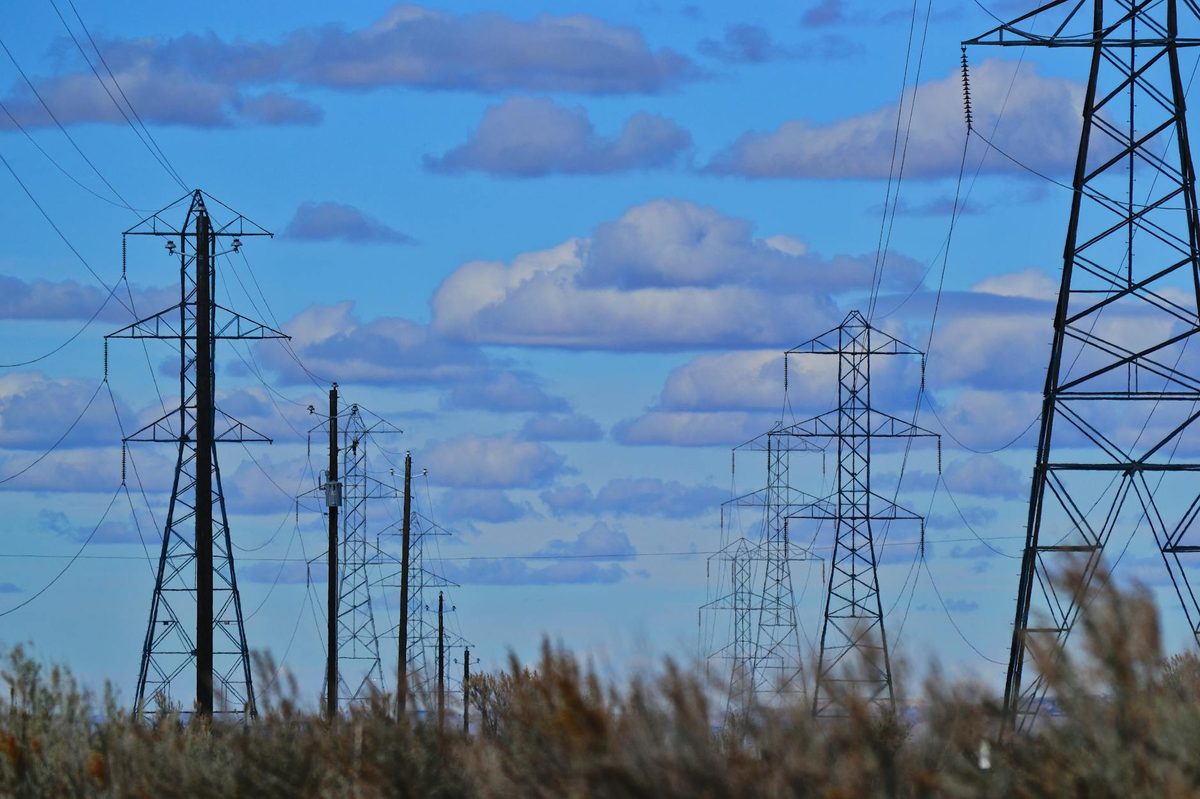
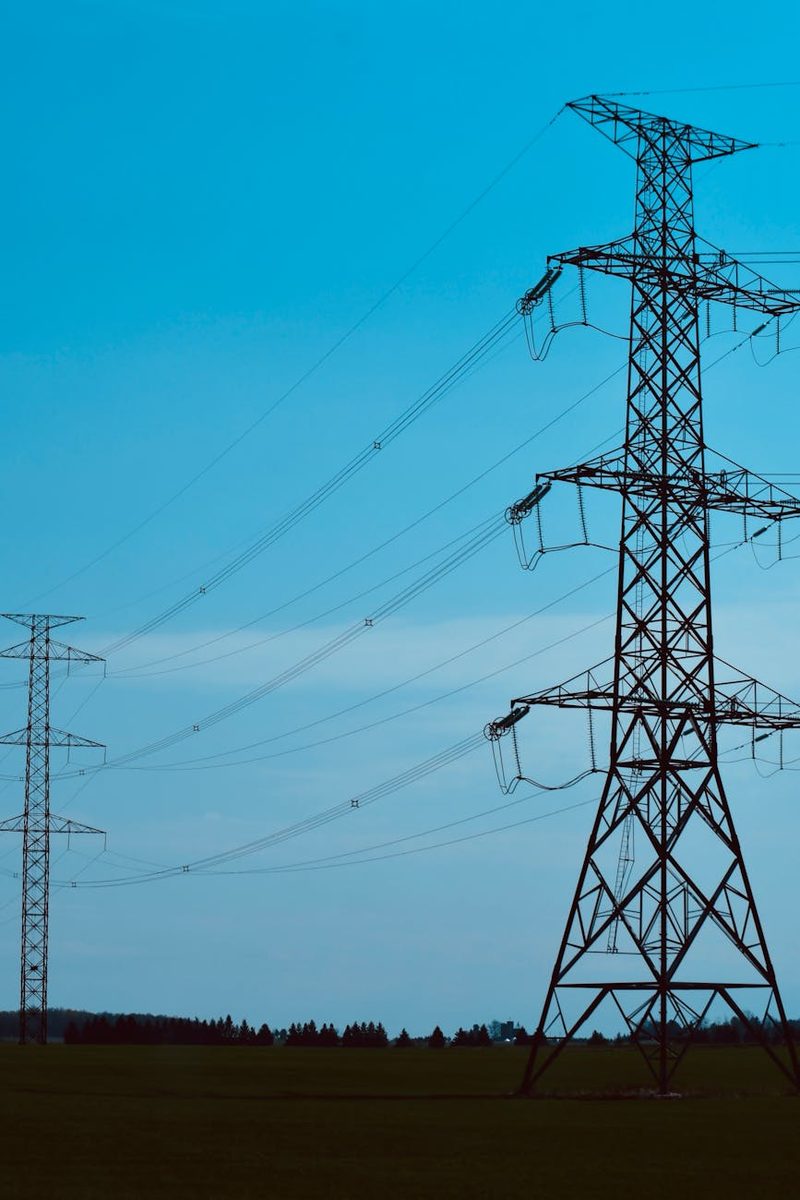
New England has paid some of the highest electricity prices in the country for decades, hostage to constrained natural gas pipelines that spike costs every winter. On January 16, 2026, a $1.6 billion transmission line began delivering 1,200 megawatts of Canadian hydropower to the region—enough to meet 20% of Massachusetts' electricity needs and save ratepayers an estimated $50 million annually.
The 145-mile line took ten years from conception to operation, surviving a New Hampshire rejection, a Maine voter referendum funded by fossil fuel competitors, a state supreme court battle, and a nine-person jury trial. Within days of commercial launch, an Arctic cold snap forced Quebec to halt exports to serve its own customers. The outage raised questions about the line's reliability.
Questions about this story
Free account needed to ask — your question is kept and asked for you right after sign-up. Answers are public.
No questions yet — be the first to ask.
Key Indicators
1,200 MW
Transmission Capacity
Enough power for approximately one million homes, representing 20% of Massachusetts electricity demand.
$1.6B
Project Cost
Paid entirely by Massachusetts ratepayers through 20-year contracts with utilities.
$100M
Referendum Spending
Combined spending by both sides in Maine's 2021 ballot question—the most expensive in state history.
50,000 acres
Conservation Offset
Wilderness permanently protected in Somerset County, Maine as an environmental mitigation requirement.
Images from Openverse under Creative Commons licenses.
Videos from YouTube.
Voices
Curated perspectives — historical figures and your fellow readers.
Cecil Rhodes
(1853-1902) ·Victorian Era · industry
Fictional AI pastiche — not real quote.
"Ten years to string wire across a mere 145 miles—and then they find themselves dependent upon the goodwill of their northern suppliers at the first freeze! In my time, we laid railways through deserts and across veldt with greater speed and less squabbling, because we understood that infrastructure is empire, and delay is defeat."
0% found this insightful
Ever wondered what historical figures would say about today's headlines?
Sign up to generate historical perspectives on this story.
19 events
Latest: January 24th, 2026 · 8 months ago
Showing 8 of 19
JK to step
Tap a bar to jump to that date
Jump to
January 2026
Arctic Cold Snap Halts Exports
LatestOperational
Hydro-Québec suspends power deliveries through NECEC during Winter Storm Fern and an extreme cold snap to meet domestic demand. New England briefly exports power to Quebec, reversing the line's intended flow. Deliveries resume January 26.
Commercial Operations Begin
Milestone
NECEC begins delivering 1,200 megawatts of hydropower from Quebec to New England. Governor Mills and Massachusetts officials welcome the completion after nearly a decade of development.
November 2025
Final Regulatory Approval Granted
Regulatory
Maine Department of Environmental Protection approves the conservation plan, clearing the last regulatory hurdle for commercial operations.
May 2025
Conservation Plan Announced
Environmental
Central Maine Power announces plans to permanently conserve approximately 50,000 acres in Somerset County as required environmental mitigation, connecting to 400,000 existing acres of protected land.
April 2025
Federal Court Upholds Army Corps Permits
Legal
A federal judge in Portland declines to revoke U.S. Army Corps of Engineers permits, dismissing environmental groups' final legal challenge.
August 2023
Construction Resumes
Construction
Work restarts after an 18-month halt. Avangrid reports the delay increased project costs by $521 million due to inflation and supply chain constraints.
April 2023
Jury Affirms Avangrid's Right to Build
Legal
A nine-member jury votes 9-0 that Avangrid had undertaken significant construction in good faith before the referendum, rendering the ballot measure unconstitutional as applied to NECEC.
November 2022
Supreme Court Upholds State Lease
Legal
Maine Supreme Judicial Court rules the state acted within constitutional authority in granting the lease, resolving the separate public lands dispute.
August 2022
Supreme Court Rules Referendum May Be Unconstitutional
Legal
Maine Supreme Judicial Court rules that retroactively applying the referendum would violate the state constitution if Avangrid had already begun significant construction, remanding the case for a jury trial.
November 2021
Avangrid Files Constitutional Challenge
Legal
Avangrid files motion arguing the referendum law is unconstitutional because it retroactively deprives the company of vested rights. Construction halts.
Maine Voters Reject Project in Referendum
Political
Question 1 passes with 59% support, retroactively banning high-impact transmission lines in the Upper Kennebec Region. Combined campaign spending reaches $100 million—the most expensive ballot question in Maine history. NextEra Energy and other fossil fuel competitors contribute over $23 million to the anti-project effort.
August 2021
Court Invalidates State Lease
Legal
Kennebec County Superior Court rules that Maine's Bureau of Parks and Lands exceeded its authority in granting a lease for the transmission line to cross public lands.
January 2021
Construction Begins
Construction
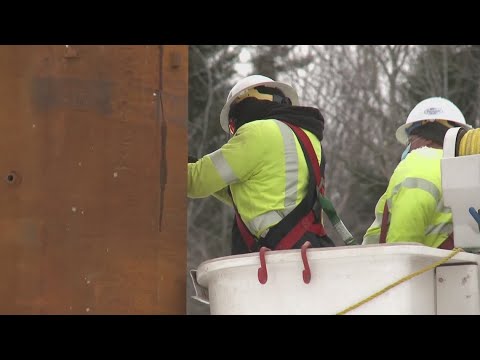
Right-of-way clearing and access road preparation commence, followed by installation of steel structures. The U.S. Department of Energy grants final federal approval.
May 2020
Environmental Permits Granted
Regulatory
Maine Department of Environmental Protection approves the project. Governor Mills separately negotiates an additional $40 million in benefits from Hydro-Québec.
February 2019
Maine PUC Approves Project
Regulatory
The Maine Public Utilities Commission grants a Certificate of Public Convenience and Necessity, with Governor Mills endorsing a stipulation providing over $240 million in benefits to Maine.
February 2018
New Hampshire Rejects Northern Pass
Regulatory
New Hampshire's Site Evaluation Committee unanimously denies permits for the competing Northern Pass project, eliminating NECEC's primary rival. Eversource eventually writes off $200 million after spending $318 million on the failed effort.
2018
Massachusetts Utilities Sign Contracts
Agreement
Eversource, National Grid, and Unitil sign 20-year contracts with Hydro-Québec at $0.059 per kilowatt-hour for delivery of approximately 9.45 terawatt-hours annually.
2017
NECEC Project Announced
Development
Central Maine Power announces plans for the 145-mile transmission line through western Maine and begins filing permits with federal and state agencies.
August 2016
Massachusetts Mandates Clean Energy Procurement
Legislation
Governor Charlie Baker signs legislation requiring Massachusetts utilities to procure long-term contracts for 1,200 megawatts of Canadian hydropower, setting the stage for competitive bidding.
Scenarios
1
NECEC Operates Reliably, Expands Regional Clean Energy
Likely
Discussed by: Massachusetts energy officials, Conservation Law Foundation, clean energy advocates
The transmission line delivers consistent power over its 20-year contract, reducing wholesale electricity prices and suppressing winter price spikes. Success emboldens similar projects and demonstrates that major transmission infrastructure can survive political opposition. Massachusetts uses NECEC power toward its 2050 net-zero emissions target, potentially prompting additional Canadian hydropower contracts.
Discussed by: New England Power Generators Association, energy consultants, critics of the project
Repeated instances of Quebec curtailing exports during cold snaps—when New England needs power most—raise questions about NECEC's reliability as baseload capacity. Massachusetts utilities or regulators seek contract modifications or penalties. The experience influences future transmission projects to include stronger delivery guarantees or penalties for non-performance.
3
Quebec Drought Conditions Reduce Available Power
Possible
Discussed by: Energy analysts, Hydro-Québec observers, Robert McCullough (industry consultant)
Three years of below-average precipitation have reduced Quebec's reservoir levels. If drought conditions persist, Hydro-Québec may struggle to meet both domestic demand and U.S. export commitments, particularly during extreme weather. This could force difficult allocation decisions and undermine the project's promised benefits to Massachusetts ratepayers.
4
Model for Future U.S. Transmission Buildout
Possible
Discussed by: Grid Strategies, Americans for a Clean Energy Grid, Department of Energy
NECEC joins the Champlain Hudson Power Express (expected operational spring 2026) as proof that major interstate transmission can be built despite intense opposition. The projects' success—surviving referenda, lawsuits, and political opposition—informs federal permitting reform efforts and regional transmission planning under FERC Order 1920.
Historical Context
3 moments from history that rhyme with this story — and how they unfolded.
1 of 3
February 2018
Northern Pass Rejection (2018)
Eversource proposed a 192-mile, $1.6 billion transmission line called Northern Pass to carry 1,090 megawatts of Quebec hydropower through New Hampshire to Massachusetts. The New Hampshire Site Evaluation Committee unanimously rejected the project, citing harm to tourism, communities, and landscapes. Eversource spent $318 million before the New Hampshire Supreme Court upheld the rejection in 2019.
Then
Massachusetts utilities pivoted to NECEC as the primary route for Canadian hydropower imports, making Maine the battleground for the regional clean energy debate.
Now
Demonstrated that even well-funded transmission projects can fail when local opposition is sufficiently organized, setting expectations for the fight NECEC would face in Maine.
Why this matters now
NECEC became the viable alternative only after Northern Pass failed, and the Maine opposition drew lessons from New Hampshire's successful resistance—including the power of framing transmission as an out-of-state benefit at local cost.
2 of 3
2001-2017
Cape Wind Offshore Project (2001-2017)
Cape Wind was proposed as America's first offshore wind farm, with 130 turbines in Nantucket Sound. Despite federal permits and utility contracts, the project faced 16 years of lawsuits, regulatory challenges, and opposition from wealthy coastal residents and the late Senator Ted Kennedy. After losing power purchase agreements in 2015, developer Energy Management abandoned the project.
Then
Massachusetts lost the chance to lead offshore wind development; the project became a cautionary tale about permitting delays and organized opposition.
Now
The failure prompted Massachusetts to create a more structured offshore wind procurement process and led to current projects like Vineyard Wind. Demonstrated that even with permits, projects can be killed through sustained litigation and contract cancellations.
Why this matters now
NECEC faced similar dynamics—well-funded opposition, ballot initiatives, and years of litigation—but ultimately prevailed where Cape Wind failed. The difference: Avangrid had begun significant construction before the referendum, giving it constitutional protection that Cape Wind lacked.
3 of 3
1971-2002
James Bay Hydroelectric Controversy (1970s-1990s)
Hydro-Québec built massive hydroelectric dams in northern Quebec, flooding 11,000 square kilometers of Indigenous Cree and Inuit territory. The James Bay project became one of North America's largest hydropower complexes at 16,000+ megawatts. Environmental and Indigenous rights groups in the U.S. and Canada campaigned against the projects, influencing the New York Power Authority to cancel contracts in 1992.
Then
Quebec negotiated land claims settlements and modified later phases of development. Some U.S. utilities reduced or cancelled Hydro-Québec contracts.
Now
Created lasting questions about whether Canadian hydropower should be classified as "clean" energy given ecological and Indigenous impacts. The 2002 Peace of the Braves agreement between Quebec and the Cree established a new framework for resource development.
Why this matters now
NECEC opponents argued that Hydro-Québec power is not truly clean energy due to reservoir methane emissions and Indigenous land impacts. These arguments appeared in the 2021 Maine referendum campaign and continue to shape debate about counting hydropower toward state renewable energy mandates.