

Pull to refresh
Logo
Georgia Power brings 128 MW battery online beside Robins solar farm

Georgia Power brings 128 MW battery online beside Robins solar farm

Built World

Battery stores four hours of solar power for winter peaks, part of a 3,000 MW buildout

5 days ago: Georgia Power announces Robins battery commercial operation

Overview

Updated 1 hour ago

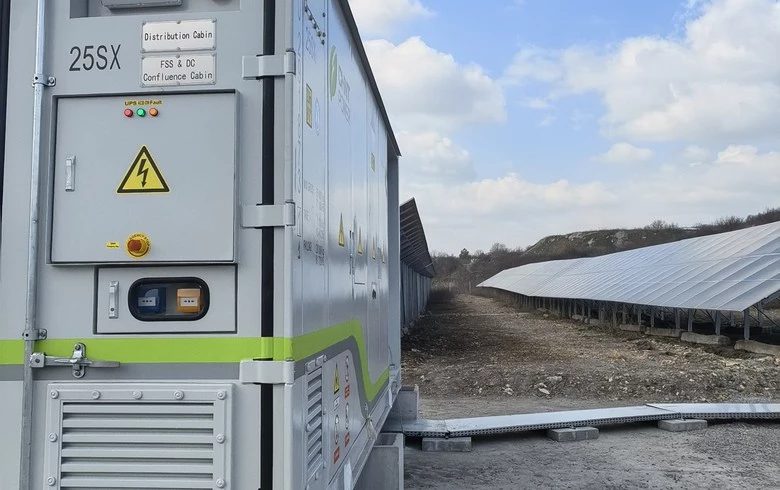
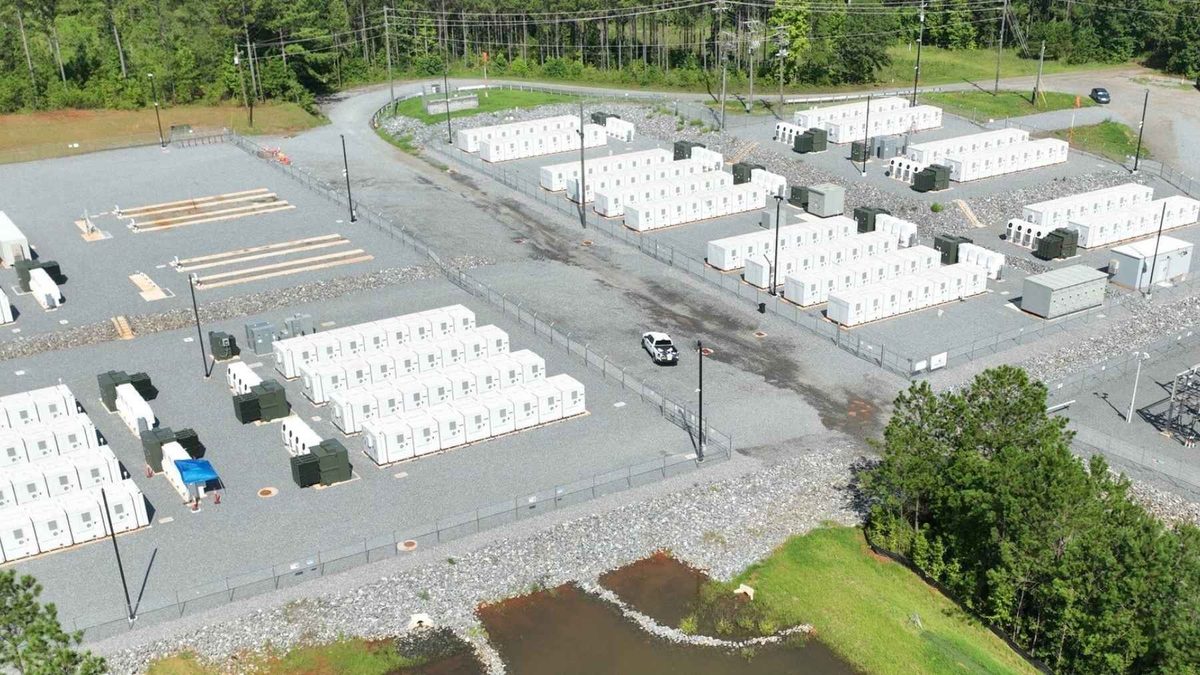
Georgia Power switched on a 128-megawatt battery near Warner Robins in September 2026. It sits beside a solar farm of roughly 470,000 panels and stores their midday output for when demand peaks, like cold winter mornings when solar is weak. At full power it feeds the grid for four hours.

The battery anchors a bigger shift. Georgia's regulator approved 500 megawatts of storage in the utility's 2023 plan; nine more approved batteries total over 3,000 megawatts. The question is whether storage can replace gas plants that only fire up at peak hours.

Why it matters

Georgia Power now runs 580 MW of grid batteries; nine approved more could let it retire gas plants that only fire up at peak hours.

Questions about this story

Free account needed to ask — your question is kept and asked for you right after sign-up. Answers are public.

No questions yet — be the first to ask.

Key Indicators

128 MW
Robins battery capacity
Rated output of the facility that entered commercial operation in September 2026.
4 hours
Storage duration at full output
Total capacity is 512 MWh, aimed at morning and evening peak windows.
579.5 MW
Georgia Power operational battery capacity
Total across completed projects after Robins came online; 57.5 MW more nears completion.
3,000+ MW
Additional approved battery capacity
Nine more approved batteries beyond the initial 2023 plan, per Georgia Power.
470,000
Solar panels at adjacent Robins Solar Facility
The battery plugs into the existing solar farm's grid connection.

Voices

Curated perspectives — historical figures and your fellow readers.

Ever wondered what historical figures would say about today's headlines?

Sign up to generate historical perspectives on this story.

People Involved

Organizations Involved

Timeline

December 2023 September 2026

3 events Latest: 5 days ago
  1. Georgia Power announces Robins battery commercial operation

    Latest Milestone

    Utility, base leaders, and state officials mark operation of the 128 MW, four-hour storage system.

  2. Robins battery construction completes

    Construction

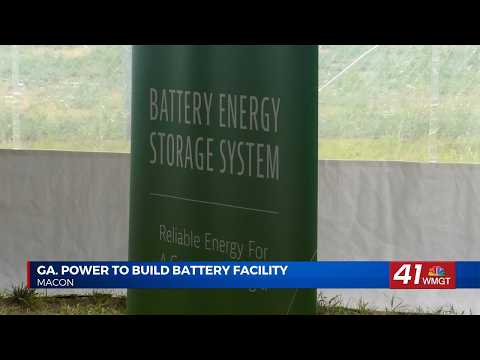
    Facility finishes in March, months ahead of its June target, per Macon TV station 41NBC.

  3. Georgia PSC approves 2023 integrated resource plan

    Regulatory

    Commission approves about 500 MW of new battery storage, including the 128 MW Robins facility.

Scenarios

1

Storage fleet tops 3 GW; Georgia Power proposes retiring a gas peaker

Possible Resolves by End of 2028

Discussed by: Georgia Power integrated resource plan filings; Southeast energy analysts

Georgia Power completes the Hammond battery (57.5 MW) and McGrau Ford Phase II, bringing approved capacity online through 2027-2028. The Robins and Moody co-located projects perform well in winter peaks on the strength of their low transmission costs, and the utility files its next IRP proposing early retirement of at least one gas peaker on battery economics.

2

Winter cold snap drains Georgia's four-hour batteries; gas peakers cover the gap

Possible Resolves by Q2 2027

Discussed by: SERC reliability assessments; regional grid operators

A polar-vortex-style cold event in winter 2026-27 pushes morning demand past what four-hour storage can carry. Robins and other Georgia batteries discharge fully; gas peakers and imported power cover the shortfall. The event would show that four-hour duration storage has limits during multi-day extreme cold.

3

Co-located solar-storage becomes Georgia's default expansion model

Likely Resolves by End of 2027

Discussed by: Georgia Power filings; Georgia Public Service Commission

Robins avoided the cost and lead time of a new step-up substation by plugging into the solar farm's existing grid connection. That saving becomes the template. Georgia Power's next IRP proposes more co-located solar-storage projects and the PSC approves them, making batteries a standard capacity addition rather than a pilot.

Historical Context

3 moments from history that rhyme with this story — and how they unfolded.

December 2017

Hornsdale Power Reserve (2017)

Tesla built a 100 MW/129 MWh battery in South Australia in under 100 days after a state blackout. It responded to grid frequency changes faster and cheaper than gas plants, and its operator locked in revenue from grid stability markets.

Then

Cut grid stabilization costs in South Australia and expanded to 150 MW within three years.

Now

Provided the first commercial proof that big grid batteries pay for themselves, kicking off a global grid-storage boom.

Why this matters now

Hornsdale showed batteries could be reliable grid assets. Robins is Georgia taking that model to scale, paired with solar.

2020-2023

California battery buildout (2020-2023)

California added thousands of megawatts of batteries to cover the evening ramp when solar fades and demand stays high. Grid battery capacity grew from roughly 250 MW in 2020 to over 6,600 MW by 2023.

Then

Batteries now supply a measurable share of evening peak power, displacing gas peakers during routine peaks.

Now

Demonstrated that a battery fleet at scale can substitute for peaker plants on ordinary days, though not during multi-day emergencies.

Why this matters now

Georgia's 3,000+ MW approved pipeline follows the same logic: batteries carry predictable daily peaks so gas plants run less.

February 2021

Winter Storm Uri (2021)

A deep freeze across Texas knocked out gas, coal, and nuclear units as fuel lines froze and demand spiked. The grid came within minutes of collapse, and over 200 people died.

Then

Texas was forced to shed load to keep the grid from failing; gas plants were the main casualties.

Now

The storm became the reference point for cold-weather grid resilience, exposing what happens when firm generation freezes.

Why this matters now

Georgia built Robins specifically for cold winter mornings. Uri is the stress test: extreme cold can outlast four hours of stored energy.

Sources

(9)