

Pull to refresh
Logo
Daily Brief
Following
Why Sign Up
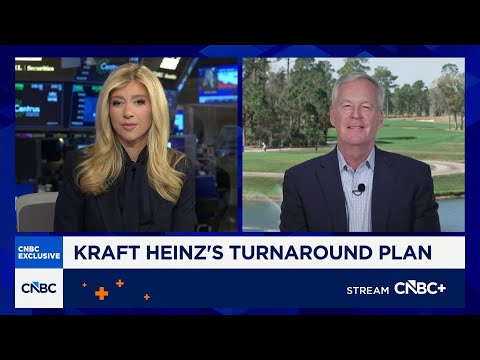
Kraft Heinz cancels split, bets on internal turnaround

Kraft Heinz cancels split, bets on internal turnaround

Money Moves
By Newzino Staff |

New CEO Steve Cahillane shelves spin-off and commits $600 million to reviving legacy brands

Today: Q1 sales beat estimates, market share inflects

Overview

For a decade, Kraft Heinz has been the cautionary tale of the 2015 mega-merger between Kraft Foods and H.J. Heinz: shrinking sales, falling market share, a $15 billion brand writedown, and a stock that lost roughly 70% of its value. In September 2025 the board approved a tax-free split into two companies as the way out. Five months later, a new CEO scrapped that plan and bet $600 million on fixing the company instead.

Why it matters

If Cahillane's reset works, it shows legacy food brands can be revived from within. If it fails, the conglomerate breaks up anywayโ€”just later and weaker.

Key Indicators

$6.05B
Q1 2026 net sales
Beat consensus estimate of $5.89 billion in the quarter ended March 28.
58%
Categories holding or gaining share
Up from 21% a year earlier, measured at the end of March.
$600M
Reinvestment commitment
Spending across 2026 on marketing, sales, R&D, and selective price cuts.
~70%
Stock decline since 2015 merger
The drag Cahillane is trying to reverse, including a $15 billion 2019 brand writedown.
$300M
Costs saved by canceling split
Money that would have been spent on separation work is now redirected to operations.

Interactive

Exploring all sides of a story is often best achieved with Play.

Ever wondered what historical figures would say about today's headlines?

Sign up to generate historical perspectives on this story.

Sign Up

Debate Arena

Two rounds, two personas, one winner. You set the crossfire.

People Involved

Organizations Involved

Timeline

  1. Q1 sales beat estimates, market share inflects

    Earnings

    Net sales of $6.05 billion top estimates by $160 million. The share of categories where Kraft Heinz holds or gains share rises from 21% a year earlier to an average of 35% in the quarter, reaching 58% by end of March. Full-year guidance unchanged.

  2. $250 million Montreal plant modernization

    Capital Investment

    Kraft Heinz commits $250 million to modernize its Montreal manufacturing facility, the first concrete capex move under the reinvestment plan.

  3. Split paused, $600 million reinvestment announced

    Strategic Reversal

    Six weeks into the job, Cahillane indefinitely shelves the split. The company commits $600 million across 2026 to marketing, sales, R&D, and select price cuts. Shares fall nearly 8% on a lowered earnings outlook.

  4. Berkshire prepares full exit of 27.5% stake

    Shareholder Action

    Reports surface that Berkshire Hathaway is preparing to sell its entire position, removing Kraft Heinz from its subsidiary list and withdrawing its directors from the board.

  5. Steve Cahillane named CEO

    Leadership

    Former Kellanova CEO Steve Cahillane is named Chairman and CEO effective January 1, 2026, ostensibly to execute the split.

  6. Board approves split into two companies

    Strategic Decision

    Kraft Heinz announces a tax-free spin-off into 'Global Taste Elevation Co.' (sauces, spreads, shelf-stable meals) and 'North American Grocery Co.' (Oscar Mayer, Kraft Singles, Lunchables), targeted to close in second half of 2026.

  7. Berkshire takes $3.8 billion writedown

    Financial

    Berkshire Hathaway impairs the value of its Kraft Heinz stake, signaling reduced confidence in the standalone investment thesis.

  8. $15.4 billion brand writedown

    Financial

    Kraft Heinz writes down the Kraft and Oscar Mayer brands by $15.4 billion, slashes its dividend, and discloses an SEC accounting investigation. The stock falls 27% the next day.

  9. Failed $143 billion Unilever bid

    Corporate Action

    Kraft Heinz withdraws an unsolicited takeover offer for Unilever after public rejection, exposing the limits of the cost-cutting growth model.

  10. Kraft and Heinz complete merger

    Corporate Action

    Berkshire Hathaway and 3G Capital combine H.J. Heinz with Kraft Foods Group to create the world's fifth-largest food company.

Scenarios

1

Cahillane turnaround sustains, Kraft Heinz becomes the CPG comeback story of 2026

Discussed by: Bullish analysts at Investing.com and ChartMill, citing the market share inflection

Q1 momentum compounds: market share gains hold through Q2 and Q3, organic sales return to growth by year-end, and the company raises 2026 guidance. Berkshire's stake exit clears the overhang. The Kellogg-style brand reinvestment playbook is validated and Cahillane gets a multi-year mandate to keep operating the company as one entity.

2

Q1 beat proves a head-fake, board revisits the split

Discussed by: Skeptical analysts noting unchanged full-year guidance of -1.5% to -3.5% organic sales

The Q1 beat reflects pulled-forward marketing spend and one-time channel restocking rather than durable demand. By Q3 sales decline resumes, and the boardโ€”under pressure from the departing Berkshire stake's new ownersโ€”reactivates the September 2025 split plan. The reinvestment becomes a costly detour that delayed the inevitable separation.

3

Cahillane sells Kraft Heinz, repeating the Kellanova playbook

Discussed by: Industry observers noting Cahillane's history of grooming companies for acquisition

Cahillane spent his last role preparing Kellanova for sale to Mars. If a strategic acquirerโ€”Nestlรฉ, Mondelez, or a private equity consortiumโ€”offers a premium for the Taste Elevation portfolio while the stock is depressed, he could sell rather than complete a multi-year operational turnaround. The Berkshire stake transition creates the opening.

4

Activist investor forces breakup before Cahillane can finish

Discussed by: Corporate governance analysts noting the board's exposure once Berkshire fully exits

The 27.5% Berkshire block lands with new holders unwilling to wait three years for an internal turnaround. An activist surfaces, demands the original September 2025 split, and finds support from institutional investors who already approved the plan once. Cahillane is overruled by the board he is supposed to lead.

Historical Context

Procter & Gamble brand revival under A.G. Lafley (2000-2009)

June 2000 - June 2009

What Happened

P&G's stock had collapsed 50% in three months when Lafley took over in June 2000, replacing Durk Jager. Rather than break the company up, Lafley refocused on core brands, raised R&D and marketing spend, and acquired Gillette in 2005. Sales doubled and the company's market value tripled over his tenure.

Outcome

Short Term

Within 18 months P&G's market share stabilized across most categories and earnings returned to growth.

Long Term

Lafley became the canonical case study for reviving a packaged-goods conglomerate from within, and was brought back as CEO in 2013 to do it again.

Why It's Relevant Today

Cahillane's playbookโ€”reject the breakup, reinvest in brands, run the same conglomerate betterโ€”is the Lafley template applied to a worse starting position. Whether it works at Kraft Heinz tests whether the model still scales after a decade of secular decline in legacy CPG.

Kellogg splits into Kellanova and WK Kellogg (2023)

October 2023

What Happened

Cahillane himself, then CEO of Kellogg, separated the company into faster-growing snacks (Kellanova: Pringles, Cheez-It, Pop-Tarts) and slower-growing North American cereal (WK Kellogg). Within two years Mars acquired Kellanova for ~$36 billion and Ferrero bought WK Kellogg for $3.1 billion.

Outcome

Short Term

Both companies traded at higher multiples as standalone entities than Kellogg had as a combined business.

Long Term

Both were acquired at premiums, validating the split as a value-creation mechanism for shareholders if not for organizational continuity.

Why It's Relevant Today

Cahillane has personally executed exactly the kind of split he just canceled at Kraft Heinz. His reasoningโ€”that Kraft Heinz brands are 'not yet healthy enough' to stand aloneโ€”implies a successful split requires healthier underlying businesses than Kraft Heinz currently has. The Kellanova outcome also raises the question of whether Cahillane is rebuilding to operate or rebuilding to sell.

Failed Kraft Heinz bid for Unilever (2017)

February 2017

What Happened

Kraft Heinz, then two years past the merger, made an unsolicited $143 billion takeover offer for Unilever. Unilever rejected it within 48 hours, citing 3G Capital's cost-cutting model as incompatible with its long-term brand investment strategy. Kraft Heinz withdrew the bid two days later.

Outcome

Short Term

The withdrawal exposed that Kraft Heinz could not grow organically and could not grow through acquisition either.

Long Term

Unilever leaned into brand investment and outperformed Kraft Heinz over the following decade. The episode marked the high-water point for the 3G playbook in consumer goods.

Why It's Relevant Today

The Unilever rejection identified the exact strategic dead end Cahillane is now trying to escape: a company that had cut so deep it could neither grow brands nor convince target companies its stewardship was credible. The $600 million reinvestment is, in effect, an acknowledgment that Unilever was right.

Sources

(10)