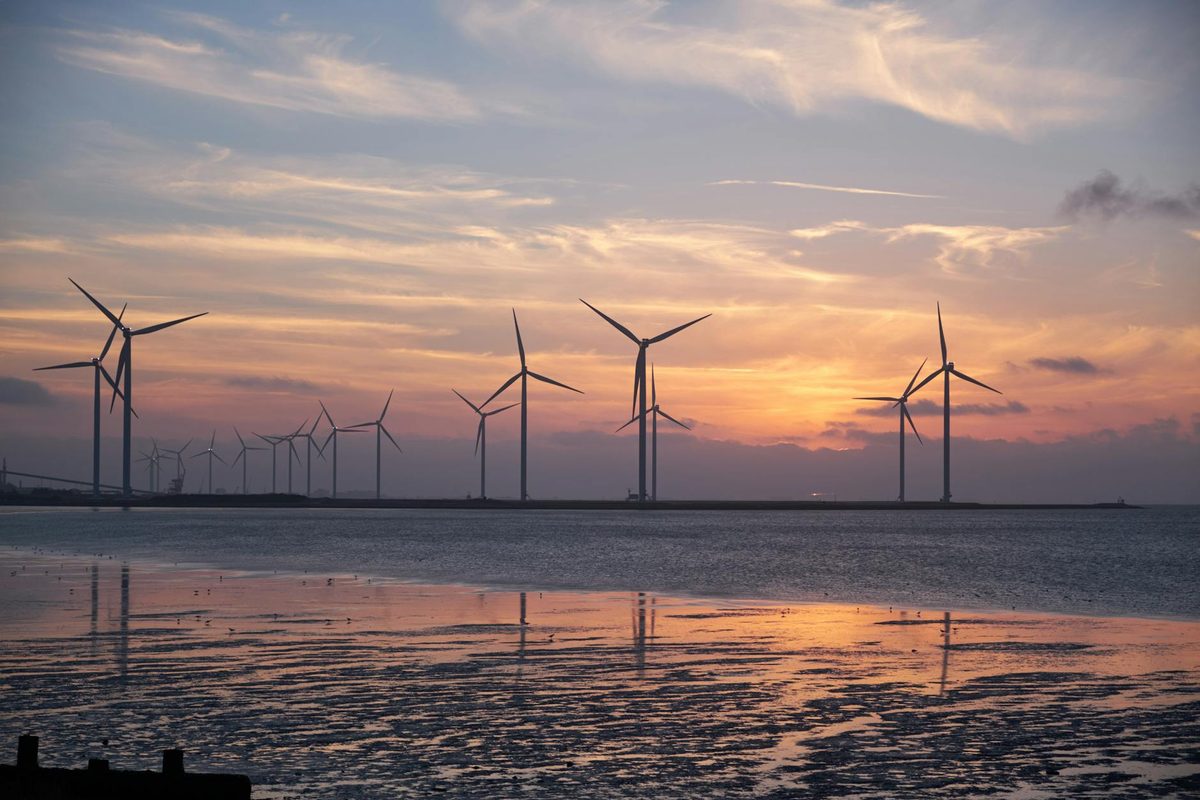
Renewables drew level with coal globally in 2025 and are now overtaking it, according to the International Energy Agency's February 2026 Electricity report. Renewables and nuclear combined are forecast to reach 50% of global electricity by 2030, up from 42% today.
Solar PV alone is projected to add over 600 TWh per year through 2030, and renewable generation is growing at 8% annually. Coal use fell in India and China due to slower demand growth and rapid renewable expansion; globally, coal was broadly flat in 2025 after peaking in 2023. In early February 2026, wind and solar capacity in China exceeded coal capacity for the first time — solar capacity alone is projected to surpass coal by 2026.
However, regional divergence reveals persistent headwinds and policy reversals. The Trump administration signed an executive order in mid-February 2026 to sustain the coal industry through federal funding; coal generation rose in 2025 after years of decline. China's thermal coal imports fell 12% in 2025 to 356.6 million tonnes, even as the country approved a record 161 GW of coal power proposals and started 78 GW of new coal capacity. The IEA warns that over 2,500 GW of renewable and storage projects are stalled in grid connection queues worldwide due to funding gaps, and the pace of deployment may fall short of climate targets. Australia generated over 50% of its electricity from renewables for a full quarter in late 2025. The UK and EU signed an agreement to deliver up to 100 GW of North Sea offshore wind capacity by 2050. Battery storage is forecast to reach 363 GW in 2026, but grid infrastructure must expand faster to keep pace.
Questions about this story
Free account needed to ask — your question is kept and asked for you right after sign-up. Answers are public.
No questions yet — be the first to ask.
Key Indicators
50%
Clean energy share by 2030 (IEA forecast)
Renewables and nuclear combined projected to reach 50% of global electricity generation by end of decade, up from 42% in 2026
Images from Openverse under Creative Commons licenses.
Voices
Curated perspectives — historical figures and your fellow readers.
Benjamin Franklin
(1706-1790) ·Enlightenment · wit
Fictional AI pastiche — not real quote.
"A nation that races to approve coal plants whilst its solar panels gather dust in connection queues reminds me of the merchant who orders new goods before clearing space in his warehouse—he shall either suffocate in his own inventory or learn the hard lesson that infrastructure, like virtue, must be practiced before it can be profitable. 'Tis a curious thing: we have harnessed the very lightning that once I chased with kite and key, yet still we quarrel over which hole to dig for yesterday's fuel."
0% found this insightful
Ever wondered what historical figures would say about today's headlines?
Sign up to generate historical perspectives on this story.
25 events
Latest: February 12th, 2026 · 8 months ago
Showing 8 of 25
JK to step
Tap a bar to jump to that date
Jump to
February 2026
China Accelerates Coal Fleet Retrofitting for Flexibility
LatestInfrastructure
Ember report reveals China on track to make its entire coal fleet fully flexible by 2027 to support rapid wind and solar expansion, shifting coal from baseload to system balancing amid 15th Five-Year Plan.
Trump Administration Signs Executive Order to Sustain US Coal Industry
Policy
President Donald Trump signed an executive order directing federal funding to sustain the US coal industry, reversing the long-term coal decline trend and supporting continued coal generation despite renewable expansion.
UK-EU North Sea Offshore Wind Agreement Announced
Policy
New UK-EU Clean Energy Security Pact commits nations to jointly deliver up to 100 GW of North Sea offshore wind capacity by 2050, coordinating historic scale-up of offshore wind power.
IEA Electricity 2026: Renewables Overtaking Coal, 50% Clean Energy by 2030
Analysis
IEA releases comprehensive electricity forecast showing renewables now overtaking coal globally, with clean energy (renewables + nuclear) projected to reach 50% of generation by 2030. Solar PV alone to add 600+ TWh annually. Coal's share declining across India and China but rising in US due to federal policy.
China's renewable electricity generation capacity expected to grow in 2026 with solar surging 25% despite slight decline in wind utilization hours. Simultaneously, China approved record 161 GW of new coal power proposals in 2025 and started 78 GW of capacity—highest in a decade—signaling coal's shift to flexibility rather than baseload.
China's 15th Five-Year Plan Targets Coal Consumption Plateau
Policy
China's new five-year plan aims for coal consumption plateau rather than decline, while oil consumption projected to peak in 2026. Plan signals continued expansion of domestic oil and gas production alongside renewable growth.
US Coal Plant Retirements Delayed by Federal Policy
Policy
Plans to retire 15 coal-fired power plants in the United States have been delayed after the U.S. Department of Energy ordered them to remain operational, reversing the long-term coal decline trend and supporting higher coal generation in 2025.
China's Wind and Solar Capacity Officially Exceeds Coal for First Time in History
Milestone
China's combined wind (640 GW) and solar (1,200 GW) capacity reached 1,840 GW in 2025, officially surpassing thermal coal capacity (1,500 GW) for the first time. Solar capacity alone projected to exceed coal by 2026, with non-fossil sources forecast to account for 63% of China's power mix in 2026.
January 2026
China Adds Record 434 GW of Renewables in 2025
Infrastructure
China installed 315 GW of solar and 119 GW of wind in 2025, the highest annual additions ever. Renewables exceeded 60% of total installed capacity.
December 2025
Australia Achieves 50% Renewable Electricity for Full Quarter
Milestone
Australia passed a major clean power milestone in late 2025, with renewables and storage supplying over 50% of grid electricity for a full quarter, driving 40%+ year-on-year fall in wholesale electricity prices.
November 2025
COP29 Pledges Six-Fold Increase in Energy Storage
Policy
At COP29 in Baku, governments pledged to increase power system storage capacity six-fold by 2030 and add 80 million km of grid infrastructure by 2040.
Fossil Generation Plateaus Globally for First Time Since COVID
Analysis
Ember's Q3 report shows fossil fuel generation expected to remain flat in 2025, with solar and wind growth meeting all new demand.
October 2025
Renewables Officially Surpass Coal Globally
Milestone
Ember analysis confirms renewables generated 34.3% of global electricity in H1 2025, overtaking coal's 33.1%.
September 2025
U.S. Adds $40 Billion in New Fossil Fuel Subsidies
Policy
Trump administration expanded tax credits for carbon capture and extended drilling incentives, adding $4B annually over next decade.
April 2025
Clean Energy Surpasses 40% of Global Electricity in 2024
Milestone
Ember's Global Electricity Review 2025 confirms low-carbon sources (renewables + nuclear) reached 40.9% in 2024, first time above 40% since 1940s.
New Coal Capacity Hits 20-Year Low
Industry
Global Energy Monitor reports 44 GW of new coal plants in 2024, lowest in two decades. UK completes coal phaseout, becoming sixth country to do so.
2025
Global Battery Storage Capacity Reaches 241 GW
Infrastructure
Battery energy storage systems grew 99 GW (+50%) in 2025 to reach 241 GW globally, forecast to hit 363 GW in 2026.
June 2024
Solar Becomes EU's Largest Power Source
Milestone
Solar overtakes all other generation sources in European Union for first time.
2024
China Installs 360 GW Wind and Solar
Infrastructure
China adds more renewable capacity than rest of world combined, reaching 2030 target six years early.
December 2023
COP28: 120 Countries Pledge to Triple Renewables
Policy
Dubai climate summit produces commitment to triple renewable capacity to 11,000 GW by 2030.
Coal Peaks at 8.5 Billion Tonnes
Industry
Coal demand reaches new record high, but IEA says this is likely the peak before decline begins.
2022
Coal Demand Hits Record High
Industry
Global coal consumption reaches all-time peak of 8.4 billion tonnes as economy rebounds from pandemic.
November 2020
IEA Predicts Renewables to Overtake Coal by 2025
Forecast
IEA forecasts renewables will become largest electricity source globally by 2025, meeting 99% of demand growth.
October 2020
IEA Declares Solar Cheapest Electricity Ever
Analysis
International Energy Agency announces solar is now cheapest source of electricity in history, projecting massive deployment.
December 2015
Paris Agreement Adopted
Policy
195 countries commit to limiting global warming to well below 2°C, spurring renewable energy investments worldwide.
Scenarios
1
Accelerated Transition: Coal Generation Halves by 2030
Possible
Discussed by: IEA, Ember, Bloomberg New Energy Finance
Solar and wind continue exponential growth driven by economics. Battery storage solves intermittency at scale as costs keep falling. China's massive manufacturing capacity floods global markets with cheap panels and turbines. Coal plants retire faster than expected as they become uneconomical even in developing nations. Natural gas plateaus as it fills reliability gaps but can't compete with renewables plus storage. By 2030, coal generates less than 20% of global electricity, down from 33% today. This pathway aligns with limiting warming to 1.5°C.
2
Natural Gas Bridge: Fossil Fuels Hold 40% Through 2030
Likely
Discussed by: BP, ExxonMobil, Resources for the Future
Renewable growth continues but grid reliability concerns slow coal retirements. Natural gas fills the gap as a "bridge fuel," with LNG capacity expanding 45% by 2030. Fossil fuel companies invest minimally in renewables while governments maintain subsidies for gas infrastructure. Developing nations build new gas plants citing energy poverty. Coal declines to 25% of generation but gas rises to 25%, keeping combined fossil fuel share around 50%. This scenario misses Paris Agreement targets and locks in decades of emissions.
3
Policy Backlash: Transition Stalls at 40% Renewables
Unlikely
Discussed by: McKinsey, political risk analysts
Political resistance to grid upgrades and industrial policy shifts slows renewable deployment. Fossil fuel subsidies continue despite G7 pledges. Grid bottlenecks prevent new solar and wind from connecting. Public backlash over electricity prices or reliability leads some countries to extend coal plant lifespans. China's domestic slowdown reduces clean energy manufacturing capacity. Renewables plateau at 40% of generation by 2030 while coal stabilizes around 28%. Climate goals become unreachable without major course correction in 2030s.
4
Breakthrough Convergence: Renewables Hit 60% by 2030
Multiple breakthroughs accelerate transition: solid-state batteries achieve commercial scale, green hydrogen becomes cost-competitive for industry, and AI optimizes grid management. China and U.S. compete on clean energy manufacturing, driving costs below all projections. India and Southeast Asia leapfrog coal entirely with distributed solar plus storage. Fossil fuel companies pivot aggressively as stranded asset risks materialize. By 2030, renewables generate 60% of global electricity and coal drops to 15%. This scenario keeps 1.5°C within reach.
5
Battery Breakthrough: Storage Costs Collapse, Grid Transformation by 2028
Solid-state batteries and grid-scale flow batteries achieve commercial viability ahead of projections, with costs falling 60% by 2027. China's manufacturing scale floods global markets with cheap storage systems. Utilities rapidly deploy multi-gigawatt battery arrays, replacing gas peaker plants economically. By 2028, major grids in California, Germany, and Australia demonstrate 24/7 renewable operation during peak demand periods. Natural gas generation enters structural decline as storage eliminates the intermittency premium. Coal becomes economically unviable even in India and Southeast Asia. This scenario accelerates the transition timeline by 5-7 years.
Historical Context
3 moments from history that rhyme with this story — and how they unfolded.
1 of 3
1760-1850
Coal Powers the Industrial Revolution (1760-1850)
Britain led the world's industrialization by harnessing coal energy, scaling production from 5.2 million tonnes in 1750 to 62.5 million tonnes by 1850—a twelve-fold increase. Coal powered steam engines, heated factories, and eventually generated electricity. By 1900, coal accounted for 95% of Britain's energy consumption.
Then
Britain became the world's dominant economic and military power through industrial supremacy.
Now
Coal-fired industrialization spread globally, creating modern civilization while setting up the climate crisis we face today.
Why this matters now
The 2025 coal-to-renewables flip reverses 265 years of energy history—the first time since the Industrial Revolution that a cleaner source has overtaken coal.
2 of 3
1970-2023
Denmark's Renewable Energy Transformation (1970s-2023)
After the 1973 oil crisis, Denmark committed to energy independence through renewables. Starting with wind power in the 1970s, the country built community-owned turbines and implemented policies requiring local ownership stakes in projects. By 2022, renewables supplied 81% of Denmark's electricity, with wind alone providing 53.4%.
Then
Denmark achieved energy security while building a global wind industry exporting technology worldwide.
Now
Power sector emissions fell 76% from 1990 to 2020. Denmark targets 100% renewable electricity by 2026.
Why this matters now
Denmark proves a modern economy can run almost entirely on renewables—providing a roadmap others are now following at global scale.
3 of 3
2000-2020
Natural Gas Displaces Coal in U.S. (2000-2020)
Fracking unlocked massive U.S. natural gas reserves, making it cheaper than coal. Gas generation grew from 16% of U.S. electricity in 2000 to 40% by 2020, while coal collapsed from 52% to 19%. Utilities closed hundreds of coal plants, citing economics rather than environmental policy.
Then
U.S. power sector emissions fell 33% from peak levels as cleaner-burning gas replaced coal.
Now
Gas infrastructure locked in decades of fossil fuel dependence, slowing renewable deployment and missing climate targets.
Why this matters now
Shows fuel transitions happen fast when economics shift—but also how a 'bridge fuel' can become a long-term obstacle if renewables don't scale quickly enough.