

Logo
Daily Brief
Following
Why
China's Emissions Enter Sustained Decline

China's Emissions Enter Sustained Decline

The world's largest emitter may have peaked five years ahead of schedule

Overview

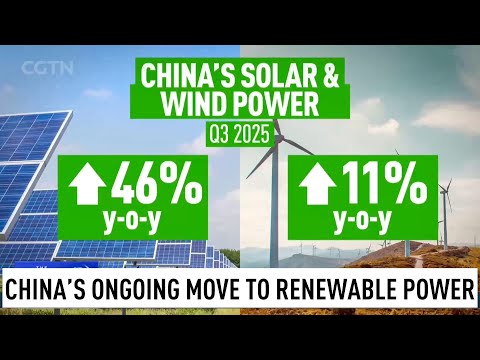
China's CO2 emissions fell 1% in the first half of 2025, extending an 18-month plateau that began in March 2024. This marks the first time clean power generation—not economic slowdown—has driven emissions down in the world's largest polluter, suggesting the peak may finally be structural rather than cyclical.

The stakes are global: China accounts for a third of worldwide emissions. Between 2013 and 2023, global emissions rose by 2.5 billion tonnes, with 1.9 billion from China alone. If this decline holds, the major source of global emissions growth has been eliminated five years ahead of Beijing's 2030 target.

Key Indicators

1%
H1 2025 emissions decline
First sustained drop driven by clean energy rather than economic contraction
356 GW
Wind & solar added in 2024
Record installations exceeding all other countries combined
1,482 GW
Total renewable capacity Q1 2025
Surpassed coal-fired thermal capacity for first time
50%
EV share of new car sales
Transportation emissions from fuel fell 5% year-on-year
27%
Cement emissions drop since 2021 peak
Real estate crisis hammered construction-related emissions
94.5 GW
New coal construction starts 2024
Highest since 2015, complicating the transition narrative

People Involved

Xi Jinping
Xi Jinping
President of China (Committed China to carbon neutrality by 2060)
Lauri Myllyvirta
Lauri Myllyvirta
Lead Analyst, Centre for Research on Energy and Clean Air (Principal researcher tracking China's emissions trends)

Organizations Involved

CE
Centre for Research on Energy and Clean Air
Research Organization
Status: Leading independent tracker of China's emissions

Independent research organization providing real-time analysis of China's energy transition and emissions trends.

CA
Carbon Brief
Climate Science Publication
Status: Primary publisher of China emissions analyses

UK-based website specializing in data-driven analysis of climate science and energy policy.

International Energy Agency
Intergovernmental Organization
Status: Global energy policy advisor

Paris-based autonomous organization providing energy policy recommendations and data analysis for member countries.

National Energy Administration
Government Agency
Status: China's primary energy regulator

Chinese government agency responsible for energy policy implementation and regulation.

Timeline

  1. China Submits Conservative 2035 Climate Target

    Policy

    First absolute emissions reduction pledge: 7-10% below peak by 2035. Critics call it unambitious.

  2. First-Half Emissions Fall 1% Year-on-Year

    Milestone

    Clean energy drives emissions decline for fourth consecutive quarter, suggesting structural peak has arrived.

  3. Renewables Surpass Thermal Capacity

    Milestone

    Wind and solar capacity (1,482 GW) exceeds coal-fired thermal (1,450 GW) for first time in history.

  4. Record Year for Renewable Installations

    Infrastructure

    China adds 356 GW wind and solar—more than rest of world combined. Total renewable capacity hits 1,400 GW.

  5. Emissions Fall 3% in March—First Drop Since Reopening

    Milestone

    Monthly emissions decline ends 14-month post-Covid surge. Clean energy growth begins outpacing demand.

  6. Coal Approvals Quadruple

    Infrastructure

    China approves 106 GW of new coal plants in 2023, four times the 2016-2020 average, citing energy security.

  7. Zero-Covid Controls End

    Policy

    China abandons strict pandemic lockdowns, triggering 14-month emissions surge as economy reopens.

  8. Property Bubble Begins Collapsing

    Economic

    Evergrande's $300 billion default triggers real estate crisis that will eventually crash cement demand by 27%.

  9. Coal Consumption Surges in Post-Pandemic Recovery

    Industrial

    Coal consumption grows 5% to highest level ever, exceeding 2013-2014 peak. China adds 25 GW coal capacity.

  10. Xi Jinping Announces Carbon Neutrality Pledge

    Policy

    President Xi surprises UN General Assembly by committing China to peak emissions before 2030 and reach carbon neutrality before 2060.

Scenarios

1

Emissions Peaked in 2023, Structural Decline Locked In

Discussed by: Carbon Brief, Centre for Research on Energy and Clean Air, Climate Action Tracker

The 18-month plateau starting March 2024 represents China's definitive emissions peak, driven by renewable capacity additions that will only accelerate. Solar and wind installations continue exceeding electricity demand growth, while EV adoption above 50% of new sales permanently reduces transport emissions. The real estate collapse has structurally lowered cement demand, unlikely to recover to 2021 levels. Coal plants approved in 2022-2023 become stranded assets as renewables prove cheaper and more reliable. China reaches carbon neutrality by 2055, five years ahead of its 2060 pledge.

2

False Peak—Emissions Rebound on Economic Stimulus

Discussed by: Analysts noting 94 GW coal construction starts in 2024, concerns about energy security prioritization

The current plateau proves temporary as Beijing launches major stimulus to revive GDP growth and the property sector. Infrastructure spending surges, driving cement and steel production back up. The 94 GW of coal plants starting construction in 2024 come online between 2026-2028, increasing baseload fossil generation. Economic anxiety trumps climate commitments, and the 2035 NDC target of only 7-10% below peak emissions reveals Beijing's true ambition level. This scenario mirrors the false peaks of 2014-2016, when emissions plateaued briefly before rebounding.

3

Volatile Plateau—Years of Uncertainty Ahead

Discussed by: World Resources Institute, researchers noting China's history of emissions volatility

Emissions oscillate narrowly around current levels through 2030, neither clearly rising nor falling. Renewable growth continues but coal generation remains stubbornly high due to grid stability concerns and political resistance from coal-dependent provinces. Some years show small declines, others modest increases, depending on weather (drought affecting hydro), economic cycles, and policy priorities. The question of whether China has peaked remains unanswerable until 2028-2030, creating uncertainty that hampers global climate negotiations and investment decisions.

Historical Context

United Kingdom Emissions Peak (1973)

1973-present

What Happened

The UK's CO2 emissions peaked in 1973 during the oil crisis, then entered a long decline driven by deindustrialization, the shift from coal to natural gas in the 1990s, and later renewable energy deployment. By 2023, UK emissions were 50% below peak levels.

Outcome

Short term: Industrial decline caused job losses and economic pain in coal regions through the 1980s.

Long term: The UK achieved emissions reductions while maintaining economic growth, proving decoupling was possible.

Why It's Relevant

Shows that emissions peaks in developed economies often resulted from structural economic shifts rather than deliberate climate policy—unlike China's renewable-driven decline.

EU Emissions Peak (1990)

1990-present

What Happened

The European Union's collective emissions peaked in 1990 following German reunification and the collapse of inefficient Eastern European industry. Subsequent declines came from natural gas replacing coal, efficiency improvements, and aggressive renewable deployment after 2010. By 2023, EU emissions were 27% below 1990 levels.

Outcome

Short term: Eastern European industrial collapse caused economic hardship but dramatically cut emissions.

Long term: The EU built a clean energy economy while maintaining living standards, becoming a global climate policy leader.

Why It's Relevant

Demonstrates that early peaks require decades of sustained effort to achieve deep reductions—China's 2060 neutrality timeline faces similar challenges.

U.S. Emissions Peak (2007)

2007-present

What Happened

U.S. CO2 emissions peaked in 2007, then fell during the 2008 financial crisis and continued declining as cheap natural gas from fracking displaced coal for power generation. Economic recovery didn't restore emissions to 2007 levels due to improved efficiency and growing renewables, though the decline has been gradual and uneven.

Outcome

Short term: The Great Recession caused the initial drop; the coal-to-gas transition sustained it.

Long term: U.S. emissions in 2023 remained about 15% below peak, but progress has been slower than EU or UK.

Why It's Relevant

Shows how economic shocks can trigger peaks, but sustained reductions require structural energy transitions—China's clean energy boom may prove more durable than past cyclical declines.

China's Previous False Peaks (2014-2016, 2022)

2014-2016, 2022

What Happened

China's emissions plateaued 2014-2016 during an economic slowdown, prompting speculation about an early peak. Emissions then resumed growing through 2019. In 2022, zero-Covid lockdowns caused another temporary drop before the 2023 post-reopening surge.

Outcome

Short term: Each plateau ended when economic growth resumed, revealing the declines were cyclical, not structural.

Long term: These false peaks made analysts skeptical about calling definitive peaks, creating the burden of proof current claims must overcome.

Why It's Relevant

The critical question: Is the 2024-2025 decline different because it's driven by clean energy overwhelming demand growth, or will it prove another false peak?

15 Sources: