

Pull to refresh
Logo
Google Cloud launches Gemini for healthcare

Google Cloud launches Gemini for healthcare

New Capabilities

A purpose-built agent that reads patient records and assembles prior-authorization packets, launching in preview with seven named health systems and payers.

Overview

Updated 49 minutes ago

A U.S. physician spends nearly 28 hours a week on documentation and administrative work, and handles about 40 prior authorizations. Google Cloud's newest product targets that work, not diagnosis.

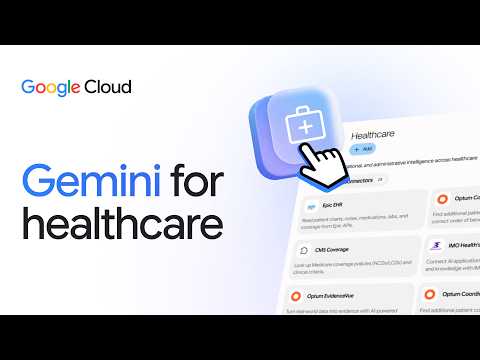
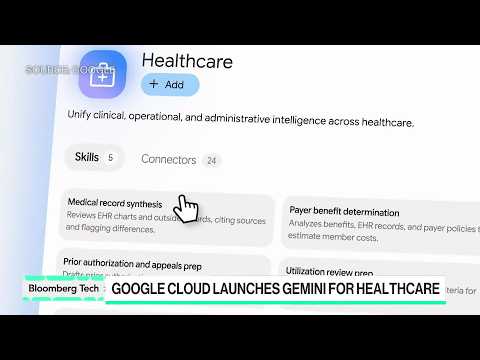
Gemini for healthcare, announced Nov. 10 in preview, wraps Google's general-purpose Gemini agent in healthcare-specific skills and connectors to electronic health records, claims systems and Medicare data. It can read a chart and assemble an authorization packet; it cannot edit the record. A clinician reviews each finding, and every answer links to its source.

Why it matters

Administrative work takes 25% to 35% of U.S. health spending; if agents absorb it, savings show up in premiums and wait times.

Questions about this story

Free account needed to ask — your question is kept and asked for you right after sign-up. Answers are public.

No questions yet — be the first to ask.

Key Indicators

28 hours
Weekly documentation and admin time per clinician
Figure from a Harris Poll and Google Cloud study cited in the launch materials.
41.9%
Physicians reporting burnout
From a 2025 American Medical Association report cited by Google.
25–35%
Administrative share of U.S. health spending
American Hospital Association estimate cited in the launch materials.
40
Prior authorizations per physician each week
American Medical Association estimate reported by Fortune.
13 hours
Weekly physician and staff time on prior authorization
American Medical Association figure; 40% of practices employ staff solely for this.
35 seconds
Time for demo agent to assemble a patient timeline
Fortune watched the agent pull conditions, medications, allergies and labs and flag a missed allergy.

Voices

Curated perspectives — historical figures and your fellow readers.

Sign up to generate historical perspectives on this story.

People Involved

Organizations Involved

Timeline

October 2026 November 2026

4 events Latest: Yesterday
Tap a bar to jump to that date
  1. Gemini for healthcare launches in preview

    Latest Product

    Connects to electronic health records, claims systems, clinical guidelines and Medicare datasets.

  2. Seven launch customers and partner vendors named

    Partnership

    Customers include HCA, Northwell, Optum and Blue Cross Blue Shield of Massachusetts.

  3. Fortune watches the agent assemble a chart in 35 seconds

    Demonstration

    It flagged a missed allergy and a new lab result, each linked to its source.

  4. Google introduces the universal Gemini agent

    Product

    A general-purpose agent that plans multi-step tasks and works inside existing enterprise tools.

Scenarios

1

Gemini for healthcare exits preview with named production deployments

Likely Resolves by Q2 2027

Discussed by: Google Cloud, which said the product is available in preview starting Nov. 10, and the launch customers named in its announcement.

Google moves the product from preview to general availability and publishes pricing or contracting terms. A named launch customer states that it has put the agent into routine use for chart preparation or authorization review, rather than evaluating it. The trigger is a Google Cloud announcement or a customer statement naming the workflow and the site. If the product stays in preview through mid-2027, this scenario fails.

2

A launch customer publishes measured results in a peer-reviewed journal

Possible Resolves by End of 2027

Discussed by: Health system research offices, which have published similar operational studies on ambient documentation tools.

One of the named customers reports measured outcomes from a live deployment: time saved on chart preparation, authorization turnaround, or denial rates, with a comparison group. Peer review is what separates a published result from a conference slide and from the vendor's own marketing. The trigger is a paper, not a press release.

3

A named launch customer suspends its Gemini for healthcare work

Unlikely Resolves by End of 2027

Discussed by: Hospital AI governance committees, which are the bodies that typically halt deployments.

A customer pauses or ends use after an accuracy failure, a data-handling question or a clinician backlash. The product's design limits the damage: it reads records but cannot write to them, and it cites sources. Even so, a governance committee can still pull the plug on a pilot. The trigger is a public statement or an on-the-record report naming the customer and the suspension.

Historical Context

3 moments from history that rhyme with this story — and how they unfolded.

February 2009 onward

HITECH Act electronic record incentives (2009)

The U.S. economic stimulus law paid hospitals and doctors to adopt certified electronic health records and demonstrate 'meaningful use.' Adoption rose quickly and paper charts receded. Documentation moved onto screens but stayed manual.

Then

Most U.S. hospitals and a large share of physician offices moved onto digital records within a decade.

Now

Time spent in the record became a standard measure of clinician burden, and the paperwork the software replaced partly reappeared inside it.

Why this matters now

The 28-hours-a-week figure Google cites descends from that shift. Gemini is being sold as the fix for software the government paid to install.

2011–2018

IBM Watson for Oncology (2011–2018)

IBM marketed Watson for Oncology to hospitals as a treatment-recommendation engine developed with Memorial Sloan Kettering. In 2018, internal IBM documents reported by STAT News showed the system returning unsafe or incorrect cancer treatment recommendations in test cases.

Then

Several hospital partners dropped or scaled back pilots.

Now

Buyers started asking vendors for validation data and citations instead of demos. IBM sold Watson Health in 2022.

Why this matters now

Google's pitch answers that history directly: each finding links to its source, and the agent cannot edit the chart without a clinician.

2016–2017

DeepMind and the Royal Free patient data agreement (2016–2017)

Google's DeepMind built a kidney-injury alert app with London's Royal Free hospital and received patient data under an agreement signed in 2015 and 2016. In July 2017, the U.K. Information Commissioner's Office found the trust's handling of that data did not comply with data protection law.

Then

The agreement was rewritten and DeepMind's health work drew sustained scrutiny.

Now

DeepMind Health was folded into Google Health, and Google's health products since have led with governance language.

Why this matters now

Gemini for healthcare launched with HIPAA compliance, audit logging and per-user permissions as headline features rather than footnotes.

Sources

(9)