
Pull to refresh
Logo
Google makes Gemini-powered data classification generally available in Drive

Google makes Gemini-powered data classification generally available in Drive

New Capabilities

Administrators can now label files with plain-language instructions instead of training a model on hand-tagged examples

Overview

Updated 23 minutes ago

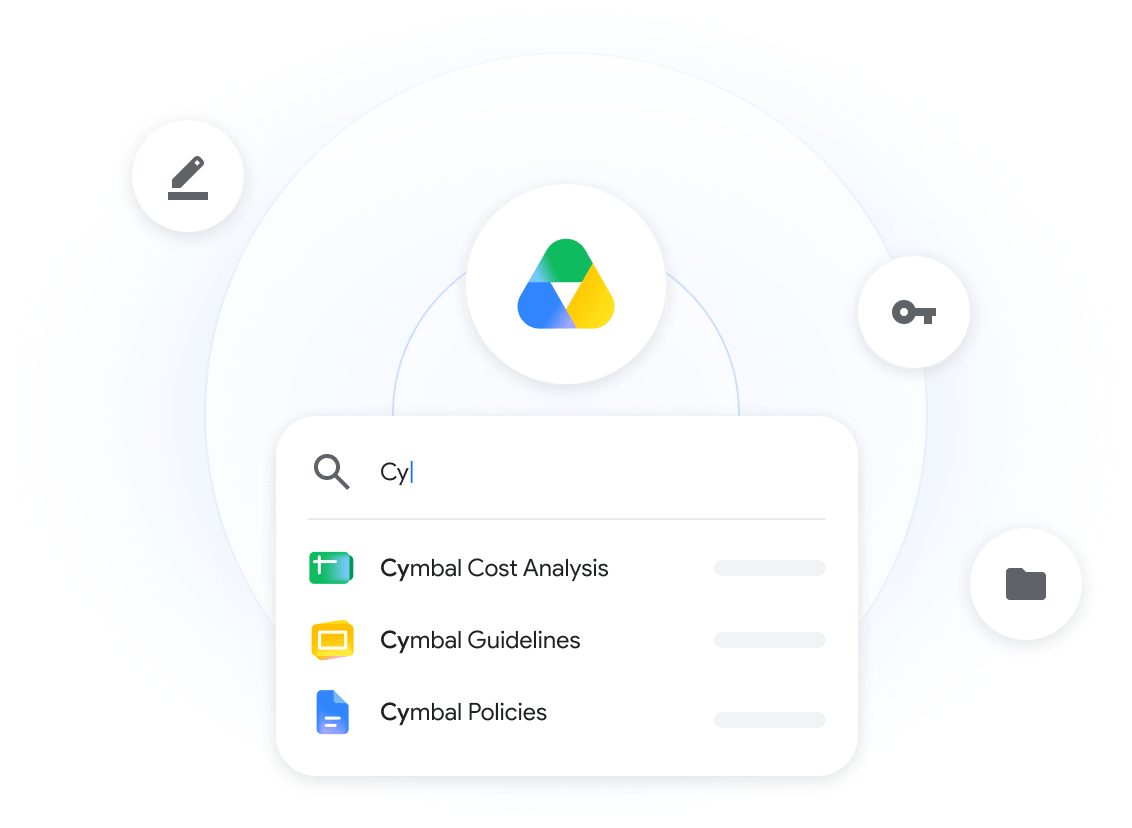
Before this month, teaching Google Drive to recognize a confidential contract meant feeding it example documents. Google made the alternative generally available on November 17, 2026: an administrator writes a sentence describing what a label means, and Gemini reads each file and applies it.

Labels are not decoration. They are the hooks that data-loss rules, retention schedules and audit searches hang on. Until now those hooks were only as good as the manual tagging behind them, which in most organizations covers a small slice of stored files.

Why it matters

Classification labels decide what an organization's security rules actually protect. Automating them changes how much of a Drive a company can govern.

Questions about this story

Free account needed to ask — your question is kept and asked for you right after sign-up. Answers are public.

No questions yet — be the first to ask.

Key Indicators

5
AI classification models per organization
Custom-trained models and Gemini instruction models share this cap.
1
Active Gemini instruction models
Only one set of plain-language instructions can run at a time.
50 words
Minimum readable text for a verdict
Roughly 200 characters of text or OCR output; shorter files are skipped.
December 15, 2026
Target rollout completion
Google expects the extended rollout to finish by this date.

Voices

Curated perspectives — historical figures and your fellow readers.

Sign up to generate historical perspectives on this story.

Organizations Involved

Timeline

2 events Latest: Yesterday
  1. General availability confirmed for three Workspace editions

    Latest Availability

    Enterprise Plus, Frontline Plus and Google AI Pro for Education get the feature; Business editions do not. Google targets December 15 for rollout completion.

  2. Gemini data classification reaches general availability

    Product launch

    Google opens the feature to eligible admins after an open beta, adding instruction testing and near real-time reporting on labeled files.

Scenarios

1

Google adds on-demand rescanning for already-evaluated files

Possible Resolves by Q2 2027

Discussed by: Google's release notes, which list on-demand rescanning as excluded from this release

Auto-apply triggers a one-time backfill scan of existing files, and updated instructions only touch new uploads. Admins who tune their instructions have no way to re-run them against the old corpus. If Google adds a manual rescan control, instruction quality becomes iterative rather than a one-shot decision.

2

Business Standard and Plus customers get AI classification

Unlikely Resolves by End of 2027

Discussed by: Back Office Beat, which flags the Business tier exclusion as the feature's widest practical limit

The feature sits behind Enterprise Plus, Frontline Plus and education tiers, which leaves small and mid-sized businesses on Business plans with the manual labeling workflow. Extending it downward would open a large customer base, but Google has so far kept AI classification as an upsell.

3

Gemini agents refuse to act on files above a set label

Possible Resolves by Q3 2027

Discussed by: Google's own launch framing, which cites agentic workflows reaching sensitive data as the reason labeling matters

Google's stated motivation is that autonomous agents should not read or act on sensitive files. That requires the agent layer to check labels before acting, not just the drive to store them. A shipped enforcement path would turn classification from a reporting tool into a runtime control.

Historical Context

3 moments from history that rhyme with this story — and how they unfolded.

2000s

Pattern-matching data loss prevention (mid-2000s)

Early data loss prevention tools scanned traffic and storage for shapes: 16-digit card numbers, national identification formats, keywords. Anything matching the pattern was flagged.

Then

Security teams got high false-positive volume and thin coverage of unstructured documents.

Now

The industry moved toward metadata labels, which describe what a file is rather than what characters it contains.

Why this matters now

Labels require someone to apply them. That labor bottleneck is what instruction-driven classification removes.

2021-2022

Google Drive labels (2021-2022)

Google added first-party labels to Drive so administrators could tag files and build data loss prevention and retention rules on top of the tags.

Then

Adoption depended on users applying labels by hand, which most organizations did at low volume.

Now

The label plumbing became the foundation Google later built automated classification on.

Why this matters now

The labels, rules and audit trails already existed. This release targets the step that was never finished: applying them at scale.

2021

Microsoft Purview trainable classifiers (2021)

Microsoft shipped classifiers that learned an organization's document types from samples, letting compliance teams label content by category rather than by pattern.

Then

Deployments required gathering and confirming training documents before anything could be labeled.

Now

Trainable models became standard in enterprise compliance suites, with sample collection as the usual bottleneck.

Why this matters now

Google's pitch is that a written instruction replaces that sample-collection step. The tradeoff is that instruction quality, not training data, becomes the variable.

Sources

(5)