
Pull to refresh
Logo
Grand Rapids expands community violence prevention as city reports mixed crime trends

Grand Rapids expands community violence prevention as city reports mixed crime trends

Rule Changes Grand Rapids, MI local

Property crimes fell but crimes against people rose; the city is scaling intervention programs to all wards

Yesterday: City manager reports mixed crime trends, announces expansion

Overview

Updated 1 hour ago

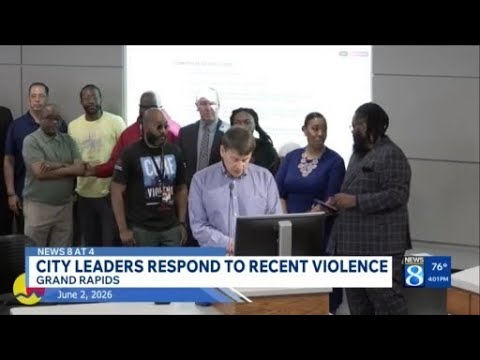
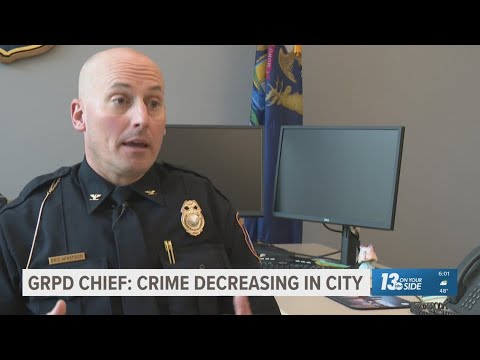
Grand Rapids is doubling down on a public health approach to violence as its crime picture splits. City Manager Mark Washington reported Sept. 22 that property crimes fell 3% and motor vehicle thefts slipped 2.7% in fiscal year 2026, while crimes against people increased.

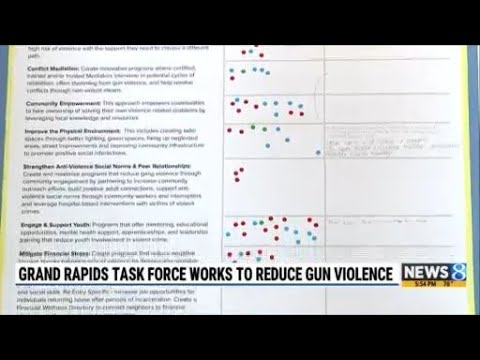
The city is responding by expanding its Cure Violence partnership with the Grand Rapids Urban League and its It Takes a Village youth program to two active sites in every ward. A full report on all 45 anti-violence initiatives is due this fall.

Why it matters

Grand Rapids is testing whether community intervention can cut violent crime; its fall report will show mid-sized cities whether the approach works at scale.

Questions about this story

Free account needed to ask — your question is kept and asked for you right after sign-up. Answers are public.

No questions yet — be the first to ask.

Key Indicators

727
Youth served in expanded summer violence prevention programs
Served across three sites after the city added First and Third ward capacity.
3,068
Violence prevention engagements in fiscal year 2026
Outreach contacts that led to violence interruptions and disruptions.
3%
Reduction in property crimes, fiscal year 2026
Year-over-year decline reported by City Manager Mark Washington.
2.7%
Reduction in motor vehicle thefts, fiscal year 2026
Second straight fiscal year with a reported decline in car thefts.
Up
Crimes against persons, year over year
The category rose against last year, a key driver of the program expansion.
45
City anti-violence initiatives under review
Impact report covering all initiatives is expected this fall.

Voices

Curated perspectives — historical figures and your fellow readers.

Ever wondered what historical figures would say about today's headlines?

Sign up to generate historical perspectives on this story.

People Involved

Organizations Involved

Timeline

September 2020 September 2026

5 events Latest: Yesterday
Tap a bar to jump to that date
  1. City manager reports mixed crime trends, announces expansion

    Latest Report

    City manager reports property crimes down, car thefts down, crimes against people up; announces ward-wide expansion.

  2. Expanded summer programs serve 727 youth

    Program

    Summer violence prevention expands into First and Third wards, serving 727 youth across three sites.

  3. FY26 ends with 3,068 violence prevention engagements

    Milestone

    Fiscal year closes with 3,068 outreach engagements, 1,013 domestic violence victims connected, and 1,161 diversions from the justice system.

  4. City funds Cure Violence partnership with Urban League

    Policy

    City Commission funds Cure Violence pilot with the Grand Rapids Urban League, adopting the public health model.

  5. Grand Rapids creates civilian oversight office

    Policy

    City creates the Office of Oversight and Public Accountability, home to civilian violence prevention work.

Scenarios

1

Crimes against people fall as prevention scales citywide

Possible Resolves by Q3 2027

Discussed by: City Manager Mark Washington, Latesha Lipscomb, and Cure Violence model proponents

Grand Rapids completes the It Takes a Village expansion to two sites per ward during fiscal year 2027 and keeps the Cure Violence contract funded. The FY27 annual performance report shows crimes against persons declining, validating the public health model and inviting other mid-sized cities to copy it.

2

Violent crime rises again despite expansion

Possible Resolves by Q3 2027

Discussed by: City commissioners skeptical of continued Cure Violence funding

Crimes against people rise a second straight year, and the FY27 report shows the increase. The City Commission debates shifting money from community intervention toward traditional enforcement or specialized detective units, fracturing the current strategy.

3

Funding shortfall stalls ward-wide expansion

Uncertain Resolves by Q2 2027

Discussed by: City budget analysts

The plan to open a second It Takes a Village site in every ward depends on new money. If state or federal grants fall short, the city's FY28 budget funds only current sites, leaving the expansion incomplete and the strategy half-built.

Historical Context

3 moments from history that rhyme with this story — and how they unfolded.

May 1996

Boston Operation Ceasefire (1996)

Boston's Gun Project brought police, clergy, and community groups to one table. They told gang members directly that violence would bring focused, credible, and immediate enforcement. Youth gun homicides in the city fell sharply.

Then

Youth gun homicides in Boston dropped more than 60% in two years, though gains faded when the partnership lapsed.

Now

Ceasefire became the template for focused deterrence, the most rigorously evaluated gun violence strategy in American policing.

Why this matters now

It is the main competing model: law-enforcement-led deterrence, against which Grand Rapids' civilian approach is being measured.

2000-2006

Chicago CeaseFire launches (2000)

Epidemiologist Gary Slutkin founded CeaseFire in Chicago's West Side on a simple claim: violence behaves like an infectious disease. Trained outreach workers interrupt conflicts, mediate disputes, and steer high-risk people to services — the same trusted-messenger playbook Grand Rapids now uses.

Then

CeaseFire reported drops in shootings in its intervention zones, though some academic reviews challenged the results.

Now

The model spread to dozens of cities as Cure Violence, becoming the most prominent community-based alternative to policing in the U.S.

Why this matters now

Grand Rapids contracts through the Cure Violence network with the Urban League as its local delivery partner.

2007-2016

Richmond, California Office of Neighborhood Safety (2007)

Richmond created the Office of Neighborhood Safety, hiring street outreach workers — many formerly incarcerated — to build sustained relationships with the roughly 50 people most likely to be shot. Homicides fell from 47 in 2007 to 11 in 2014.

Then

The city reported dramatic homicide reductions, and the credible-messenger model drew national attention.

Now

Richmond showed that civilian staff without badges or guns could reach the highest-risk people police often cannot.

Why this matters now

Grand Rapids applies the same credible-messenger logic through its civilian manager position and Urban League partnership.

Sources

(2)

More from Grand Rapids, MI

Openings, permits and council decisions in Grand Rapids, MI, in your inbox every Monday.