
Pull to refresh
Logo
Croatia signs €35 million grant to drill geothermal wells in four cities

Croatia signs €35 million grant to drill geothermal wells in four cities

Built World

Grant completes hot-water doublets in Velika Gorica, Osijek, Vinkovci, and Zaprešić, with district heating targeted for 2030

3 days ago: Grant agreement signed in Zagreb

Overview

Updated 1 hour ago

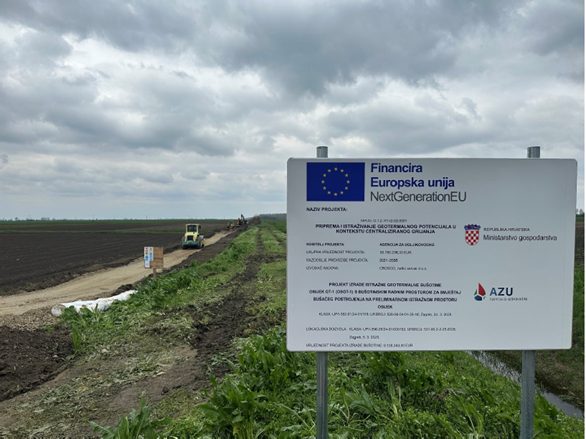
Four Croatian cities could start heating homes from underground hot water by 2030. The government signed a €35 million grant on October 9 to drill injection wells at Velika Gorica, Osijek, Vinkovci, and Zaprešić, where test wells drilled in 2025 already confirmed usable heat.

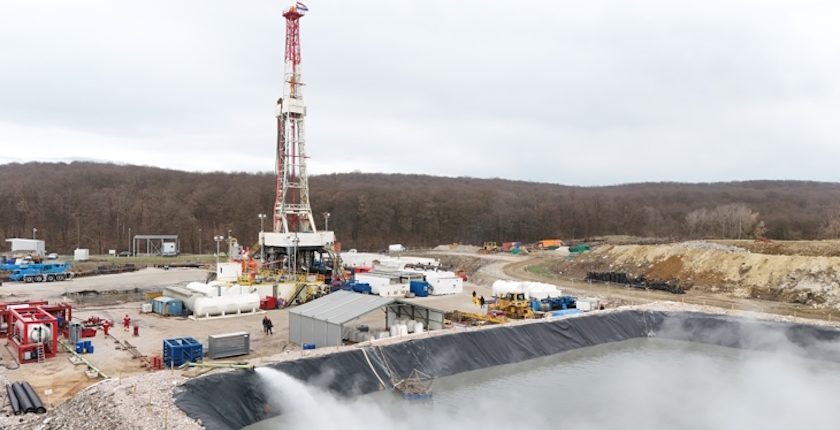
Each site pairs an existing production well with a new injection well to form a closed loop: hot water rises, gives up its heat, and returns to the reservoir. Geothermal runs around the clock, unlike wind and solar, which suits district heating networks that need steady supply. The European Regional Development Fund covers €30 million of the cost.

Why it matters

Four Croatian cities could replace natural gas heating with domestic, always-available underground heat, cutting import dependence and exposure to energy price swings.

Questions about this story

Free account needed to ask — your question is kept and asked for you right after sign-up. Answers are public.

No questions yet — be the first to ask.

Key Indicators

€35.29M
Signed grant agreement value
Of which €30 million comes from the European Regional Development Fund.
€86M+
Total two-phase investment
Adds €50.8 million in earlier National Recovery and Resilience Plan funding.
4
Cities with confirmed geothermal resources
Velika Gorica, Osijek, Vinkovci, and Zaprešić all passed exploration drilling.
100°C+
Water temperature at Osijek well
Well Osijek GT-1 confirmed water above 100°C and roughly 5 MW of thermal capacity.
1,700
Households Vinkovci plans to heat
The district system would also cover schools and public institutions.

Voices

Curated perspectives — historical figures and your fellow readers.

Ever wondered what historical figures would say about today's headlines?

Sign up to generate historical perspectives on this story.

People Involved

Organizations Involved

Timeline

2025 2030

7 events Latest: 3 days ago
Tap a bar to jump to that date
  1. Target year for geothermal heating

    Upcoming Milestone

    Government target for the four cities to begin using geothermal energy for heating.

  2. Drilling of injection wells planned to begin

    Upcoming Construction

    AZU president Marijan Krpan says construction should start roughly two years before the 2030 target.

  3. Grant agreement signed in Zagreb

    Latest Funding

    Government signs €35.29 million grant for four injection wells at the National and University Library, with €30 million from the EU.

  4. Ministry approves geothermal financing

    Funding

    The Ministry of Economy issues its decision to finance the four injection wells.

  5. Ministry publishes geothermal grant call

    Funding

    The Ministry of Economy opens the call for funding to drill the four injection wells.

  6. Osijek exploration well confirms usable heat

    Exploration

    Well Osijek GT-1 confirms water above 100°C and roughly 5 MW of thermal capacity at about 2 km depth.

  7. Exploration drilling runs across four sites

    Exploration

    The Croatian Hydrocarbon Agency drills exploration wells at Velika Gorica, Osijek, Vinkovci, and Zaprešić, confirming resources at all four.

Scenarios

1

First city connects geothermal heat by 2030

Likely Resolves by End of 2030

Discussed by: Croatian government (Ministry of Economy, AZU) and Jutarnji list reporting

The agreement moves the four sites from confirmed resources to working doublets. If tenders run on schedule, drilling begins around 2028 and the first district heating connections follow by 2030. Osijek, where HEP-Toplinarstvo already plans grid integration, is the most advanced candidate.

2

Geothermal program expands to seven cities

Possible Resolves by Q2 2028

Discussed by: Ministry of Economy public statements

The Ministry has flagged geothermal potential at Karlovac, Virovitica, Križevci, Bjelovar, and Lipik, with the last three closest to realization. A public call through the Modernization Fund, worth roughly €26 million, is being prepared for them under a new law simplifying exploration permits.

3

Drilling slips past the 2028 start

Uncertain Resolves by End of 2028

Discussed by: No named analyst — program execution risk

The Croatian Hydrocarbon Agency had not announced the drilling tender as of the signing. Delays in procurement, permitting under the new georesources law, or funding shortfalls could push construction past the planned 2028 start and the 2030 heating target.

Historical Context

3 moments from history that rhyme with this story — and how they unfolded.

1930–1970s

Reykjavik geothermal district heating (1930s–1970s)

Reykjavik began piping hot spring water into buildings in 1930, starting with a school and a pool. Over the following decades the city expanded the network, and by the 1970s it heated most of its buildings using geothermal energy instead of imported coal and oil.

Then

The city displaced coal and oil for heating within a generation.

Now

Reykjavik became the standard example of a whole city converting to geothermal, with geothermal heating now covering the vast majority of building needs.

Why this matters now

Croatia's four-city program follows the same municipal pattern, though on a smaller scale and with a faster public-funding path.

1969 onward

Melun l'Almont, France (1969)

France's first geothermal district heating plant opened in Melun in 1969, tapping the Dogger aquifer beneath the Paris Basin. It demonstrated that continental European heating networks could run on deep geothermal water.

Then

The Paris Basin saw dozens of similar geothermal heating projects in following decades.

Now

It proved the technical model of production-injection well pairs that Croatia is now adopting.

Why this matters now

France's Dogger layer and Croatia's Pannonian Basin share the same basic engineering: paired wells circulating hot water through a closed loop.

2020s

Szeged, Hungary (2020s)

Hungary's second city built one of Europe's largest geothermal district heating projects with EU backing, using wells in the same Pannonian Basin that holds Croatia's resources.

Then

Szeged expanded geothermal supply across multiple phases of its district network.

Now

It showed that Pannonian Basin geology can sustain commercial-scale municipal heating.

Why this matters now

Hungary's success in the same basin underpins expectations that Croatia's wells will perform; it is the regional precedent closest to home.

Sources

(8)