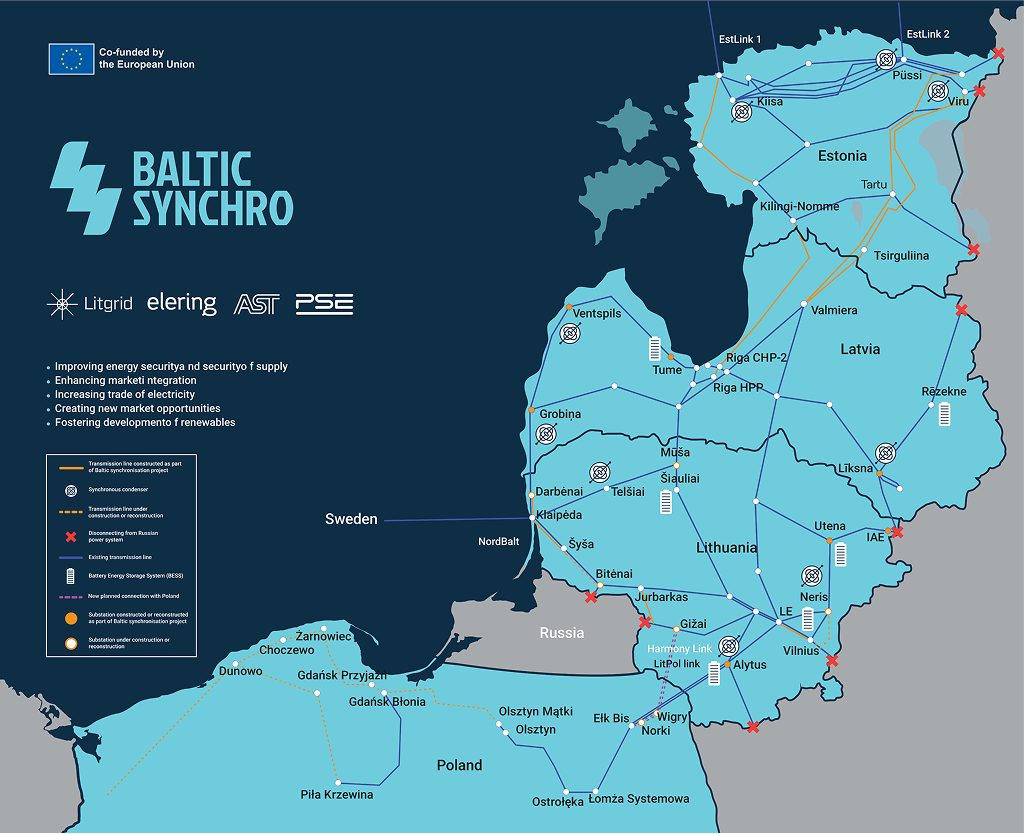
The European Commission allocated €650 million on January 28, 2026, for 14 cross-border energy projects—including the first-ever construction grant for hydrogen storage infrastructure. Germany's Gronau-Epe facility, which will store hydrogen in underground salt caverns, received €120 million. The Baltic states, which permanently disconnected from Russia's electricity grid just weeks earlier, received €113 million for critical infrastructure protection.
This investment marks a shift from study phase to construction phase for European hydrogen infrastructure. Eight of the 14 funded projects involve hydrogen—but only one is for actual construction. The other seven remain studies; Europe's hydrogen backbone exists mostly on paper.
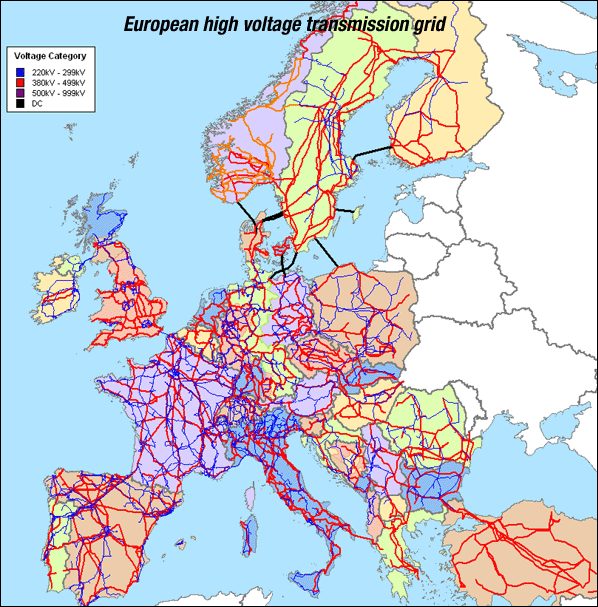
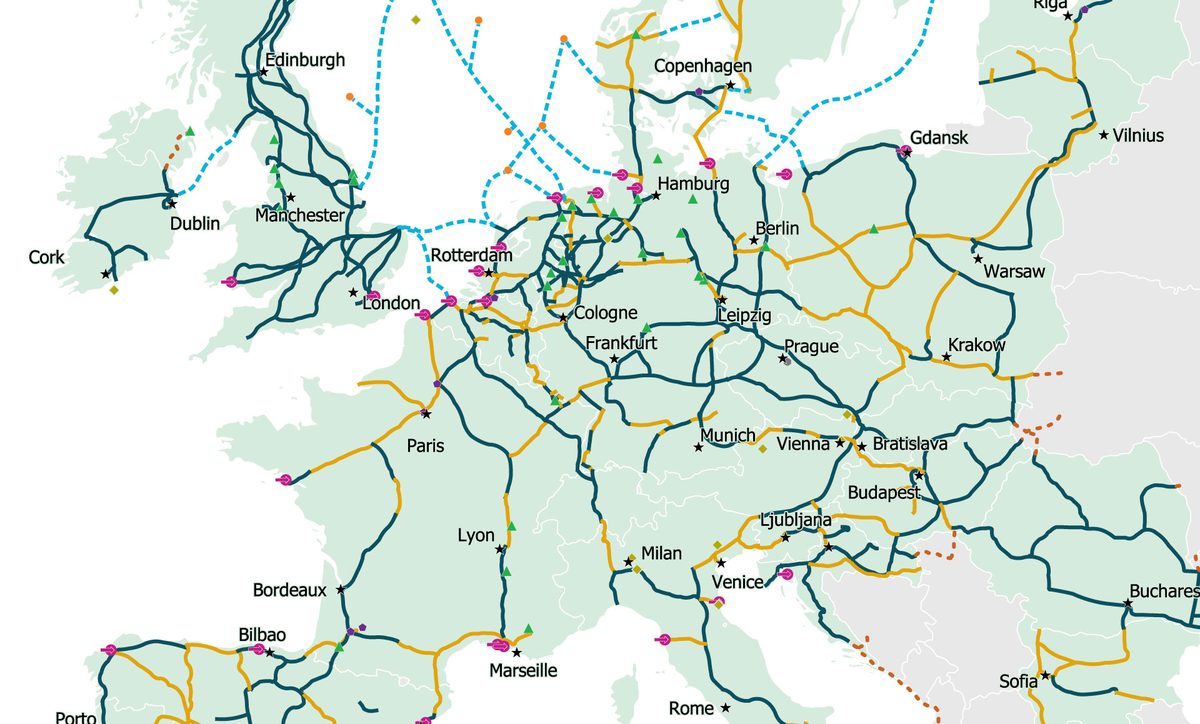
Electricity grid investments totaling €470 million will expand energy storage capacity through pumped hydro plants in Spain, Slovakia, and across the Romania-Bulgaria border.
Questions about this story
Free account needed to ask — your question is kept and asked for you right after sign-up. Answers are public.
No questions yet — be the first to ask.
Key Indicators
€650M
January 2026 Investment
Funding allocated for 14 cross-border energy projects under the Connecting Europe Facility
8
Hydrogen Projects
Number of hydrogen infrastructure investments funded, though only one is for construction (the rest are studies)
€5.84B
CEF Energy Budget 2021-2027
Total Connecting Europe Facility budget for trans-European energy networks this funding period
45%→19%
Russian Gas Import Share
EU's dependence on Russian gas dropped from 45% in 2021 to 19% in 2024
18 events
Latest: February 5th, 2026 · 8 months ago
Showing 8 of 18
JK to step
Tap a bar to jump to that date
Jump to
February 2026
CEF-E-2026-CBRENEW Call Opens for €150M in Cross-Border Renewables
LatestPolicy
The European Commission opens its call for cross-border renewable energy projects with €150 million available. Applications accepted until March 12, 2026. This call supports both works and studies for electricity and hydrogen infrastructure connecting EU member states.
EU Electrolyser Makers Form Coalition for Hydrogen Policy
Industry
Six of Europe's leading electrolyser manufacturers form a coalition to strengthen hydrogen policy and protect industrial leadership in clean hydrogen technology. The move signals industry confidence in EU hydrogen infrastructure investments.
REPowerEU Regulation Enters Into Force
Policy
The REPowerEU regulation (EU/261/2026) officially enters into force, cementing the EU's legal framework for phasing out Russian energy imports and accelerating the transition to independent, clean energy infrastructure.
January 2026
Commissioner Jørgensen Visits Portugal for Energy Talks
Diplomatic
European Energy Commissioner Dan Jørgensen travels to Portugal to discuss energy resilience, cross-border interconnections, and affordable housing—underscoring the Commission's focus on strengthening bilateral energy cooperation.
€650 Million Allocated for 14 Cross-Border Projects
Investment
The Commission funds 14 energy infrastructure projects including the first-ever CEF construction grant for hydrogen storage (Gronau-Epe, Germany) and €113 million for Baltic grid resilience.
North Sea Summit Advances Offshore Wind Cooperation
Policy
Commissioner Jørgensen attends North Sea Summit in Hamburg to advance cross-border offshore wind expansion. Germany and Denmark agree on joint development of Bornholm Energy Island project, which Jørgensen calls 'Europe's pathway for independence.'
December 2025
EU Agrees to End Russian Gas Imports by 2027
Policy
EU member states reach historic agreement to phase out Russian gas imports entirely by end of 2027 and Russian oil shortly thereafter.
November 2025
EU Hydrogen Mechanism Launches
Policy
Commissioner Jørgensen launches the Hydrogen Mechanism to connect hydrogen suppliers and buyers across the EU. Over 260 projects submit supply offers by January 2026.
February 2025
Baltic States Complete Synchronization with EU Grid
Milestone
Estonia, Latvia, and Lithuania permanently disconnect from the Soviet-era BRELL grid and synchronize with continental Europe—ending 75 years of electrical dependence on Russia ahead of schedule.
January 2025
Record €1.25 Billion CEF Energy Allocation
Investment
The Commission announces its largest-ever CEF Energy call, allocating €1.25 billion for 41 cross-border energy projects—exceeding the call's initial €850 million budget.
July 2024
Germany Funds RWE Hydrogen Projects
Investment
German federal and state governments confirm €818 million for RWE's hydrogen projects, including the Gronau-Epe storage facility and a 300-megawatt electrolyzer in Lingen.
April 2024
Sixth PCI/PMI List Published
Milestone
The Commission publishes its sixth list of priority projects: 166 total, including 85 electricity and smart grid projects plus 100 hydrogen and electrolyzer projects—signaling hydrogen infrastructure's arrival as an EU priority.
June 2022
Revised TEN-E Regulation Adopted
Policy
Updated rules add hydrogen infrastructure, smart grids, and offshore electricity as priority categories. New Projects of Mutual Interest category enables projects with non-EU countries.
May 2022
REPowerEU Plan Launched
Policy
The Commission unveils REPowerEU, mobilizing €300 billion to end dependence on Russian fossil fuels through diversified imports, energy efficiency, and accelerated renewable deployment.
February 2022
Russia Invades Ukraine, Triggering Energy Crisis
Geopolitical
Russia's full-scale invasion of Ukraine exposes EU dependence on Russian fossil fuels. At this point, Russia supplies 45% of EU gas imports, 27% of oil, and significant coal volumes.
July 2020
EU Hydrogen Strategy Launched
Policy
The Commission adopts its hydrogen strategy, targeting 6 gigawatts of electrolyzer capacity by 2024 and 40 gigawatts by 2030 to produce up to 10 million tonnes of renewable hydrogen.
December 2019
European Green Deal Announced
Policy
European Commission President Ursula von der Leyen unveils the European Green Deal, committing the EU to climate neutrality by 2050 and pledging to mobilize €1 trillion in sustainable investments over the 2020s.
June 2013
TEN-E Regulation Creates Projects of Common Interest
Policy
The EU establishes the Trans-European Networks for Energy framework, creating a category of priority cross-border infrastructure projects eligible for public funding. The first PCI list follows.
Scenarios
1
Hydrogen Infrastructure Accelerates, EU Meets 2030 Targets
Possible
Discussed by: European Hydrogen Backbone initiative, Hydrogen Europe, European Commission projections
Germany's Gronau-Epe project proves the technology works at scale, triggering a cascade of final investment decisions on the seven hydrogen studies now receiving EU funding. By 2030, five pan-European hydrogen corridors emerge with nearly 28,000 kilometers of pipelines—mostly repurposed natural gas infrastructure. The EU reaches its target of 10 million tonnes of domestic renewable hydrogen production and emerges as a global leader in hydrogen technology exports.
2
Hydrogen Remains Niche, Electrification Dominates
Possible
Discussed by: International Energy Agency, energy economists, battery storage advocates
Hydrogen infrastructure costs prove stubbornly high while battery storage costs continue falling. Most of the seven hydrogen studies funded in January 2026 never progress to construction. Green hydrogen remains confined to hard-to-electrify industrial processes like steel and ammonia production. The EU's €29 billion proposed CEF Energy budget increase for 2028-2034 gets redirected toward grid reinforcement and battery storage instead.
3
Energy Crisis Returns, Infrastructure Spending Surges
Uncertain
Discussed by: European Council on Foreign Relations, security analysts, energy ministers from eastern EU states
Geopolitical tensions or supply disruptions trigger another energy crisis before 2027. EU member states respond by fast-tracking permitting for all PCI projects and dramatically increasing the CEF Energy budget beyond the proposed €29.91 billion. Cross-border interconnection capacity doubles by 2035. The crisis mindset that drove REPowerEU becomes permanent EU energy policy.
4
Fiscal Constraints Slow Infrastructure Buildout
Possible
Discussed by: EU budget hawks, fiscal conservatives in member state governments, infrastructure developers
Economic pressures or competing spending priorities prevent the proposed fivefold increase in CEF Energy funding. The pace of cross-border energy investments slows after 2027. Pumped hydro modernization projects stall. Europe's aging energy storage infrastructure—70% of pumped storage facilities are over 40 years old—becomes a reliability liability rather than a grid stabilization asset.
Historical Context
3 moments from history that rhyme with this story — and how they unfolded.
1 of 3
2011-2022
Nord Stream Pipeline Expansion (2011-2022)
Germany and Russia built two undersea pipelines—Nord Stream 1 (2011) and Nord Stream 2 (2021)—to deliver Russian gas directly to Germany, bypassing Ukraine and Poland. The pipelines carried up to 110 billion cubic meters of gas annually. The US and Eastern European states warned for years that the infrastructure created dangerous dependence on Moscow.
Then
Russia cut Nord Stream 1 flows to 20% capacity in July 2022, then zero in August. In September 2022, underwater explosions (still under investigation) ruptured both pipelines.
Now
The episode vindicated critics and transformed EU energy policy. It accelerated diversification away from Russian gas and created political will for the CEF Energy budget expansion now underway.
Why this matters now
Today's €650 million investment explicitly funds infrastructure resilience and independence—including Baltic grid protection against the kind of energy weaponization Nord Stream demonstrated.
2 of 3
1996-2009
EU Single Electricity Market Creation (1996-2009)
The EU spent over a decade building legal frameworks and physical infrastructure to create a unified electricity market across member states. Three successive legislative packages gradually opened national markets to competition and required transmission system operators to coordinate across borders.
Then
Wholesale electricity prices converged somewhat across the EU. Cross-border trading enabled countries to balance supply and demand more efficiently.
Now
The single market infrastructure proved essential during the 2022 energy crisis, allowing countries with surplus power to help neighbors. It established the institutional framework now being extended to hydrogen.
Why this matters now
The current hydrogen backbone initiative follows the same playbook: build physical infrastructure and market rules simultaneously. The difference is hydrogen faces technology uncertainty that electricity transmission never did.
3 of 3
1991-2025
Baltic Independence from Soviet Grid (1991-2025)
When Estonia, Latvia, and Lithuania regained independence in 1991, their electricity grids remained physically synchronized with Russia and Belarus through the Soviet-era BRELL agreement. For 34 years, Moscow could theoretically destabilize Baltic grids by manipulating frequency. The EU committed €1.2 billion to fund undersea cables to Finland and Sweden and an overland link to Poland.
Then
On February 9, 2025—months ahead of the original 2025 year-end deadline—the Baltic states disconnected from BRELL and synchronized with continental Europe.
Now
Russia's Kaliningrad exclave must now manage its grid independently. The precedent shows EU energy infrastructure can move faster when security urgency exists.
Why this matters now
The €113 million allocated in January 2026 for Baltic infrastructure protection shows the EU's commitment to defending what was achieved—and the ongoing perception that physical grid infrastructure is a security vulnerability.