

Pull to refresh
Logo
Ancient meteorite grains reveal magnetism helped build the solar system

Ancient meteorite grains reveal magnetism helped build the solar system

New Capabilities

A magnetic field up to 12 times stronger than Earth's operated in the solar system's first 200,000 years, alongside gravity

Yesterday: Study reported by ScienceDaily

Overview

Updated 1 hour ago

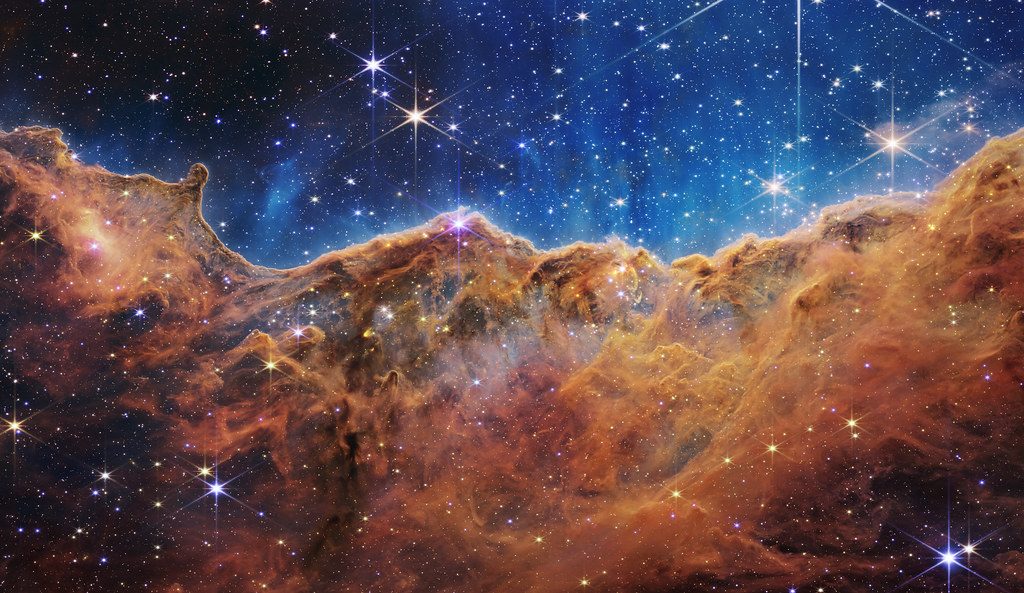
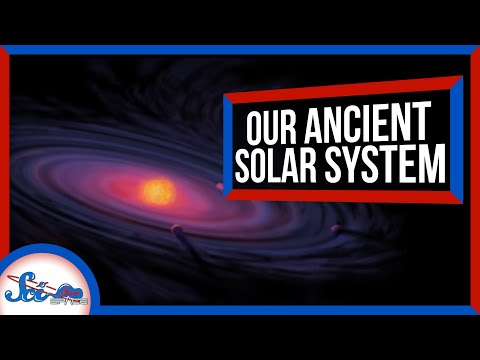
Around 4.6 billion years ago, the solar system began as a cloud of gas and dust. Over a few million years it collapsed and flattened into a disk that gave rise to the sun and planets.

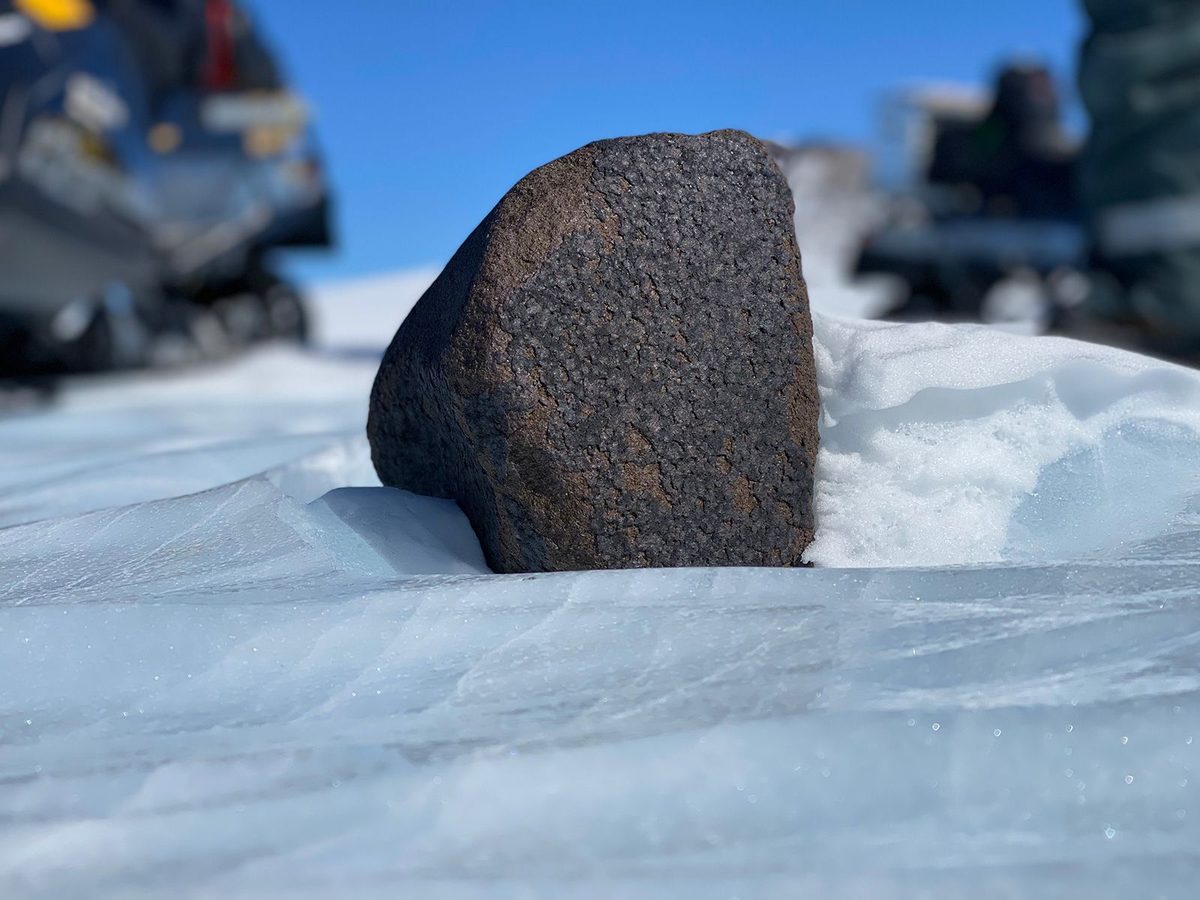
Gravity was long seen as the main driver. New measurements from grains inside an Antarctic meteorite show a magnetic field up to 12 times stronger than Earth's was active in the solar system's first 200,000 years, strong enough to pull ionized gas toward the young sun.

The result adds magnetism to gravity as a force that shaped the solar system. Future models of star and planet formation must now include magnetic fields.

Why it matters

Magnetism now joins gravity as a force that built the solar system, one that models of planet formation must include.

Questions about this story

Free account needed to ask — your question is kept and asked for you right after sign-up. Answers are public.

No questions yet — be the first to ask.

Key Indicators

150–600 µT
Magnetic field strength in the early solar system
About three to 12 times stronger than Earth's magnetic field today.
3–12×
Field strength relative to Earth's today
The ratio of the measured nebular field to Earth's current field.
200,000 years
Time after solar system formation when the grains formed
The calcium-aluminum-rich inclusions are the oldest known solar system material.
5
Calcium-aluminum-rich inclusions analyzed
Microscopic grains studied from the Antarctic meteorite DOM 08006.

Voices

Curated perspectives — historical figures and your fellow readers.

Ever wondered what historical figures would say about today's headlines?

Sign up to generate historical perspectives on this story.

People Involved

Organizations Involved

Timeline

November 2008 September 2026

3 events Latest: Yesterday
  1. Study reported by ScienceDaily

    Latest Scientific Publication

    ScienceDaily covers the finding that magnetism worked alongside gravity in solar system formation.

  2. MIT reports magnetic field in ancient grains

    Scientific Publication

    Weiss and Borlina's team measures a 150–600 µT field in the oldest known solar system material.

  3. Antarctic meteorite DOM 08006 recovered

    Discovery

    The Antarctic Search for Meteorites program collects the meteorite from the Dominion Range.

Scenarios

1

New meteorite samples confirm the early magnetic field

Likely Resolves by End of 2028

Discussed by: Study authors Weiss and Borlina, who call for comparisons of CAIs from other primitive meteorites

The team notes the field strength range is wide and only five grains were studied. If CAIs from other Antarctic meteorites record the same 150–600 µT range, the result becomes a firm constraint on solar system formation models.

2

Reanalysis shows the field was weaker than measured

Unlikely Resolves by End of 2028

Discussed by: Study authors acknowledge uncertainty about whether grains were remagnetized up to 2 million years after formation

The grains may have recorded the field during a later heating event rather than at formation. Isotopic data do not fully rule out later remagnetization, and the iron-to-magnetite ratio carries substantial uncertainty. A revised estimate below 150 µT would weaken the case for magnetism as a prime mover.

3

Magnetic transport enters standard solar-formation models

Possible Resolves by End of 2029

Discussed by: Researchers and coverage in ScienceDaily and MIT News

The measured field matches theoretical models in which magnetic fields in a spinning disk create turbulence that drives gas inward. If the result holds, future simulations of the solar nebula will include magnetic forces alongside gravity as standard physics.

Historical Context

2 moments from history that rhyme with this story — and how they unfolded.

February 1969

Allende meteorite fall (1969)

A fireball scattered thousands of meteorite fragments near Pueblito de Allende in Chihuahua, Mexico. Scientists soon found calcium-aluminum-rich inclusions in the stones, which turned out to be the oldest material in the solar system.

Then

Researchers gained pristine CAIs to study, launching a new field of early solar system geochemistry.

Now

CAIs became the benchmark for the solar system's earliest solids, the same grains studied in the new MIT work.

Why this matters now

The MIT team analyzed exactly the type of material Allende established as a research target. Half a century later, those grains now carry magnetic as well as chemical information.

2013–2025

ALMA protoplanetary disk surveys (2010s–2020s)

Radio telescopes in Chile's Atacama desert resolved dust disks around young stars in unprecedented detail, revealing rings, gaps, and streams of gas. Some surveys detected magnetic field structure within these disks.

Then

Astronomers confirmed that disks around young stars contain magnetic fields and moving material, matching models of disk evolution.

Now

These observations provide the modern counterpart to the ancient magnetic field recorded in meteorites, linking current star formation to the solar system's own history.

Why this matters now

The MIT measurement of a strong ancient field connects meteorite evidence to what telescopes now see around infant stars, suggesting the same magnetic process operated in both.

Sources

(6)