


Logo
Daily Brief
Following
The End of the H-1B Lottery

The End of the H-1B Lottery

DHS Replaces Random Selection with Wage-Weighted System After Years of Fraud

Overview

On December 23, 2025, DHS killed the H-1B lottery. Starting February 2026, the random draw that decided which 85,000 foreign workers could fill specialty occupation jobs will be replaced by a wage-weighted system. A software engineer offered $150,000 gets four entries in the pool; one offered $65,000 gets one. The change ends a lottery that USCIS says was gamed by outsourcing firms flooding the system with multiple registrations for the same workers.

The stakes: 758,994 registrations competed for 85,000 slots in 2024—and nearly 410,000 were duplicate submissions for the same people, up 140% from the year before. Shell companies submitted thousands of entries per worker. Disney laid off American IT staff and made them train H-1B replacements paid 40% less. Now the fight shifts: Will wage-weighting stop the fraud, or just hand more visas to Big Tech while crushing startups that can't match Google's salaries?

Key Indicators

758,994
FY 2024 H-1B Registrations
Applications for 85,000 available slots—a 60% jump from 474,421 the prior year
408,891
Duplicate Registrations
Multiple employers filed for same beneficiaries in FY 2024—54% of all submissions
4x
Level IV Wage Advantage
Highest-paid workers get quadruple entries versus lowest wage tier under new system
70-75%
Indian National Share
Percentage of H-1B holders from India; ~300,000 Indians work in US on these visas

People Involved

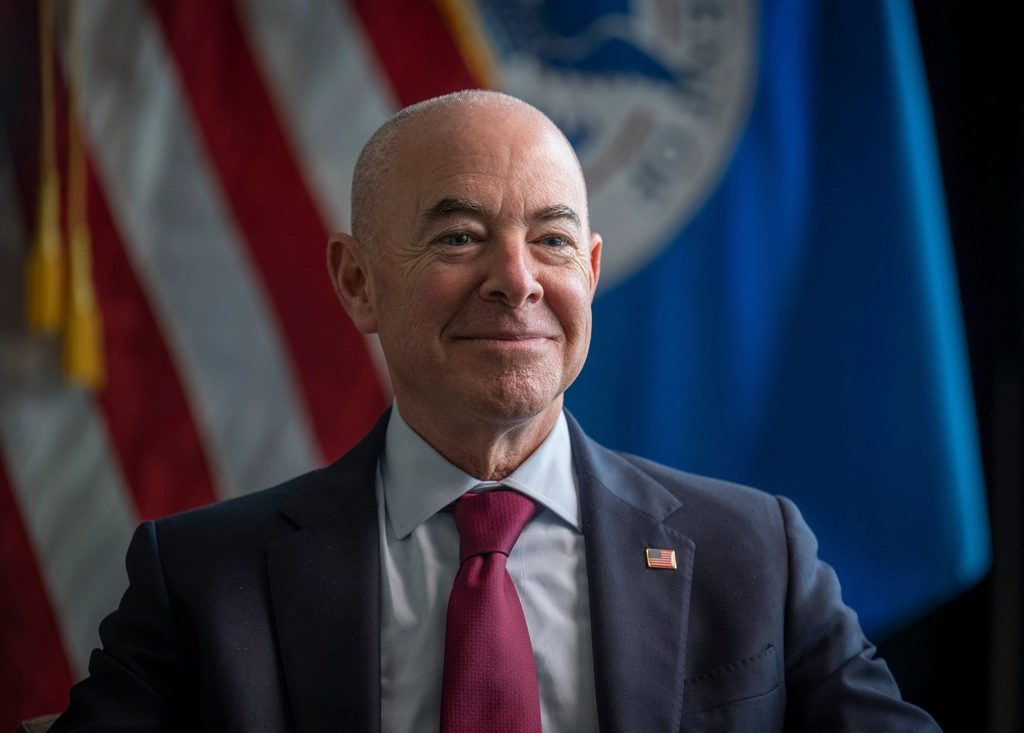
Alejandro N. Mayorkas
Secretary of Homeland Security (Finalized wage-weighted H-1B rule December 2025)
Chuck Grassley
Chuck Grassley
U.S. Senator (R-Iowa) (Co-sponsor of H-1B reform bills since 2007)
Elon Musk
Elon Musk
CEO of Tesla and SpaceX (Defending H-1B visas amid MAGA backlash, December 2024-January 2025)
Donald Trump
Donald Trump
President of the United States (Flip-flopped on H-1B policy; now supports program)

Organizations Involved

U.S. Citizenship and Immigration Services (USCIS)
Federal Agency
Status: Administering H-1B program; enforcing fraud crackdown

USCIS runs the H-1B cap lottery and processes petitions for the 85,000 annual visas.

CO
Cognizant Technology Solutions
IT Outsourcing Firm
Status: Major H-1B user; sued in Disney case

Global IT services company that files thousands of H-1B petitions annually, often for lower-wage positions.

HCL Technologies
HCL Technologies
IT Outsourcing Firm
Status: Major H-1B user; sued in Disney case

Indian multinational IT services firm and heavy H-1B petitioner, often criticized for wage suppression.

The Walt Disney Company
Entertainment Conglomerate
Status: Faced backlash and lawsuit over 2015 H-1B layoffs

Used H-1B outsourcing to replace American IT workers in 2015, sparking national controversy.

Timeline

  1. New System Takes Effect

    Implementation

    Wage-weighted selection begins for FY 2027 H-1B cap season.

  2. Rule Published in Federal Register

    Regulation

    Wage-weighted selection rule formally published.

  3. DHS Announces Wage-Weighted Selection

    Regulation

    Final rule replaces lottery with wage-based weighting effective Feb 2026.

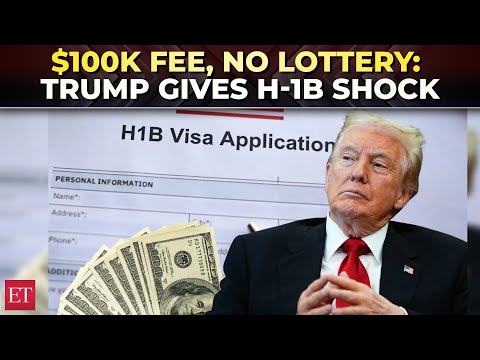
  4. Trump Imposes $100,000 H-1B Fee

    Executive

    New fee targets program abuse; Indian IT stocks plunge.

  5. Musk-Bannon H-1B Feud

    Political

    MAGA coalition splits over visas; Trump sides with Musk, calls program 'great.'

  6. FY 2024 Registrations Hit Record

    Data

    758,994 registrations submitted; 54% are duplicates for same workers.

  7. USCIS Launches Fraud Investigations

    Enforcement

    Agency investigates dozens of companies for coordinated lottery gaming.

  8. Grassley-Durbin Bill Reintroduced

    Legislation

    H-1B and L-1 Visa Reform Act filed again; dies in committee.

  9. Trump Bans New H-1B Visas

    Executive

    Temporary ban issued, later struck down by federal courts.

  10. Electronic Registration Launches

    Policy

    USCIS introduces online H-1B lottery registration; fraud explodes.

  11. Trump's 'Buy American, Hire American'

    Executive

    Executive order directs agencies to review H-1B program for abuse.

  12. Workers Sue Disney

    Legal

    Laid-off employees file federal lawsuit alleging illegal replacement with H-1Bs.

  13. New York Times Exposé

    Media

    Disney H-1B scandal breaks nationally, triggering congressional scrutiny.

  14. Disney Layoffs Take Effect

    Corporate

    Workers laid off after training H-1B replacements paid 40% less.

  15. Disney Notifies IT Workers of Layoffs

    Corporate

    250 Disney IT staff told they'll be replaced by H-1B workers from outsourcing firms.

  16. First Grassley-Durbin Reform Bill

    Legislation

    Senators introduce H-1B fraud prevention bill; fails to pass.

  17. Cap Set at 85,000

    Legislation

    H-1B Visa Reform Act sets 65,000 regular cap plus 20,000 for US master's degrees.

  18. H-1B Program Created

    Legislation

    Immigration Act of 1990 establishes H-1B visa for specialty occupations.

Scenarios

1

Big Tech Dominates, Startups Shut Out

Discussed by: Startup founders, immigration attorneys, Federal Register public comments

Google, Meta, and Amazon hoover up visas by offering Level IV salaries ($150K+) that small companies can't match. Startups needing niche AI or cryptography talent get frozen out even when offering competitive equity packages, because cash wage determines lottery weight. Indian IT outsourcers pivot to 'staff augmentation' at higher rates, passing costs to clients. Concentration accelerates: top 50 employers capture 60% of all H-1Bs versus 40% pre-reform. Congress holds hearings on unintended consequences but takes no action. Venture capitalists lobby for carve-outs; none pass.

2

Fraud Migrates to Wage Inflation

Discussed by: Immigration enforcement officials, fraud investigators, policy analysts

Shell companies and body shops game the new system by listing inflated Level IV wages on registrations, then paying Level I salaries after approval via side agreements or mandatory 'training fee' kickbacks. USCIS scrambles to audit actual compensation post-selection but lacks resources to verify 85,000 petitions annually. Whistleblowers report rampant wage fraud; enforcement lags years behind. Congress debates mandatory wage verification and site inspections. Meanwhile, legitimate employers bear audit burden while bad actors exploit gaps. By 2028, wage fraud eclipses the old lottery manipulation.

3

Reform Works, Fraud Collapses

Discussed by: DHS officials, immigration reform advocates, mainstream immigration attorneys

Wage-weighting kills the incentive for duplicate registrations: no point filing 10 entries for a Level I worker when one Level IV worker has quadruple the odds. FY 2027 registrations drop 40% to 450,000; duplicates fall to under 5%. Outsourcing firms either raise wages genuinely or exit the H-1B market, shifting to L-1 visas and nearshoring in Mexico. Median H-1B salary climbs from $95,000 to $125,000. Universities and research labs win more visas for PhD scientists. Displacement complaints decrease. Critics still argue the cap should rise or the program should end, but consensus forms: wage-weighting fixed the lottery's worst abuses.

4

Congressional Overhaul Replaces Executive Fix

Discussed by: Senate immigration hawks, tech industry lobbyists, bipartisan reform groups

Wage-weighting proves a stopgap. In 2026, Republicans control Congress and pass comprehensive H-1B reform increasing the cap to 110,000 but mandating Level III minimum wages, site audits, and criminal penalties for fraud. Democrats extract green card pathways for STEM PhD graduates in exchange. The bill sunsets DHS's wage-weighted rule, replacing it with statutory requirements. Indian IT firms lobby fiercely; tech giants back the compromise. The law passes with 65 Senate votes. By 2027, the H-1B program looks unrecognizable: higher wages, more enforcement, clearer pathways to permanence.

Historical Context

Canada's Points System Shift (2015)

1967-2015

What Happened

Canada pioneered points-based immigration in 1967, awarding visas based on education, language, age, and skills without employer sponsorship. For decades, immigrants arrived without job offers, leading to credential mismatches—engineers driving taxis. In 2015, Canada introduced Express Entry, a hybrid model: candidates still need points, but employers select from a pre-approved pool, blending supply-driven points with demand-driven hiring.

Outcome

Short term: Applications spiked; processing times dropped from years to months.

Long term: Immigrant employment outcomes improved significantly as employer involvement ensured job market fit.

Why It's Relevant

The US H-1B wage-weighted system mirrors Canada's evolution: moving from pure randomness toward valuing market signals—here, wages as a proxy for skill and demand—without abandoning employer sponsorship entirely.

Australia's 457 Visa Abuse and Reform (2017)

1996-2018

What Happened

Australia's Temporary Skill Shortage (subclass 457) visa allowed employers to sponsor foreign workers. By 2017, widespread abuse emerged: employers sponsoring workers for fake jobs, paying below-market wages, or using 457s to suppress Australian salaries. In April 2017, Prime Minister Malcolm Turnbull abolished the 457 visa, replacing it with the Temporary Skill Shortage (TSS) visa with stricter wage floors, mandatory labor market testing, and occupation lists tied to genuine shortages.

Outcome

Short term: Visa grants dropped 20%; businesses protested disruption.

Long term: Wage protections strengthened; public trust in skilled migration partially restored.

Why It's Relevant

Like the 457 visa, the H-1B lottery faced exploitation by employers seeking cheap labor rather than scarce talent. The US wage-weighted rule parallels Australia's wage floor approach: using compensation as a gatekeeper to prioritize genuine skill needs over cost arbitrage.

Disney's H-1B Layoffs (2015)

2014-2015

What Happened

In October 2014, Walt Disney World notified 250 IT workers they'd be laid off and replaced by H-1B workers from Cognizant and HCL—outsourcing firms paying $61,000 versus Disney's $100,000 salaries. Workers spent 90 days training their replacements or lost severance. The scandal broke nationally in June 2015 via the New York Times, sparking lawsuits alleging illegal displacement and congressional hearings on program abuse.

Outcome

Short term: Disney reversed 35 layoffs; lawsuits filed but largely dismissed on standing grounds.

Long term: The case became a rallying cry for H-1B critics, illustrating wage suppression and the gap between statutory intent (fill labor shortages) and corporate practice (cut costs).

Why It's Relevant

The Disney case epitomizes the problem DHS's wage-weighted rule aims to solve: employers using H-1Bs not for specialized talent but for cheaper labor. By prioritizing higher wages, the new system theoretically blocks the cost-cutting outsourcing model that enabled Disney's layoffs.